


























Views
Downloads

Theme and Inference Worksheet | Grade 6 Reading Printable
Paste this activity's link or code into your existing LMS (Google Classroom, Canvas, Teams, Schoology, Moodle, etc.).
Students can open and work on the activity right away, with no student login required.
You'll still be able to track student progress and results from your teacher account.
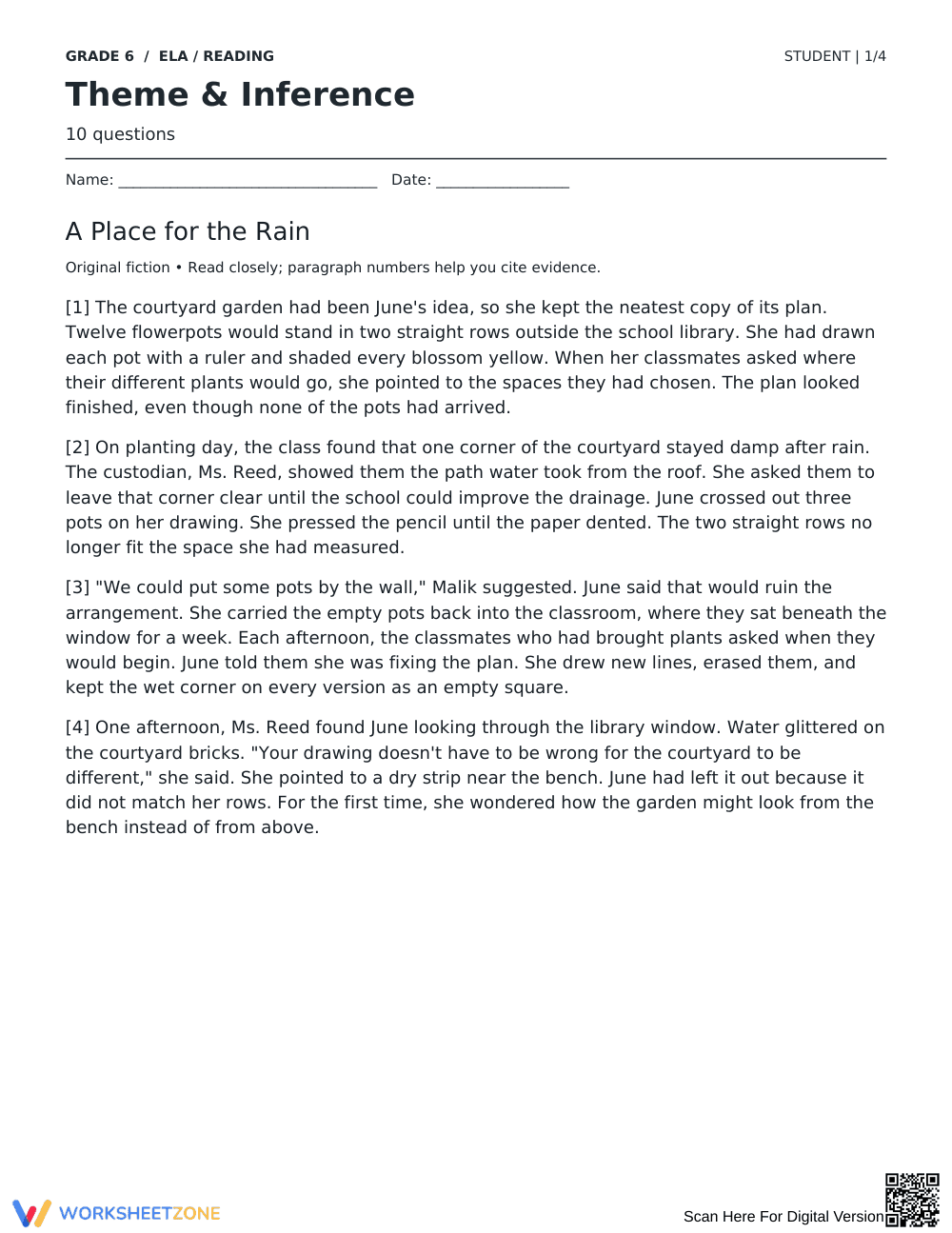
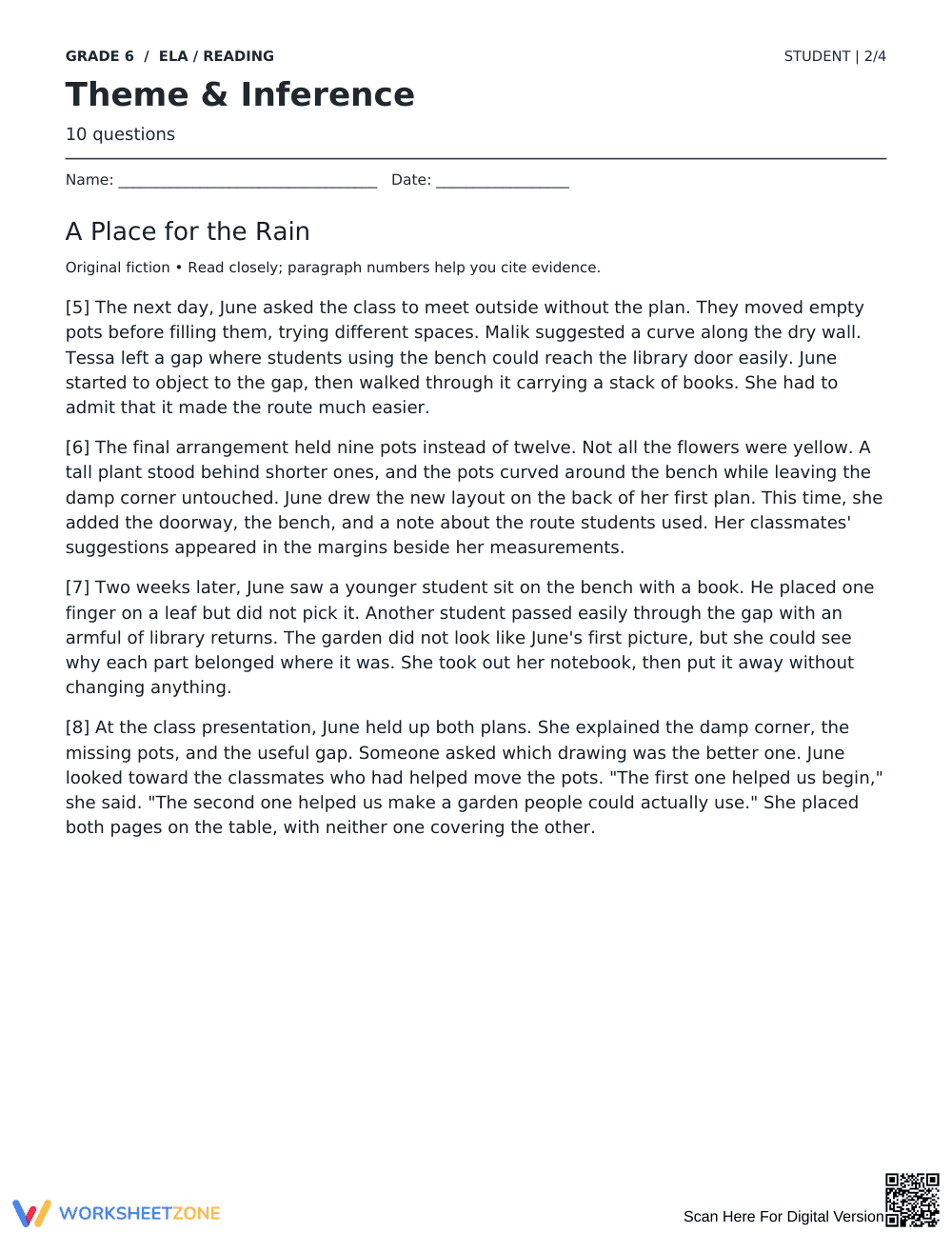
This Grade 6 reading worksheet guides students to infer themes and analyze character development through close reading. Working with an original story, learners evaluate how characters respond to challenges, formulate central themes, and support their conclusions using direct textual citations to achieve grade-level comprehension mastery.
At a Glance
- Grade: 6 · Subject: ELA and Reading Literature
- Standard:
CCSS.ELA-LITERACY.RL.6.2— Determine a theme or central idea and explain how details support it- Skill Focus: Inferring theme and citing text evidence
- Format: 4 pages · 10 short-response problems · Answer key included · PDF
- Best For: Independent practice and close reading assessment
- Time: 35–45 minutes
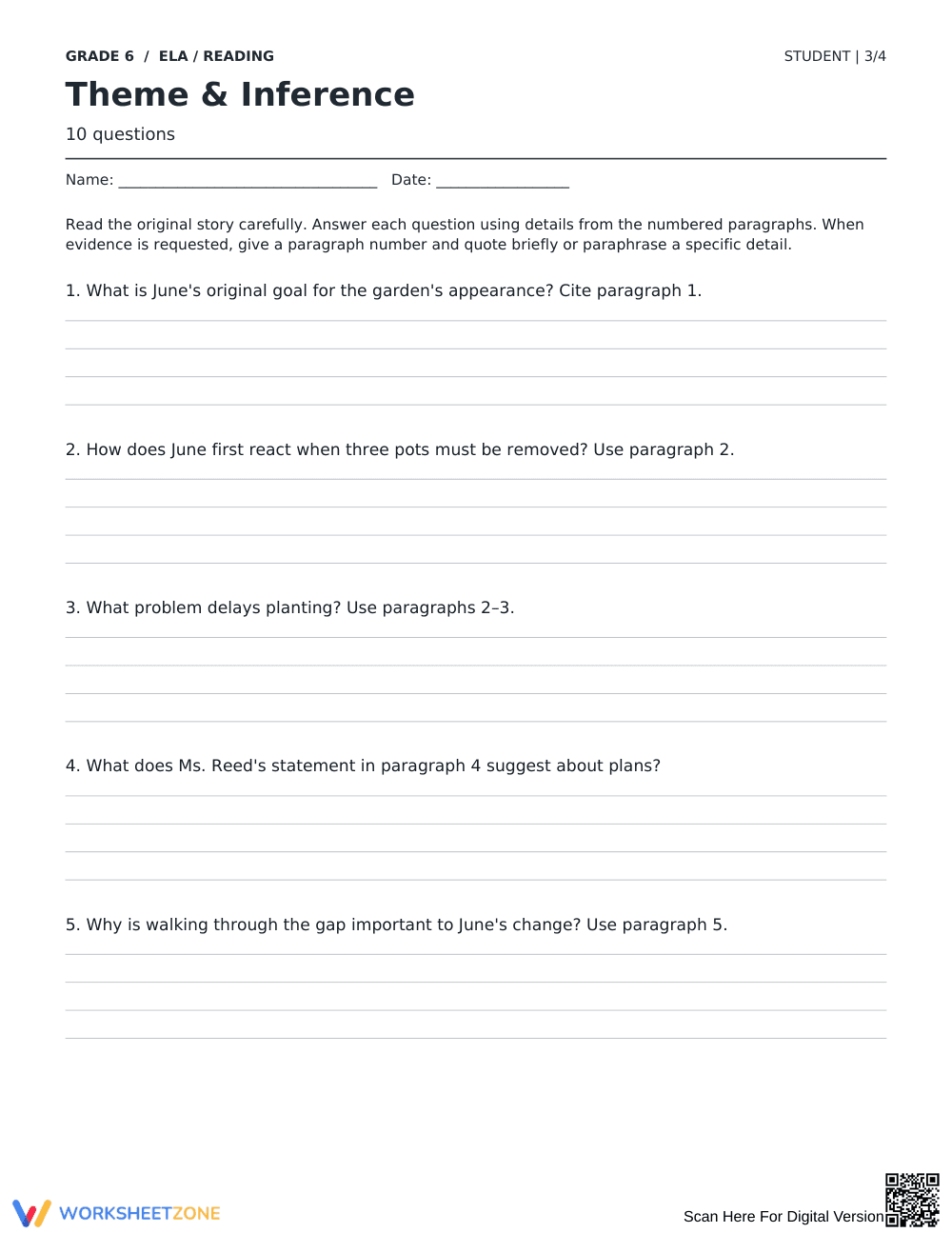
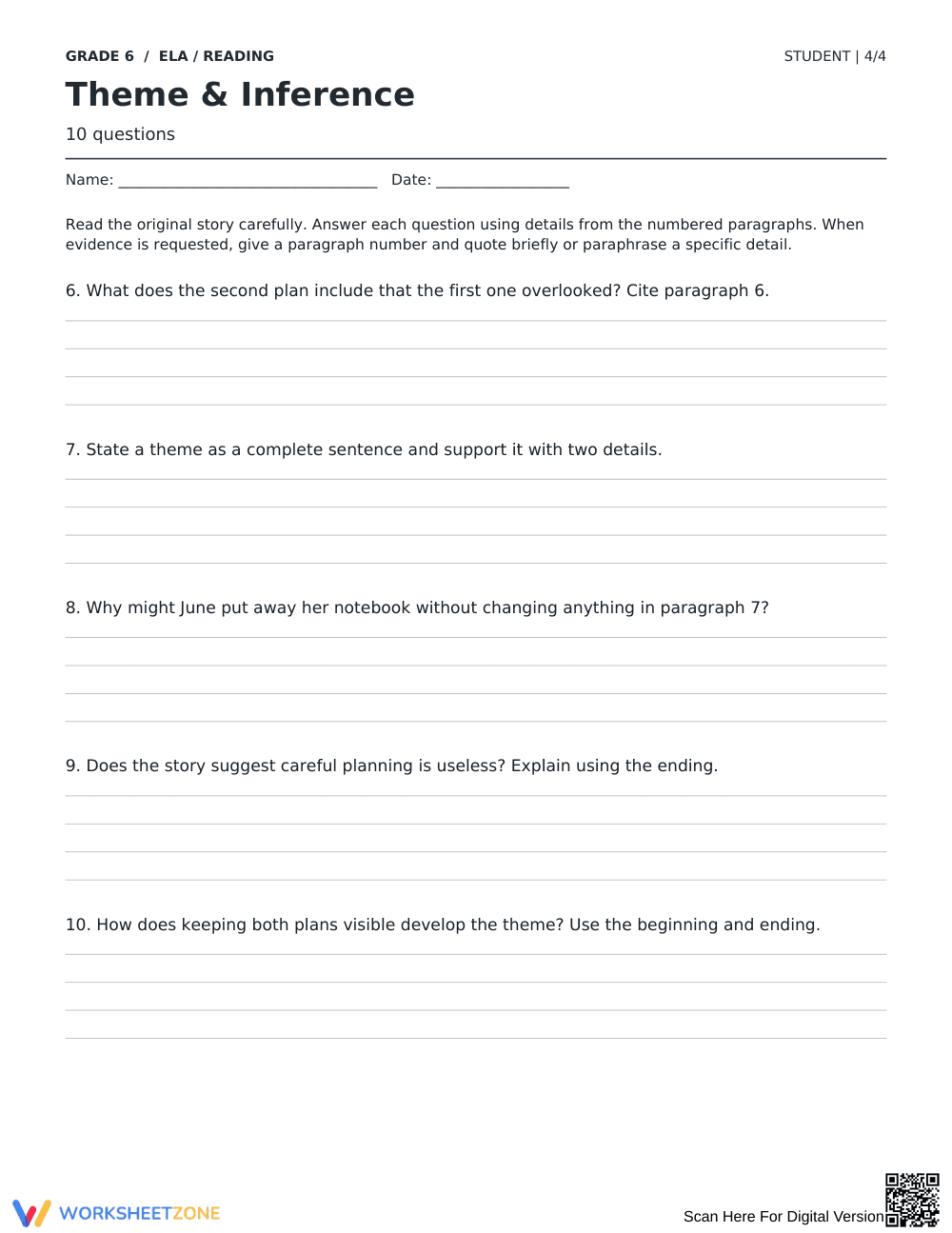
The resource provides a four-page packet pairing an eight-paragraph fiction story titled "A Place for the Rain" with ten text-dependent questions. Paragraph numbers support accurate evidence citation, while lined spaces accommodate extended written answers. A two-page answer key provides complete model responses and a two-point scoring guide.
Skill Progression
- Guided practice (Questions 1–3): Students identify concrete details, characters, and plot obstacles in paragraphs 1–3 using direct paragraph hints.
- Supported practice (Questions 4–6): Learners interpret character growth and pivotal choices using guided prompts targeting specific scenes.
- Independent practice (Questions 7–10): Students craft full thematic statements, defend them with two pieces of evidence, and analyze structural story development across the whole text.
This sequence follows the gradual release of responsibility model, moving students from guided comprehension to independent theme evaluation.
Standards Alignment
This worksheet aligns directly to `CCSS.ELA-LITERACY.RL.6.2` by requiring students to determine a theme and explain how narrative details convey it. It also reinforces `CCSS.ELA-LITERACY.RL.6.1` through textual evidence citation for every analytical claim. Both standard codes can be copied directly into lesson plans, IEP goals, or district curriculum mapping tools.
How to Use It
Use this worksheet after direct instruction on literary themes. In a 40-minute reading block, have students read the passage with a partner before completing the questions independently. Alternatively, assign it as a formal mid-unit assessment. As a formative assessment check, verify whether students write Question 7 as a universal statement rather than summarizing plot events.
Who It's For
This resource is designed for Grade 6 reading classes, inclusion settings, and Tier 2 reading intervention. Striving readers benefit from the numbered paragraphs and scaffolded prompts. Pair this printable with a mini-lesson on character motivation or an anchor chart distinguishing central idea from theme.
Grade 6 students master literary analysis by determining themes and supporting their conclusions with specific narrative evidence under standard CCSS.ELA-LITERACY.RL.6.2. Research by Fisher & Frey (2014) demonstrates that structured reading tasks combining close textual examination with scaffolded text-dependent questions significantly increase students' capacity to synthesize abstract concepts and draw complex inferences. When middle school learners engage with numbered literary passages, they move beyond surface-level plot recall to examine how character decisions and environmental conflicts illustrate broader life truths. By requiring students to articulate complete thematic statements and validate them through multiple cited details, this ten-question exercise reinforces critical reading habits that are essential for academic success across the secondary curriculum. Teachers can reliably utilize this standards-aligned resource to assess independent comprehension, track interpretive writing growth, and establish measurable evidence of student progress toward grade-level mastery.


