


























Views
Downloads

Seed Germination Worksheet | Grade K-2 Essential
Paste this activity's link or code into your existing LMS (Google Classroom, Canvas, Teams, Schoology, Moodle, etc.).
Students can open and work on the activity right away, with no student login required.
You'll still be able to track student progress and results from your teacher account.
This Grade K-2 science worksheet transforms the complex biological process of seed germination into an accessible, visual journey. Students observe the transition from seed to sprout, developing a foundational understanding of plant life cycles and the specific environmental conditions required for growth. By the end of these activities, learners will confidently identify plant anatomy and chronological growth patterns through structured observation.
At a Glance
- Grade: K-2 · Subject: Science
- Standard:
K-LS1-1— Use observations to describe patterns of what plants need to survive- Skill Focus: Plant life cycles and anatomy
- Format: 3 pages · 4 problems · Answer key included · PDF
- Best For: Introduction to botany and life science
- Time: 20–30 minutes
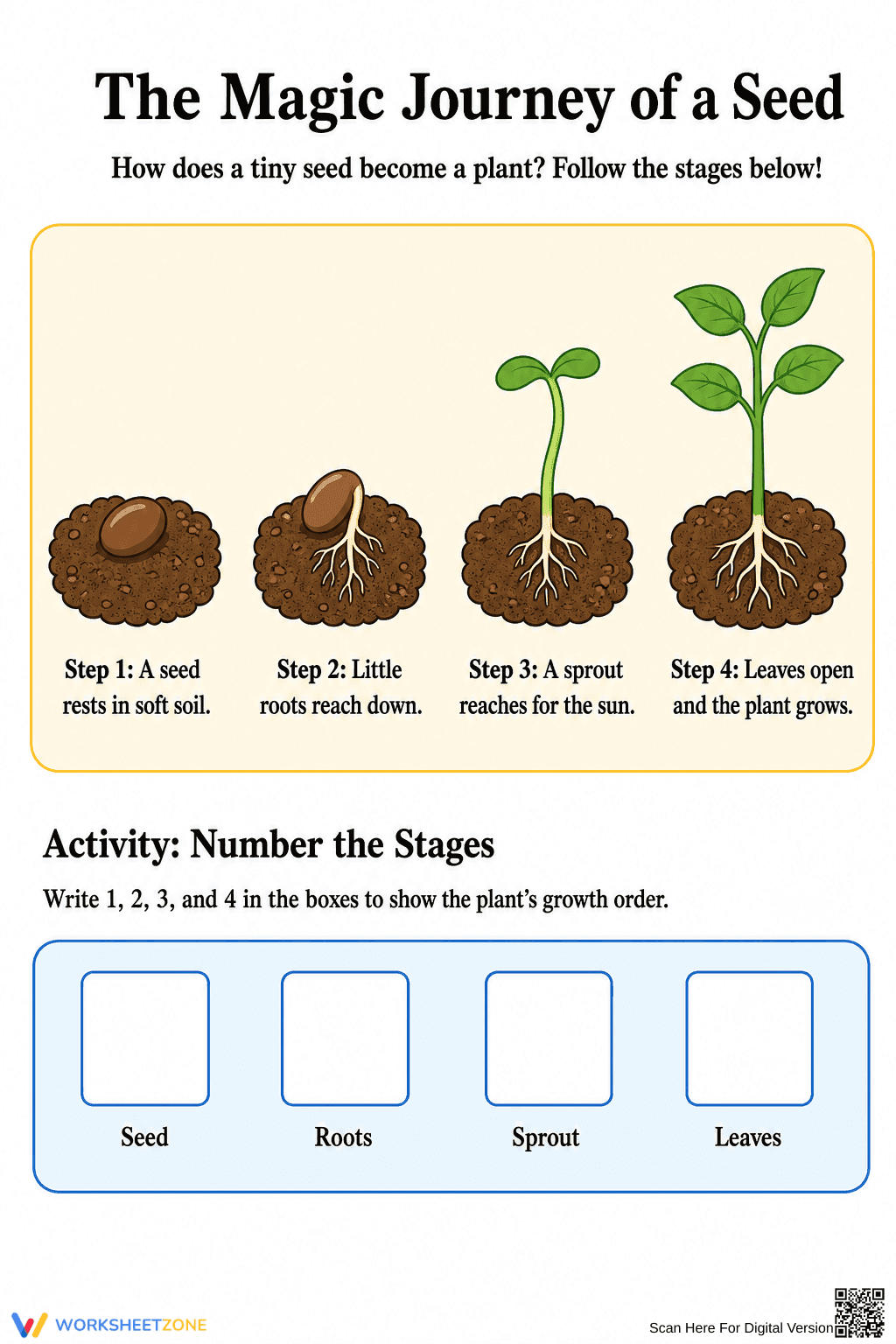
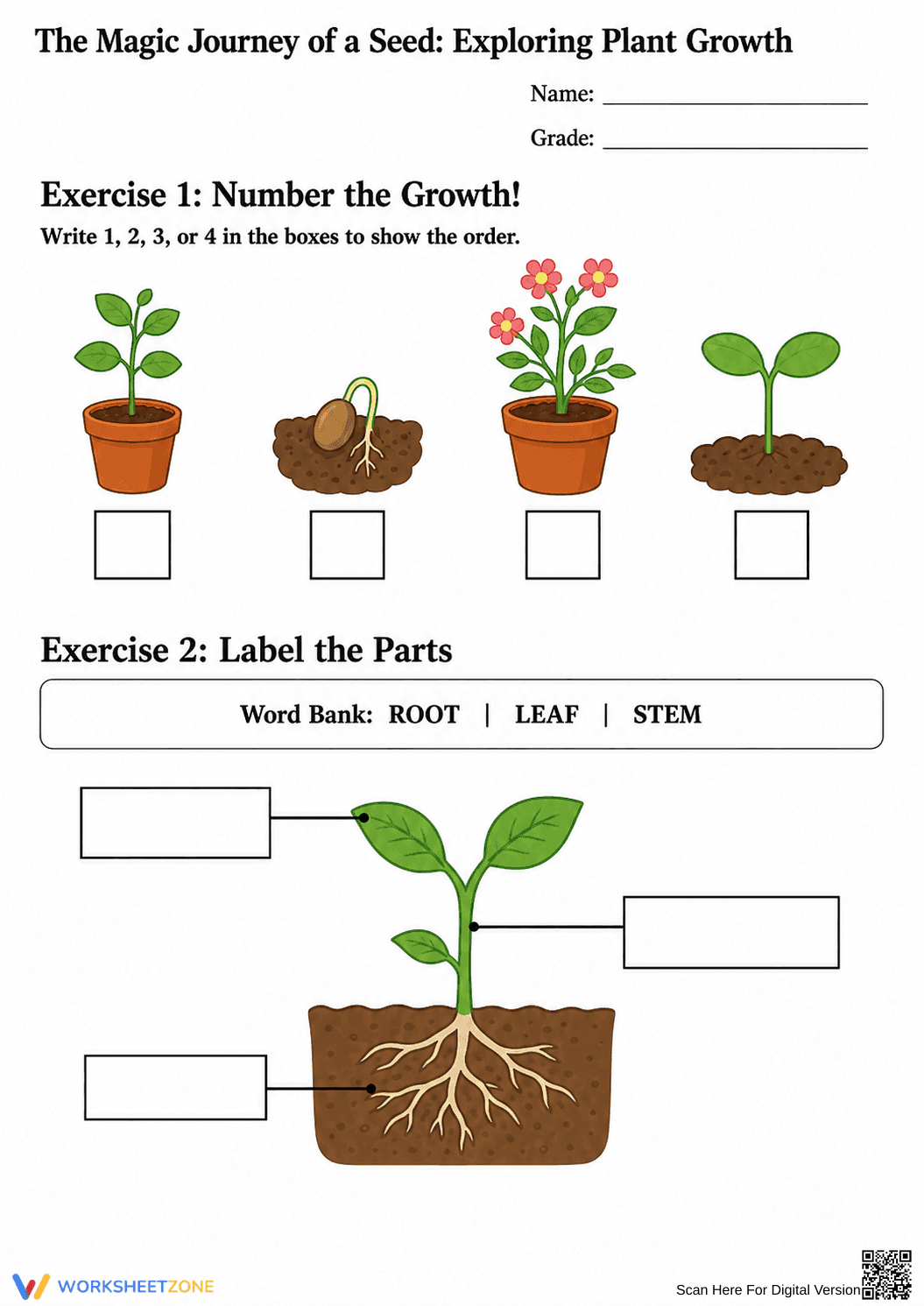
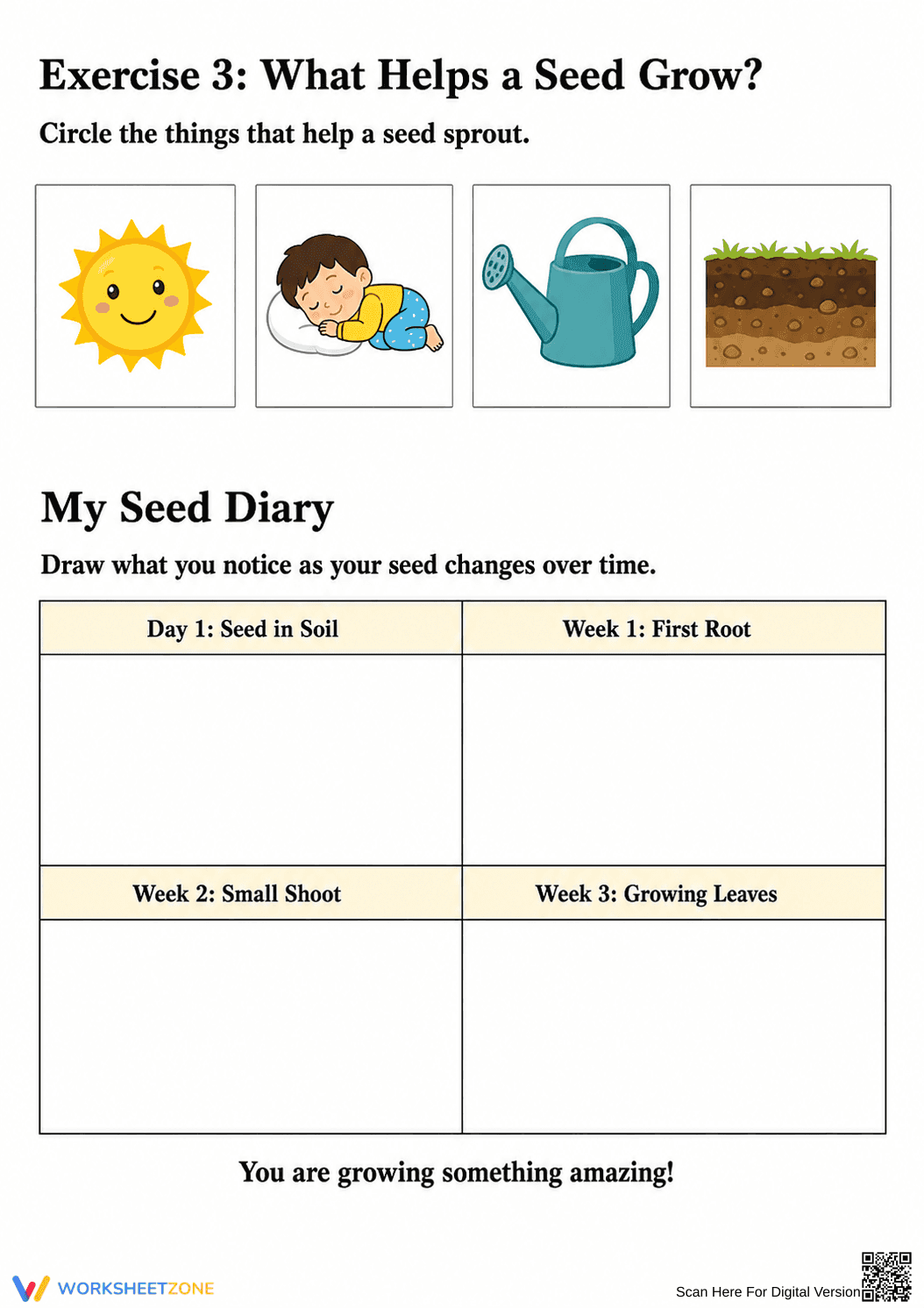
The resource contains 3 comprehensive pages designed to build mastery through visual literacy. Page one provides a visual anchor chart with four distinct stages of growth followed by an immediate sequencing task. Page two challenges students to number growth stages in a different context and label the root, leaf, and stem using a provided word bank. The final page includes a critical thinking exercise on plant needs and a four-part "Seed Diary" for long-term observation and drawing.
Zero-Prep Workflow
- Print: Select the 3-page PDF and print enough copies for your class in under 30 seconds.
- Distribute: Hand out the sheets during your life science block; the visual instructions allow students to begin with minimal verbal direction in about 1 minute.
- Review: Use the visual anchor on page one to check for understanding as a whole group during a 5-minute wrap-up.
Total teacher preparation time is targeted at under 2 minutes, making this an ideal resource for substitute plans or spontaneous science lessons.
Standards Alignment
Primary Standard: K-LS1-1: "Use observations to describe patterns of what plants and animals (including humans) need to survive." This worksheet directly supports this standard by requiring students to identify sun, water, and soil as essential needs for a sprouting seed. Both standard codes can be copied directly into lesson plans, IEP goals, or district curriculum mapping tools.
How to Use It
Use this as a formative assessment after a read-aloud about gardening to gauge student understanding of sequencing. Alternatively, assign the "Seed Diary" section as a weekly homework project where students observe a real bean seed growing in a plastic bag. Expected completion time for the first two pages is approximately 15–20 minutes, while the diary is intended for multi-day use.
Who It's For
This resource is designed for preschool through second-grade students, particularly those who benefit from visual learning and scaffolded labeling tasks. It pairs naturally with a classroom seed-planting experiment or a non-fiction text about botany and the natural world.
According to the RAND AIRS 2024 report on early childhood science education, visual sequencing and labeling are critical components of developing scientific literacy in Grade K-2. This worksheet aligns with these findings by providing a structured framework for students to document the K-LS1-1 standard through observable evidence. By engaging with the "Magic Journey of a Seed," students move beyond rote memorization toward a conceptual understanding of how living things change over time. Research from Fisher & Frey (2014) emphasizes that such scaffolded observation tools help bridge the gap between concrete experiences and abstract scientific concepts. This 3-page set ensures that young learners have the vocabulary and organizational tools necessary to discuss plant biology accurately and confidently in a classroom setting.


