




























Views
Downloads

Printable Integumentary System Worksheet | Grade 6-7

Paste this activity's link or code into your existing LMS (Google Classroom, Canvas, Teams, Schoology, Moodle, etc.).
Students can open and work on the activity right away, with no student login required.
You'll still be able to track student progress and results from your teacher account.
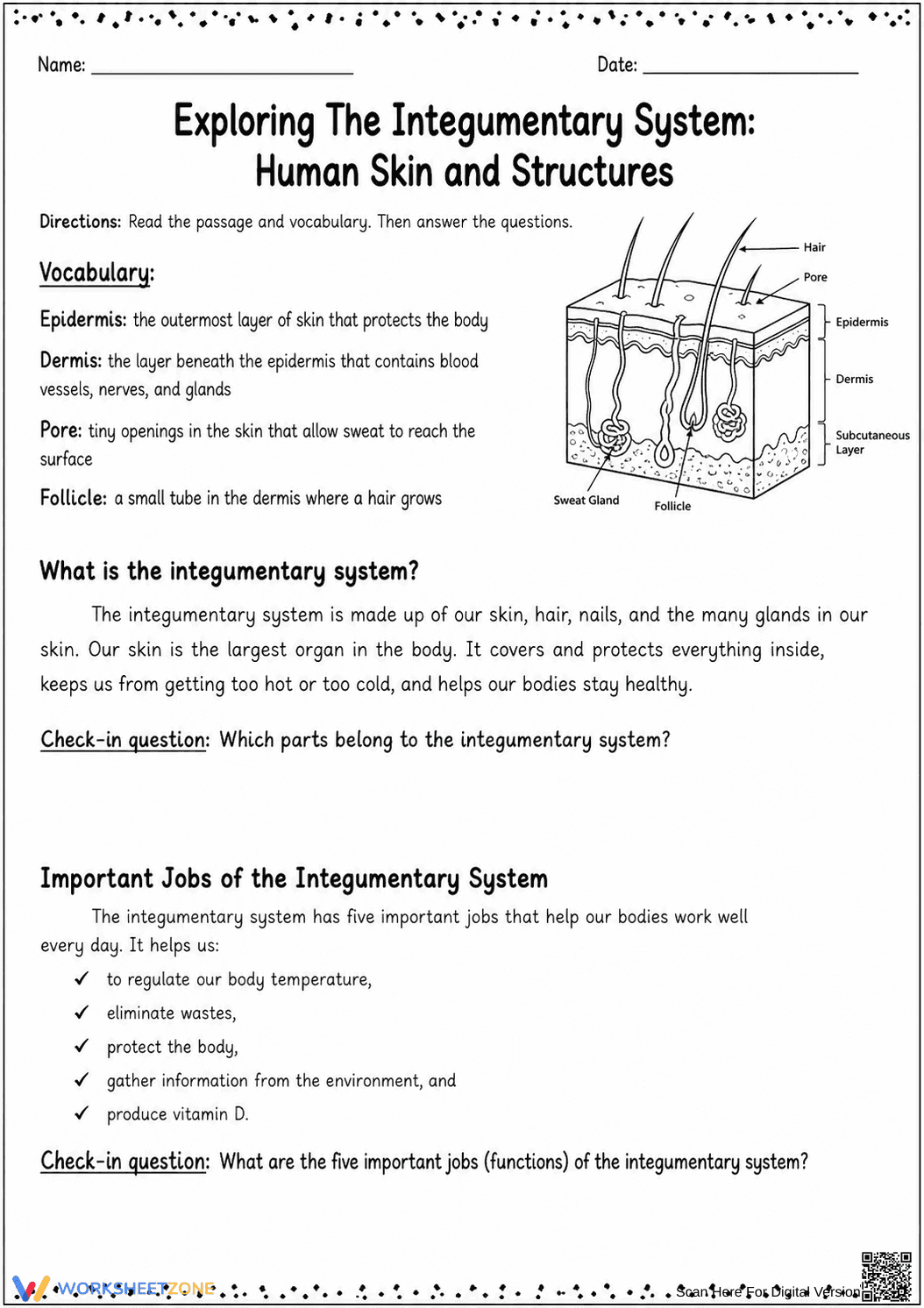
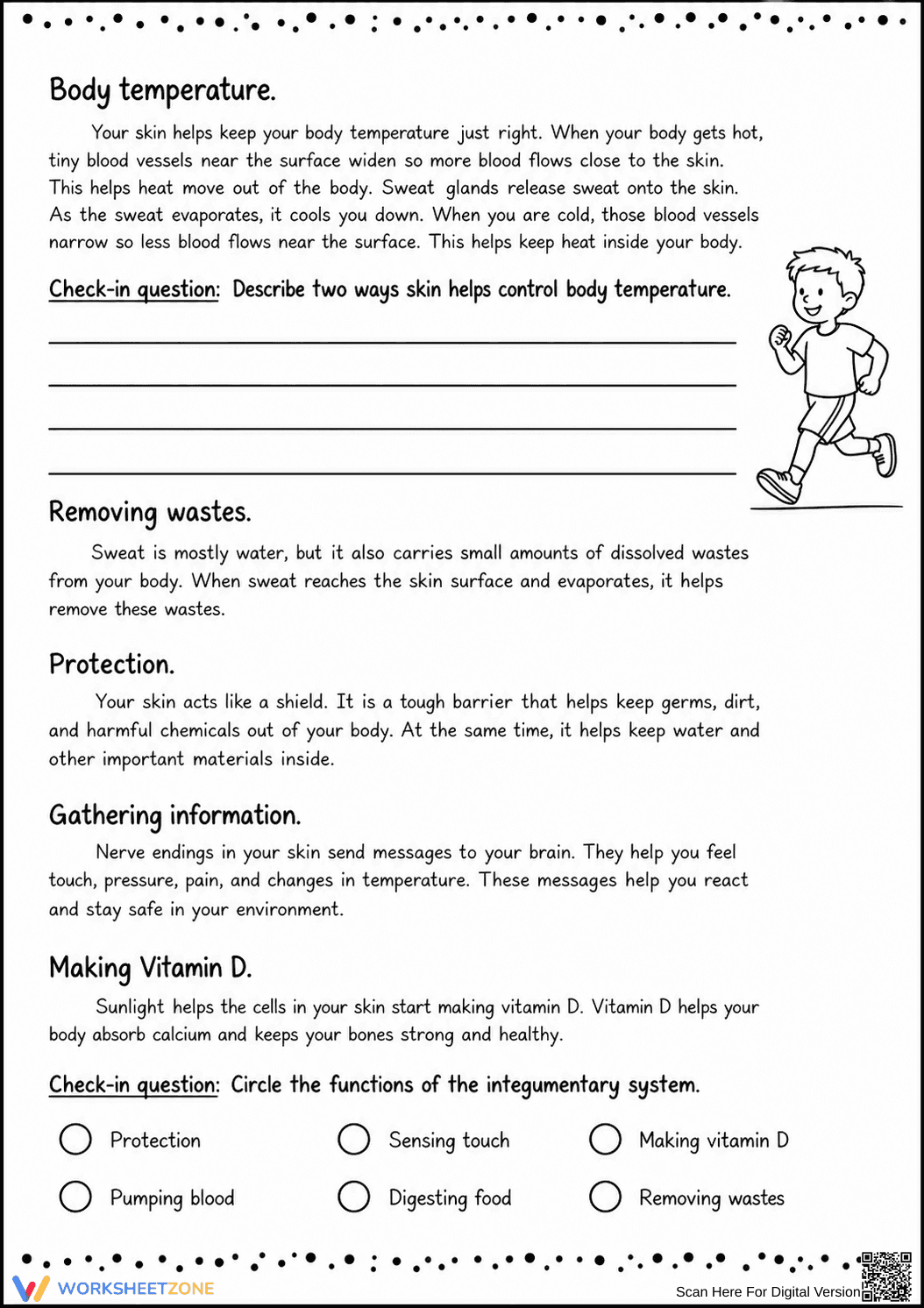
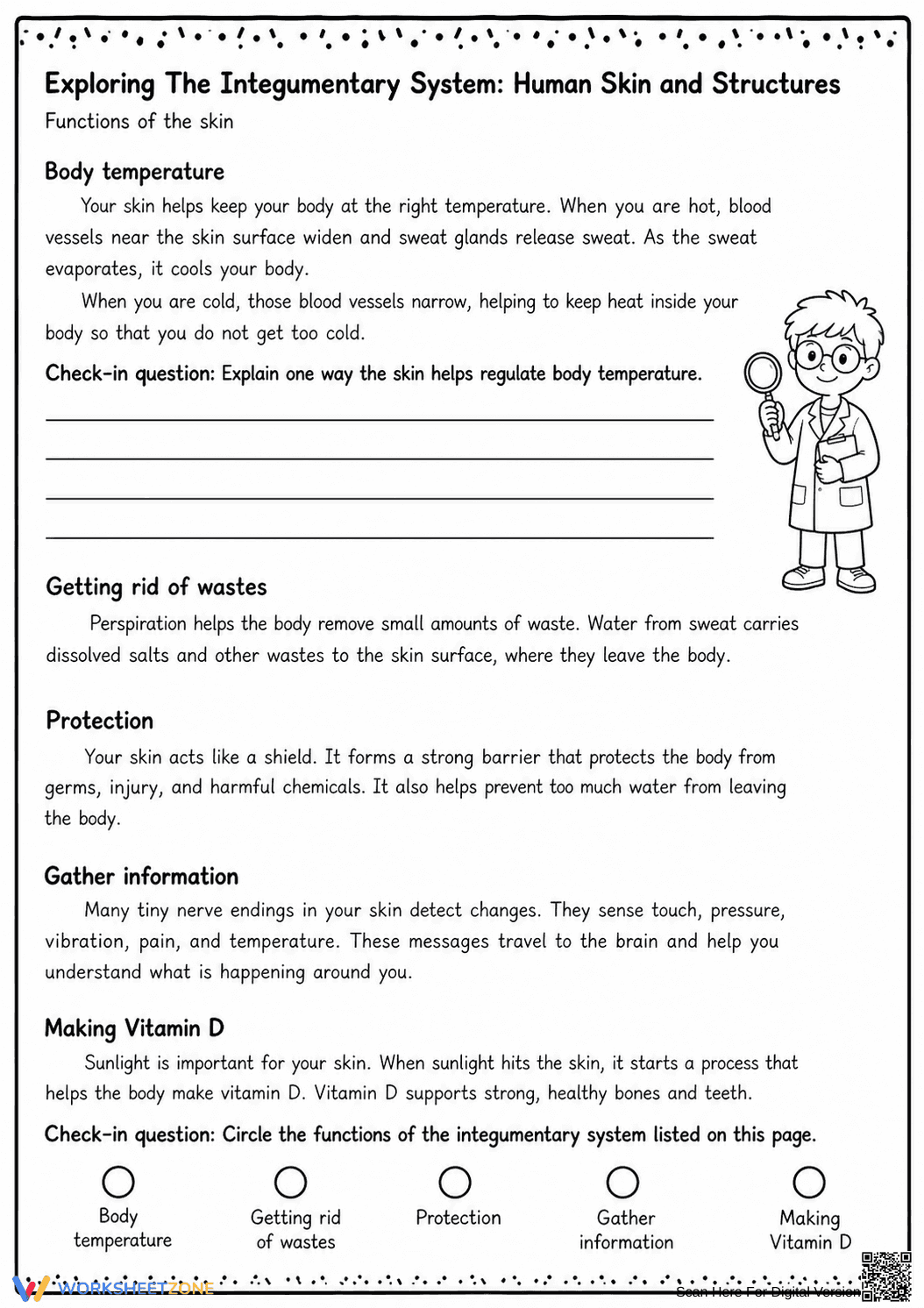
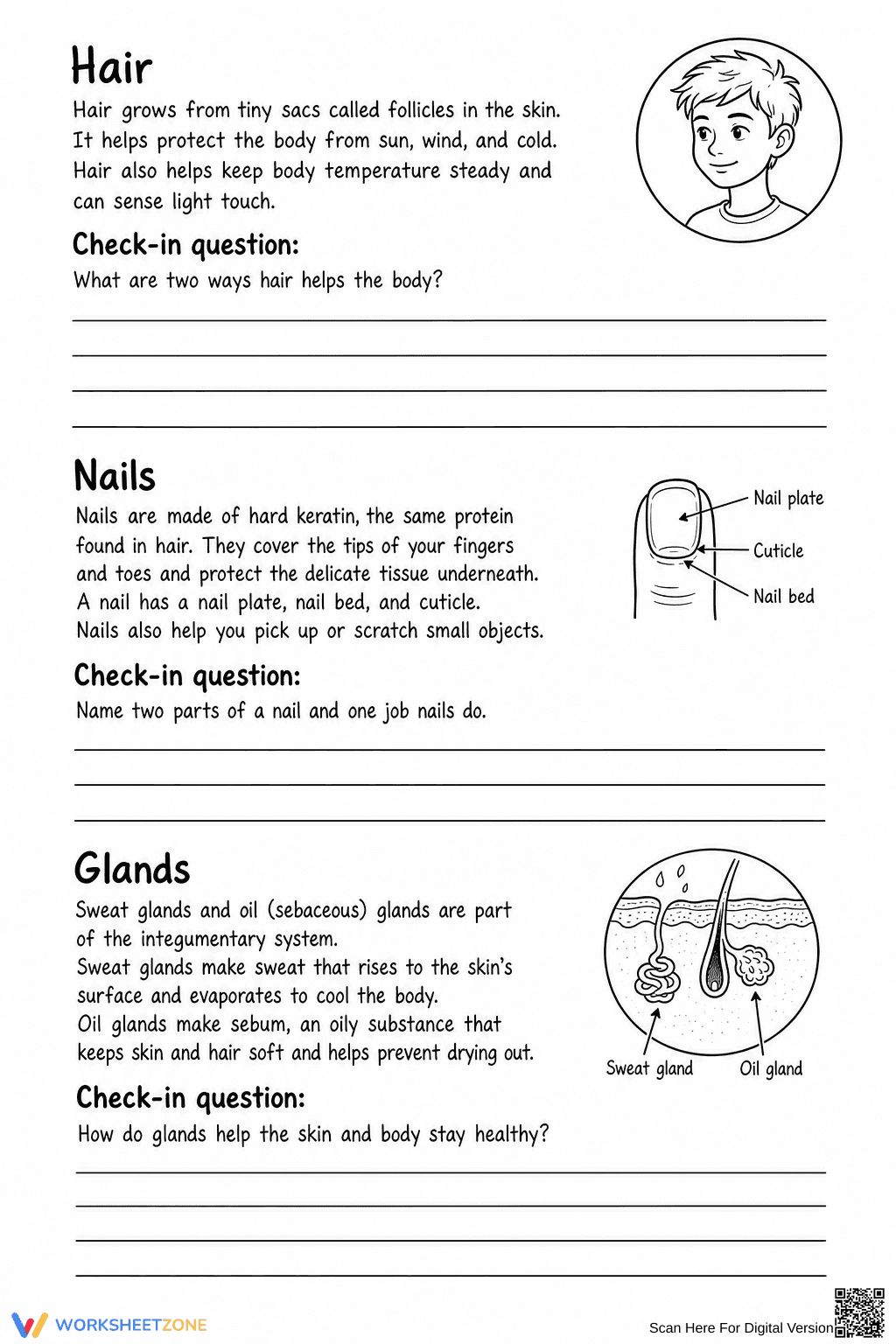
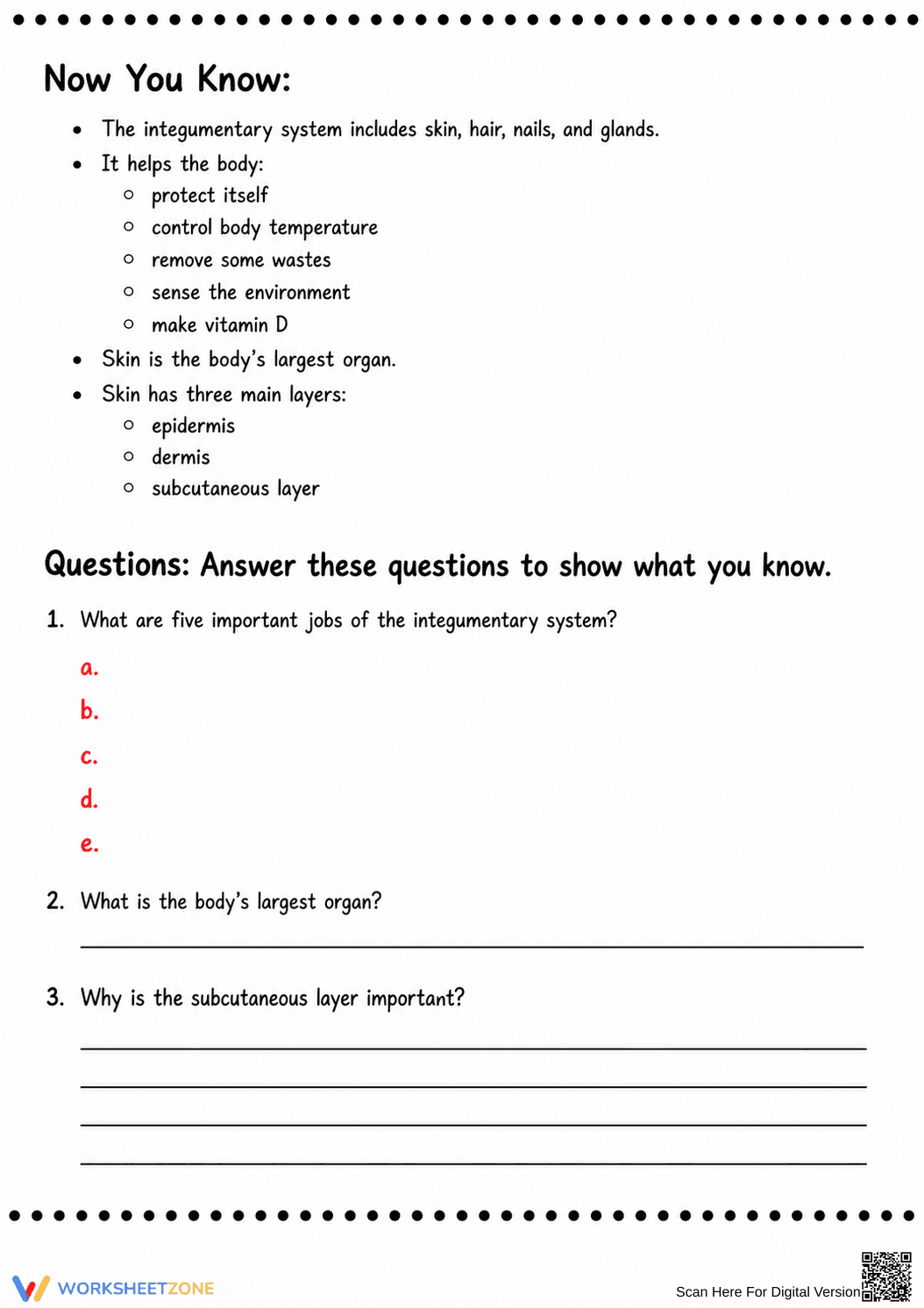
This comprehensive integumentary system worksheet helps middle school students master the structures and functions of human skin, hair, and nails. By combining detailed reading passages with embedded check-in questions, students will analyze how the body's largest organ regulates temperature, provides protection, and synthesizes Vitamin D.
At a Glance
- Grade: 6 · Subject: Science
- Standard:
MS-LS1-3— Explain how body subsystems interact to function- Skill Focus: Integumentary system structures and functions
- Format: 5 pages · 15 problems · Answer key included · PDF
- Best For: Independent reading and review
- Time: 30–45 minutes
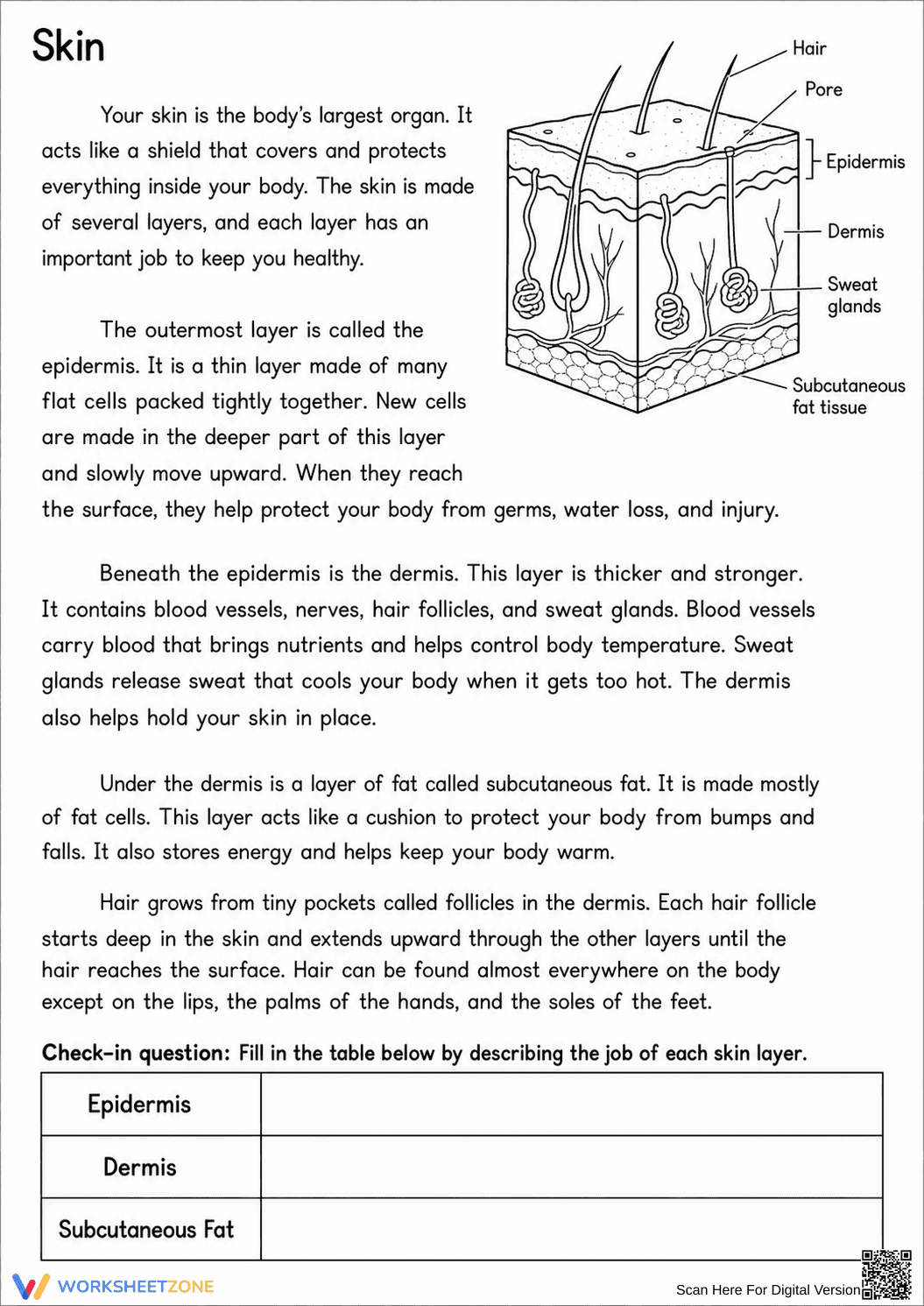
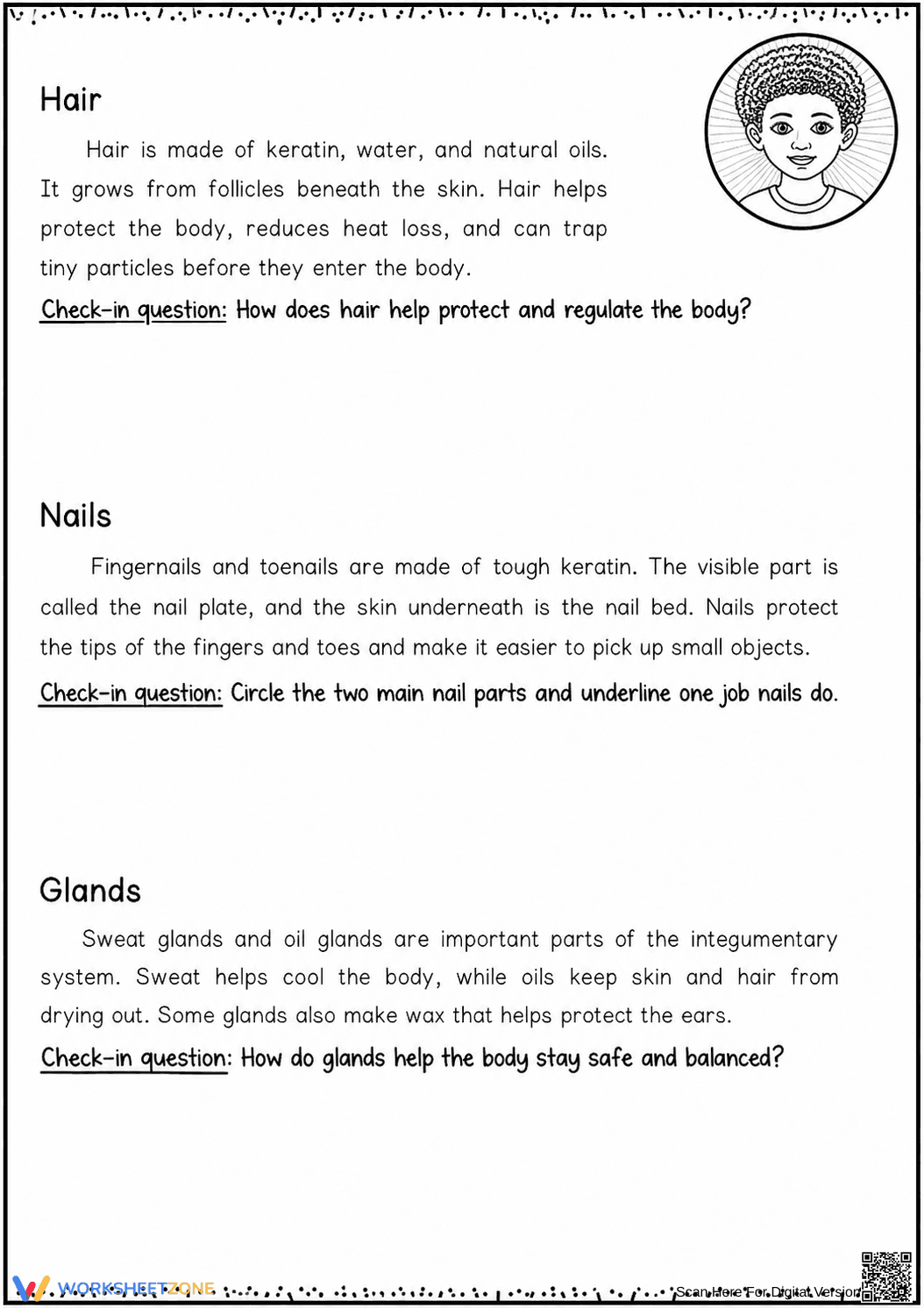
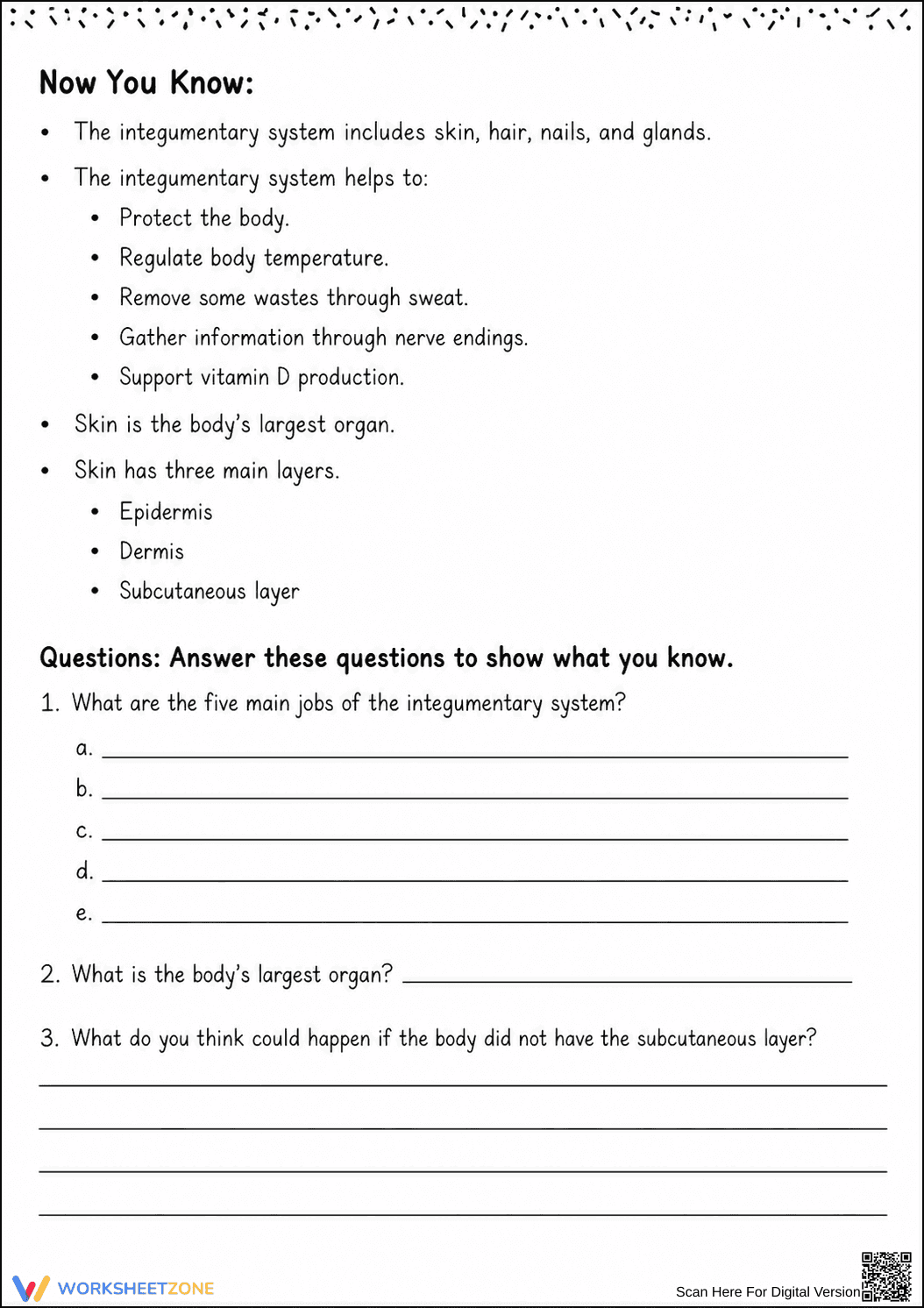
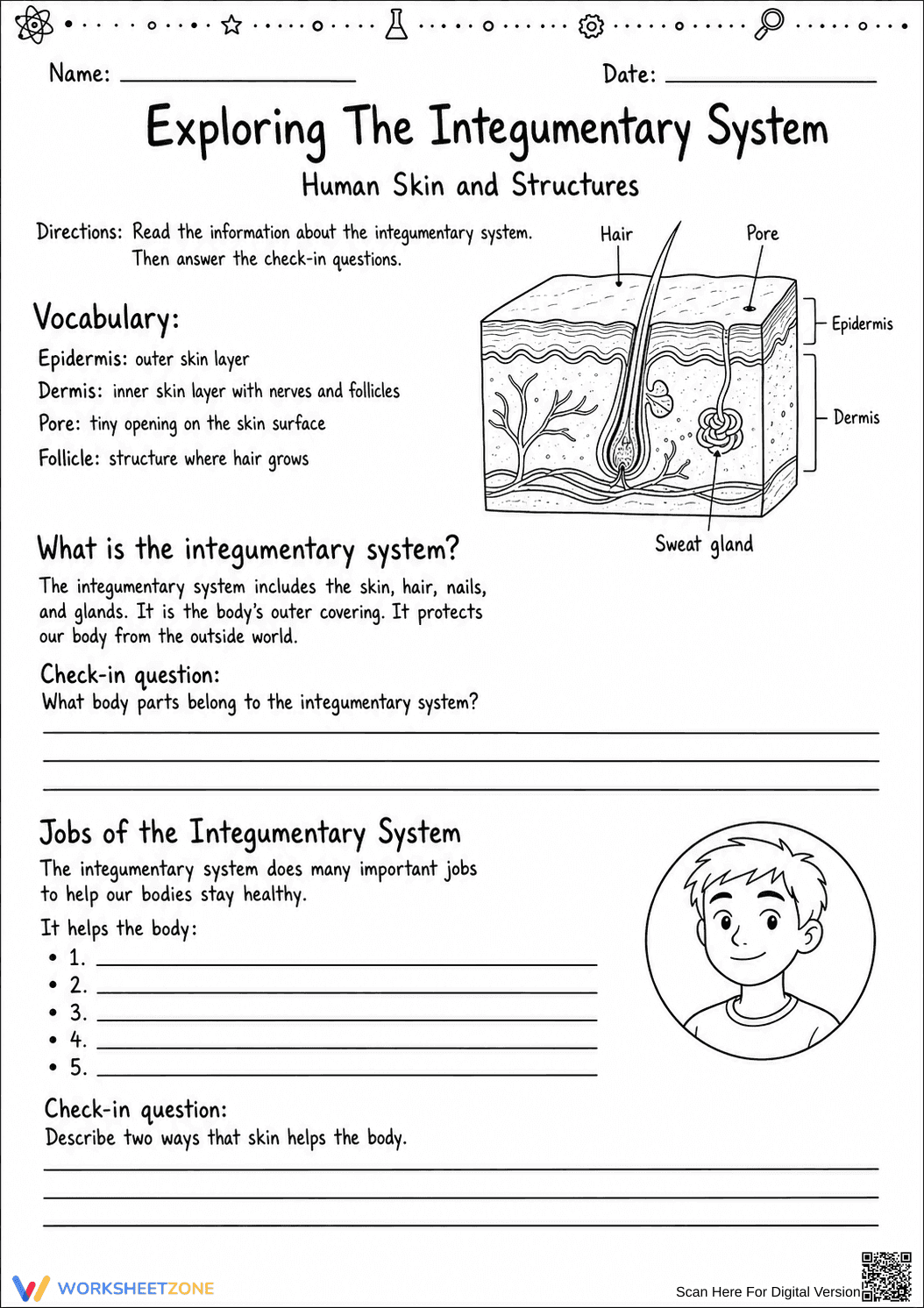
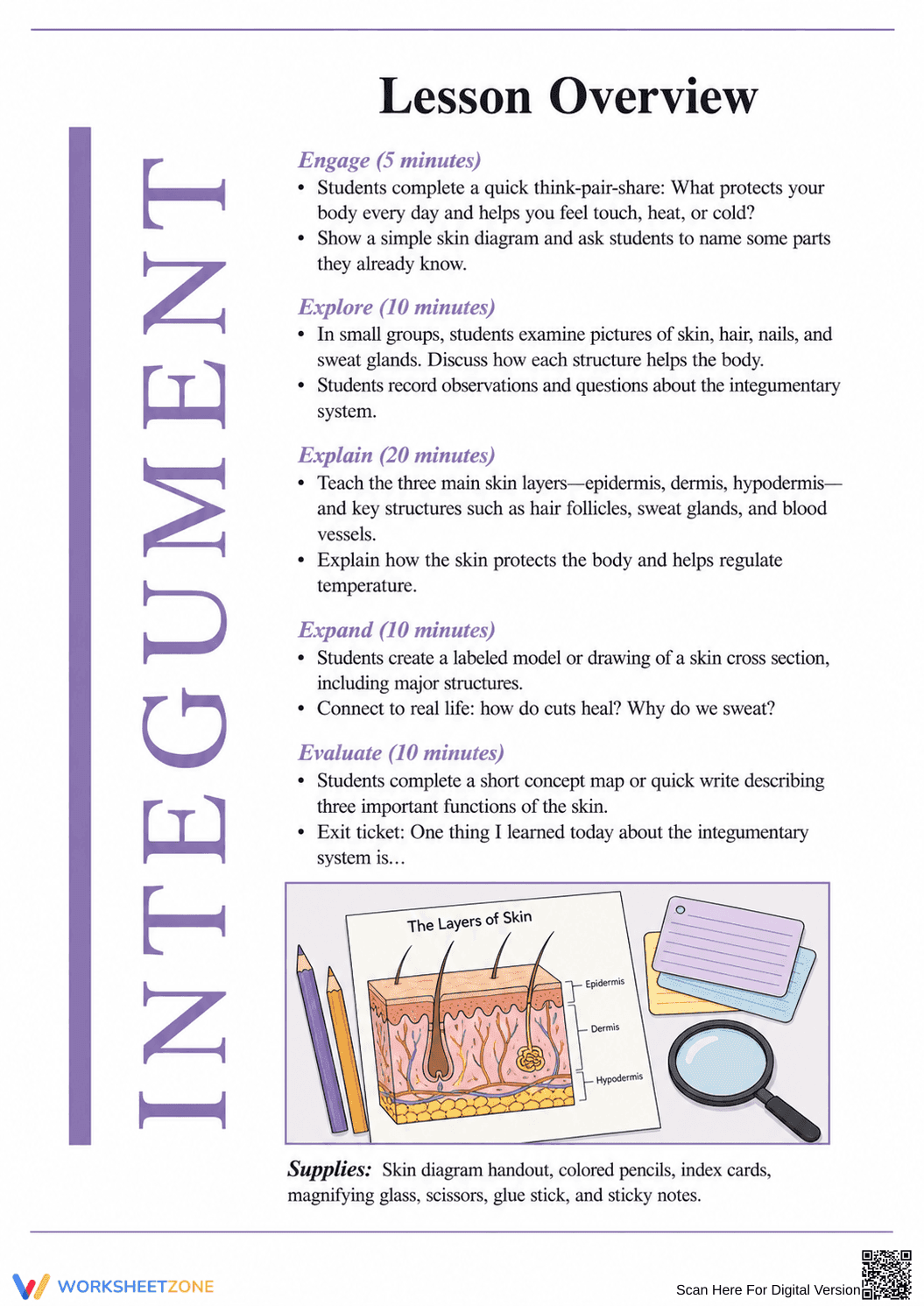
This five-page packet features detailed black-and-white cross-section diagrams of skin layers, clear vocabulary definitions, and informative reading passages. Students will encounter a mix of short-answer, fill-in-the-blank, and multiple-choice check-in questions strategically placed after each reading section to ensure immediate comprehension. A complete answer key is provided to make grading fast and accurate.
Designed for maximum efficiency, this resource requires virtually zero teacher setup:
- Print (1 minute): The black-and-white formatting ensures crisp, clear copies without draining expensive school ink.
- Distribute (1 minute): Hand out the packet as a complete self-contained lesson or break it up into daily warm-ups.
- Review (0 minutes): Use the included answer key to quickly check student work or allow for peer grading.
With under two minutes of total prep time, this packet is an ideal emergency sub plan or a reliable independent study assignment.
This resource is carefully aligned to MS-LS1-3, requiring students to use evidence to explain how the body is a system of interacting subsystems composed of groups of cells. It specifically highlights how the integumentary system works with the nervous and circulatory systems to maintain homeostasis. Both standard codes can be copied directly into lesson plans, IEP goals, or district curriculum mapping tools.
Introduce this packet during the core instruction phase of a human body systems unit. Teachers can use the first page as a guided reading activity, reading aloud and labeling the skin diagram together, before releasing students to complete the remaining pages independently. As a formative assessment tip, circulate while students answer the check-in questions on thermoregulation to quickly identify any misconceptions about blood vessel dilation. Expect the entire packet to take between 30 and 45 minutes to complete.
This resource is primarily designed for 6th and 7th-grade general science students. The embedded vocabulary and chunked reading sections offer built-in differentiation for students who struggle with dense textbook chapters. It pairs perfectly with a hands-on lab about body temperature or a 3D skin model building activity.
Aligning instructional materials to MS-LS1-3 ensures students can effectively explain how body subsystems interact to function. According to a ScienceDirect TpT Analysis, providing students with integrated reading and question sets significantly improves their retention of complex anatomical vocabulary compared to isolated memorization tasks. When students engage with chunked informational text and immediately apply their knowledge through targeted check-in questions, they build stronger cognitive connections regarding physiological processes like thermoregulation and Vitamin D synthesis. This structured approach to scientific literacy not only supports immediate lesson objectives but also builds the foundational critical thinking skills required for advanced high school biology courses. By utilizing comprehensive, self-contained packets, educators can maintain high academic rigor while simultaneously reducing their daily preparation burden, ensuring that every minute of classroom time is maximized for student learning and engagement.


