


























Views
Downloads

Essential Electromagnetic Spectrum Guide | Grades 8-12
Paste this activity's link or code into your existing LMS (Google Classroom, Canvas, Teams, Schoology, Moodle, etc.).
Students can open and work on the activity right away, with no student login required.
You'll still be able to track student progress and results from your teacher account.
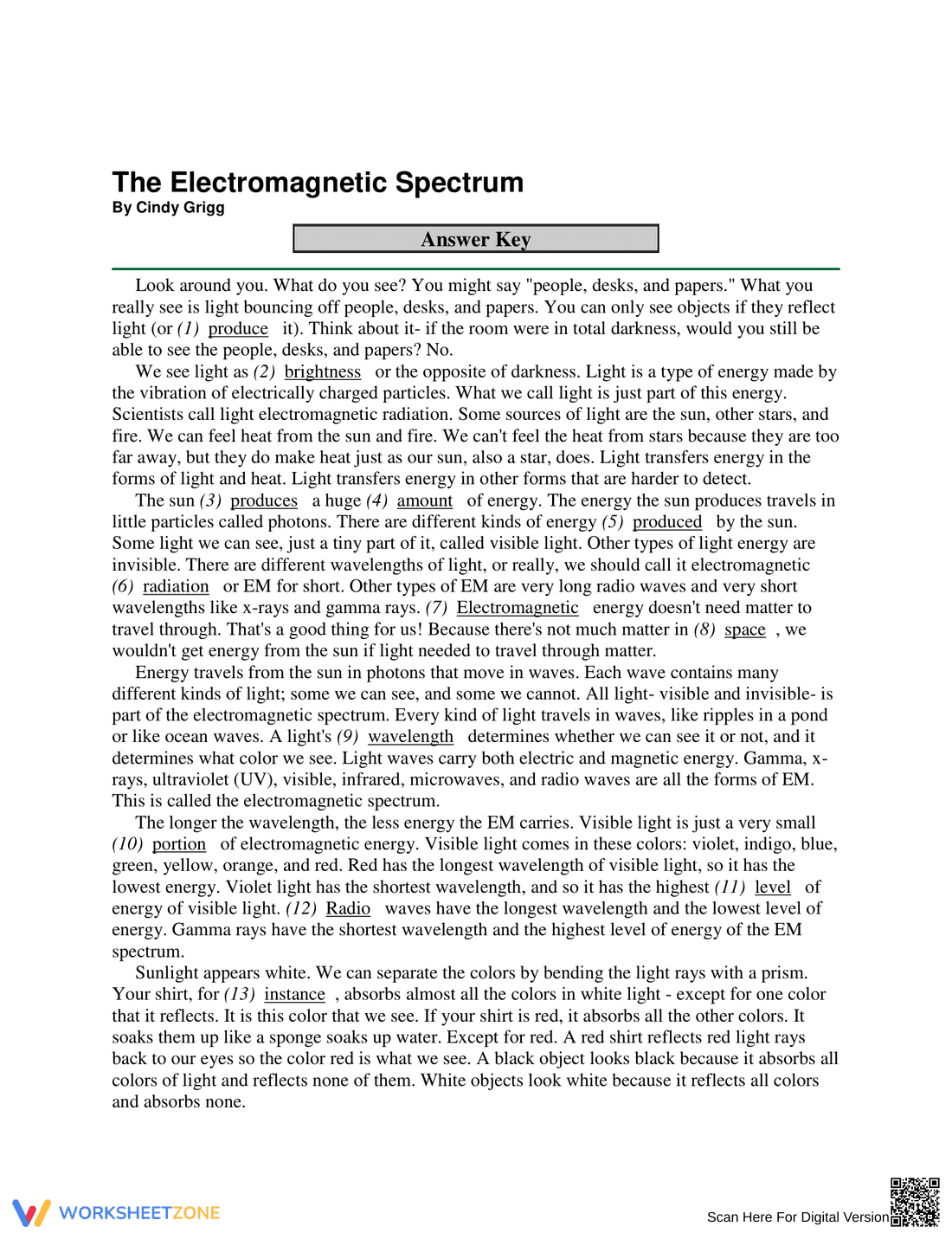
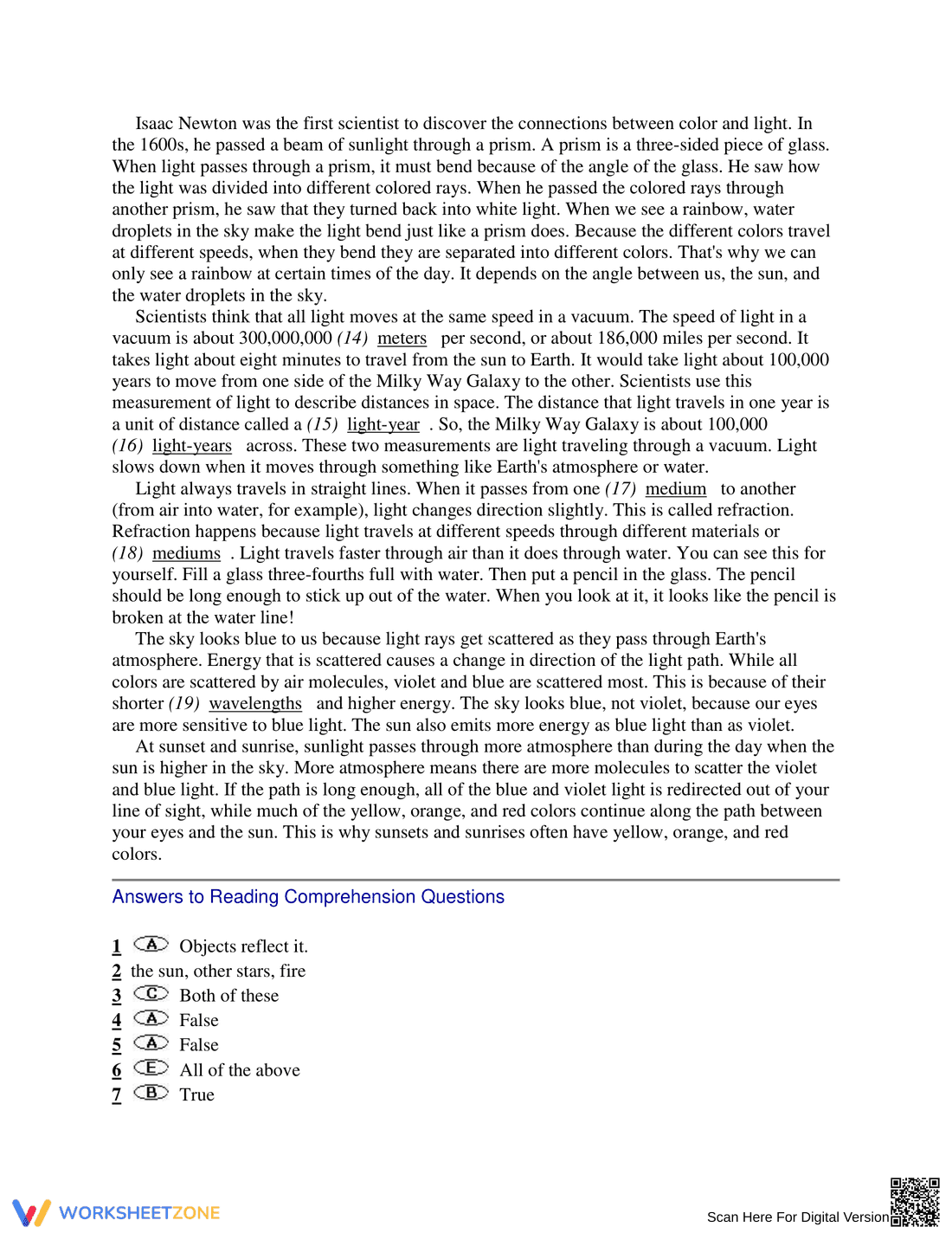
This comprehensive science packet helps students master the properties of light and the electromagnetic spectrum. By analyzing wave energy, refraction, and the visible light spectrum, learners build a foundational understanding of how energy transfers through space. This resource ensures students can distinguish between different EM waves and explain the physics of color.
At a Glance
- Grade: 8-12 · Subject: Physics
- Standard:
HS-PS4-1— Use mathematical representations to support a claim regarding relationships among frequency, wavelength, and speed.- Skill Focus: EM Spectrum Properties
- Format: 15 pages · 33 tasks · Answer key included · PDF
- Best For: Sub plans and independent practice
- Time: 45–60 minutes
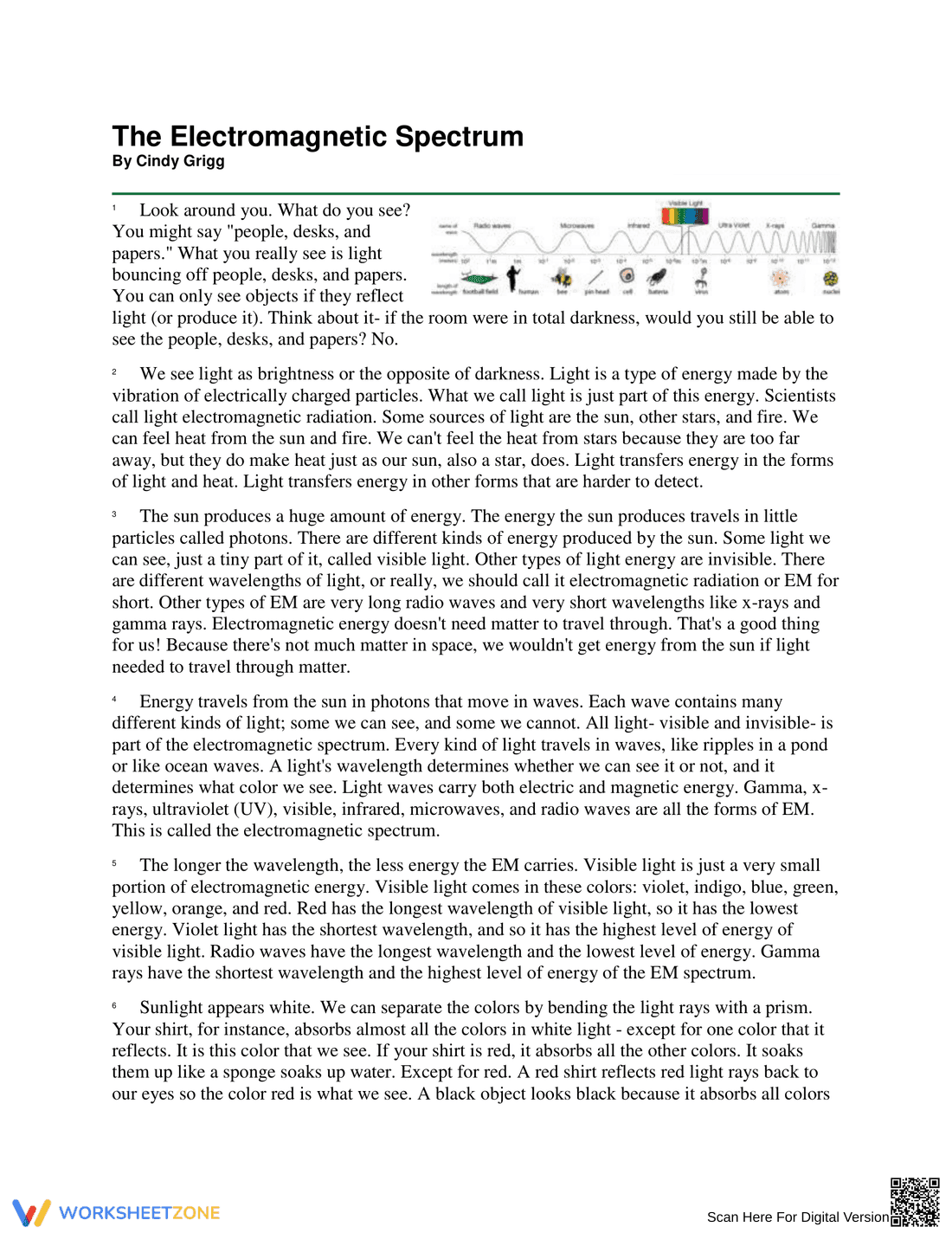
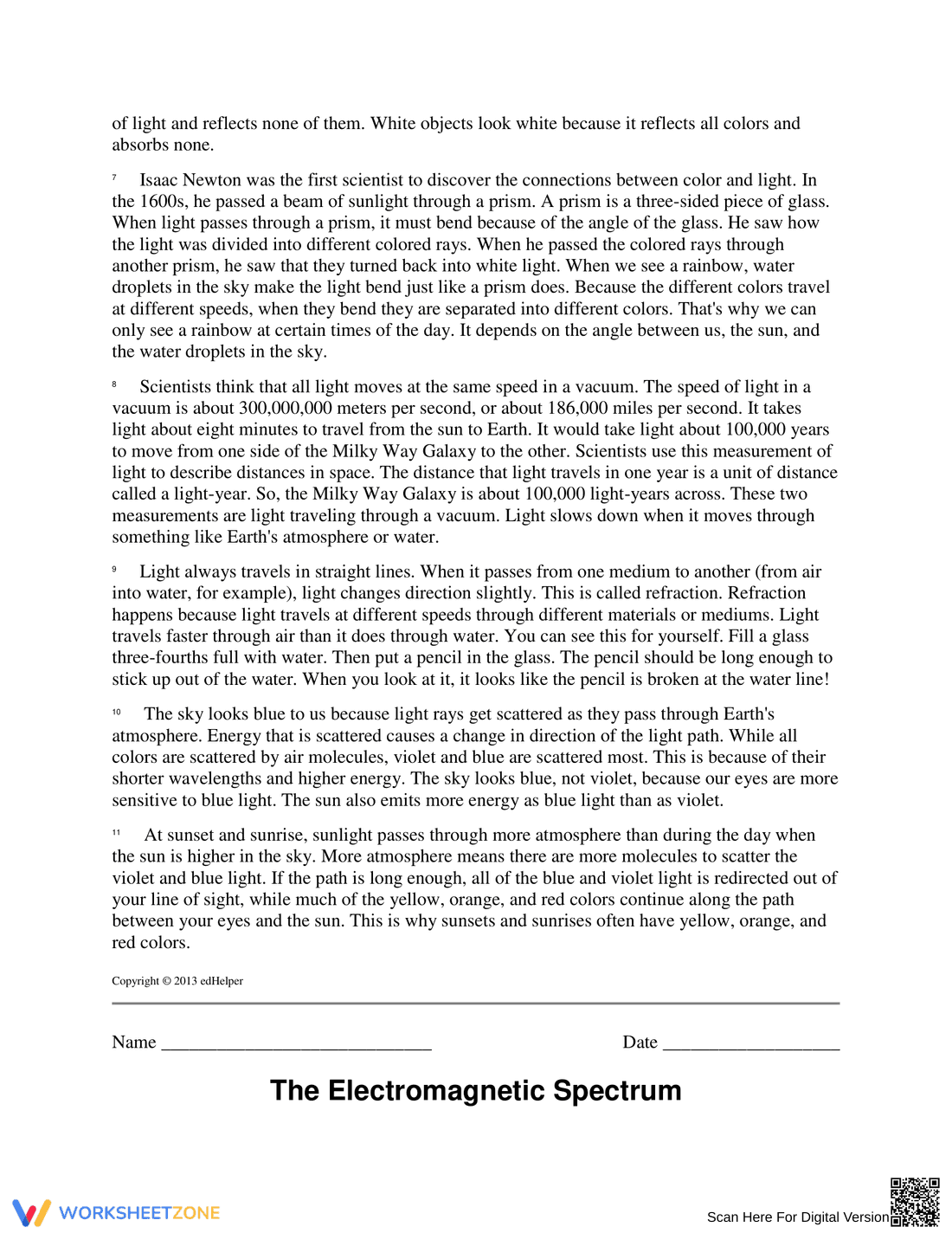
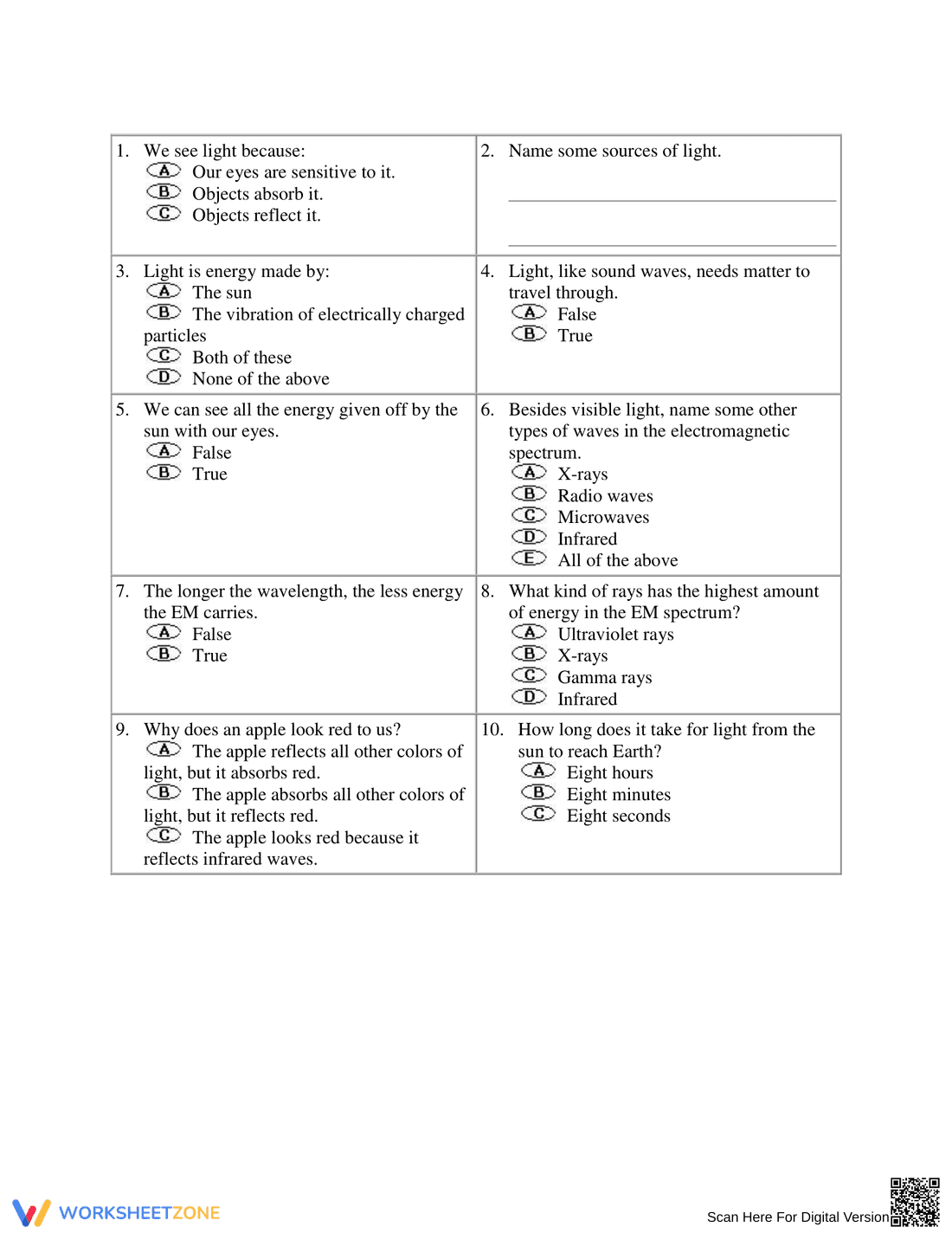
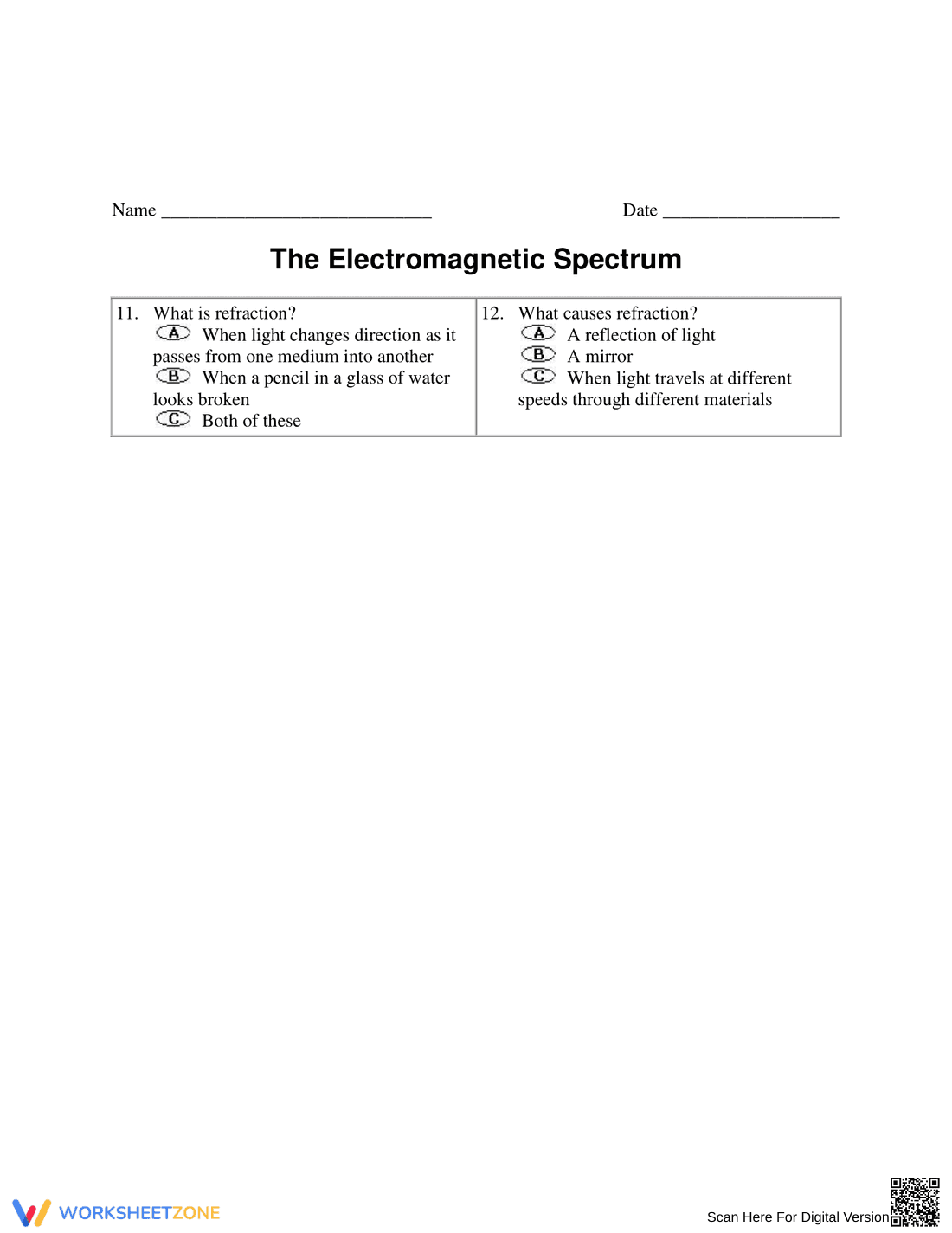
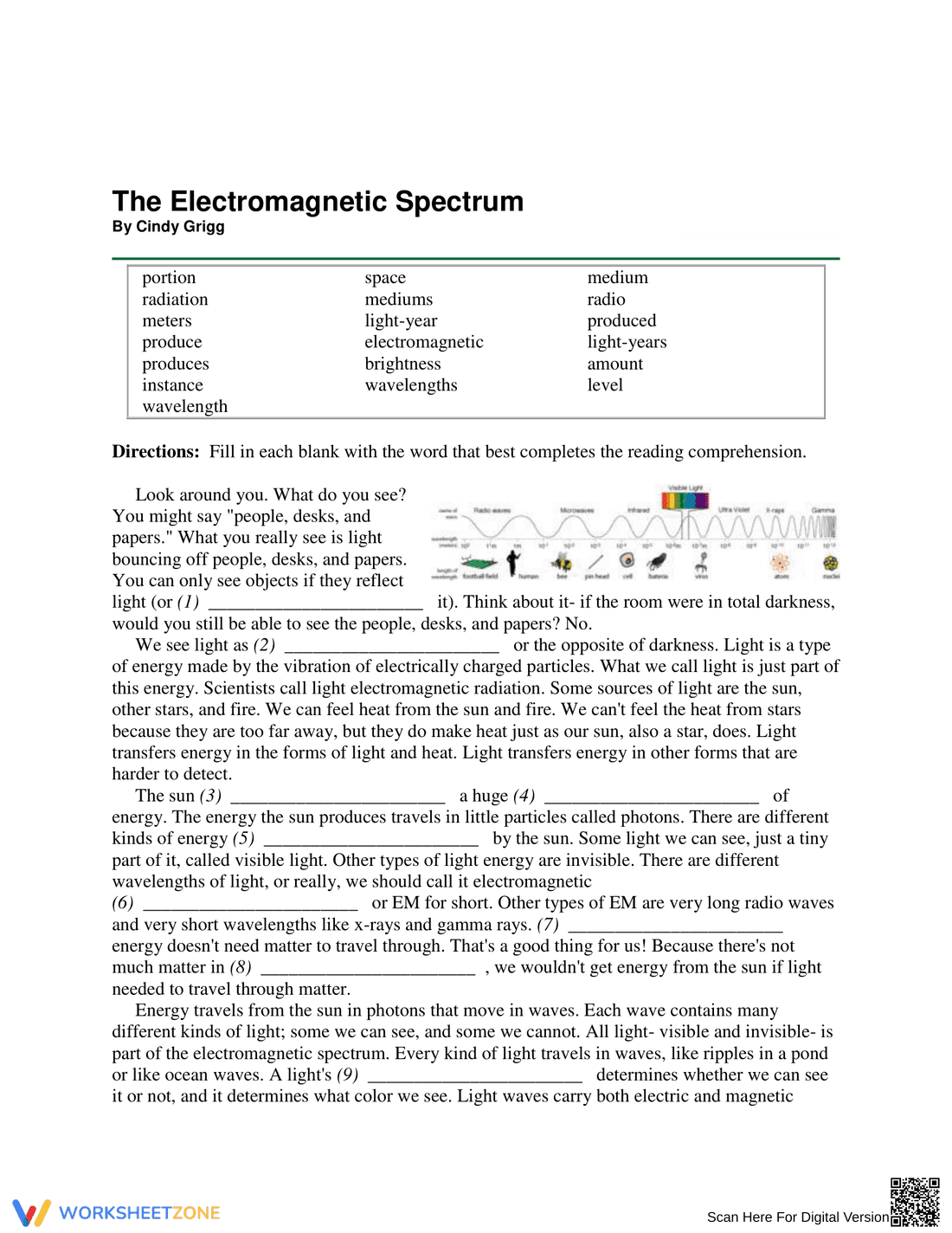
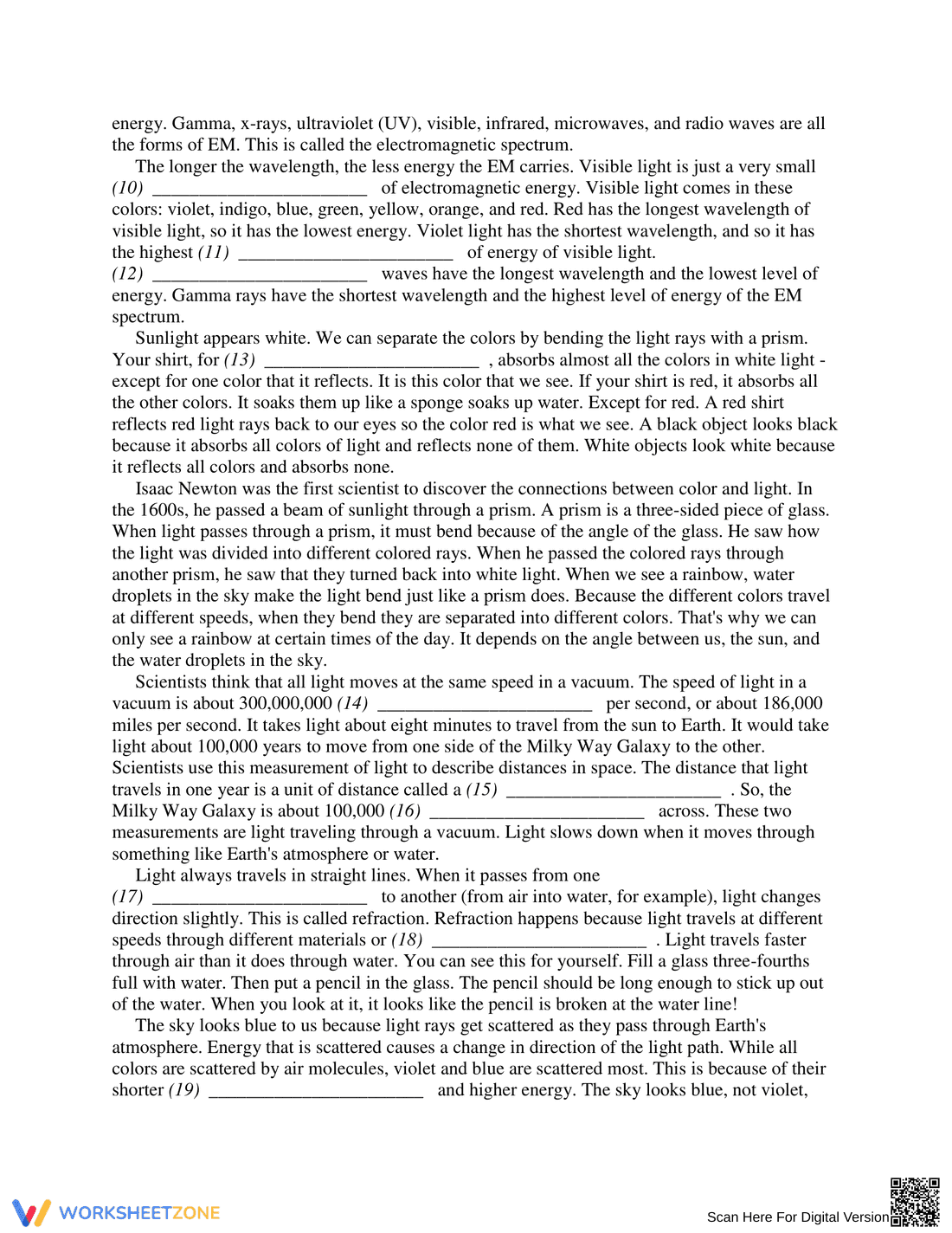
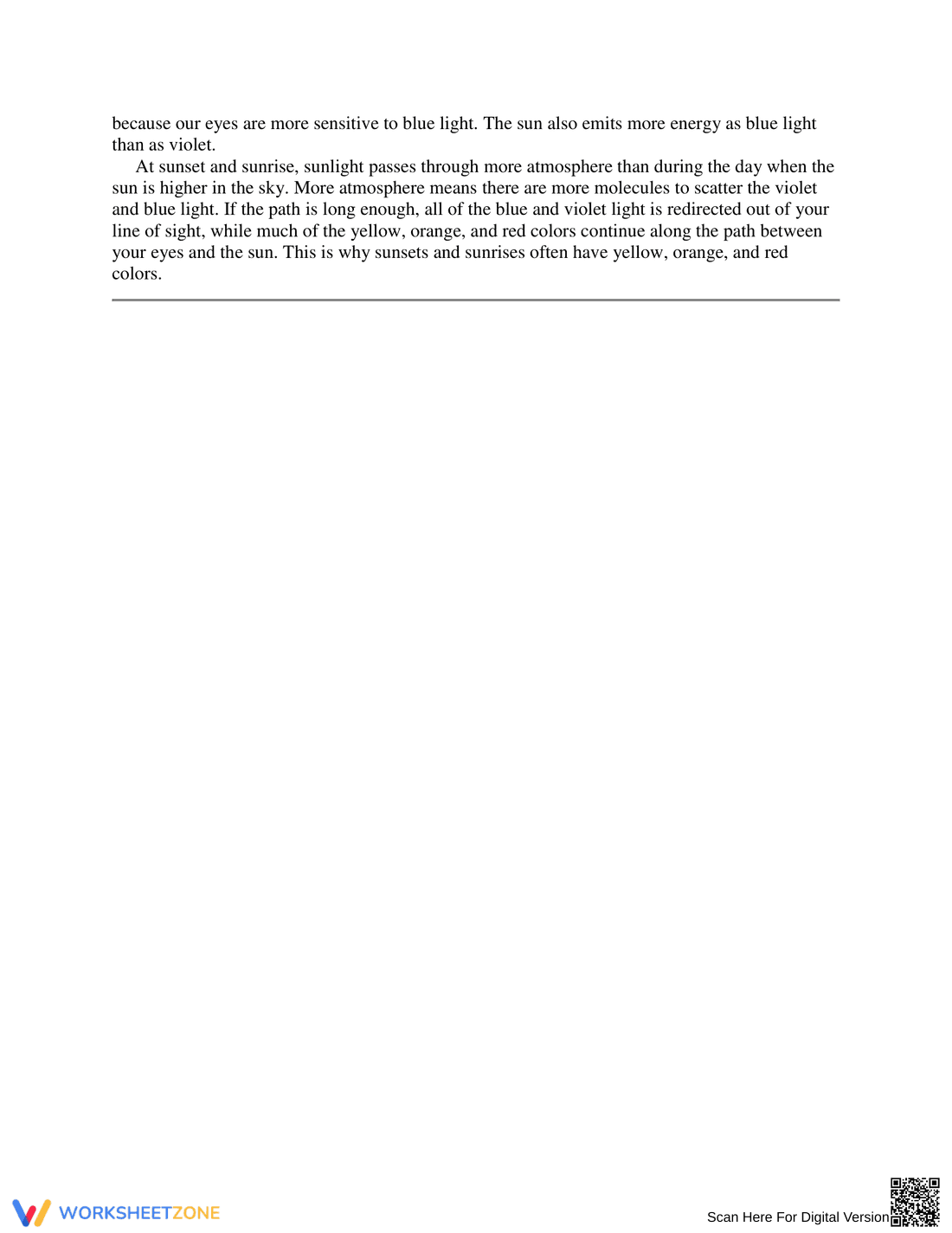
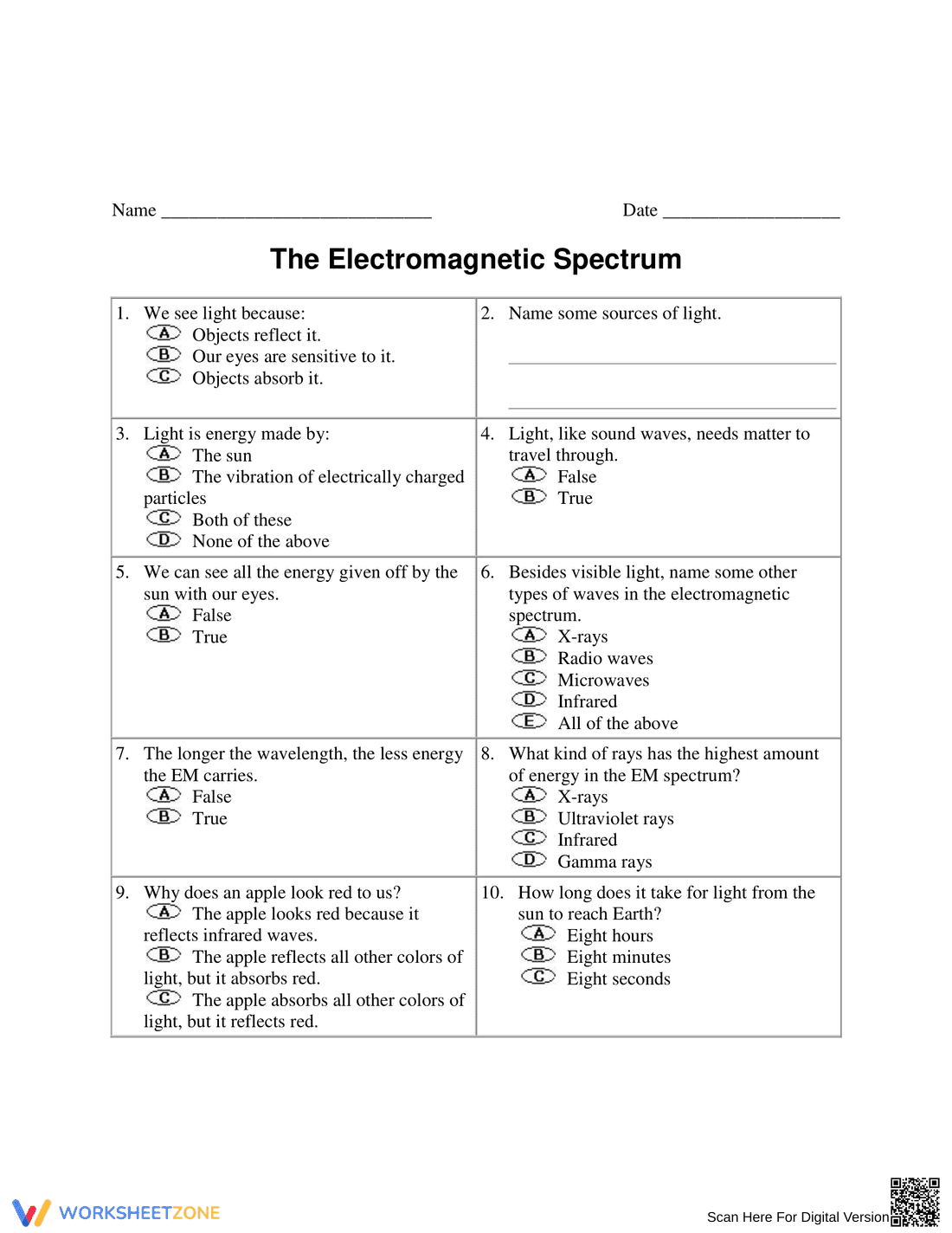
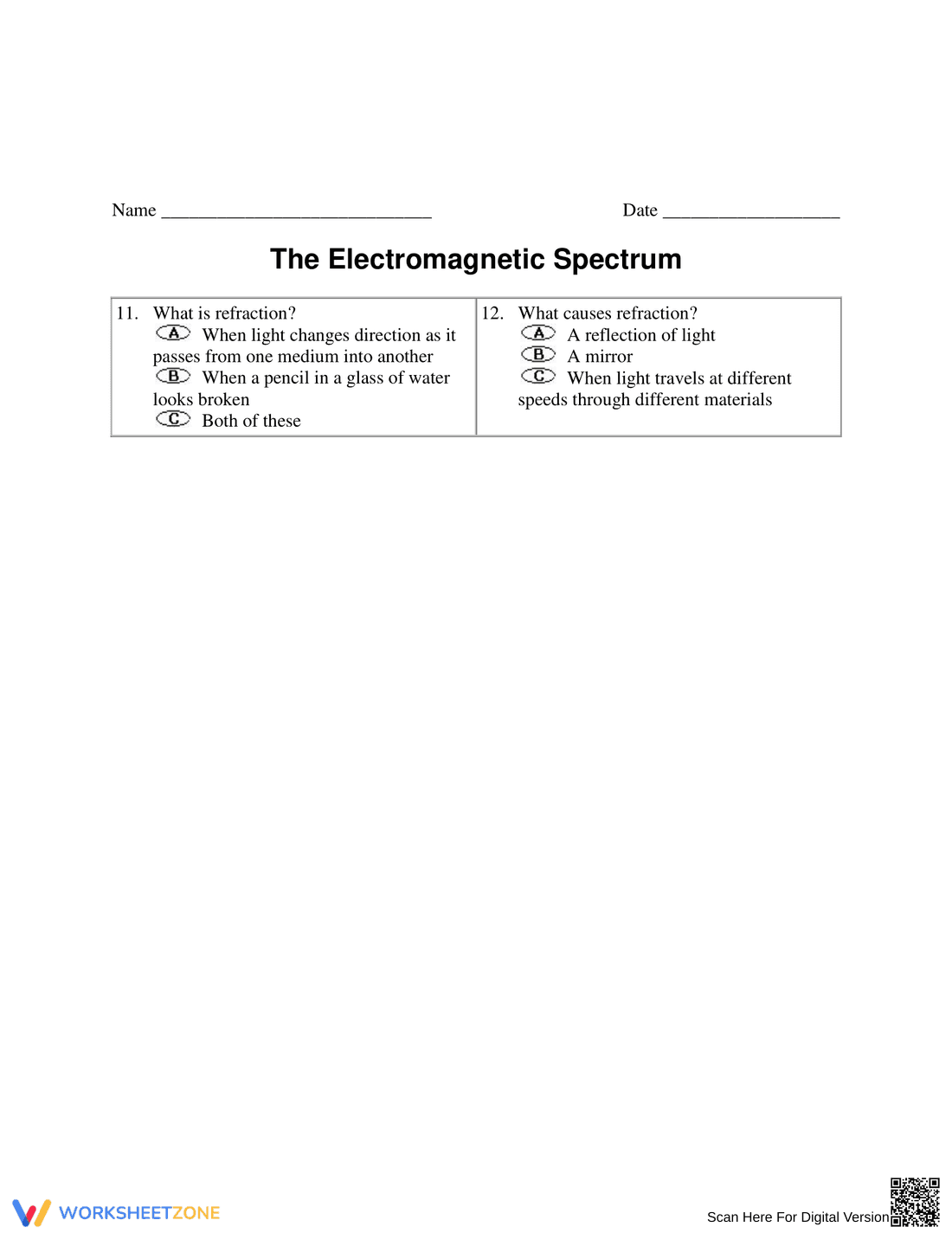
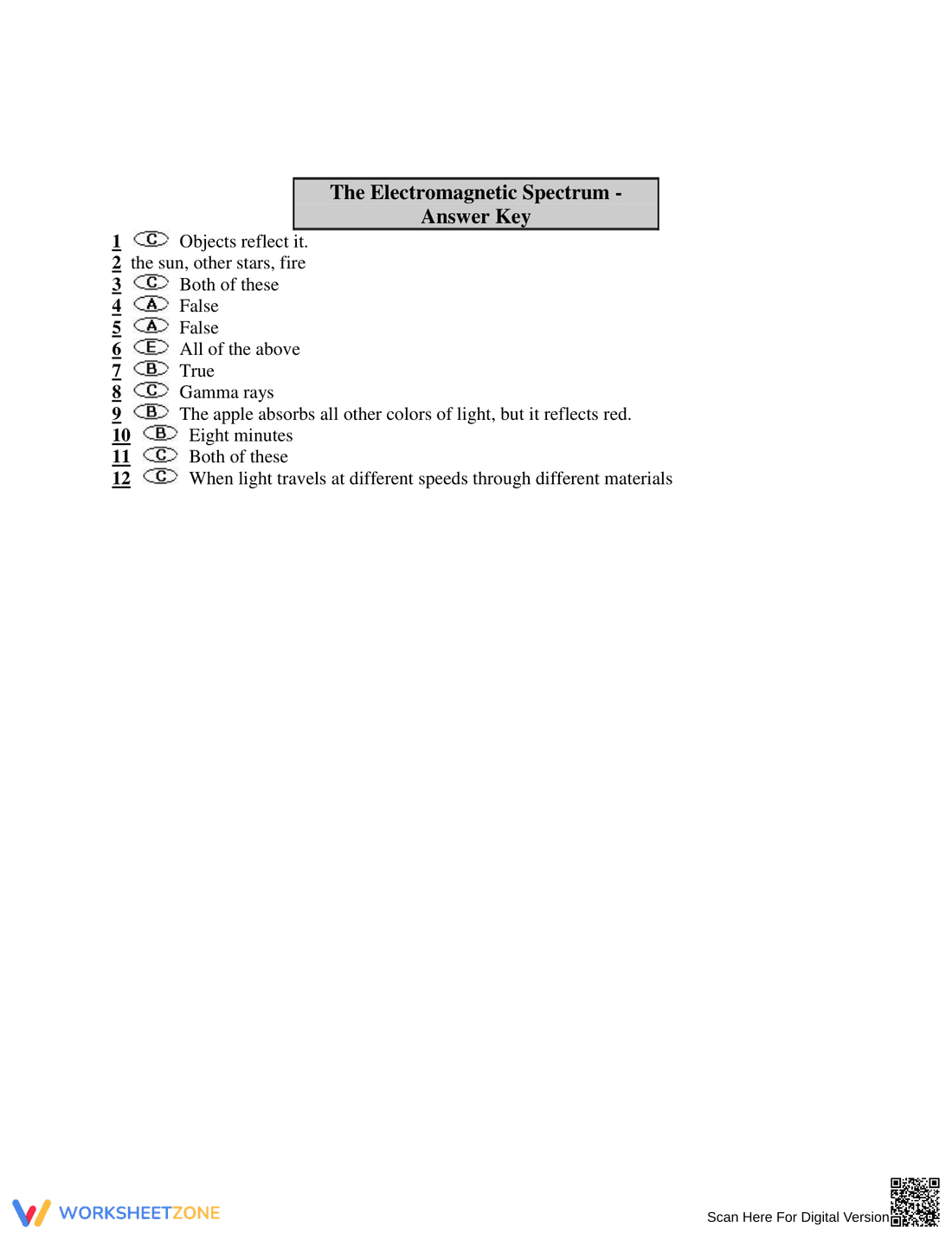
The packet contains a detailed multi-paragraph reading passage that explains photons, wavelengths, and the history of light science. It features 12 multiple-choice assessment questions, two extended-response writing prompts for deeper synthesis, and a 19-blank cloze reading activity to reinforce vocabulary. A full answer key is provided for all sections to facilitate quick grading.
Zero-Prep Workflow
- Print: Select the reading and assessment pages for your specific class needs (30 seconds).
- Distribute: Hand out the 15-page packet to students for individual or partner work (1 minute).
- Review: Use the included answer key to grade or facilitate a peer-review session (5 minutes).
Total teacher preparation time is under two minutes, making this an ideal solution for emergency sub plans or busy instructional days where high-quality content is required without the setup.
Standards Alignment
This resource aligns with `HS-PS4-1`. Students explore how "the longer the wavelength, the less energy the EM carries," directly addressing the relationship between wave characteristics and energy. Both standard codes can be copied directly into lesson plans, IEP goals, or district curriculum mapping tools.
How to Use It
Use this as a primary instructional text during a unit on waves. After direct instruction on the EM spectrum, assign the cloze activity as a formative check. Alternatively, use the multiple-choice section as a summative quiz to gauge mastery of refraction and reflection concepts. Expected completion typically takes 50 minutes.
Who It's For
This is designed for middle and high school physics or physical science students. It is particularly effective for learners who benefit from text-based evidence and structured vocabulary reinforcement. Pair this with a prism demonstration or an interactive wave simulator for a complete learning experience.
The study of the electromagnetic spectrum is a cornerstone of secondary physical science, requiring students to move from concrete observations of light to abstract understandings of invisible wave energy. According to the RAND AIRS 2024 report, high-quality science literacy materials that integrate reading comprehension with technical assessment significantly improve student retention of complex physics concepts. This worksheet facilitates that integration by pairing a 12-question assessment with a 19-task cloze activity, ensuring students interact with the standard HS-PS4-1 multiple times across different cognitive levels. By requiring students to explain refraction and the energy-wavelength relationship in their own words, the resource moves beyond rote memorization toward true conceptual mastery. This structured approach aligns with evidence-based practices for science instruction, providing the necessary scaffolding for diverse learners to access high-level physics content independently.


