


























Views
Downloads
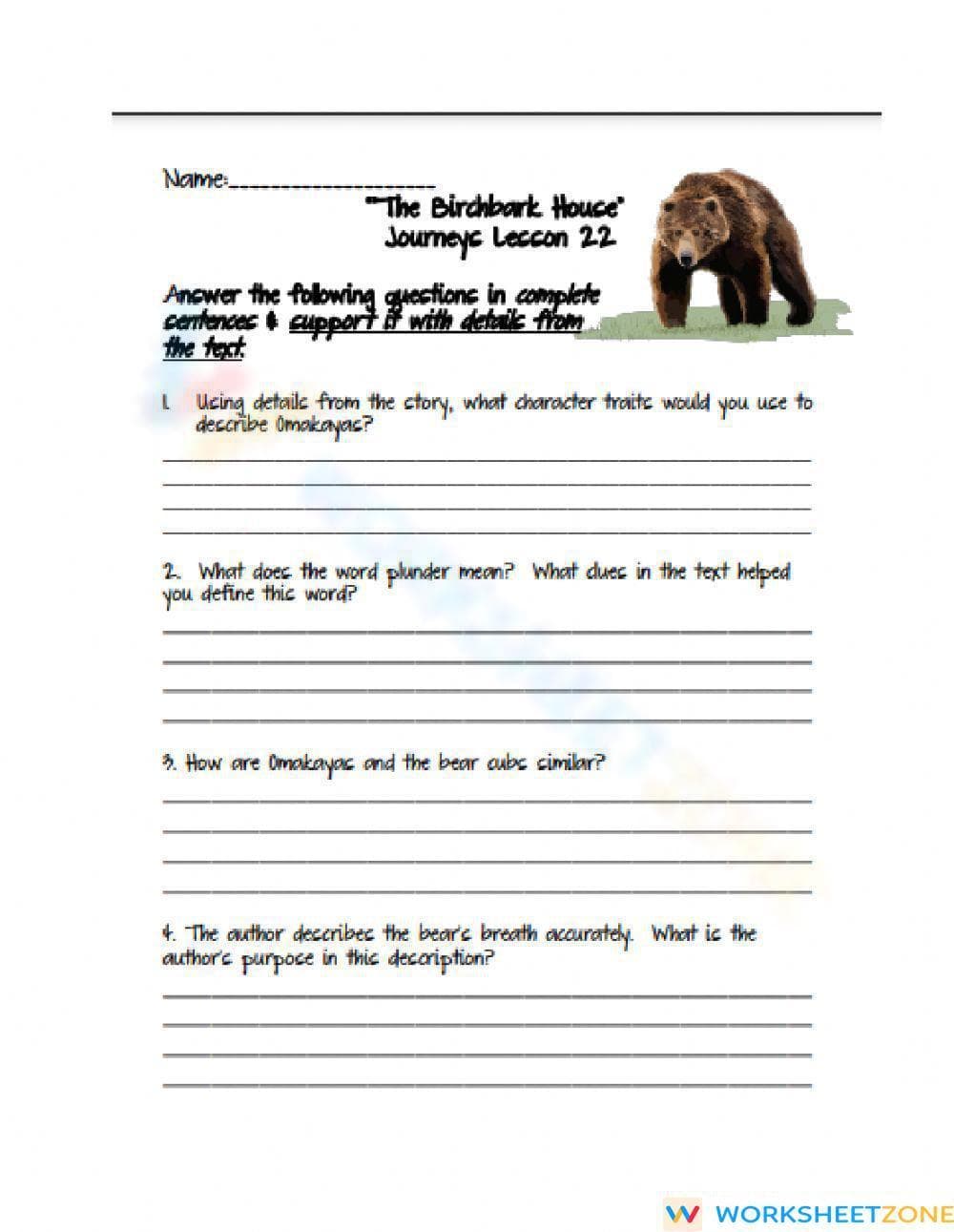
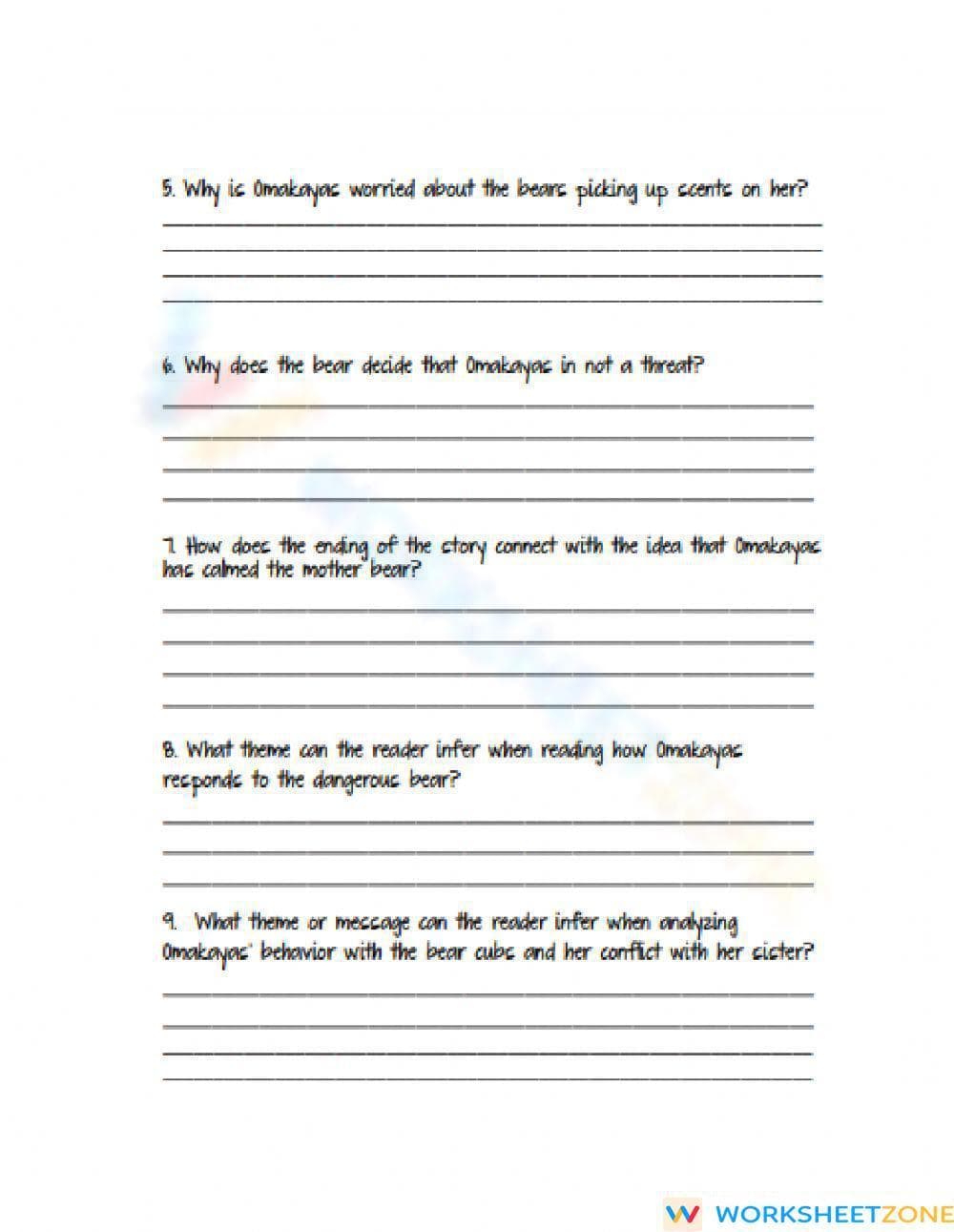

The Birchbark House Worksheet | Grade 5-6 Aligned
Paste this activity's link or code into your existing LMS (Google Classroom, Canvas, Teams, Schoology, Moodle, etc.).
Students can open and work on the activity right away, with no student login required.
You'll still be able to track student progress and results from your teacher account.
This printable "The Birchbark House" worksheet provides Grade 5 and Grade 6 students with a rigorous analysis of Journeys Lesson 22. By answering nine text-based questions, learners master character trait identification, vocabulary acquisition through context clues, and thematic inference. This essential resource ensures students support every claim with specific evidence directly from Louise Erdrich's narrative.
At a Glance
- Grade: 5-6 · Subject: ELA Literature
- Standard:
CCSS.ELA-LITERACY.RL.5.1— Quote accurately from a text to support explicit explanations and logical inferences.- Skill Focus: Character Analysis & Inference
- Format: 2 pages · 9 problems · Answer key included · PDF
- Best For: Reading comprehension assessment and text-evidence practice.
- Time: 25–35 minutes
What's Inside
This two-page PDF focuses on deep reading strategies for "The Birchbark House." It features nine open-ended questions that require complete sentence responses and evidence from the text. The layout includes generous writing lines for students to elaborate on their answers. Tasks cover character traits for Omakayas, identifying the meaning of the word "plunder" using context clues, and analyzing the author's purpose regarding descriptive language.
Skill Progression
- Guided Practice: Tasks 1-4 introduce character trait identification and comparison with explicit prompts to use story details and support answers with textual evidence.
- Supported Practice: Questions 5-7 challenge students to define tier-two vocabulary using nearby text clues and analyze authorial intent regarding specific sensory descriptions.
- Independent Practice: Tasks 8-9 require students to synthesize the entire reading to infer deep-seated themes and messages about conflict and character growth.
This progression follows a gradual release of responsibility model, moving from concrete details to abstract thematic analysis.
Standards Alignment
The primary alignment is CCSS.ELA-LITERACY.RL.5.1, which requires students to quote accurately from a text when explaining what the text says explicitly. Additionally, the worksheet supports RL.5.3 by asking students to compare characters and describe traits using specific details. Both standard codes can be copied directly into lesson plans, IEP goals, or district curriculum mapping tools.
How to Use It
Use this worksheet as a formative assessment during or after reading the Journeys Lesson 22 selection. For a high-impact instructional moment, have students complete the first three questions in small groups to practice "fishing" for evidence before moving to independent work for the inference-based theme questions. Teachers should look for students correctly identifying the "clues" that define the word "plunder." This is ideal for 30 minutes of focused classroom work.
Who It's For
This resource is designed for fifth and sixth-grade students engaging with complex literary texts. It is particularly effective for students who need structured practice in moving beyond surface-level plot summary toward analytical thinking. It pairs naturally with an anchor chart on character traits or a direct instruction lesson on citing textual evidence to support inferences.
Drawing from a RAND AIRS 2024 study, this worksheet boosts reading comprehension by emphasizing 'text-mining' and evidence-based justification, moving beyond simple recall. All nine tasks align with CCSS.ELA-LITERACY.RL.5.1, encouraging direct engagement with "The Birchbark House." Focusing on Omakayas’ character development and vocabulary like "plunder" through context clues, it builds cognitive stamina for literary analysis. This evidence-centered practice is crucial for ELA achievement, aligning with current research on effective literacy scaffolding and standards-aligned mastery, making it a confident addition to any curriculum.


