


























Views
Downloads

Printable Beginning Sounds (la-, pl-, sh-) Worksheet
Paste this activity's link or code into your existing LMS (Google Classroom, Canvas, Teams, Schoology, Moodle, etc.).
Students can open and work on the activity right away, with no student login required.
You'll still be able to track student progress and results from your teacher account.
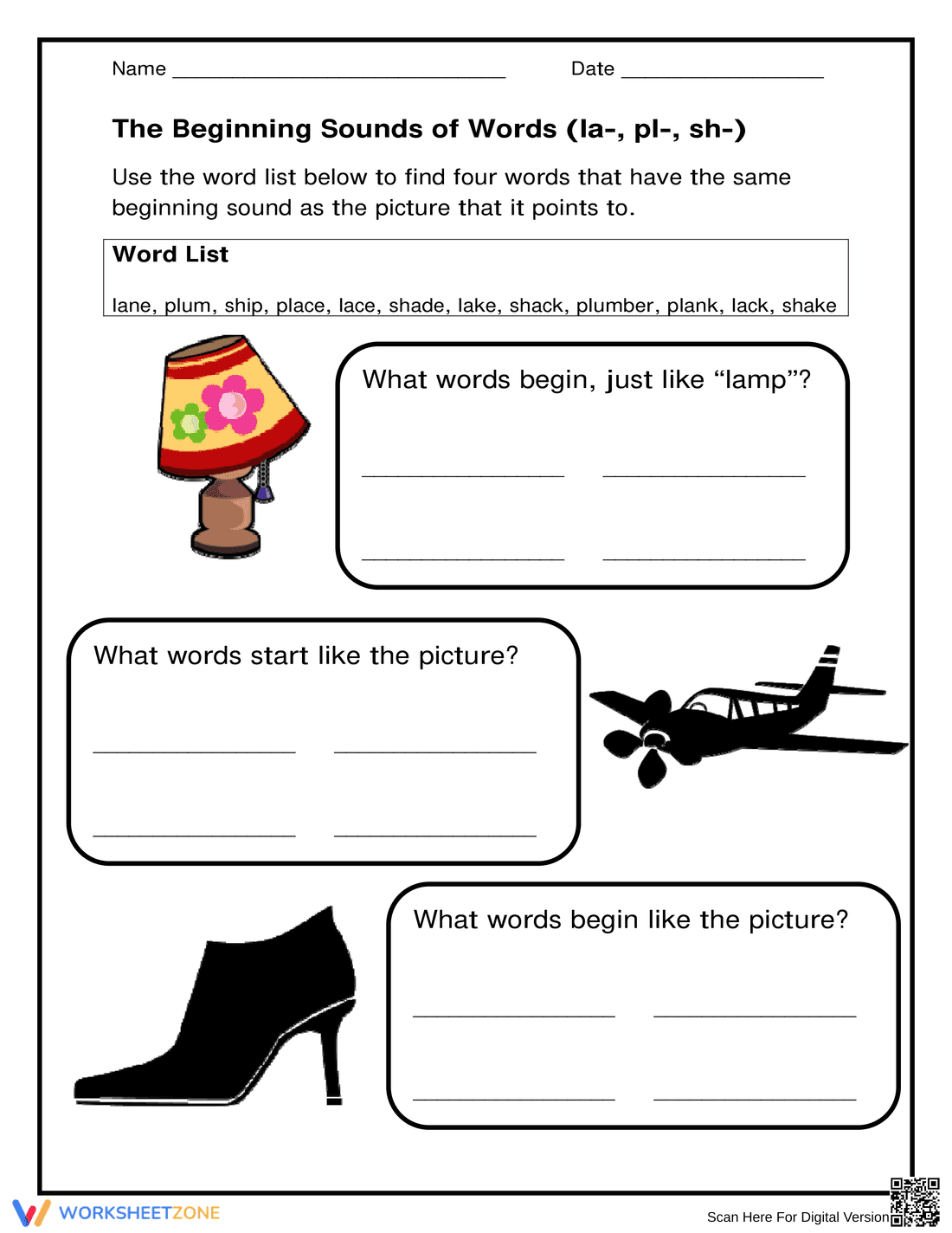
This Grade 1 phonics worksheet focuses on identifying and classifying beginning sounds using common blends and digraphs. Students analyze a word list to categorize twelve specific terms based on their initial phonemes: la-, pl-, and sh-. This activity strengthens phonological awareness and decoding skills, leading to improved reading fluency and spelling accuracy in early learners.
At a Glance
- Grade: 1 · Subject: English Language Arts
- Standard:
CCSS.ELA-LITERACY.RF.1.3.B— Decode regularly spelled one-syllable words and recognize initial consonant sounds- Skill Focus: Initial Consonant Blends and Digraphs (la, pl, sh)
- Format: 1 page · 12 problems · Answer key included · PDF
- Best For: Literacy centers and independent practice
- Time: 10–15 minutes
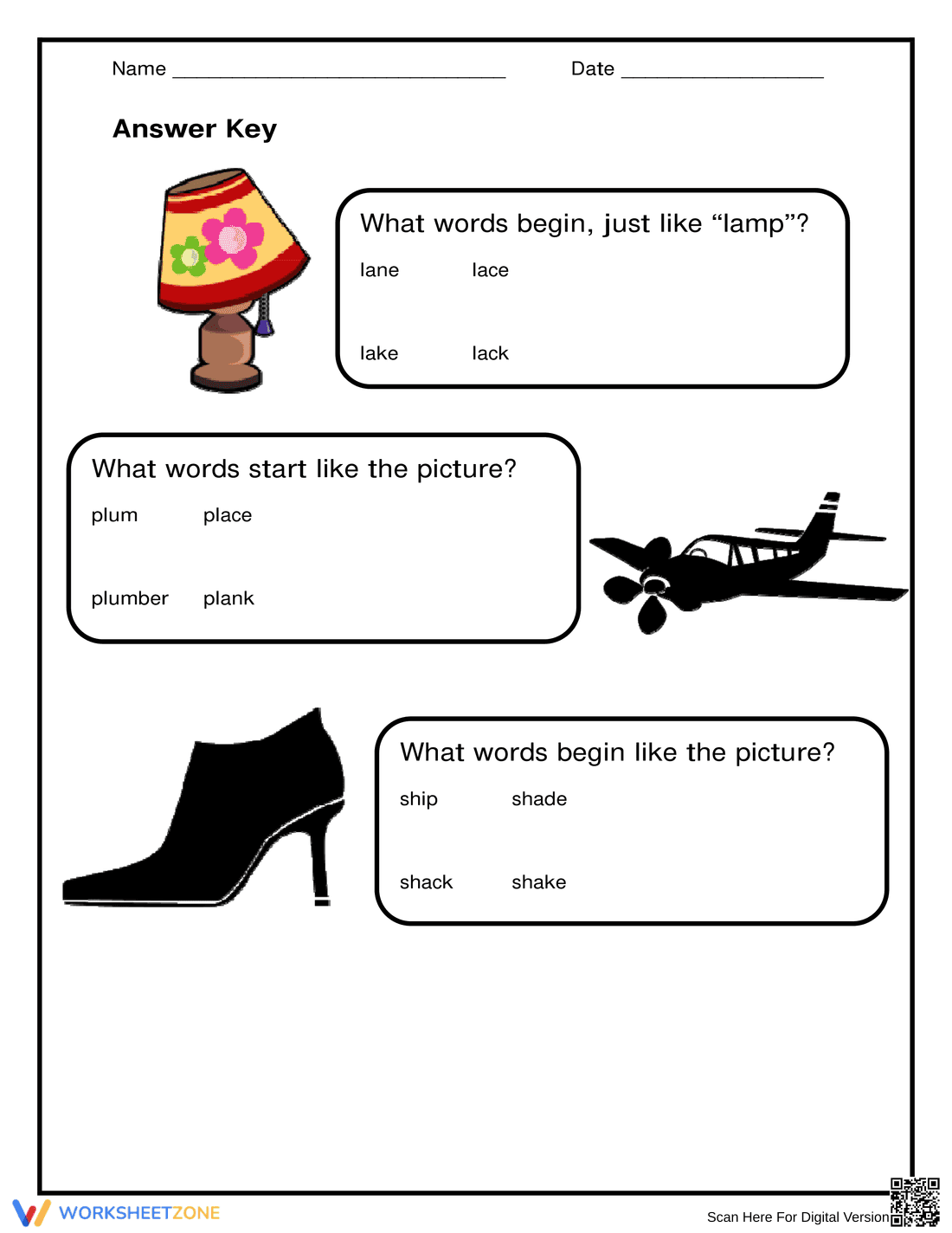
Inside this resource, you will find a single-page activity featuring a curated word list of twelve items and three distinct categorization zones. Each zone is anchored by a visual prompt—a lamp, a plane, and a shoe—to provide concrete context for the abstract sounds. The layout includes structured lines for organized student responses and clear instructions for identifying the specific beginning sounds required.
The zero-prep workflow for this resource is designed for maximum teacher efficiency. First, print the single PDF page in under thirty seconds. Next, distribute the sheets to your students, which takes approximately one minute. Finally, review the completed work using the provided answer key during a two-minute whole-class check or individual conference. Total preparation time remains well under two minutes, making it an ideal choice for emergency sub plans or bell-ringer activities.
This resource is aligned to CCSS.ELA-LITERACY.RF.1.3.B, which requires students to decode regularly spelled one-syllable words. By isolating the initial sounds of "lane," "plank," and "shade," students demonstrate mastery of phonemic segmentation and grapheme-phoneme correspondence. This standard code can be copied directly into lesson plans, IEP goals, or district curriculum mapping tools to ensure instructional compliance and track student mastery of foundational reading skills.
Use this worksheet as a formative assessment during a phonics unit on consonant blends. Before starting, display the "lamp" picture and ask students to orally brainstorm words that start the same way. During independent work time, observe students to see if they can segment the sounds without assistance from the provided word list. This provides an immediate data point on which students require further small-group intervention or more intensive phonemic awareness support.
This activity is designed for first-grade students but serves as an excellent intervention for second graders needing additional phonics support. It pairs naturally with an anchor chart displaying common "L-blends" and "SH" digraphs for visual reference. The visual cues help English Language Learners (ELL) bridge the gap between vocabulary recognition and phonemic categorization by providing recognizable images to anchor each sound category.
The mastery of initial consonant blends and digraphs is a critical milestone in early literacy development. According to research from Fisher & Frey (2014), explicit instruction in phonemic awareness, specifically focusing on how sounds map to letter patterns like CCSS.ELA-LITERACY.RF.1.3.B, significantly improves a student's ability to decode unfamiliar text. This worksheet targets the beginning sounds of la-, pl-, and sh-, which are foundational phonemes in the English language. By providing twelve structured tasks, students engage in high-repetition practice that moves them toward automaticity in sound recognition. The inclusion of visual scaffolds ensures that the cognitive load is focused on sound isolation rather than word meaning alone. Such targeted practice is essential for building the reading stamina required for more complex informational texts. Educators can confidently use this printable as a reliable tool for assessing a student's progress toward foundational reading standards.


