


























Views
Downloads

Essential Grade 2 Spelling Test: Term 3 Weekly Assessment
Paste this activity's link or code into your existing LMS (Google Classroom, Canvas, Teams, Schoology, Moodle, etc.).
Students can open and work on the activity right away, with no student login required.
You'll still be able to track student progress and results from your teacher account.
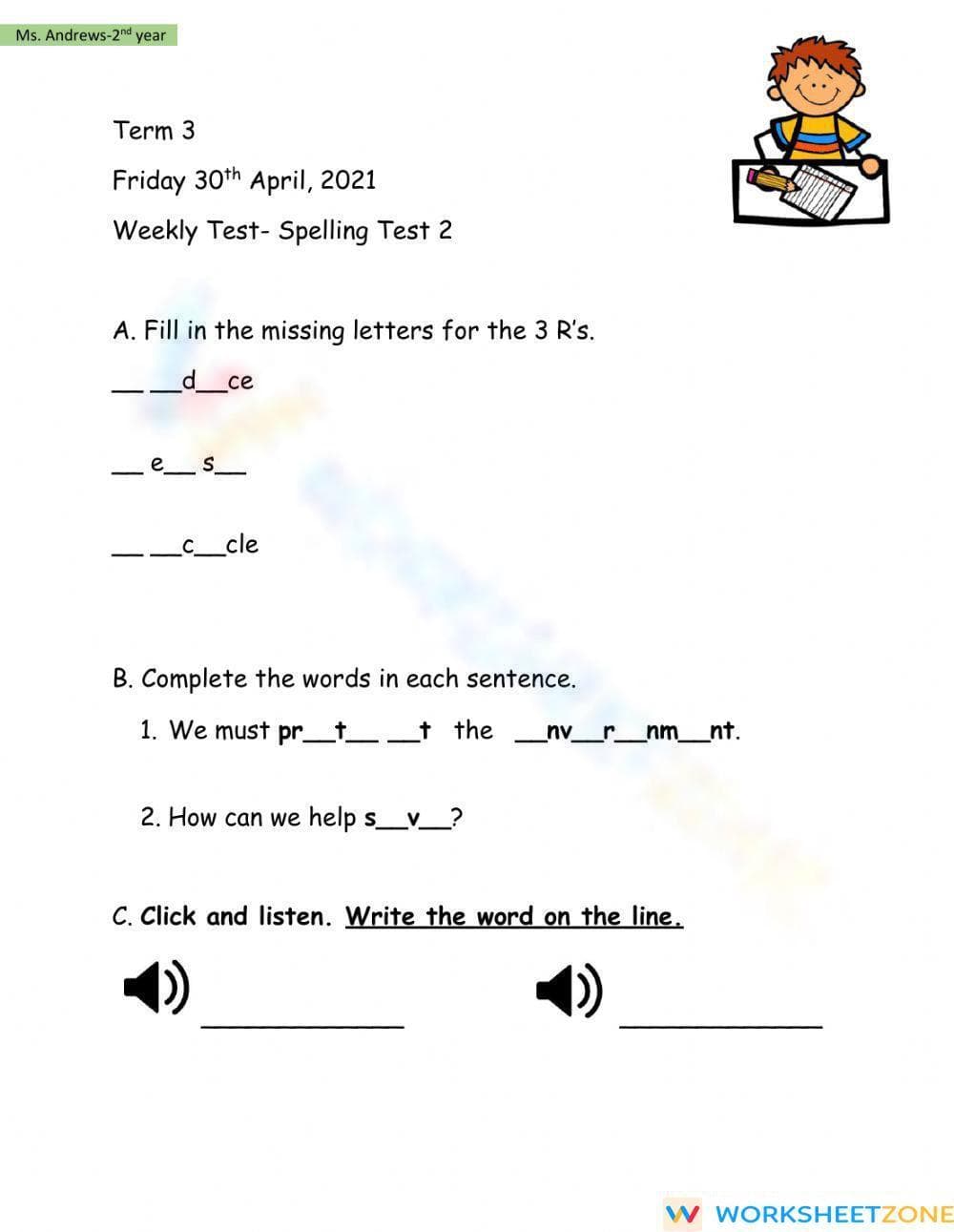
This essential Grade 2 spelling assessment provides a comprehensive way to evaluate student mastery of environmental vocabulary and phonetic spelling patterns. By combining contextual fill-in-the-blank exercises with audio-based dictation, the worksheet ensures students can both recognize and produce correctly spelled words within the framework of real-world sentences and auditory cues.
At a Glance
- Grade: Grade 2 · Subject: English Language Arts (ELA)
- Standard:
CCSS.ELA-LITERACY.L.2.2.D— Generalize learned spelling patterns when writing words- Skill Focus: Environmental Vocabulary & Phonetic Spelling
- Format: 2 pages · 12 problems · Answer key included · PDF
- Best For: Weekly spelling assessment or sub plans
- Time: 15–20 minutes
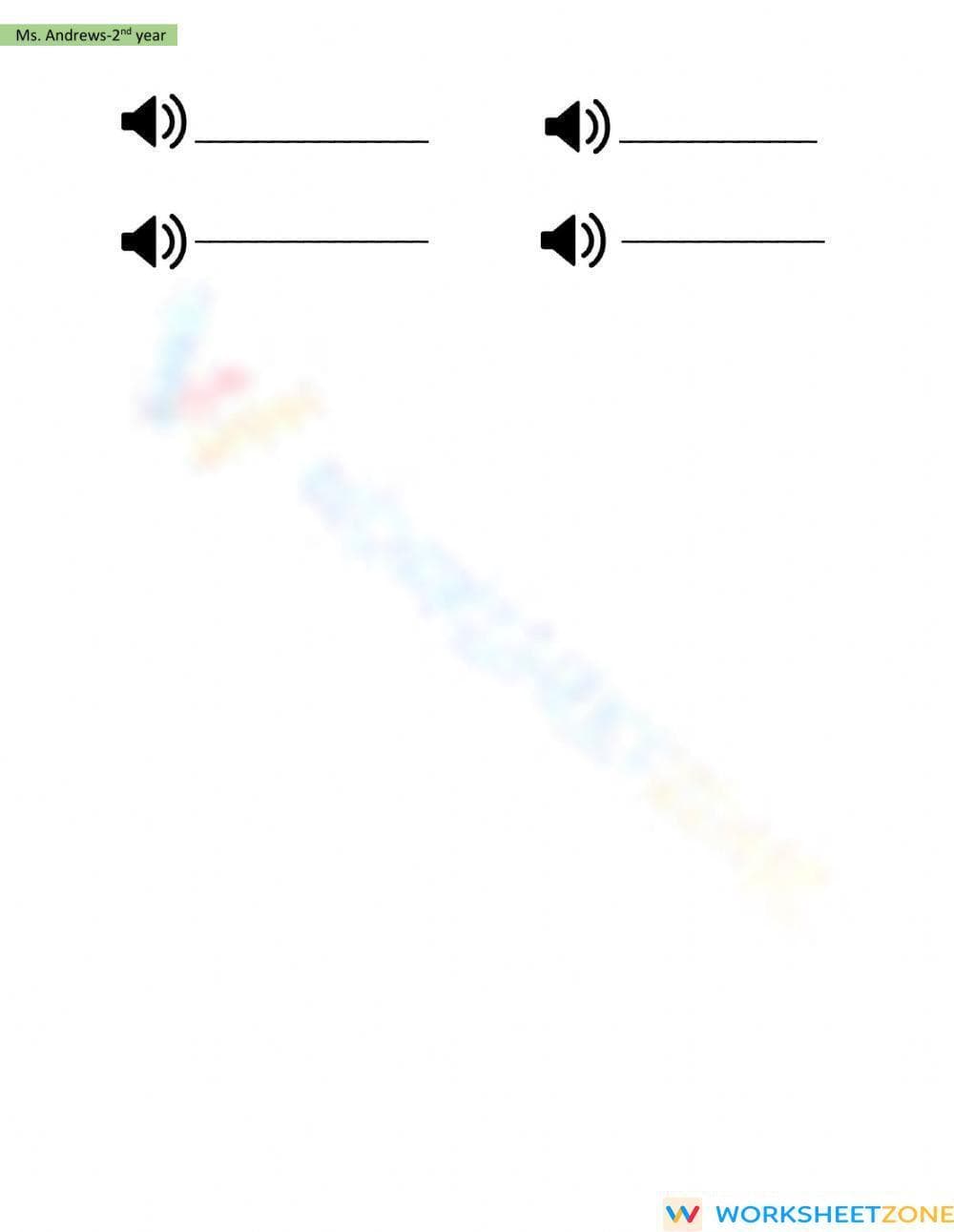
Inside this two-page assessment, you will find twelve targeted spelling tasks divided into three distinct sections. Section A focuses on the "3 R's" of sustainability (reduce, reuse, recycle), Section B integrates these concepts into full sentences to test contextual application, and Section C features six dedicated spaces for audio-driven dictation. The layout is clean and spacious, including a date line and student name field to facilitate easy classroom organization and grading.
The zero-prep workflow for this resource is designed for maximum teacher efficiency. Print the two-page document, distribute the worksheets, and prepare your audio cues for the dictation portion. Review student submissions using the provided answer key for quick formative evaluation. This streamlined approach makes it an ideal choice for busy Friday assessments or as a reliable resource for emergency substitute folders.
This worksheet is strictly aligned to CCSS.ELA-LITERACY.L.2.2.D, which requires students to generalize learned spelling patterns when writing words. By challenging students to complete words like "protect," "environment," and "recycle," the assessment verifies their ability to apply phonetic rules to multi-syllabic vocabulary. This standard code can be copied directly into lesson plans, IEP goals, or district curriculum mapping tools to ensure documented compliance with educational frameworks.
To use this effectively, assign it as a cumulative Friday test following a week of direct instruction on environmental science or phonetic spelling patterns. For a formative assessment observation tip, watch for students who struggle specifically with the medial vowel sounds in Section C, as this often indicates a need for additional phonemic awareness support. Most Grade 2 students will complete the entire assessment, including dictation, within a 20-minute instructional block.
This resource is primarily intended for Grade 2 students but serves as an excellent challenge for advanced Grade 1 learners or a focused intervention for Grade 3 students needing spelling reinforcement. It pairs naturally with anchor charts regarding the "3 R's" or any informational text unit focused on Earth Day and conservation efforts. The inclusion of audio-based tasks provides necessary support for auditory learners while challenging their transcription accuracy.
Spelling proficiency in the early grades is a foundational predictor of later writing fluency and reading comprehension. According to Fisher & Frey (2014), the gradual release of responsibility model is most effective when students move from guided recognition to independent production of complex vocabulary. This worksheet facilitates that transition by providing sentence frames before moving to the high-stakes dictation section. By focusing on 12 specific environmental terms, the assessment manages cognitive load while maintaining rigorous alignment to CCSS.ELA-LITERACY.L.2.2.D. The structured format allows educators to pinpoint exactly where phonetic generalizations are failing, whether in consonant blends or syllable division. This resource provides the structured practice necessary to achieve long-term literacy outcomes in a classroom-ready format.


