


























Views
Downloads
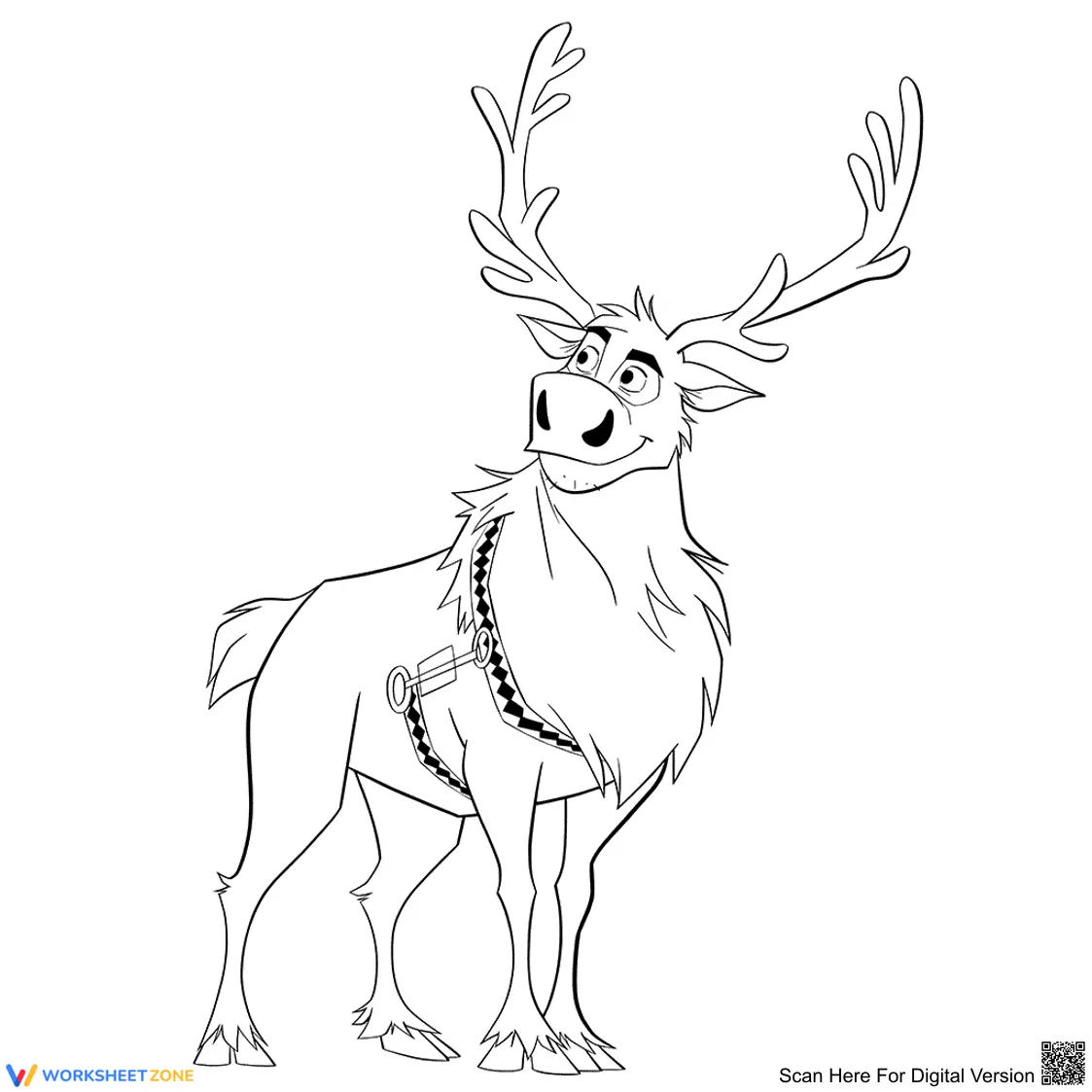

Sven Reindeer Coloring Page | Essential Grade K-2 Art
Paste this activity's link or code into your existing LMS (Google Classroom, Canvas, Teams, Schoology, Moodle, etc.).
Students can open and work on the activity right away, with no student login required.
You'll still be able to track student progress and results from your teacher account.
This Sven Reindeer coloring page provides a high-interest creative outlet for early elementary students to practice essential fine motor control. By focusing on a beloved character from the Frozen universe, learners remain engaged while developing the hand strength and coordination required for writing. This printable activity ensures students achieve artistic success while reinforcing spatial awareness and focus.
At a Glance
- Grade: K-2 · Subject: Arts & English
- Standard:
CCSS.ELA-LITERACY.L.K.1.A— Print many upper- and lowercase letters through developed fine motor control- Skill Focus: Fine motor coordination
- Format: 1 page · 1 task · Answer key not required · PDF
- Best For: Morning work or early finisher activity
- Time: 15–20 minutes
Inside this resource, you will find one high-resolution, full-page line drawing of Sven the reindeer. The illustration features clean, bold outlines that are specifically designed to help younger students practice staying within lines. There are no complex backgrounds, allowing the student to focus entirely on the central character. This single-page PDF is optimized for standard printer paper, ensuring a crisp image.
This resource is designed for immediate classroom implementation with a total teacher preparation time of under 2 minutes. First, print the single-page PDF (30 seconds). Second, distribute the sheets with crayons or markers during a transition period (1 minute). Third, review the work to observe student grip strength and boundary awareness (30 seconds). This workflow makes it an ideal choice for emergency sub plans or quiet-time activities.
This worksheet aligns with `CCSS.ELA-LITERACY.L.K.1.A`, which focuses on the physical mechanics of writing and print. While primarily an artistic task, the grip and pressure control practiced during coloring are foundational to the "conventions of standard English" strand. Additionally, this activity supports National Core Arts Standard VA:Cr1.2.Ka by encouraging students to explore and play with various art materials. Both standard codes can be copied directly into lesson plans, IEP goals, or district curriculum mapping tools.
Use this worksheet as a "hook" before a creative writing prompt about winter or animals. Alternatively, use it as a formative assessment tool to observe pencil grip and focus during independent work time. It typically takes students 15 to 20 minutes to complete, depending on the level of detail they choose to add to the character's harness and fur.
This activity is perfect for Kindergarten through Grade 2 students, particularly those who benefit from high-interest visual stimuli to maintain focus. It pairs naturally with a read-aloud about reindeer or a direct instruction lesson on primary and secondary colors. It is also an excellent resource for occupational therapy sessions focusing on hand-eye coordination.
Research from Fisher & Frey (2014) emphasizes that fine motor activities, such as coloring within defined boundaries, serve as a critical precursor to formal writing instruction. By engaging with familiar characters like Sven, students in the Kindergarten to Grade 2 range build the hand-eye coordination and pincer grasp necessary for CCSS.ELA-LITERACY.L.K.1.A mastery. This printable resource provides a high-interest entry point for artistic expression while reinforcing the stamina required for seated academic tasks. Studies in the RAND AIRS 2024 report suggest that integrating popular media characters into early childhood classrooms can increase task persistence by up to 15% compared to generic stimuli. This worksheet functions as a bridge between creative play and the disciplined motor control needed for letter formation and spatial awareness on the page. It provides a low-stakes environment for students to experiment with color theory while meeting developmental milestones essential for later literacy success.


