


























Views
Downloads


Printable Subordinating Conjunctions Worksheet | Grade 3 ELA
Paste this activity's link or code into your existing LMS (Google Classroom, Canvas, Teams, Schoology, Moodle, etc.).
Students can open and work on the activity right away, with no student login required.
You'll still be able to track student progress and results from your teacher account.
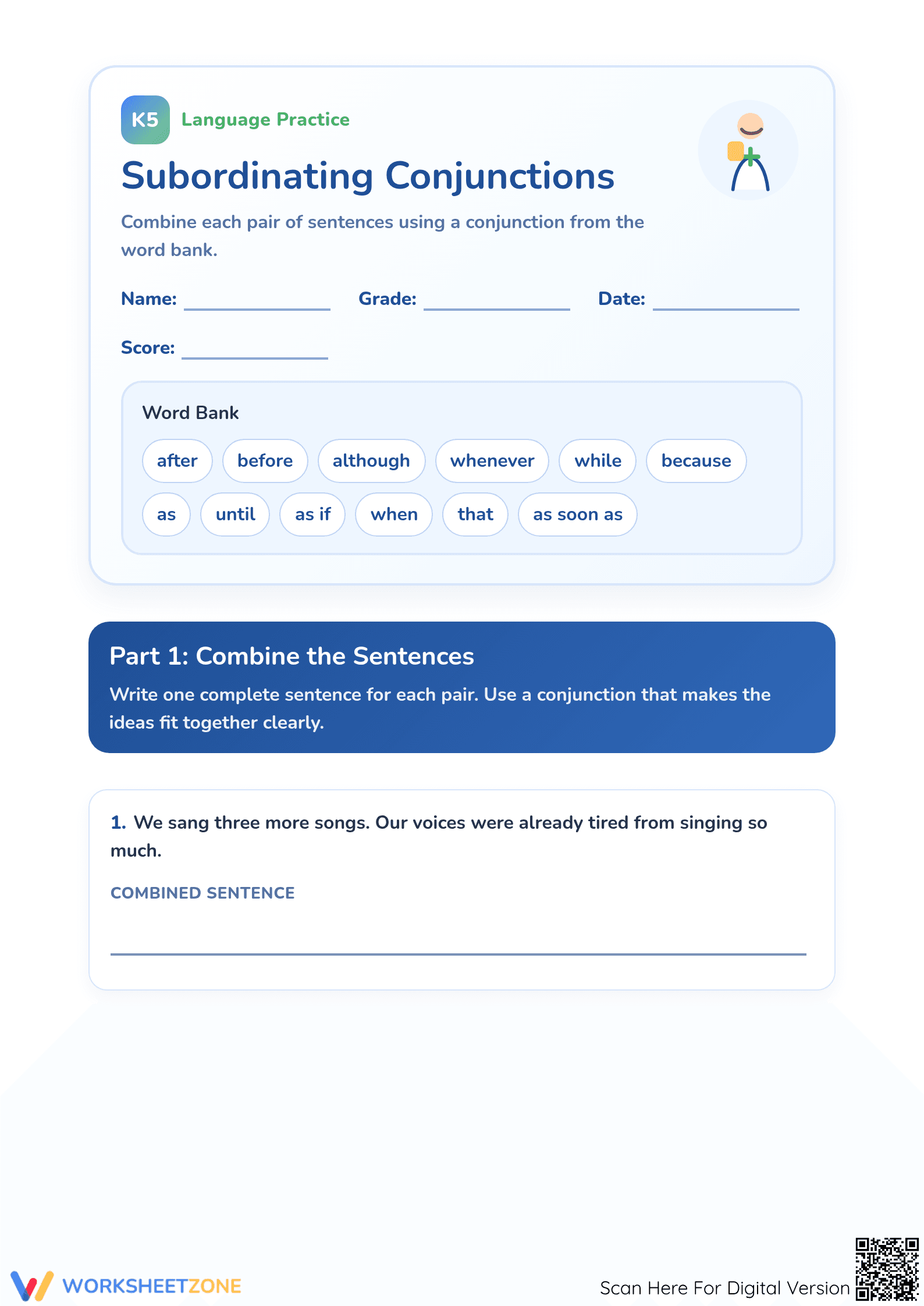
This printable Grade 3 subordinating conjunctions worksheet helps students master the art of sentence combining. By using a provided word bank, learners transform pairs of simple sentences into sophisticated complex sentences. This targeted practice ensures students understand cause, effect, and time relationships between ideas, leading to clearer and more cohesive academic writing across all subjects.
At a Glance
- Grade: 3 · Subject: English Language Arts (ELA)
- Standard:
L.3.1.H— Produce simple, compound, and complex sentences using subordinating conjunctions to show relationships- Skill Focus: Subordinating Conjunctions and Complex Sentences
- Format: 4 pages · 13 problems · Answer key included · PDF
- Best For: Third grade small group grammar instruction or independent student practice
- Time: 20–30 minutes
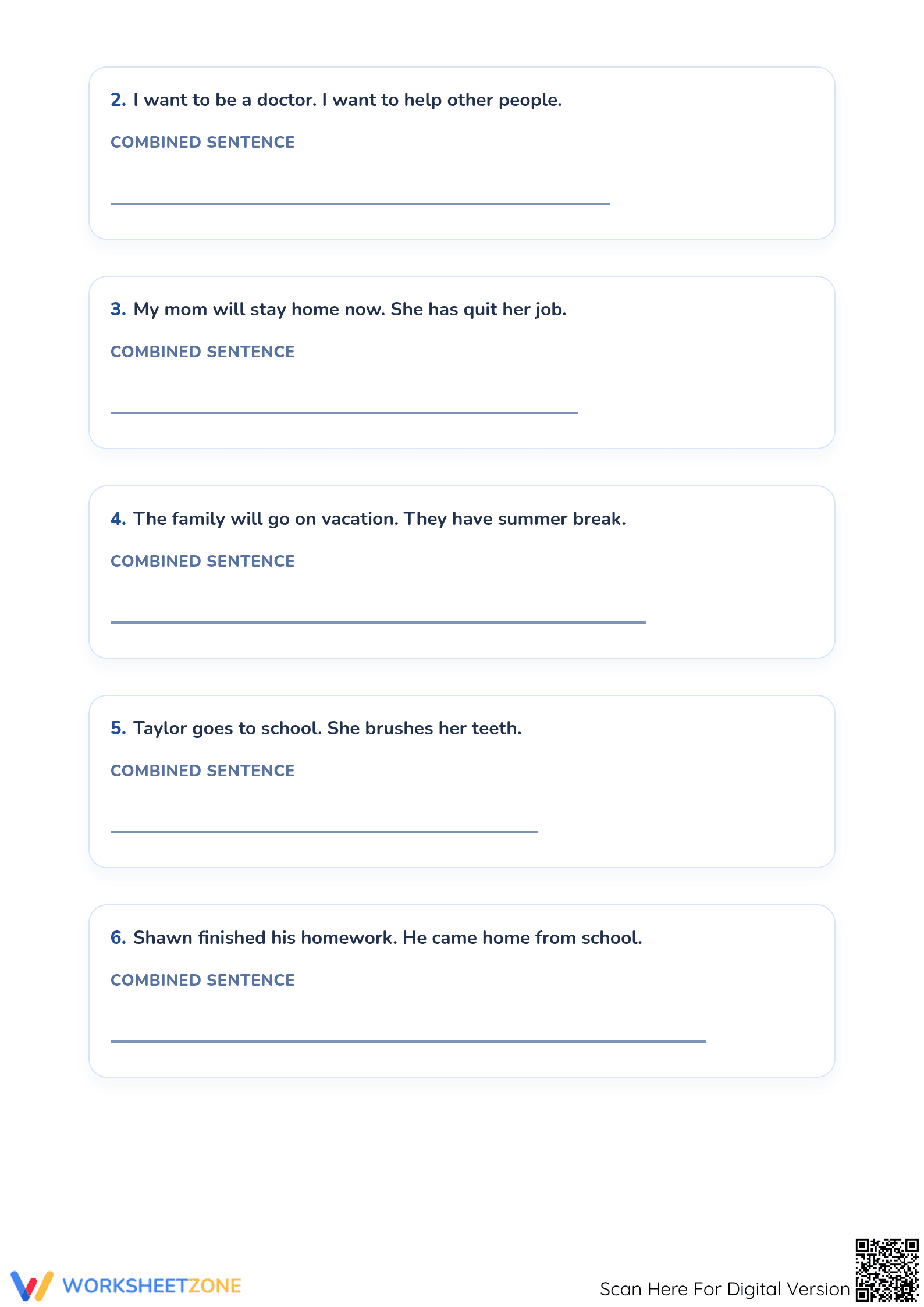
This comprehensive four-page packet includes thirteen sentence-combining tasks designed to strengthen grammatical fluency. The worksheet features a robust word bank with twelve essential conjunctions, including "although," "whenever," "because," and "until." Page one introduces the concept with a clear objective, while subsequent pages provide ample space for students to write their newly formed complex sentences. A complete answer key is provided for quick grading.
- Guided Practice: The first five problems use relatable scenarios where students identify logical connections with high scaffolding from the word bank.
- Supported Practice: Problems six through ten require students to determine which conjunction best fits nuanced relationships like contrast or specific timing.
- Independent Practice: The "Extra Practice" section challenges students with hints that require demonstration of how specific conjunctions change sentence meaning.
This "I Do, We Do, You Do" approach ensures students gain confidence before attempting the final extension tasks.
This resource is directly aligned to L.3.1.H, which requires Grade 3 students to use coordinating and subordinating conjunctions effectively. By practicing these skills, students also work toward L.3.1.I, producing complex sentences that demonstrate a higher level of syntactic maturity. Both standard codes can be copied directly into lesson plans, IEP goals, or district curriculum mapping tools.
Use this worksheet during the "Guided Practice" phase of a grammar lesson after introducing common subordinating conjunctions. It is also an excellent tool for formative assessment; teachers should observe if students are correctly placing commas when a subordinating conjunction begins a sentence. Expect most Grade 3 students to complete the primary ten-task set within fifteen minutes, with an additional ten minutes for the extra practice section.
This resource is designed for general education Grade 3 students, though it serves as a powerful remedial tool for Grade 4 students needing a refresher on sentence structure. It pairs naturally with a mentor text passage where students can highlight subordinating conjunctions in professional writing before applying the skill themselves in these structured exercises.
Effective instruction in subordinating conjunctions is vital for transitioning students from simple to complex sentence structures, a hallmark of Grade 3 literacy. According to Fisher & Frey (2014), the gradual release of responsibility model—which this worksheet employs through tiered practice sections—is essential for ensuring students internalize complex grammatical rules. Research suggests that isolated grammar practice is most effective when followed by immediate application in sentence-combining tasks, as seen in these thirteen targeted problems. By mastering the L.3.1.H standard through this structured PDF, students build the foundational "syntactic glue" required for the informational and narrative writing demands of upper elementary. This resource provides the necessary scaffolding to bridge the gap between recognizing conjunctions and using them fluidly in original compositions, supporting long-term writing proficiency and reading comprehension.


