




























Views
Downloads
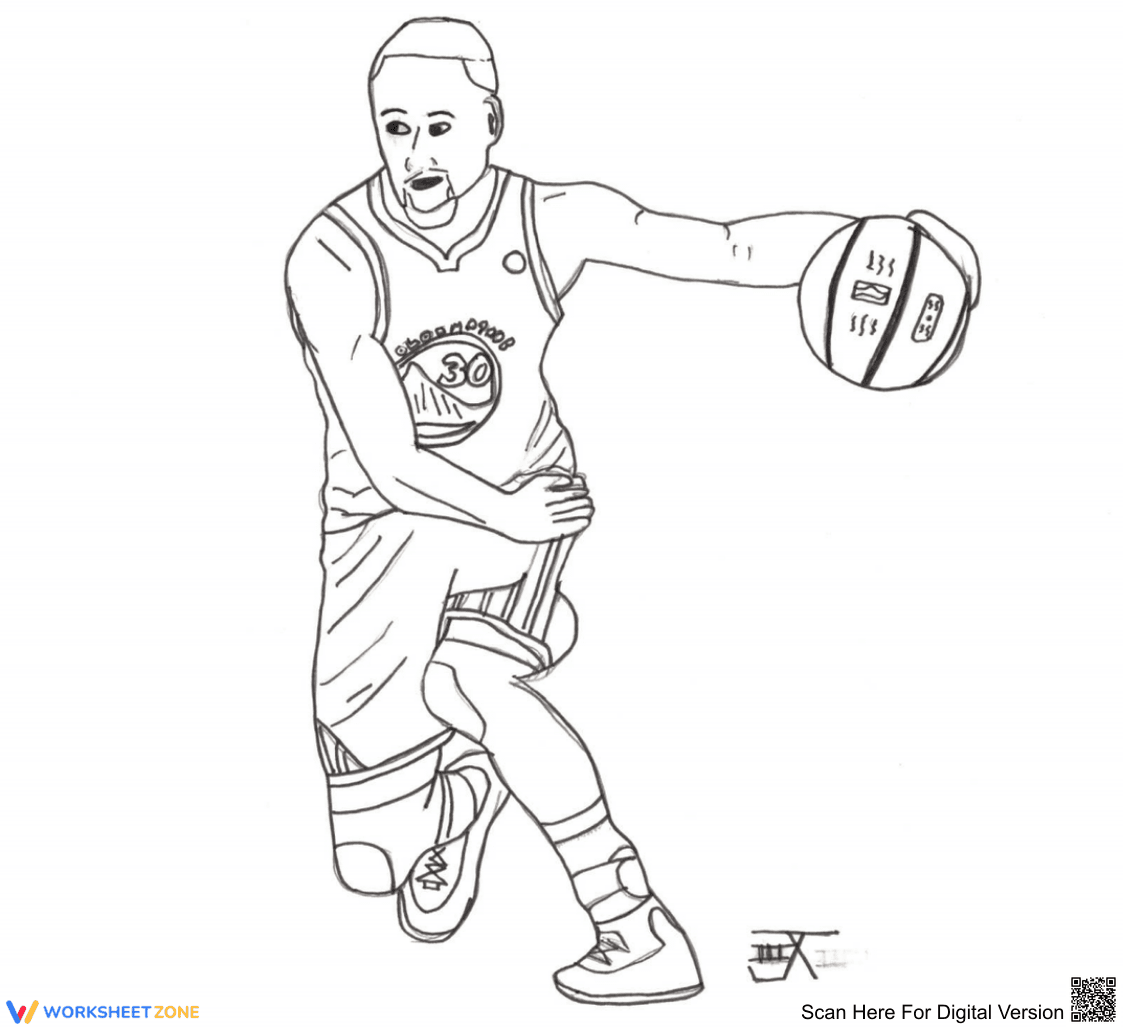

Stephen Curry Coloring Page | Essential Grade K-5 Art

Paste this activity's link or code into your existing LMS (Google Classroom, Canvas, Teams, Schoology, Moodle, etc.).
Students can open and work on the activity right away, with no student login required.
You'll still be able to track student progress and results from your teacher account.
This Stephen Curry basketball coloring page provides a high-interest activity for students to develop fine motor control and artistic expression. By focusing on a recognizable sports icon, the worksheet encourages engagement while students practice the precision required for coloring within lines. This printable resource is an effective tool for early elementary classrooms looking to blend sports enthusiasm with foundational skill-building.
At a Glance
- Grade: K-5 · Subject: Arts & English
- Standard:
CCSS.ELA-LITERACY.SL.K.5— Add drawings or visual displays to descriptions to provide additional detail- Skill Focus: Fine motor precision and artistic expression
- Format: 1 page · 1 task · No answer key required · PDF
- Best For: Morning work or early finisher activity
- Time: 15–20 minutes
Inside this resource, you will find a single-page, high-resolution line drawing of Stephen Curry in action on the basketball court. The illustration is designed with clear, bold outlines to accommodate various skill levels, from Kindergarteners practicing basic grip to Grade 5 students exploring shading and texture. The layout ensures that the central figure is the focus, providing ample space for creative background additions.
The zero-prep workflow for this worksheet is designed for maximum efficiency. First, print the single-page PDF for your class or a small group (1 minute). Second, distribute the pages during transition periods or as a reward for completing primary assignments (30 seconds). Finally, review the completed work by displaying it on a classroom board to build community and recognize student effort (30 seconds). Total teacher preparation time is under 2 minutes.
This worksheet aligns with CCSS.ELA-LITERACY.SL.K.5, which asks students to add drawings or other visual displays to descriptions to provide additional detail. While primarily an artistic task, it supports visual literacy and the ability to represent specific subjects accurately. Both standard codes can be copied directly into lesson plans, IEP goals, or district curriculum mapping tools.
Use this worksheet as a hook before a writing prompt about sports or perseverance. Students can color the image first, then write three descriptive sentences about the athlete's action. Formatively, observe how students handle the smaller details of the basketball and jersey numbers to assess their manual dexterity. Completion typically takes 15 to 20 minutes depending on the student's age and focus level.
This resource is ideal for K-5 students, particularly those motivated by sports culture. It serves as an excellent differentiation tool for students who need a tactile activity to reset between core subjects. Pair this with a short biography of Stephen Curry or a video clip of a basketball game to provide context and inspire color choices for the Golden State Warriors uniform.
According to research by Fisher & Frey (2014), the integration of visual arts and fine motor tasks like coloring supports the development of foundational literacy skills in early childhood education. This Stephen Curry coloring worksheet aligns with CCSS.ELA-LITERACY.SL.K.5, which encourages students to use visual displays to enhance their communication and descriptive abilities. By engaging with high-interest subjects like professional athletes, students are more likely to sustain focus during fine motor practice, which is a critical precursor to handwriting and spatial awareness. The activity provides a low-stakes environment for students to practice precision and color theory while connecting with contemporary cultural icons. Educational analysis suggests that these brain break activities can reduce cognitive load and improve overall classroom temperament, making them a valuable component of a balanced instructional day for Kindergarten through Grade 5 learners.


