




























0
Views
0
Downloads

0.0
0
Save
0 Likes
Share
States of Matter Activity for Kids
0 Views
0 Downloads

Paste this activity's link or code into your existing LMS (Google Classroom, Canvas, Teams, Schoology, Moodle, etc.).
Students can open and work on the activity right away, with no student login required.
You'll still be able to track student progress and results from your teacher account.
Information
Description
What It Is:
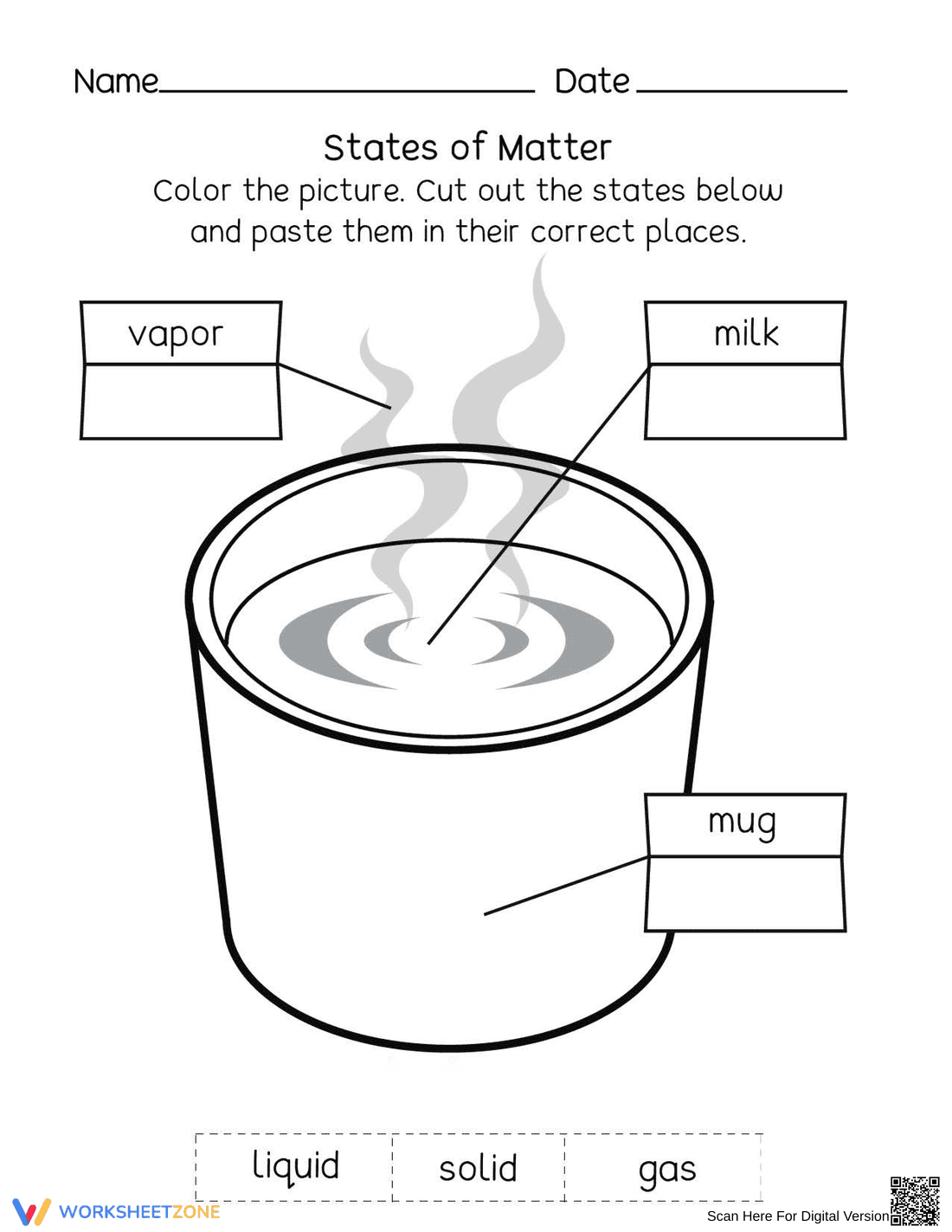
This worksheet helps students learn about the different states of matter: solid, liquid, and gas. It includes a coloring activity where students cut out and paste labels for the states of matter in the correct spots. The activity focuses on recognizing the states of matter in everyday objects.
Why Use It:
The worksheet offers a fun and engaging way for younger students to understand the states of matter. It encourages hands-on learning and reinforces concepts like vapor, liquid, and solid through simple activities and visual aids.
How to Use It:
• Color the image of the mug and liquid.
• Cut out the labels and paste them in the appropriate spots.
• Discuss the states of matter as you go through the worksheet.
Grade Suitability:
Best suited for Grade 1 and Grade 2.
• Ideal for students just starting to learn about matter.
• Suitable for interactive science lessons and group activities.
Target Users:
• Teachers looking for a hands-on way to teach matter to early learners.
• Students in early grades exploring basic science concepts.
This worksheet helps students learn about the different states of matter: solid, liquid, and gas. It includes a coloring activity where students cut out and paste labels for the states of matter in the correct spots. The activity focuses on recognizing the states of matter in everyday objects.
Why Use It:
The worksheet offers a fun and engaging way for younger students to understand the states of matter. It encourages hands-on learning and reinforces concepts like vapor, liquid, and solid through simple activities and visual aids.
How to Use It:
• Color the image of the mug and liquid.
• Cut out the labels and paste them in the appropriate spots.
• Discuss the states of matter as you go through the worksheet.
Grade Suitability:
Best suited for Grade 1 and Grade 2.
• Ideal for students just starting to learn about matter.
• Suitable for interactive science lessons and group activities.
Target Users:
• Teachers looking for a hands-on way to teach matter to early learners.
• Students in early grades exploring basic science concepts.


