


























Views
Downloads


Preschool Spelling — Printable No-Prep Worksheet
Paste this activity's link or code into your existing LMS (Google Classroom, Canvas, Teams, Schoology, Moodle, etc.).
Students can open and work on the activity right away, with no student login required.
You'll still be able to track student progress and results from your teacher account.
Developing foundational spelling skills begins with the ability to associate visual images with written language. This printable Preschool ELA worksheet bridges that gap by requiring students to identify the correct word for a given picture. By presenting familiar animals and foods, this resource builds the phonological awareness needed for future reading mastery.
At a Glance
- Grade: Preschool · Subject: ELA
- Standard:
CCSS.ELA-LITERACY.RF.K.3— Know and apply grade-level phonics and word analysis skills in decoding words- Skill Focus: Picture-word matching
- Format: 3 pages · 4 problems · Answer key included · PDF
- Best For: Early literacy centers and morning work
- Time: 10–15 minutes
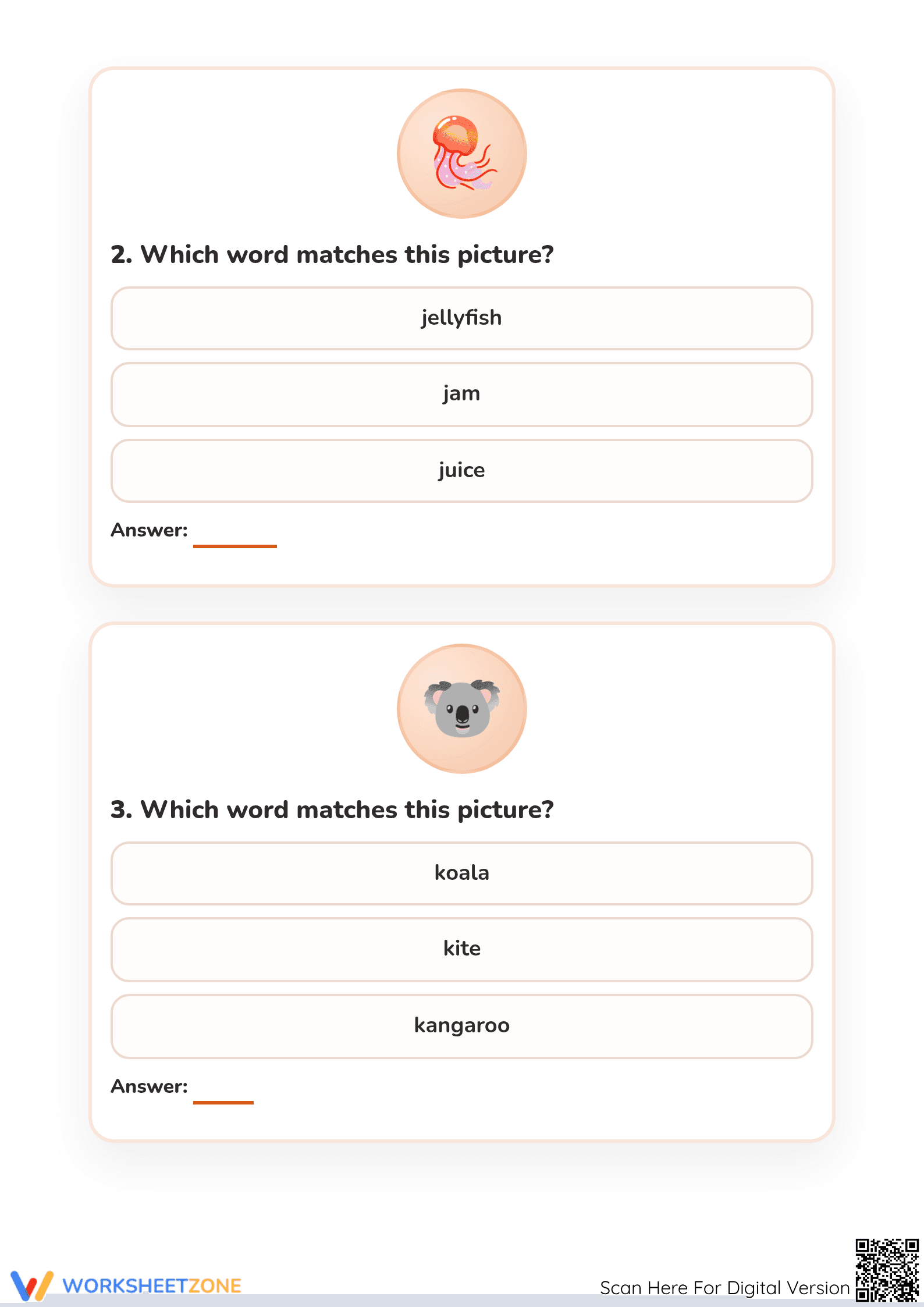
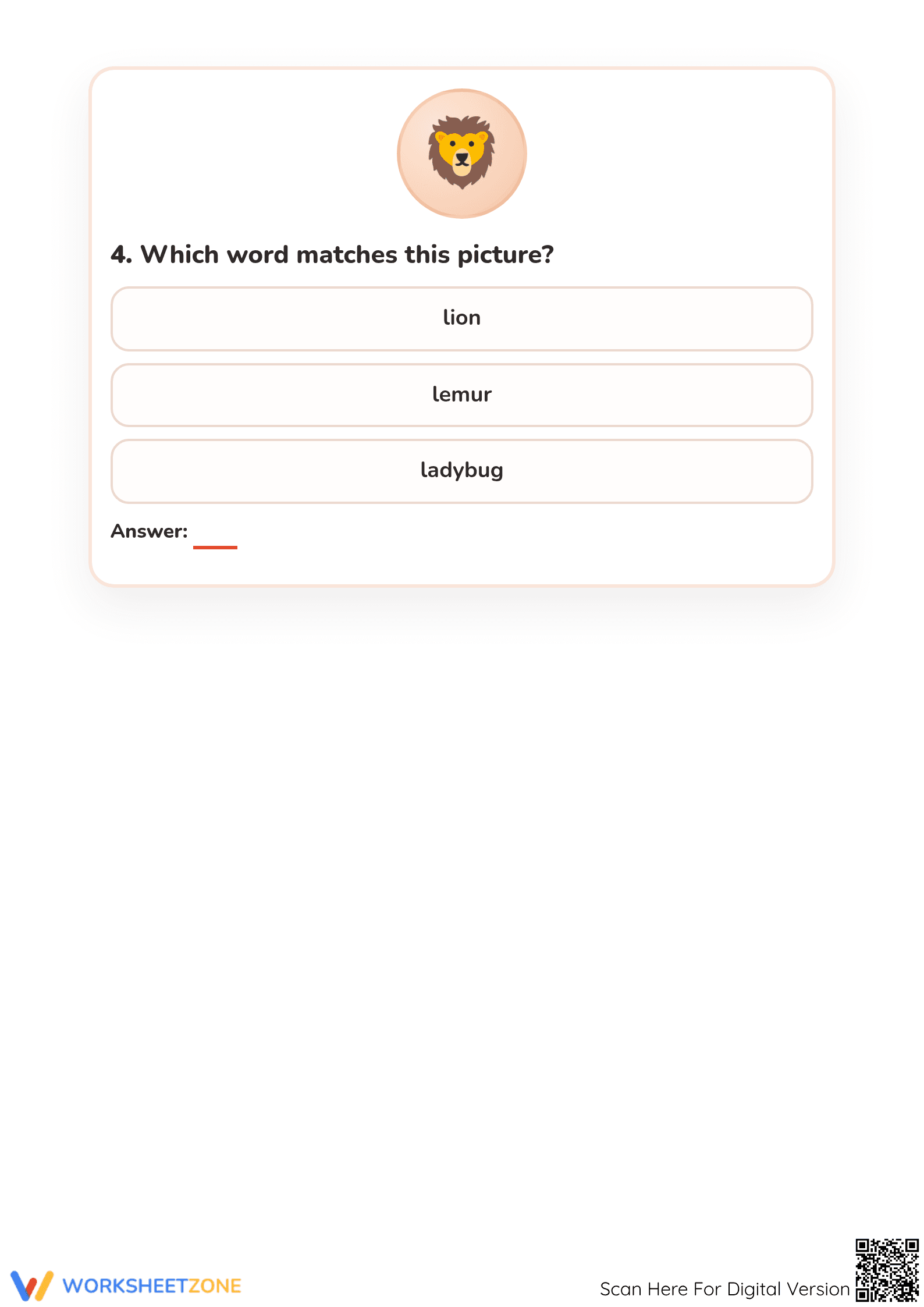
This three-page resource is designed specifically for the needs of young learners. Page one introduces the picture-word matching format with a clear graphic of an ice cream cone. Subsequent pages provide high-contrast images of a jellyfish, a koala, and a lion. Each of the 4 tasks includes three distractor options to challenge initial sound recognition and a designated line for students to record their final answers.
The zero-prep workflow ensures that teachers can implement this resource in under two minutes. Step 1: Print the 3-page PDF on standard letter paper (30 seconds). Step 2: Distribute the sheets to students for independent or small-group work (1 minute). Step 3: Review the completed tasks using the included answer key to provide immediate instructional feedback. This efficient process makes the worksheet an ideal candidate for substitute plans or quick literacy checks.
This resource is aligned to `CCSS.ELA-LITERACY.RF.K.3`, which focuses on applying phonics and word analysis skills to decode words. By identifying the correct word based on a visual prompt, students demonstrate their understanding of one-to-one letter-sound correspondences. Both standard codes can be copied directly into lesson plans, IEP goals, or district curriculum mapping tools to ensure instructional consistency across the grade level.
To maximize the impact of this worksheet, use it as a focused literacy center activity during your small-group rotations. It also functions effectively as a formative assessment tool following a lesson on initial consonants. Teachers should observe if students whisper the names of the pictures to themselves before selecting a word, as this subvocalization indicates active engagement with phonemic awareness. This observation provides a quick check for understanding during the instructional block.
This worksheet is tailored for preschool students beginning their literacy journey and kindergarteners who require additional scaffolding in word recognition. It pairs naturally with alphabet anchor charts and phonics-based read-aloud sessions. The large font sizes and clear spacing ensure that students with developing fine motor skills can successfully navigate the page while focusing on the cognitive task of spelling.
Building foundational spelling skills at the preschool level requires a structured approach to phonemic awareness and word recognition. This worksheet utilizes CCSS.ELA-LITERACY.RF.K.3 to provide targeted practice in matching visual stimuli with written language. Research by Fisher & Frey (2014) emphasizes that scaffolded tasks allow students to experience success early, which is critical for long-term engagement. By engaging with 4 high-frequency word tasks, preschoolers develop the cognitive pathways necessary for decoding. The use of familiar objects like a jellyfish or a lion reduces cognitive load, allowing the brain to focus specifically on the phonemic differences between the provided choices. This systematic exposure to word forms in a no-prep format ensures that literacy instruction remains consistent and effective. It provides a measurable way to track early progress in letter-sound correspondence before moving toward independent reading and complex spelling patterns in later grades.


