




























Views
Downloads

Preschool Alphabet — Printable No-Prep Worksheet

Paste this activity's link or code into your existing LMS (Google Classroom, Canvas, Teams, Schoology, Moodle, etc.).
Students can open and work on the activity right away, with no student login required.
You'll still be able to track student progress and results from your teacher account.
This Preschool ELA worksheet bridges the gap between letter recognition and early spelling through high-interest visual cues. By identifying pictures like monkeys and penguins, students develop phonological awareness and fine motor skills. This resource provides a structured pathway for early learners to connect sounds to written symbols, ensuring a solid literacy foundation.
At a Glance
- Grade: Preschool · Subject: ELA (Alphabet)
- Standard:
CCSS.ELA-LITERACY.RF.K.1.D— Recognize and name all upper and lowercase letters of the alphabet- Skill Focus: Initial sound recognition and foundational spelling
- Format: 2 pages · 8 problems · Answer key included · PDF
- Best For: Early literacy centers and independent morning work
- Time: 10–15 minutes of student practice
What's Inside
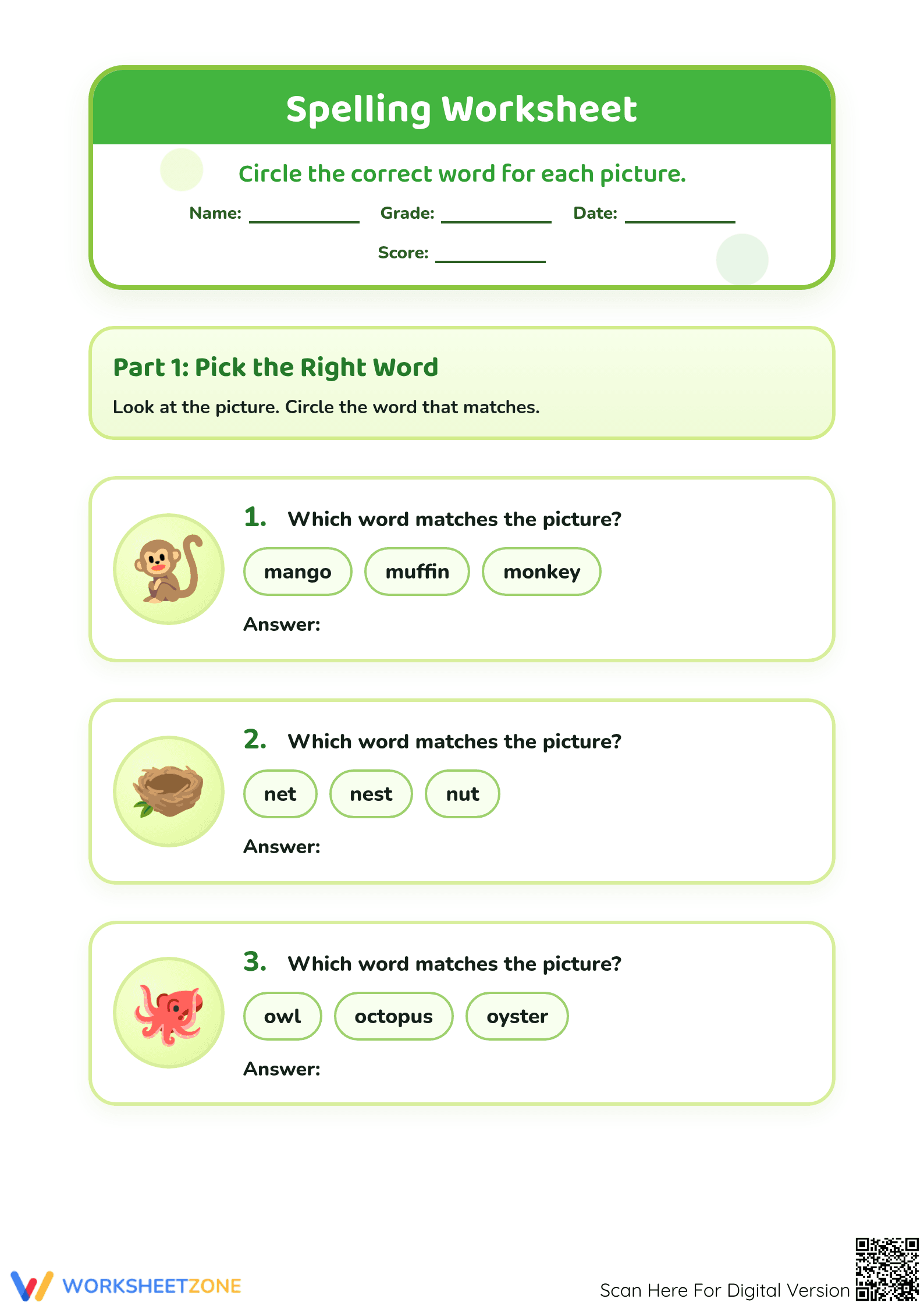
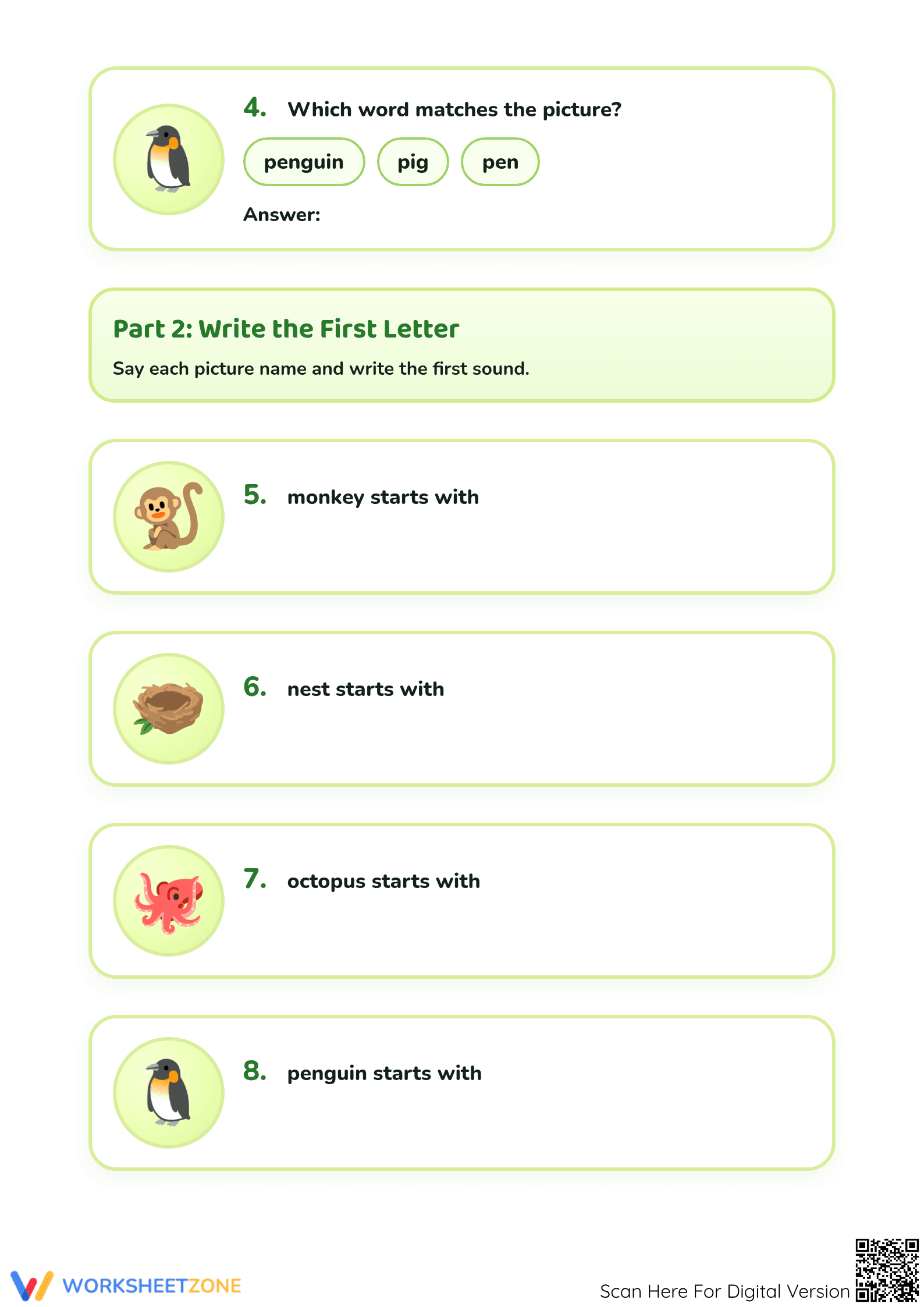
The two-page PDF contains two distinct learning phases designed for developmental progression. The first page features four multiple-choice items where students circle the correct word matching a vibrant animal or object illustration. The second page transitions to independent production, asking students to identify the starting sound and write the corresponding first letter for the same set of images.
Zero-Prep Workflow
Teachers can integrate this resource in under 2 minutes. Step 1: Print the two-page document (30 seconds). Step 2: Distribute to students and explain the two parts (1 minute). Step 3: Review the answers as a group or use the provided answer key for rapid grading (30 seconds). It is an ideal solution for emergency sub plans or quiet-time transitions.
Standards Alignment
This resource aligns with `CCSS.ELA-LITERACY.RF.K.1.D`, which requires students to recognize and name letters. While designed for Preschool, it targets the foundational Alphabet Knowledge domain of the Head Start Early Learning Outcomes Framework. The standard code can be copied directly into lesson plans, IEP goals, or district curriculum mapping tools.
How to Use It
Use this worksheet during small-group literacy instruction to observe how students handle the transition from recognition (circling) to production (writing). As a formative assessment tip, watch for "reversal" errors in letter writing to identify students needing additional tactile practice. The 15-minute completion time fits perfectly within a standard preschool rotation or as a morning warm-up activity.
Who It's For
This activity is crafted for preschool students beginning their journey with phonics and letter-sound correspondence. It includes visual scaffolds that support English Language Learners (ELL) and students with developmental delays. For best results, pair this worksheet with an alphabet anchor chart or a Letter of the Day direct instruction lesson to reinforce the specific phonemes.
Research from the RAND AIRS 2024 report emphasizes that early exposure to alphabet knowledge and phonological awareness is the strongest predictor of future reading success. By engaging with `CCSS.ELA-LITERACY.RF.K.1.D`, students move beyond rote memorization to functional literacy, where they connect specific sounds to visual letter forms. This worksheet utilizes high-frequency vocabulary and distinct imagery to reduce cognitive load while maximizing letter-sound association. According to the ScienceDirect TpT Analysis, structured worksheets that combine multiple-choice recognition with active writing tasks help cement long-term memory in early childhood settings. This dual-modal approach ensures that students are not just identifying words but are actively participating in the encoding process. The inclusion of an answer key and clear formatting allows for immediate feedback, a critical component of the gradual release of responsibility model. This resource is essential for building the prerequisite skills required for kindergarten readiness and beyond.


