


























Views
Downloads

Spelling 1 Worksheet | Grade K-2 Printable Essential
Paste this activity's link or code into your existing LMS (Google Classroom, Canvas, Teams, Schoology, Moodle, etc.).
Students can open and work on the activity right away, with no student login required.
You'll still be able to track student progress and results from your teacher account.
This Spelling 1 worksheet provides a structured approach to early literacy by focusing on high-frequency words and basic phonetic patterns. Students engage in matching and identification tasks that bridge the gap between visual recognition and orthographic representation. It serves as an essential tool for establishing foundational spelling habits in early elementary grades.
At a Glance
At a Glance
- Grade: K-2 · Subject: English Language Arts (ELA)
- Standard:
CCSS.ELA-LITERACY.L.K.2.D— Spell simple words phonetically using knowledge of sound-letter relationships- Skill Focus: Foundational Spelling and Phonetic Recognition
- Format: 2 pages · 10 problems · Answer key included · PDF
- Best For: Weekly spelling checks or phonics centers
- Time: 15–20 minutes
What's Inside
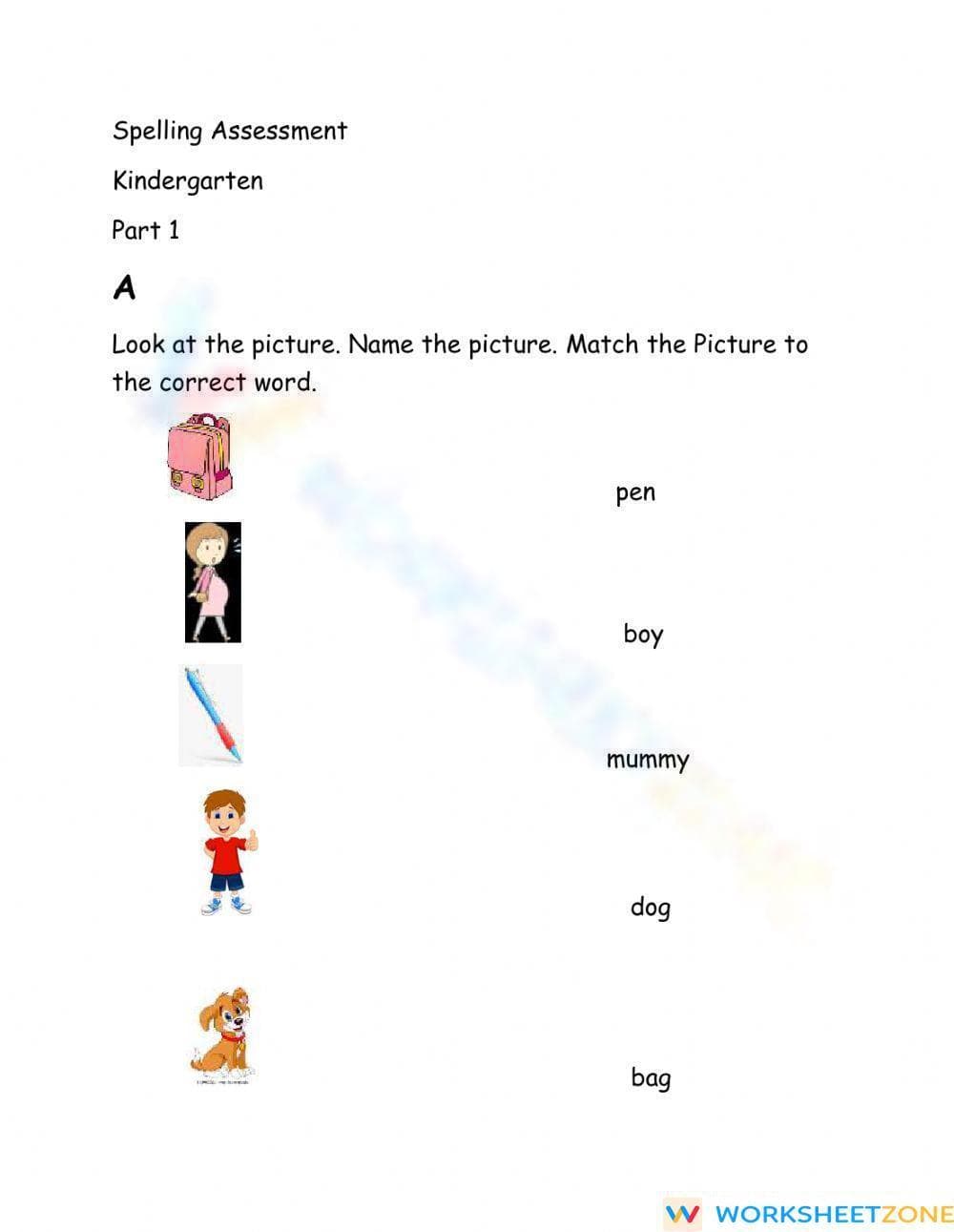
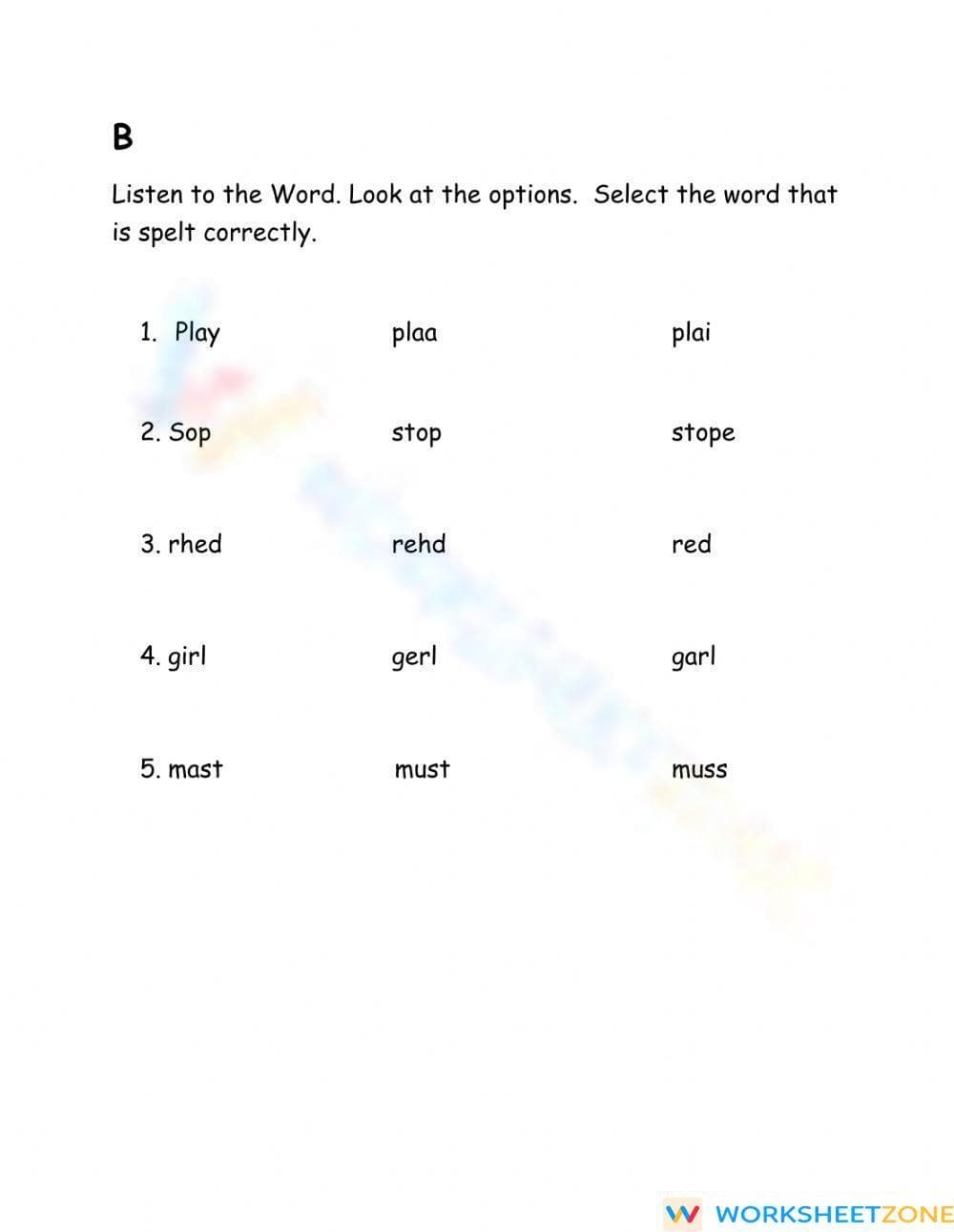
The two-page packet is divided into two distinct assessment parts. Part A features five visual-matching exercises where students connect images of common objects like a bag, a pen, and a dog to their written forms. Part B transitions to auditory and visual discrimination, challenging students to select the correct spelling from three phonetic distractors for high-frequency words such as play, stop, and girl.
Zero-Prep Workflow
The print-and-go design minimizes instructional overhead. Teachers can follow this simple three-step process to integrate the worksheet into their daily routine:
- Print (30 seconds): Generate the high-quality PDF and print copies for the entire class or specific reading groups.
- Distribute (1 minute): Hand out the assessment during your dedicated ELA block, center rotation, or as morning work.
- Review (2 minutes): Use the included answer key to check for phonetic accuracy or common letter reversals.
Total teacher preparation time is less than two minutes, making it ideal for substitute plans or emergency instructional needs.
Standards Alignment
Aligned primarily to CCSS.ELA-LITERACY.L.K.2.D, which requires students to spell simple words phonetically by drawing on their knowledge of sound-letter relationships. It also supports CCSS.ELA-LITERACY.L.1.2.B through the inclusion of frequently occurring irregular and high-frequency words. Both standard codes can be copied directly into lesson plans, IEP goals, or district curriculum mapping tools.
How to Use It
Assign this worksheet as a formative assessment after completing a unit on CVC words or beginning consonant blends. It works best during the Independent Practice phase of a gradual release model. Teachers should observe whether students are sounding out the words in Part B or relying on sight recognition. Expect most Grade 1 students to complete the full 10-task set within 15 minutes.
Who It's For
This resource is designed for Kindergarten through second-grade students who are developing their phonemic awareness. It is particularly effective for English Language Learners who benefit from the visual scaffolding provided in Part A. The clear font and ample white space accommodate learners with fine motor challenges or those who require additional visual focus support during testing.
According to research from RAND AIRS 2024, consistent exposure to phonetic matching tasks significantly accelerates the transition from decoding to automatic word recognition. This worksheet applies those principles by pairing concrete imagery with orthographic choices, a method proven to strengthen the neural pathways associated with spelling. Fisher & Frey (2014) emphasize that high-quality assessments must provide students with opportunities to demonstrate their understanding through multiple modalities, such as the matching and selection formats used here. By isolating spelling from the physical demand of writing full sentences, this resource allows teachers to accurately measure a student's phonological storage without interference from other literacy sub-skills. The integration of 10 targeted problems ensures a reliable data point for tracking student progress toward state literacy benchmarks. This evidence-based design makes the Spelling 1 assessment a robust component of any comprehensive primary literacy curriculum or RTI Tier 2 intervention strategy.


