


























Views
Plays

Grade 10 Social Studies Mid-Term: Essential Exam Prep
Paste this activity's link or code into your existing LMS (Google Classroom, Canvas, Teams, Schoology, Moodle, etc.).
Students can open and work on the activity right away, with no student login required.
You'll still be able to track student progress and results from your teacher account.
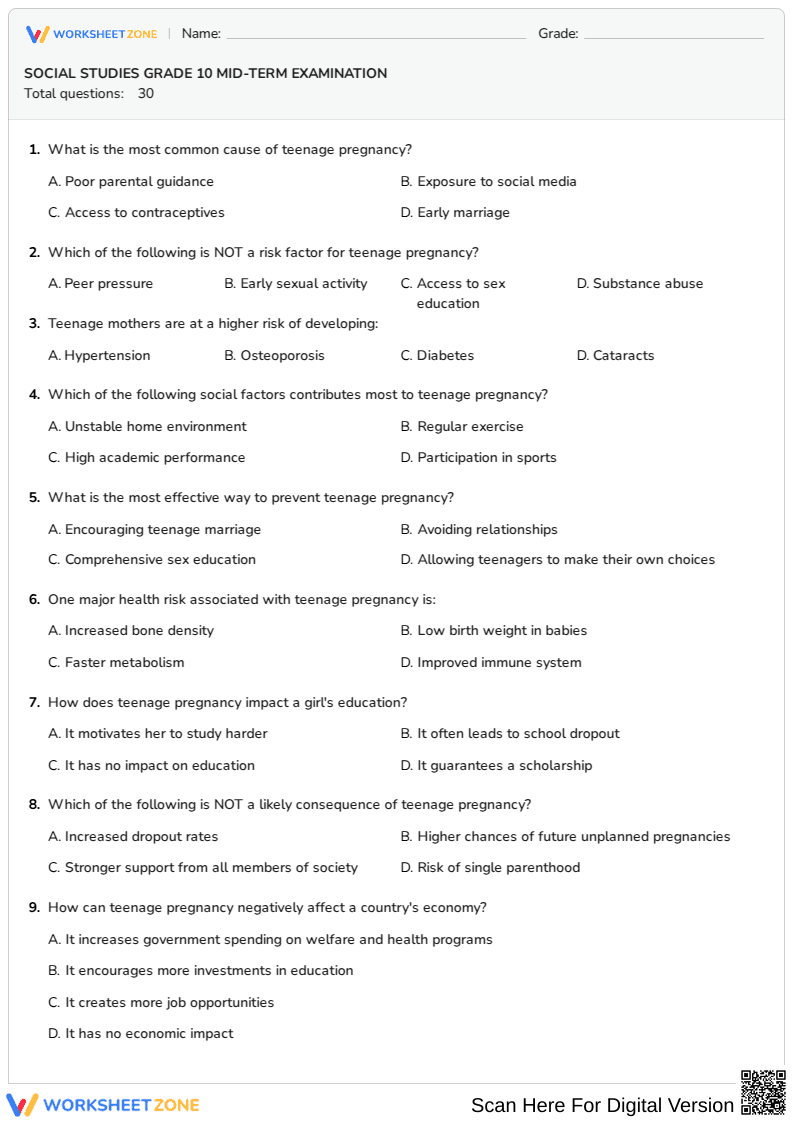
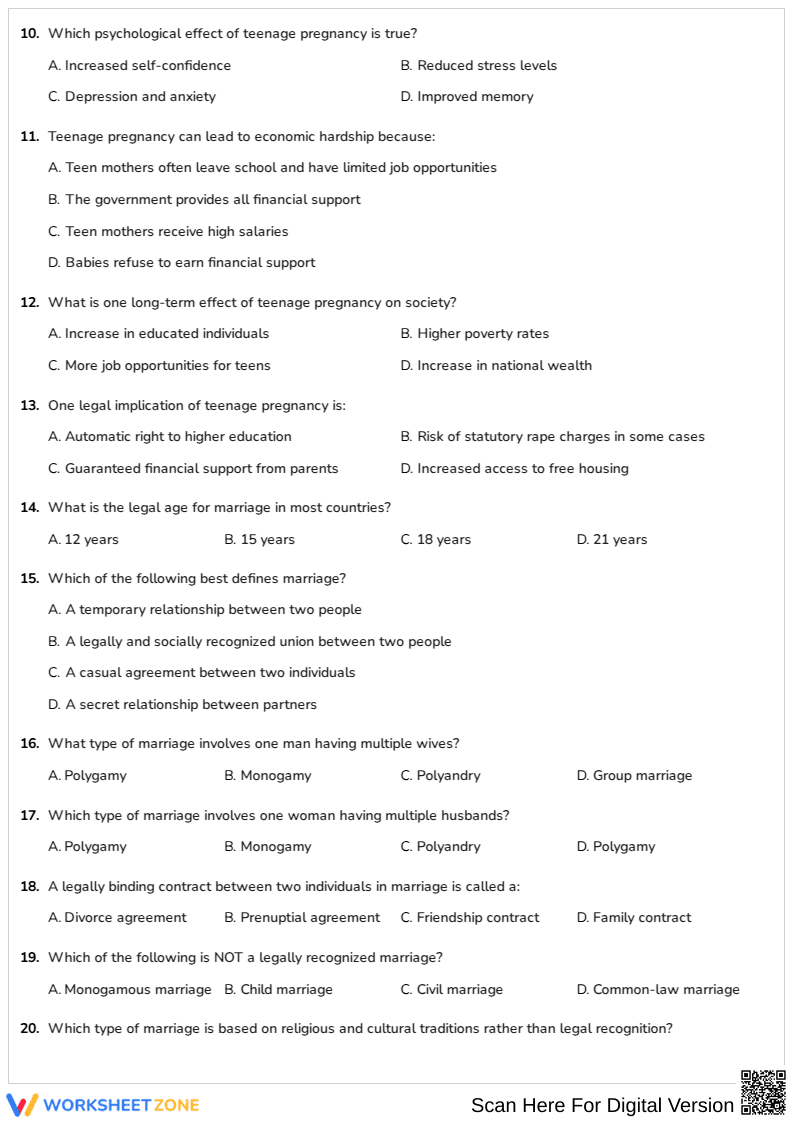
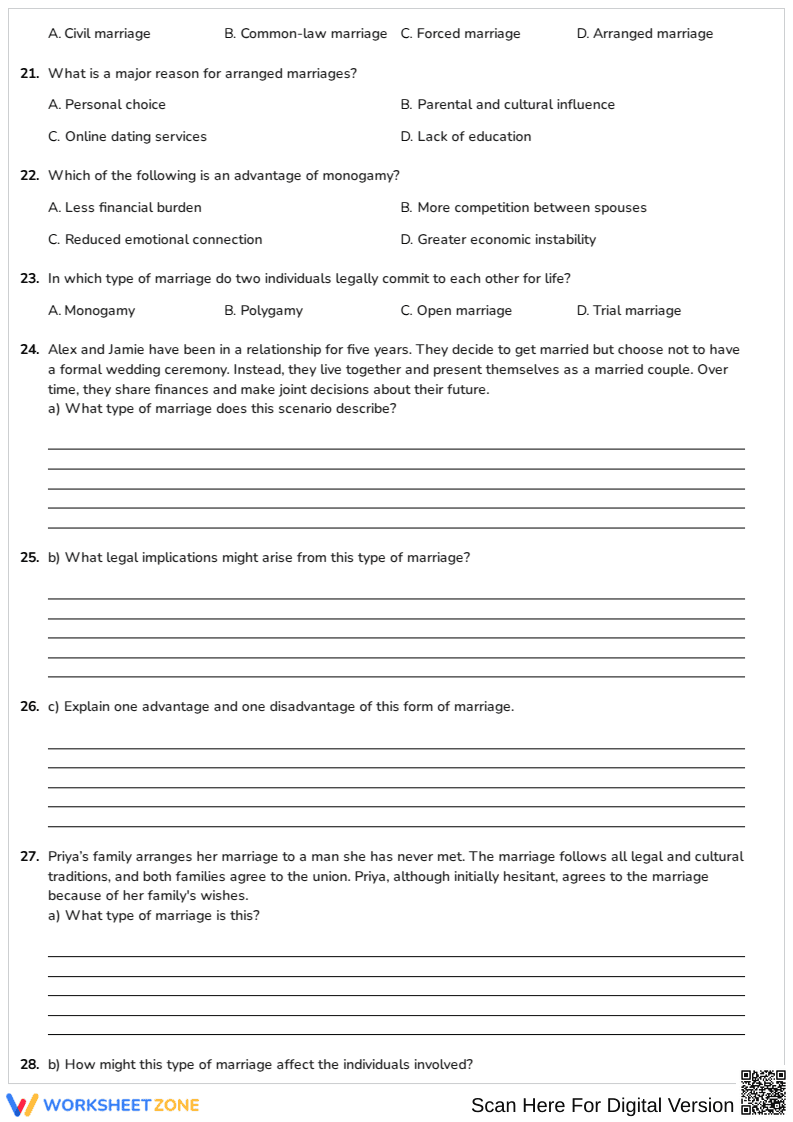
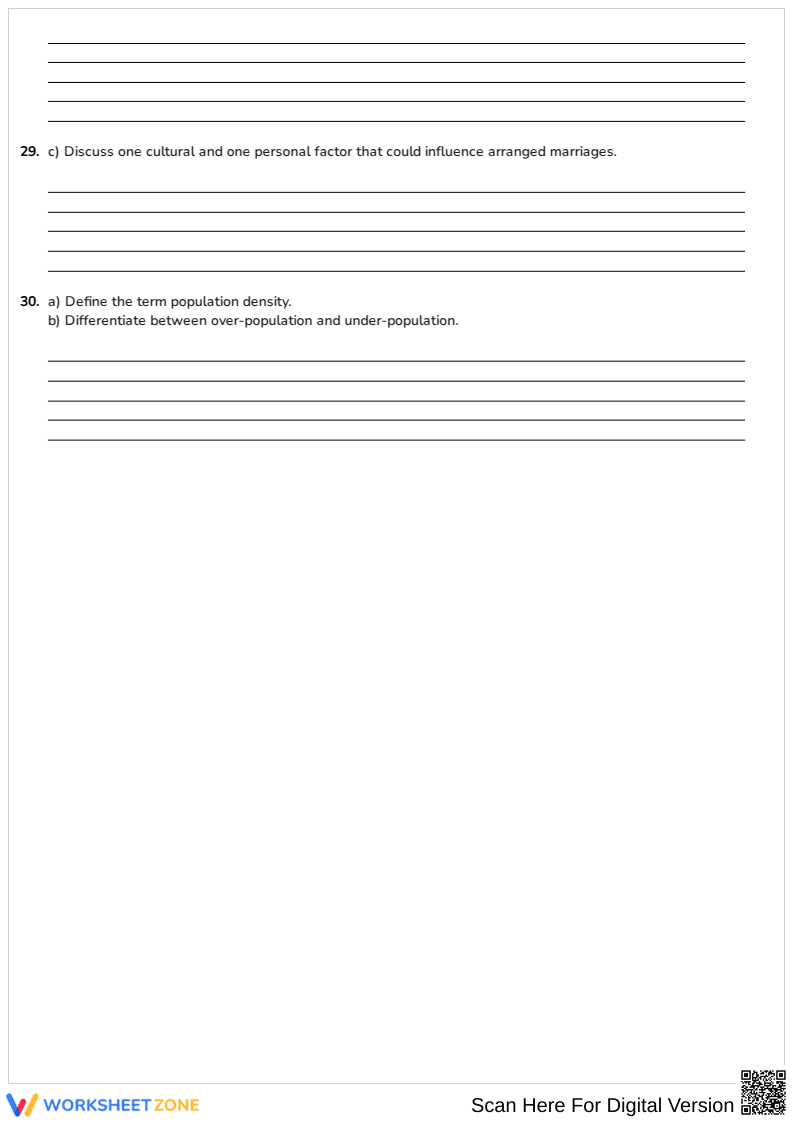
This Grade 10 Social Studies mid-term examination evaluates student understanding of critical social issues, marriage systems, and population dynamics. Students analyze 30 comprehensive questions to demonstrate their grasp of how social factors influence individual and national outcomes. This assessment provides a clear snapshot of student mastery regarding demographic trends and cultural institutions.
At a Glance
- Grade: 10 (Ages 15–16) · Subject: Social Studies
- Standard:
CCSS.ELA-LITERACY.RH.9-10.2— Determine central ideas or information of a primary or secondary source- Skill Focus: Social Issues, Marriage Systems, Demographics, and Population
- Format: 4 pages · 30 problems · Full answer key included · PDF
- Best For: Comprehensive mid-term assessment and evaluation
- Time: 45–60 minutes of testing
The examination consists of 4 pages featuring a mix of question styles. It includes 23 multiple-choice questions focusing on the causes and consequences of teenage pregnancy, various marriage types (monogamy, polygamy, arranged), and legal definitions. The final section provides 7 scenario-based short-answer questions that require students to apply their knowledge to specific case studies and define demographic terms like population density. A full answer key is provided for streamlined grading.
The zero-prep workflow for this examination is designed for maximum efficiency in a busy classroom. First, print the 4-page PDF (1 minute). Second, distribute the booklets to students and provide 45 to 60 minutes for completion (0 minutes prep). Third, use the included answer key to grade the 23 multiple-choice items and 7 open-response questions (10 minutes). Total teacher preparation time is under 2 minutes, making this an ideal resource for scheduled mid-terms or emergency sub plans.
Standards Alignment
This resource is primarily aligned with CCSS.ELA-LITERACY.RH.9-10.2, which focuses on determining the central ideas or information of a secondary source. Additionally, it supports standards related to analyzing the relationship between individuals and social structures. Both standard codes can be copied directly into lesson plans, IEP goals, or district curriculum mapping tools.
How to Use It
Use this worksheet as a formal summative assessment at the midpoint of a sociology or global studies unit. It is best administered after direct instruction on family structures and demographic transitions. For a formative approach, teachers can observe student responses to the scenario-based questions to gauge their ability to apply theoretical concepts to real-life situations. Completion typically takes 45 to 60 minutes.
Who It's For
This assessment is designed for Grade 10 students but is appropriate for Grade 9-11 learners in Social Studies or Health Education courses. It provides necessary scaffolding through clear multiple-choice options while challenging advanced learners with open-ended analysis. It pairs naturally with an introductory lecture on social institutions or a demographic data anchor chart.
This Grade 10 Social Studies assessment targets critical understanding of social structures and demographic shifts, specifically focusing on marriage systems and adolescent health outcomes. According to the RAND AIRS 2024 report, structured assessments that combine objective multiple-choice questions with scenario-based analysis significantly improve student retention of complex sociological concepts. By evaluating 30 distinct items, students demonstrate mastery of CCSS.ELA-LITERACY.RH.9-10.2, which requires the determination of central ideas within social science texts. The inclusion of real-world scenarios, such as legal implications of marriage types and economic impacts of population density, ensures that learners move beyond rote memorization toward applied knowledge. This resource provides a valid measure of student proficiency in identifying cause-and-effect relationships within societal frameworks, a core competency for secondary social studies success. Educators can utilize this data-driven tool to identify specific learning gaps in demographic literacy and social policy understanding before moving into advanced global studies units.


