


























Views
Downloads

Grade 6-10 SOAPStone — Printable No-Prep Worksheet
Paste this activity's link or code into your existing LMS (Google Classroom, Canvas, Teams, Schoology, Moodle, etc.).
Students can open and work on the activity right away, with no student login required.
You'll still be able to track student progress and results from your teacher account.
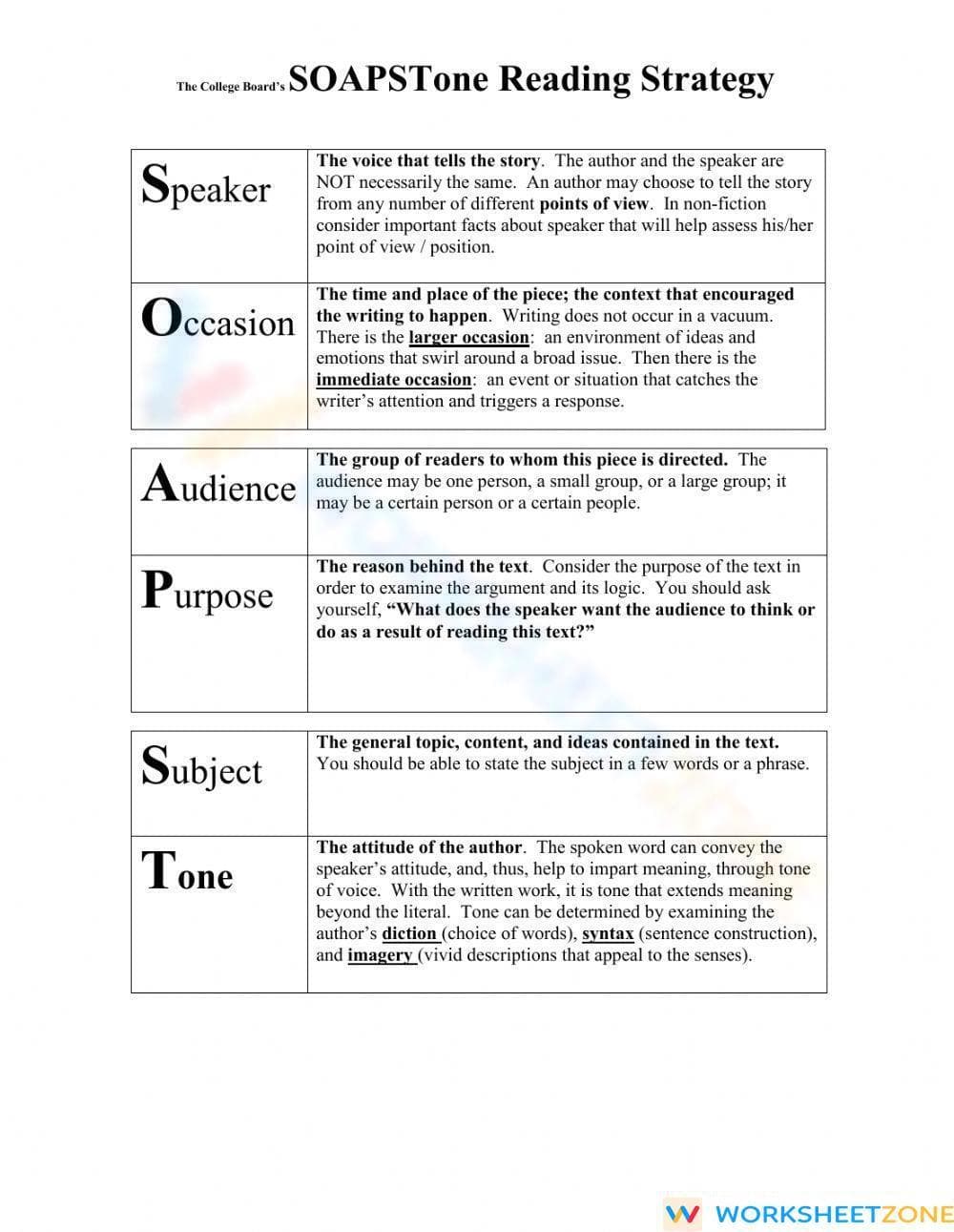
This SOAPStone graphic organizer provides a structured framework for students to analyze any poem or literary text. By breaking down works into six essential components—Speaker, Occasion, Audience, Purpose, Subject, and Tone—students develop the critical thinking skills needed for high-level rhetorical analysis.
At a Glance
- Grade: 6-10 · Subject: ELA
- Standard:
CCSS.ELA-LITERACY.RL.9-10.1— Cite strong and thorough textual evidence to support literary analysis- Skill Focus: Rhetorical Analysis (SOAPStone)
- Format: 2 pages · 6 tasks · Guide included · PDF
- Best For: Poetry analysis and rhetorical reading supplements
- Time: 20–45 minutes
What's Inside
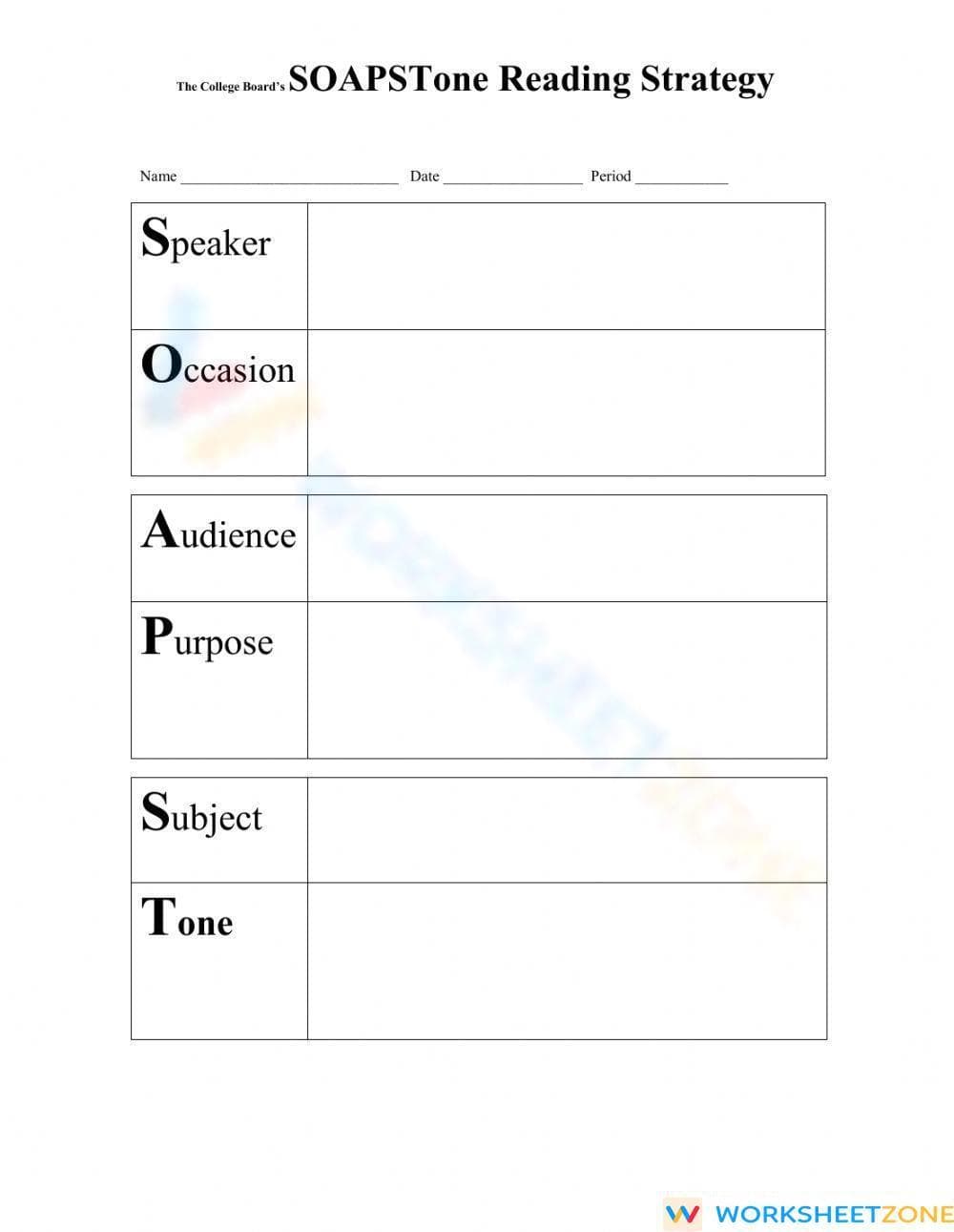
This resource consists of two pages designed for classroom utility. The first page serves as a reference guide, providing clear definitions and guiding questions for each SOAPStone element. The second page is a student-facing graphic organizer with dedicated sections for recording observations and evidence, ensuring students stay organized during the analytical process.
Zero-Prep Workflow
Integrating this worksheet into your lesson requires minimal effort. Simply print the double-sided handout (1 minute), distribute it to your students along with a selected text (30 seconds), and facilitate a peer-review session or class discussion once they have completed their analysis (5-10 minutes). It is an ideal solution for emergency sub plans or last-minute lesson enhancements.
Standards Alignment
This worksheet is primarily aligned with CCSS.ELA-LITERACY.RL.9-10.1, which requires students to cite strong and thorough textual evidence to support their analysis. Additionally, it supports CCSS.ELA-LITERACY.RL.9-10.6 by guiding students to determine an author's point of view or purpose in a text. Both standard codes can be copied directly into lesson plans, IEP goals, or district curriculum mapping tools.
How to Use It
Use this organizer as a formative assessment during the "Guided Practice" phase of a poetry unit. After modeling the strategy with a short poem, have students work in pairs to apply SOAPStone to a new text. Teachers can circulate and observe students as they attempt to define the "Occasion" or "Tone," providing immediate feedback on their ability to find supporting evidence. Expected completion time ranges from 20 to 45 minutes depending on text complexity.
Who It's For
This resource is perfect for middle and high school students (Grades 6-10) who are beginning to tackle complex rhetorical analysis. It is particularly effective for scaffolding analysis for English Language Learners (ELL) or students with IEPs who benefit from clear visual organizers. Pair this with a high-interest contemporary poem or a classic speech for a complete instructional experience.
Research by Fisher & Frey (2014) highlights the critical importance of scaffolding complex reading tasks through the consistent use of graphic organizers like the SOAPStone strategy. By providing students with a robust mnemonic for analysis—Speaker, Occasion, Audience, Purpose, Subject, and Tone—educators help them internalize the essential "habits of mind" required for sophisticated and independent rhetorical critique. This Grade 6-10 worksheet directly addresses CCSS.ELA-LITERACY.RL.9-10.1 by requiring students to cite specific, high-quality textual evidence for each category, effectively bridging the gap between surface-level reading and deep cognitive comprehension. As noted in the comprehensive RAND AIRS 2024 report, such structured prompts are essential for developing the analytical stamina needed for future college and career readiness. This tool ensures that every student, regardless of their starting point, has a clear, accessible pathway to mastering the intricate nuances of both literary and informational texts.


