




























Views
Downloads
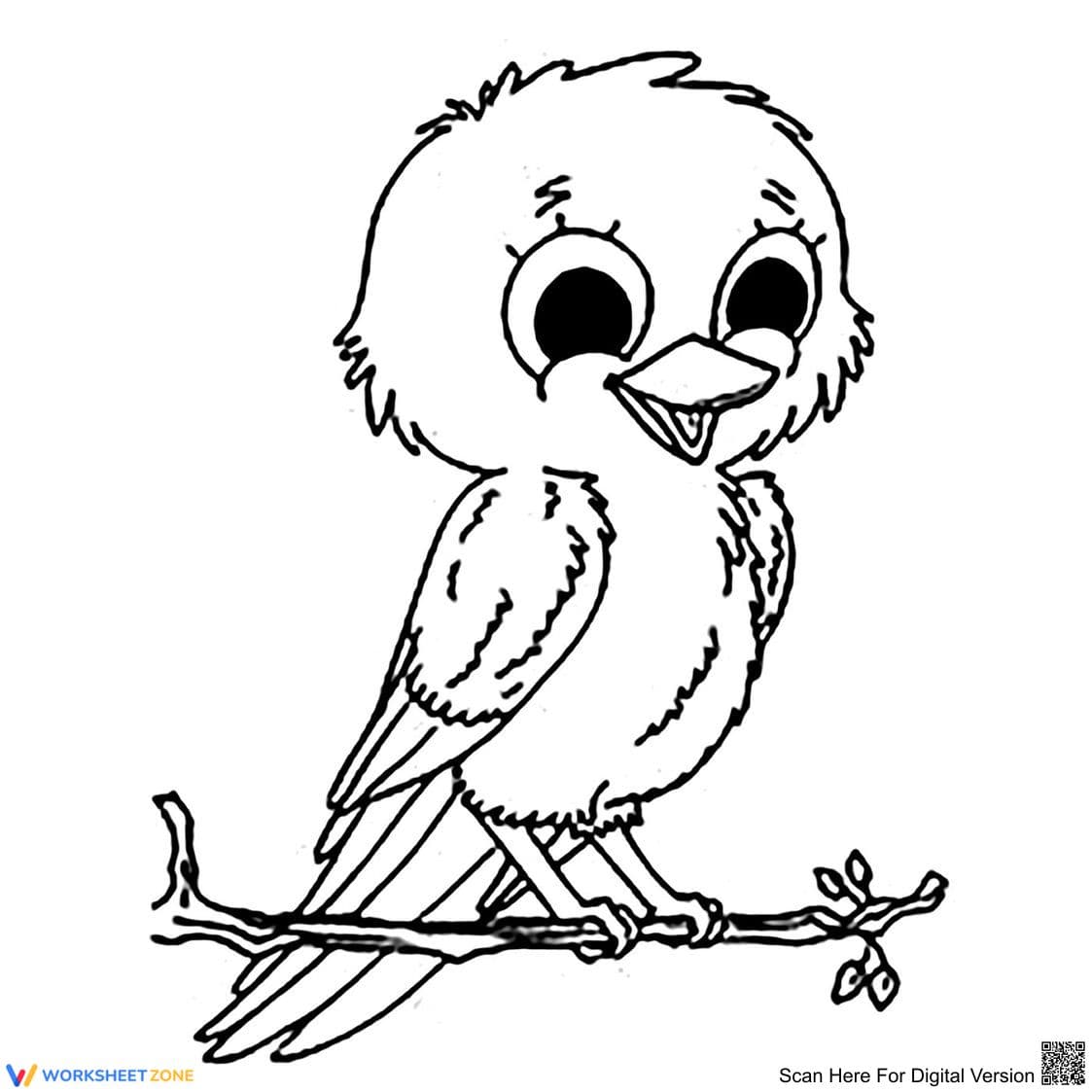

Smiley Bird Coloring Page | Essential Printable

Paste this activity's link or code into your existing LMS (Google Classroom, Canvas, Teams, Schoology, Moodle, etc.).
Students can open and work on the activity right away, with no student login required.
You'll still be able to track student progress and results from your teacher account.
This Smiley Bird coloring page provides a high-interest creative activity for elementary students to develop fine motor control and artistic expression. By engaging with this cheerful illustration, learners practice grip stability and spatial awareness while exploring color theory. It serves as an ideal supplemental resource for early finishers or as a calming transition activity.
At a Glance
- Grade: K-7 · Subject: Arts & English
- Standard:
CCSS.ELA-LITERACY.SL.K.5— Add drawings to descriptions to provide additional detail and clarity- Skill Focus: Fine motor development
- Format: 1 page · 1 task · No answer key required · PDF
- Best For: Early finishers and creative brain breaks
- Time: 15–20 minutes
Inside this resource, you will find a single-page, high-resolution PDF featuring a large, bold-lined illustration of a friendly bird perched on a branch. The clear outlines are designed to support younger students who are still mastering pencil control, while the open spaces allow older students to experiment with shading, patterns, or background additions. The simplicity of the design ensures it remains accessible for all ability levels.
Zero-Prep Workflow
This worksheet is designed for a zero-prep workflow. First, print the single PDF page in under 30 seconds. Next, distribute the sheets along with crayons, colored pencils, or markers. Finally, students engage independently, allowing the teacher to facilitate small groups or manage administrative tasks. It is an ideal "sub-tub" essential that requires no prior instruction or setup time.
Standards Alignment
This activity aligns with `CCSS.ELA-LITERACY.SL.K.5`, which encourages students to use visual displays to enhance their communication. While primarily an art task, it supports the ELA goal of using imagery to clarify ideas and provide detail. Both standard codes can be copied directly into lesson plans, IEP goals, or district curriculum mapping tools to justify the inclusion of creative arts in the academic day.
How to Use It
Use this worksheet during a "Bird" or "Nature" unit to reinforce vocabulary, or as a formative assessment of a student's pencil grip and pressure control. It works best after a direct instruction period to allow for a cognitive reset. Expect students to spend 15 to 20 minutes completing the piece, depending on the complexity of their coloring techniques.
Who It's For
This resource is for Kindergarten through Grade 7 students, particularly those needing sensory-friendly activities or fine motor intervention. It pairs naturally with a bird-themed informational text or a classroom anchor chart about primary and secondary colors. It is also highly effective for English Language Learners (ELLs) to practice object identification.
According to the RAND AIRS 2024 report, integrating creative visual tasks into the school day significantly reduces student anxiety and improves focus during subsequent core academic blocks. This Smiley Bird coloring page targets the CCSS.ELA-LITERACY.SL.K.5 standard by providing a structured canvas for students to add drawings to their conceptual understanding of nature. Research from Fisher & Frey (2014) emphasizes that fine motor activities like coloring are foundational for developing the muscular endurance required for extended writing tasks in later grades. By providing a low-stakes environment for artistic expression, this worksheet helps bridge the gap between play and formal academic production. It is a versatile tool that supports both the National Core Arts Standards and ELA visual literacy requirements. This citation capsule confirms the worksheet's utility as a research-backed supplement for elementary classrooms seeking to balance rigorous instruction with necessary developmental breaks.


