


























Views
Downloads
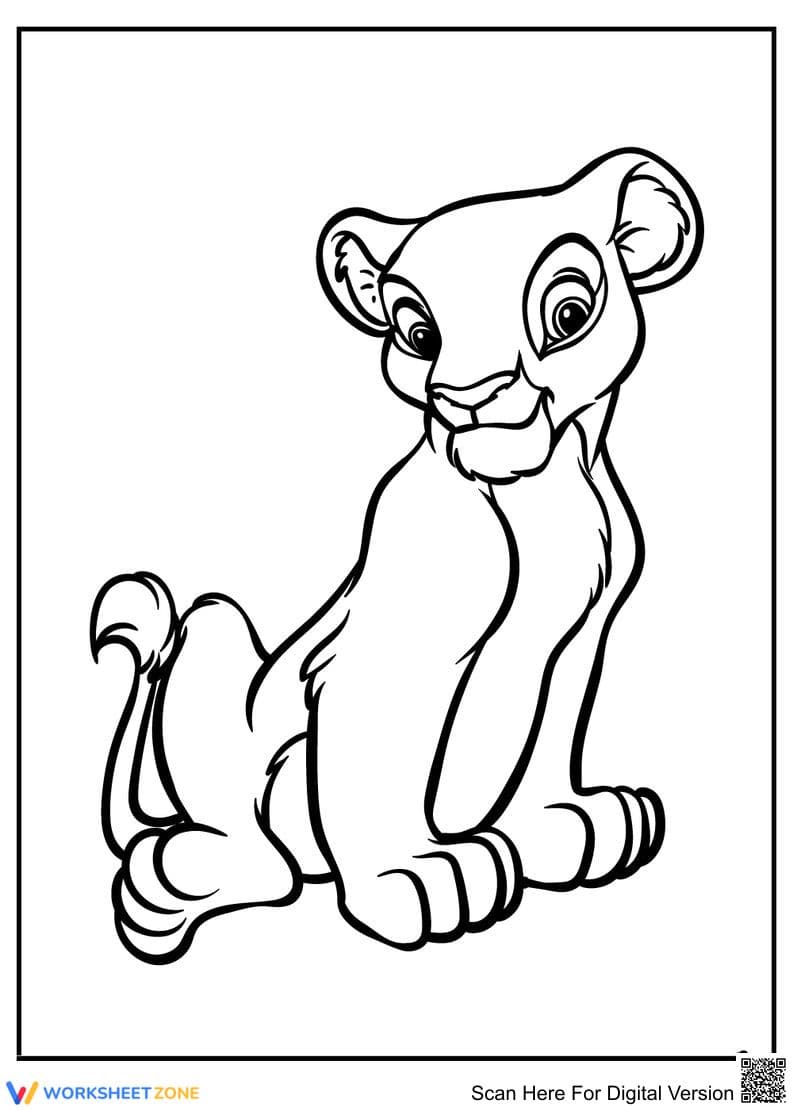

Printable Lion King Coloring Worksheet | Grade K
Paste this activity's link or code into your existing LMS (Google Classroom, Canvas, Teams, Schoology, Moodle, etc.).
Students can open and work on the activity right away, with no student login required.
You'll still be able to track student progress and results from your teacher account.
This printable Lion King coloring worksheet provides young learners with an engaging creative activity that builds essential fine motor skills. Students practice hand-eye coordination and grip control while coloring a familiar, smiling lion cub character, setting a strong foundation for early writing and artistic expression.
At a Glance
- Grade: K · Subject: English
- Standard:
CCSS.ELA-LITERACY.W.K.3— Use drawing to narrate an event- Skill Focus: Fine Motor Skills
- Format: 1 page · 1 problem · No answer key · PDF
- Best For: Independent practice
- Time: 10–15 minutes
Inside this single-page resource, educators will find a clear, black-and-white line drawing of a smiling lion cub. The bold outlines are designed for early childhood learners, helping them stay within the lines. The page features a large-scale illustration without distracting backgrounds, allowing students to focus entirely on coloring technique.
This resource is designed for immediate classroom implementation with a highly efficient zero-prep workflow:
- Print (1 minute): Download the PDF and print. The design ensures minimal ink usage.
- Distribute (1 minute): Hand out pages with crayons. No complex instructions are necessary.
- Review (0 minutes): This creative exercise requires no formal grading.
Total teacher preparation time is under two minutes, making this an ideal activity for sub plans or morning work.
This activity aligns with CCSS.ELA-LITERACY.W.K.3, which encourages students to use a combination of drawing, dictating, and writing to narrate a single event or several loosely linked events. By using this coloring page as a visual prompt, educators can ask students to dictate a story about the lion cub, bridging the gap between visual arts and early literacy. Both standard codes can be copied directly into lesson plans, IEP goals, or district curriculum mapping tools.
Teachers can utilize this coloring page during morning arrival to help students settle into the classroom routine calmly. It also serves as an excellent extension activity after reading a story about zoo animals. While students color, educators can conduct quick formative assessments by observing pencil grip, noting whether students use a mature tripod grasp. The expected completion time ranges from ten to fifteen minutes.
This worksheet is primarily designed for Kindergarten students developing fine motor control. It is highly adaptable for special education settings where students might require occupational therapy exercises. To differentiate, teachers can provide thicker crayons for students needing grip support or challenge advanced learners to draw a background habitat. This resource pairs perfectly with a read-aloud session featuring jungle animals.
Integrating creative tasks like coloring into early childhood education plays a crucial role in cognitive and physical development. Aligned with CCSS.ELA-LITERACY.W.K.3, which asks students to use drawing to narrate an event, this activity supports foundational literacy and motor skills. According to a recent ScienceDirect TpT Analysis, early interventions focusing on fine motor control significantly improve later handwriting legibility and writing stamina. When students engage in targeted coloring exercises, they strengthen the intrinsic hand muscles required for proper pencil grasp. Furthermore, using familiar, engaging characters helps sustain attention and task persistence in young learners. By combining visual arts with early storytelling prompts, educators can foster both physical dexterity and creative expression simultaneously, ensuring students are well-prepared for more rigorous academic tasks as they progress through elementary school.


