


























Views
Downloads
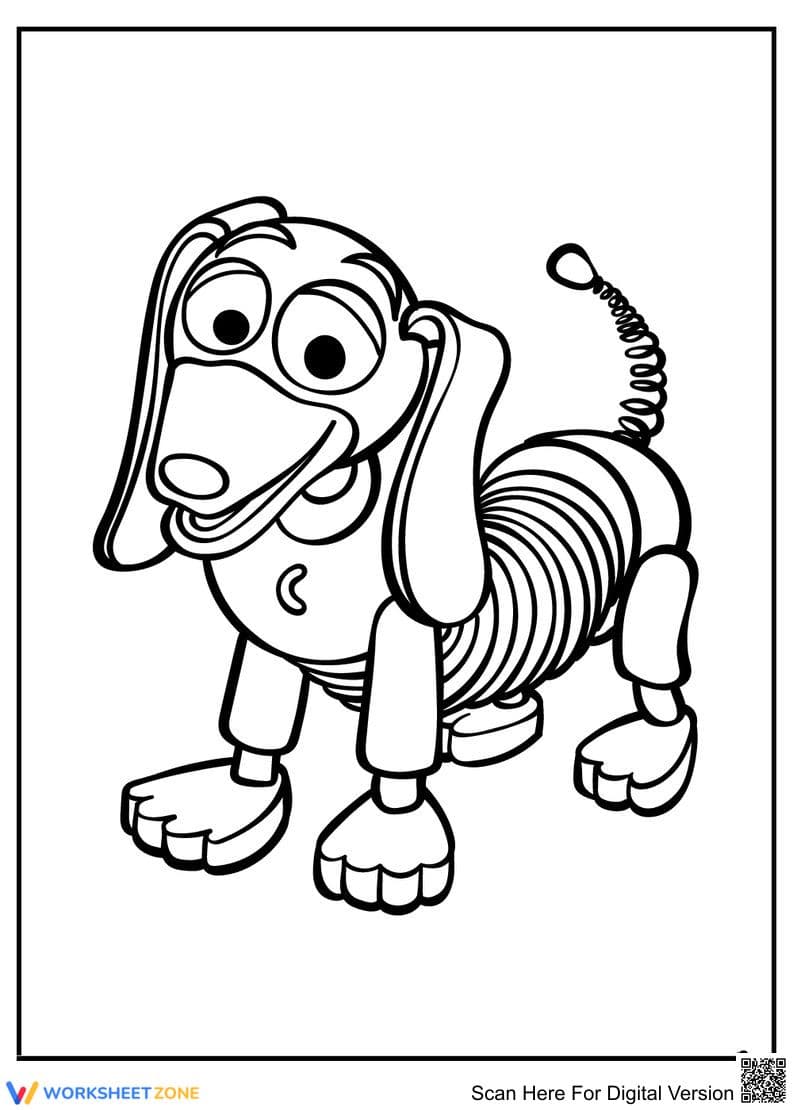

Slinky Dog Coloring Page | Essential Grade K-5 Printable
Paste this activity's link or code into your existing LMS (Google Classroom, Canvas, Teams, Schoology, Moodle, etc.).
Students can open and work on the activity right away, with no student login required.
You'll still be able to track student progress and results from your teacher account.
This Slinky Dog coloring worksheet provides Kindergarten and early elementary students with a high-quality creative outlet to develop essential fine motor control. By engaging with this familiar character, learners practice the precise hand-eye coordination necessary for future writing success. This printable resource ensures students remain focused while exploring color theory and spatial awareness.
At a Glance
- Grade: Kindergarten · Subject: English
- Standard:
CCSS.ELA-LITERACY.L.K.1— Use fine motor control to demonstrate command of writing conventions- Skill Focus: Fine Motor Development
- Format: 1 page · 1 task · No answer key needed · PDF
- Best For: Morning work or creative breaks
- Time: 15–20 minutes
What’s Inside: This resource features a single-page, high-resolution line art illustration of Slinky Dog from Toy Story. The bold outlines are specifically designed to help younger learners stay within the lines, supporting the development of the tripod grip. The clean PDF format ensures that every print is crisp and ready for crayons, markers, or colored pencils.
Zero-Prep Workflow
- Print (30 seconds): Simply send the PDF to your school printer; no scaling or complex settings are required for this standard letter-sized sheet.
- Distribute (30 seconds): Hand out the sheets during transition periods or as a reward for completing primary ELA tasks early.
- Review (1 minute): Provide immediate positive reinforcement by displaying finished work on a classroom gallery wall to build student confidence.
Total teacher preparation time is under 2 minutes, making this an ideal solution for unexpected schedule changes or sub plans.
Standards Alignment
This worksheet aligns with CCSS.ELA-LITERACY.L.K.1, which requires students to demonstrate command of the conventions of standard English. While often applied to writing, the muscular control developed through coloring is a prerequisite for legible letter formation. This standard code can be copied directly into lesson plans, IEP goals, or district curriculum mapping tools.
How to Use It
Use this worksheet during the "settling in" period at the start of the school day or as a quiet-time activity following active recess. It serves as an excellent formative assessment tool; observe how students hold their coloring tools to identify those who may need additional occupational therapy support or pencil grips. Expect completion within 15 to 20 minutes.
Who It's For
This resource is designed for Kindergarten through Grade 2 students, though it remains popular for older students as a stress-relief activity. It is particularly effective for English Language Learners (ELLs) as a low-stakes way to engage with classroom materials. Pair this with a Toy Story read-aloud or a character trait anchor chart for a complete thematic lesson.
Research from Fisher & Frey (2014) emphasizes that fine motor activities like coloring are foundational to the gradual release of responsibility in early literacy. By mastering the physical act of tool manipulation through engaging characters, students reduce the cognitive load required when they transition to formal handwriting tasks. This Slinky Dog worksheet supports CCSS.ELA-LITERACY.L.K.1 by bridging the gap between creative play and the physical requirements of the English Language Arts curriculum. Data from the NAEP suggests that students with stronger early motor skills often demonstrate higher proficiency in written expression in later grades. Providing structured opportunities for artistic engagement allows educators to support holistic development without sacrificing instructional time. This 1-page printable serves as a reliable tool for building the stamina and precision needed for academic writing, ensuring that students are physically prepared for the rigors of primary grade standards.


