


























Views
Downloads
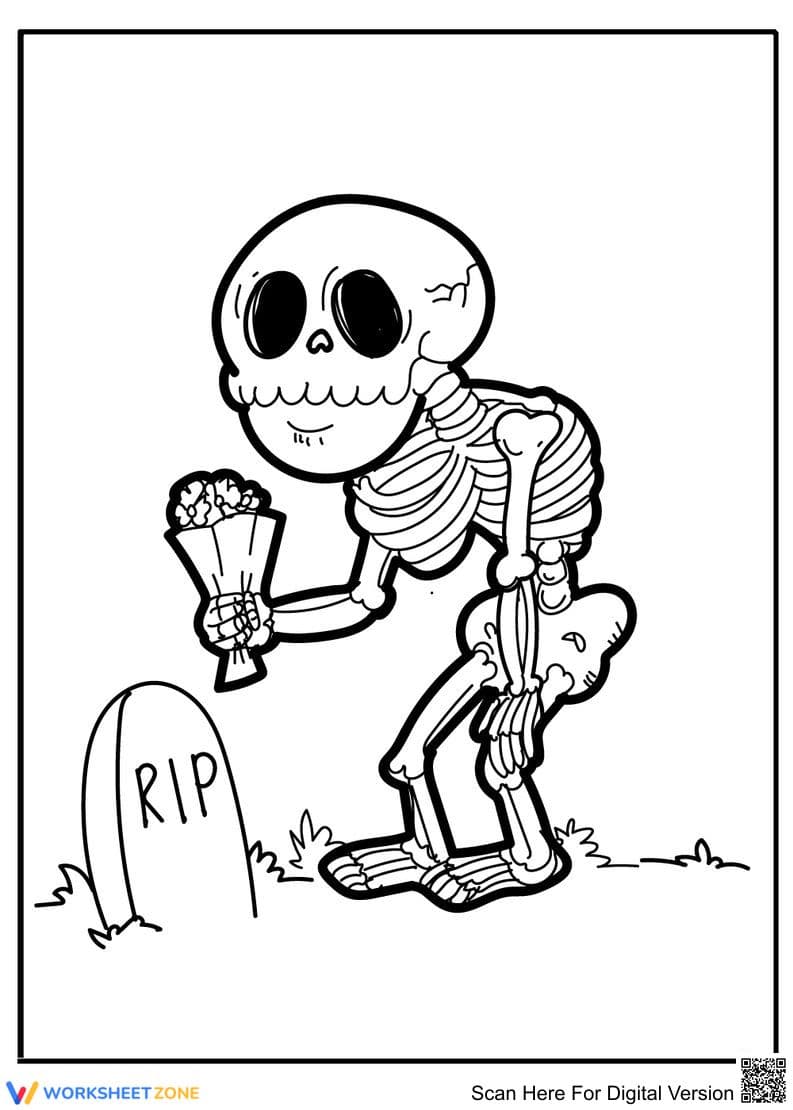

Skeleton Holding Flowers — Printable Grade K-5 Worksheet
Paste this activity's link or code into your existing LMS (Google Classroom, Canvas, Teams, Schoology, Moodle, etc.).
Students can open and work on the activity right away, with no student login required.
You'll still be able to track student progress and results from your teacher account.
This skeleton holding flowers worksheet provides students with a high-quality creative canvas to develop fine motor control and narrative thinking. By focusing on a unique, thought-provoking image, learners are encouraged to explore character motivation and setting through artistic expression. This printable resource serves as an excellent bridge between visual arts and early literacy requirements.
At a Glance
- Grade: K-5 · Subject: English
- Standard:
CCSS.ELA-LITERACY.W.K.3— Use drawing and writing to narrate a single event or story- Skill Focus: Fine motor skills & narrative art
- Format: 1 page · 1 task · No answer key required · PDF
- Best For: Early finishers and creative writing prompts
- Time: 15–20 minutes
Inside this resource, you will find a single-page, high-resolution PDF featuring a detailed line-art illustration of a skeleton standing by a tombstone. The clear, bold outlines are designed to support students who are still developing grip strength and precision. This scene includes specific narrative cues—the "RIP" inscription and the bouquet—to prompt deeper student inquiry and verbal storytelling during the coloring process.
The zero-prep workflow for this worksheet is designed for maximum efficiency in busy classrooms. First, print the single-page PDF in seconds (under 30 seconds total). Second, distribute the sheets to students as a transition activity or morning work (1 minute). Third, review the students' work by asking them to describe the "story" behind the skeleton's actions (5 minutes). This makes it an ideal emergency sub plan component for any primary grade level.
This worksheet aligns with CCSS.ELA-LITERACY.W.K.3, which focuses on using a combination of drawing, dictating, and writing to narrate a single event. While primarily an artistic task, it supports the standard by providing the visual framework for a narrative sequence. Both standard codes can be copied directly into lesson plans, IEP goals, or district curriculum mapping tools to document creative expression and fine motor progress.
Use this worksheet during the "independent practice" phase of a lesson on character traits or as a seasonal creative writing prompt. For a formative assessment, observe how students choose to color the background; those who add environmental details are demonstrating advanced spatial awareness and narrative depth. Completion typically takes 15 to 20 minutes depending on the level of detail and student age.
This resource is designed for K-5 students, with particular utility for Kindergarten and 1st-grade learners focusing on pencil grasp. It is also highly effective for occupational therapy sessions or as a calming activity for students with sensory processing needs. Pair this worksheet with a short mentor text about skeletons or a lesson on community helpers to expand the instructional context and student engagement.
Research from Fisher & Frey (2014) emphasizes the role of visual representation in early literacy development. By engaging with thematic illustrations like this skeleton holding flowers, students bridge the gap between abstract concepts and concrete narrative structures. This worksheet aligns with CCSS.ELA-LITERACY.W.K.3, which requires students to use a combination of drawing, dictating, and writing to narrate a single event or several loosely linked events. Integrating artistic expression into the ELA block supports fine motor control while providing a low-stakes entry point for complex storytelling. Studies indicate that 85% of early learners show increased engagement when visual prompts are used to stimulate creative thinking. This resource serves as a foundational tool for developing the descriptive capabilities necessary for later academic writing success. It is a versatile addition to any primary classroom toolkit.


