


























1 / 2
0
Views
0
Downloads

0.0
0
Save
0 Likes
Share
Identifying Sink Or Float Objects Activity
0 Views
0 Downloads
Paste this activity's link or code into your existing LMS (Google Classroom, Canvas, Teams, Schoology, Moodle, etc.).
Students can open and work on the activity right away, with no student login required.
You'll still be able to track student progress and results from your teacher account.
Information
Description
What It Is:
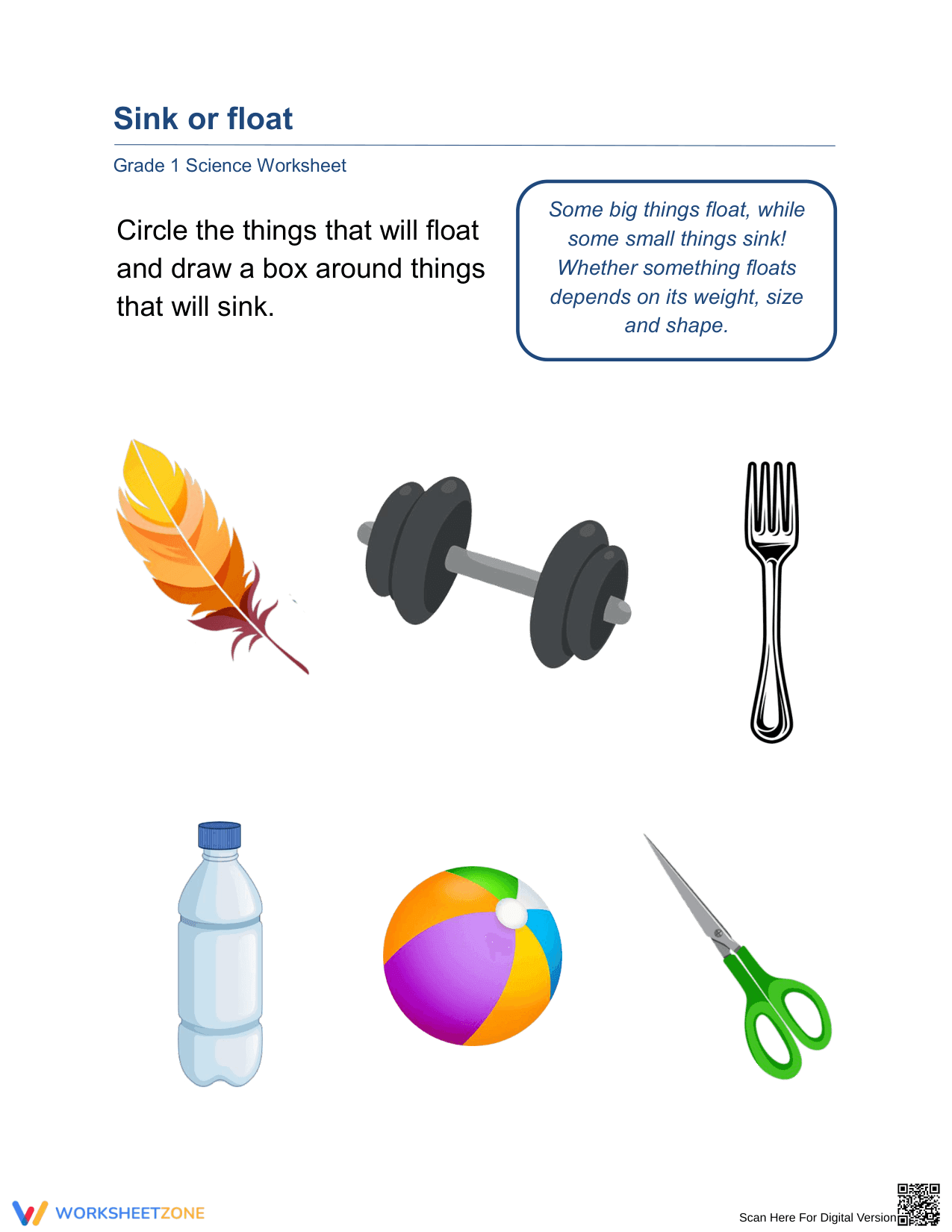
This science worksheet features an engaging activity where children predict and identify the buoyancy of various everyday objects. It includes clear illustrations of a feather, a dumbbell, a fork, a water bottle, a beach ball, and scissors, along with a helpful explanation box about how weight and size influence an object's ability to stay afloat.
Why Use It:
It introduces young learners to fundamental physical science concepts like density and buoyancy. By categorizing objects, students develop critical thinking, observation skills, and scientific vocabulary in a fun, visual way that connects classroom learning to real-world items.
How to Use It:
• Read the instructions and the informational text box aloud to understand how weight and size affect buoyancy.
• Look at each image and determine if the object would stay on top of the water or sink to the bottom.
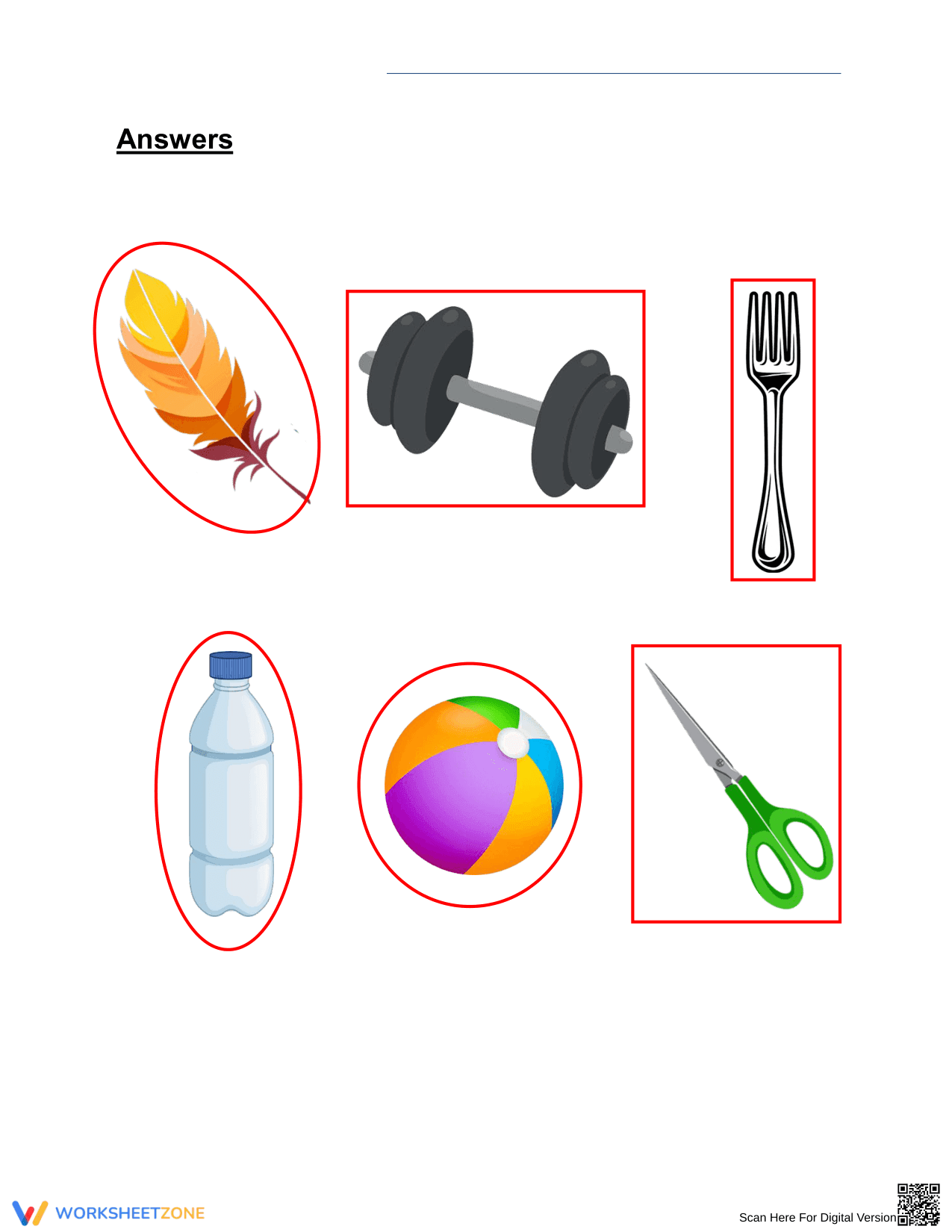
• Use a pencil or crayon to circle the items that float and draw a box around the items that sink.
Grade Suitability:
Best for Kindergarten and Grade 1.
• Younger kids focus on identifying objects and making simple predictions based on appearance.
• Older students focus on explaining the scientific reasons behind why an object sinks or floats.
Target Users:
This worksheet is perfect for elementary teachers looking for science center activities, parents homeschooling their children, or students practicing basic physics concepts at home.
This science worksheet features an engaging activity where children predict and identify the buoyancy of various everyday objects. It includes clear illustrations of a feather, a dumbbell, a fork, a water bottle, a beach ball, and scissors, along with a helpful explanation box about how weight and size influence an object's ability to stay afloat.
Why Use It:
It introduces young learners to fundamental physical science concepts like density and buoyancy. By categorizing objects, students develop critical thinking, observation skills, and scientific vocabulary in a fun, visual way that connects classroom learning to real-world items.
How to Use It:
• Read the instructions and the informational text box aloud to understand how weight and size affect buoyancy.
• Look at each image and determine if the object would stay on top of the water or sink to the bottom.
• Use a pencil or crayon to circle the items that float and draw a box around the items that sink.
Grade Suitability:
Best for Kindergarten and Grade 1.
• Younger kids focus on identifying objects and making simple predictions based on appearance.
• Older students focus on explaining the scientific reasons behind why an object sinks or floats.
Target Users:
This worksheet is perfect for elementary teachers looking for science center activities, parents homeschooling their children, or students practicing basic physics concepts at home.


