


























Views
Plays
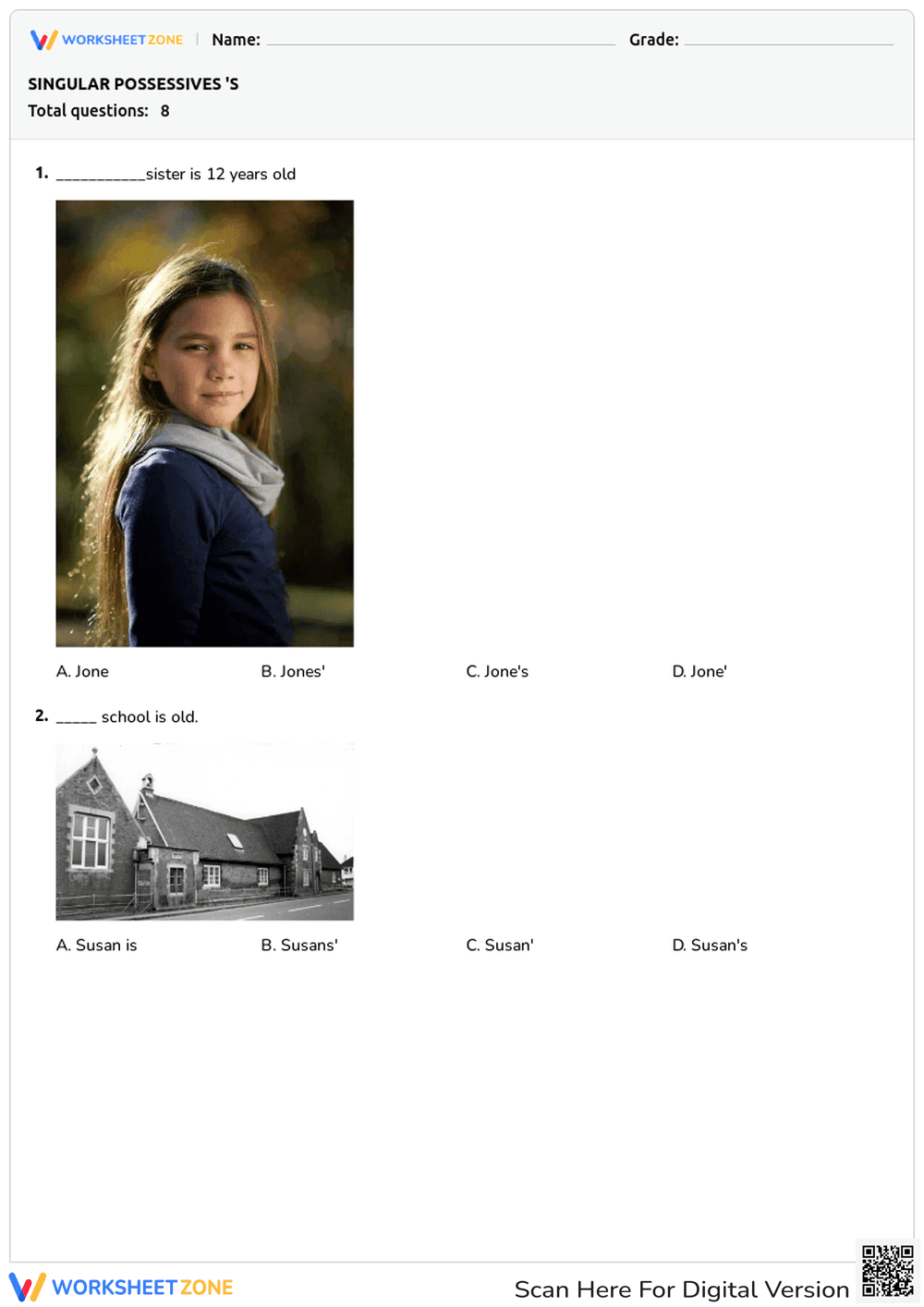
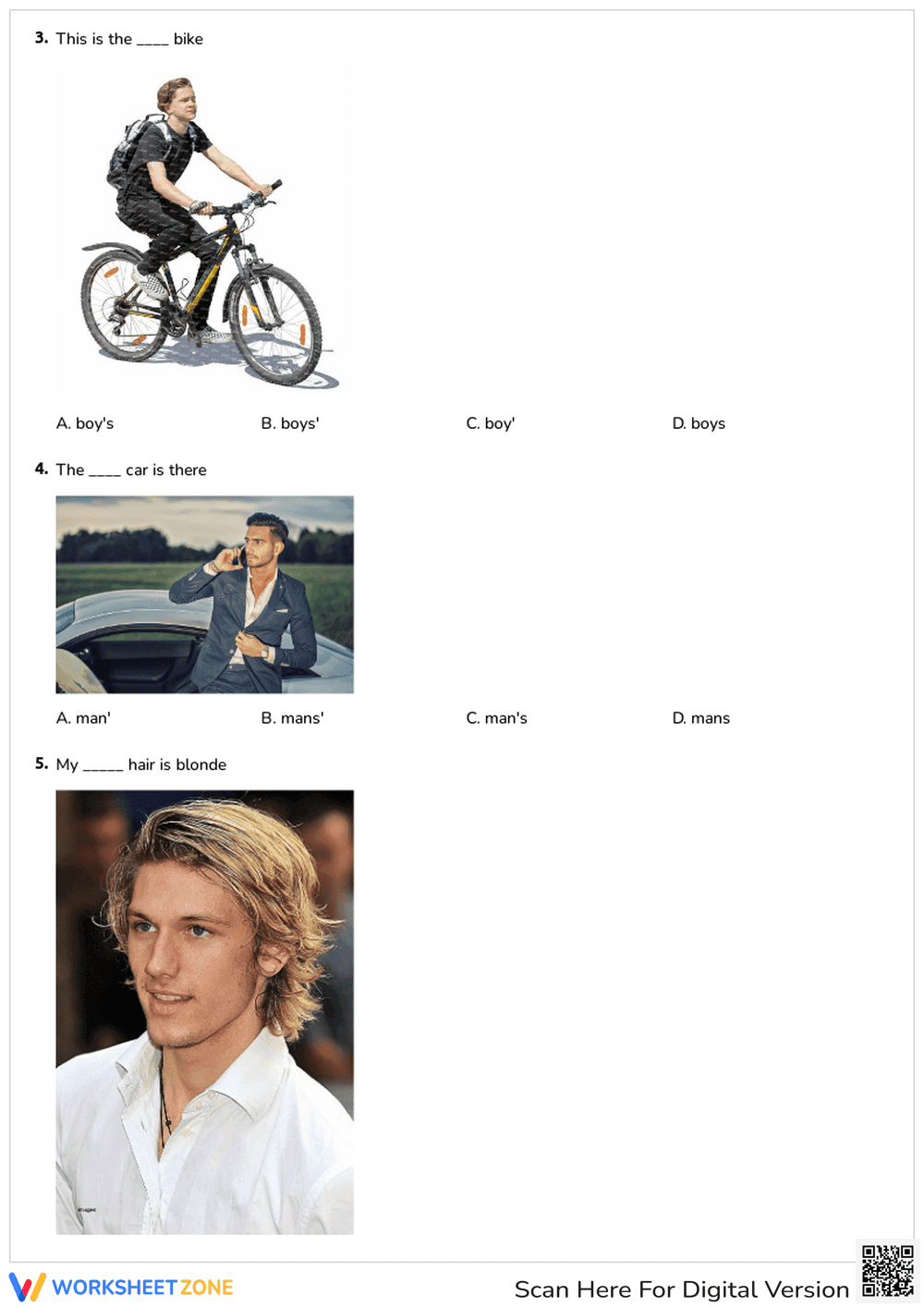
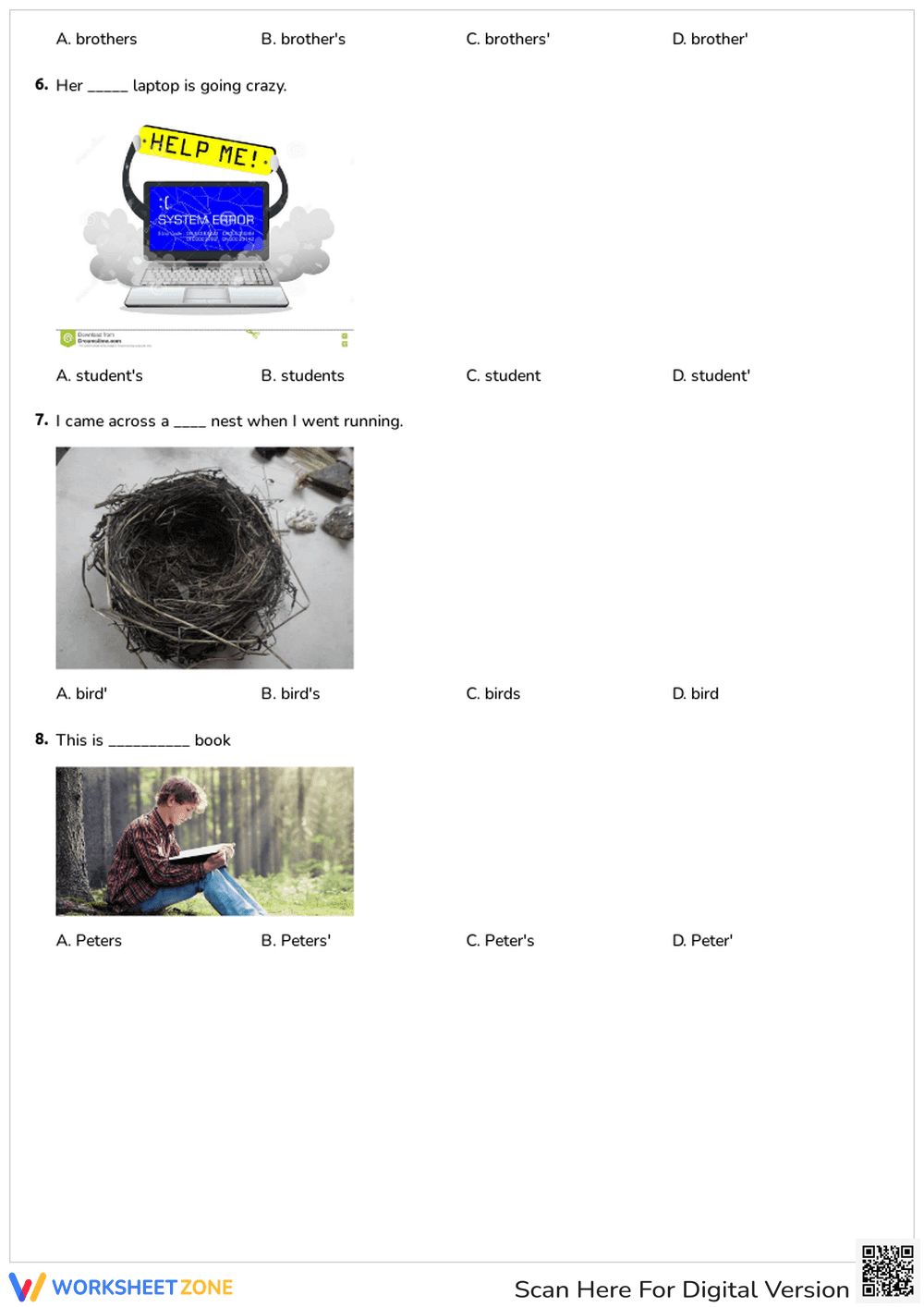

Singular Possessives Worksheet | Grade 1 Essential
Paste this activity's link or code into your existing LMS (Google Classroom, Canvas, Teams, Schoology, Moodle, etc.).
Students can open and work on the activity right away, with no student login required.
You'll still be able to track student progress and results from your teacher account.
This Grade 1 grammar worksheet provides targeted practice for mastering singular possessive nouns. By focusing specifically on the addition of the apostrophe and the letter 's', students learn to indicate ownership clearly within a sentence. This resource ensures learners can distinguish between simple nouns and possessives, a fundamental step in early writing development and syntactic accuracy.
At a Glance
- Grade: 1 · Subject: ELA Grammar
- Standard:
CCSS.ELA-LITERACY.L.1.1— Demonstrate command of the conventions of standard English grammar and usage- Skill Focus: Singular possessive nouns
- Format: 3 pages · 8 problems · Answer key included · PDF
- Best For: Independent practice and formative assessment
- Time: 15–20 minutes
Inside this 3-page PDF, you will find 8 carefully crafted multiple-choice questions. Each question is paired with a high-quality, real-world image that provides context for the possessive relationship being described. The layout is clean and distraction-free, featuring large text and clear answer options (A-D). A full answer key is provided to facilitate quick grading or student self-correction.
Skill Progression
- Guided practice: The first 2 items use familiar names like "Jone" and "Susan" to establish the pattern of adding an apostrophe and 's' to a person's name.
- Supported practice: Items 3 through 5 transition to common nouns like "boy," "man," and "brother," requiring students to distinguish between plural and possessive forms.
- Independent practice: The final 3 items challenge students with varied contexts, including animals and objects, to ensure the rule is generalized across different noun categories.
This sequence follows the gradual release instructional framework, moving from high-support visual cues to independent selection.
Standards Alignment
This resource is primarily aligned with `CCSS.ELA-LITERACY.L.1.1`, which requires students to demonstrate command of the conventions of standard English grammar and usage when writing or speaking. Specifically, it addresses the foundational understanding of how nouns change form to show possession. Both standard codes can be copied directly into lesson plans, IEP goals, or district curriculum mapping tools.
How to Use It
Use this worksheet during the independent practice phase of a lesson on punctuation. It works exceptionally well as an exit ticket to gauge student understanding after a direct instruction session on apostrophes. Teachers should observe whether students are mistakenly choosing plural options instead of the possessive form. Expect students to complete the 8 tasks in approximately 15 to 20 minutes.
Who It's For
This resource is designed for Grade 1 students but is also highly effective for Kindergarteners ready for enrichment or English Language Learners (ELLs) who need visual support to understand possessive relationships. It pairs naturally with an anchor chart showing the owner-object formula or a mentor text that features prominent possessive nouns.
Singular possessives represent a critical juncture in early literacy where students transition from simple labeling to expressing complex relationships between nouns. According to Fisher & Frey (2014), the gradual release of responsibility model is most effective when teaching mechanics like the apostrophe-s convention. This worksheet aligns with CCSS.ELA-LITERACY.L.1.1 by providing 8 high-frequency noun examples that require students to identify the correct possessive form. Research from the NAEP indicates that early mastery of punctuation conventions correlates with higher writing fluency in later elementary years. By isolating the singular possessive skill, educators can provide the targeted intervention necessary to prevent common errors in noun-verb agreement. This resource serves as a foundational tool for building the syntactic awareness required for Grade 1 mastery.


