


























Views
Downloads
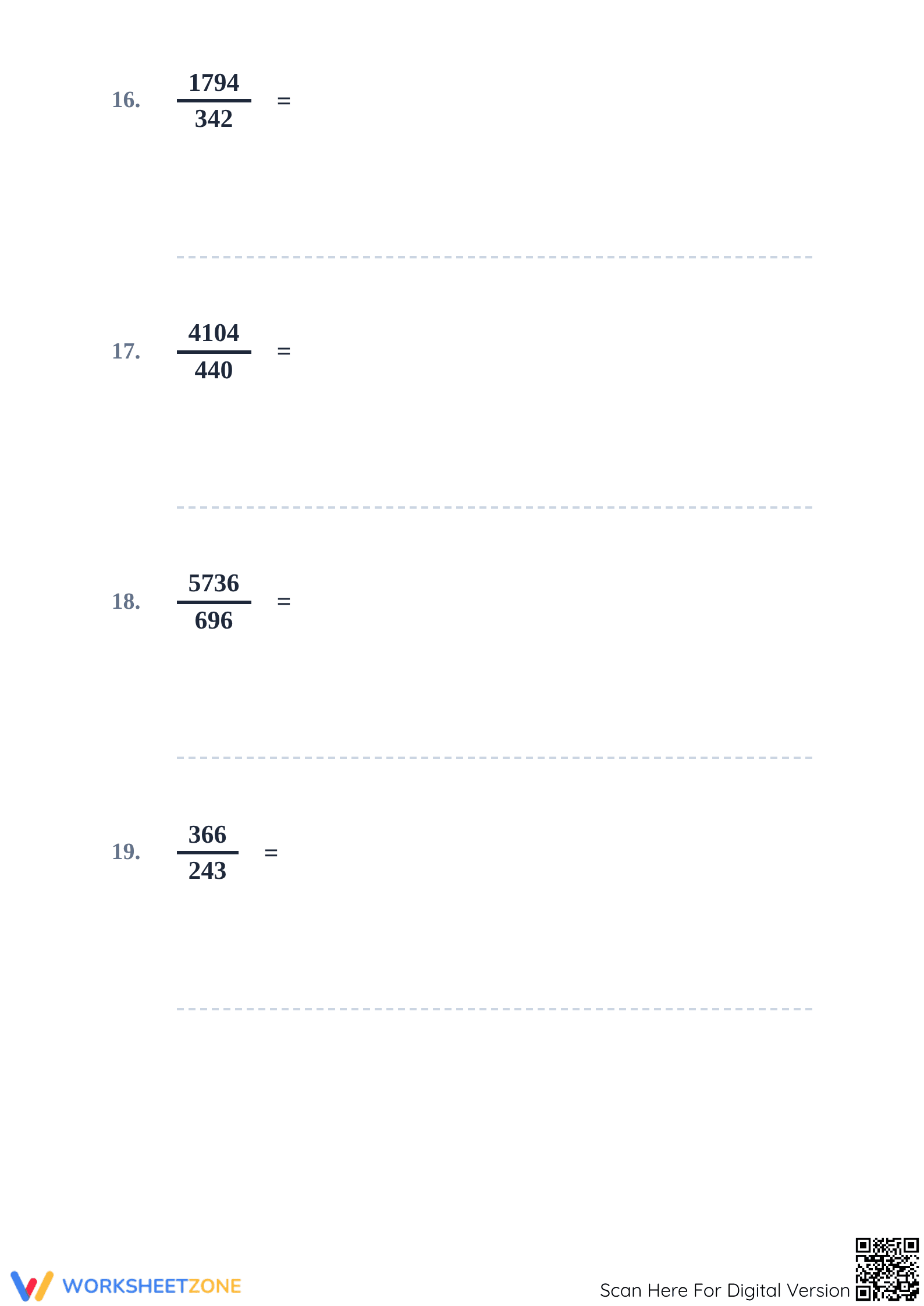

Printable Improper Fractions Worksheet | Grades 4-6
Paste this activity's link or code into your existing LMS (Google Classroom, Canvas, Teams, Schoology, Moodle, etc.).
Students can open and work on the activity right away, with no student login required.
You'll still be able to track student progress and results from your teacher account.
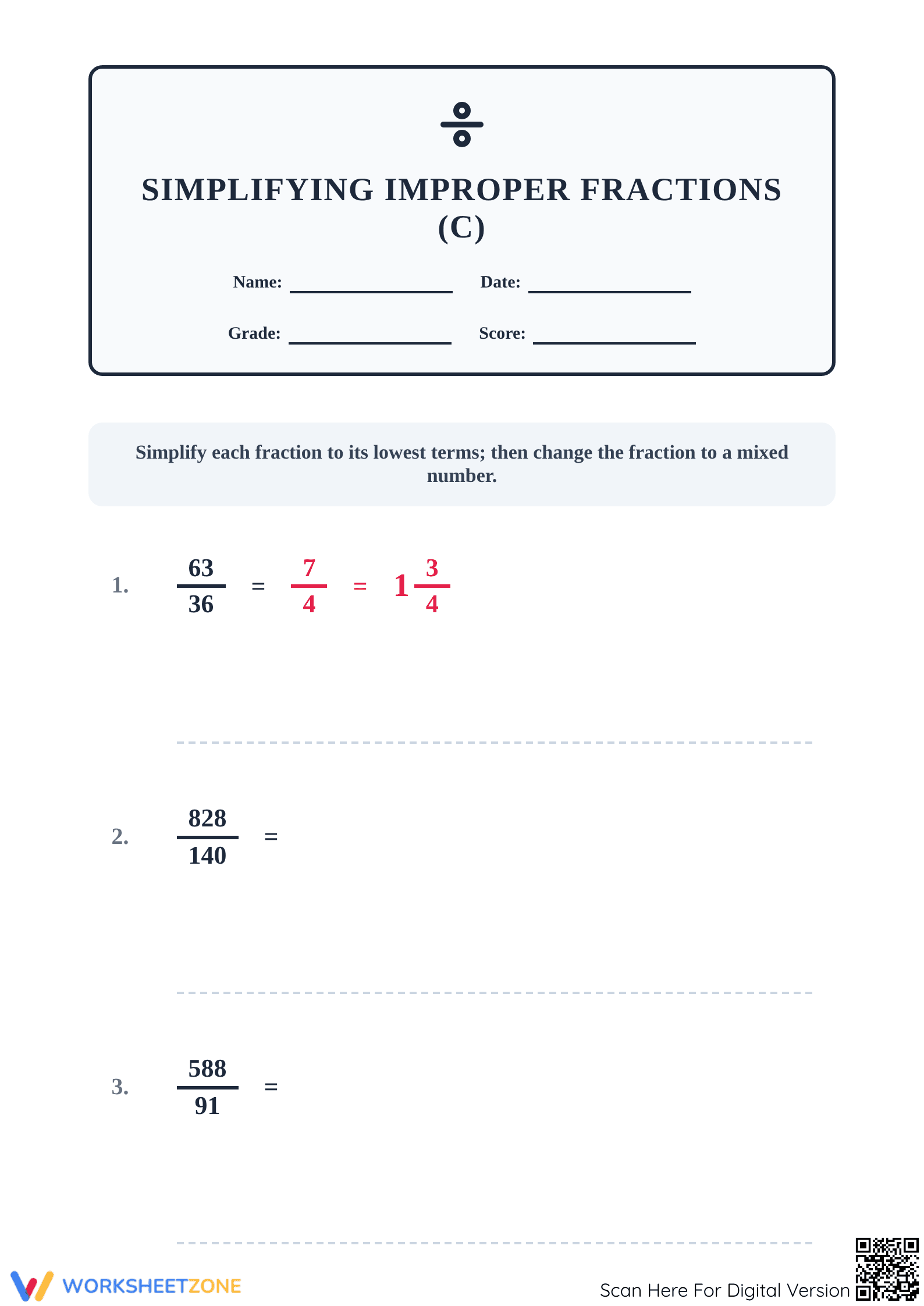
Help students master fraction equivalence with this comprehensive practice set. This worksheet guides learners through the multi-step process of reducing improper fractions to their simplest form before converting them into mixed numbers. By focusing on both simplification and conversion, students develop a deeper numerical fluency required for advanced middle school mathematics.
At a Glance
- Grade: 4 · Subject: Math
- Standard:
CCSS.MATH.CONTENT.4.NF.B.3.C— Add and subtract mixed numbers with like denominators by replacing with equivalent fractions- Skill Focus: Improper Fraction Simplification
- Format: 5 pages · 19 problems · Answer key included · PDF
- Best For: Small group intervention or independent practice
- Time: 25–35 minutes
What's Inside
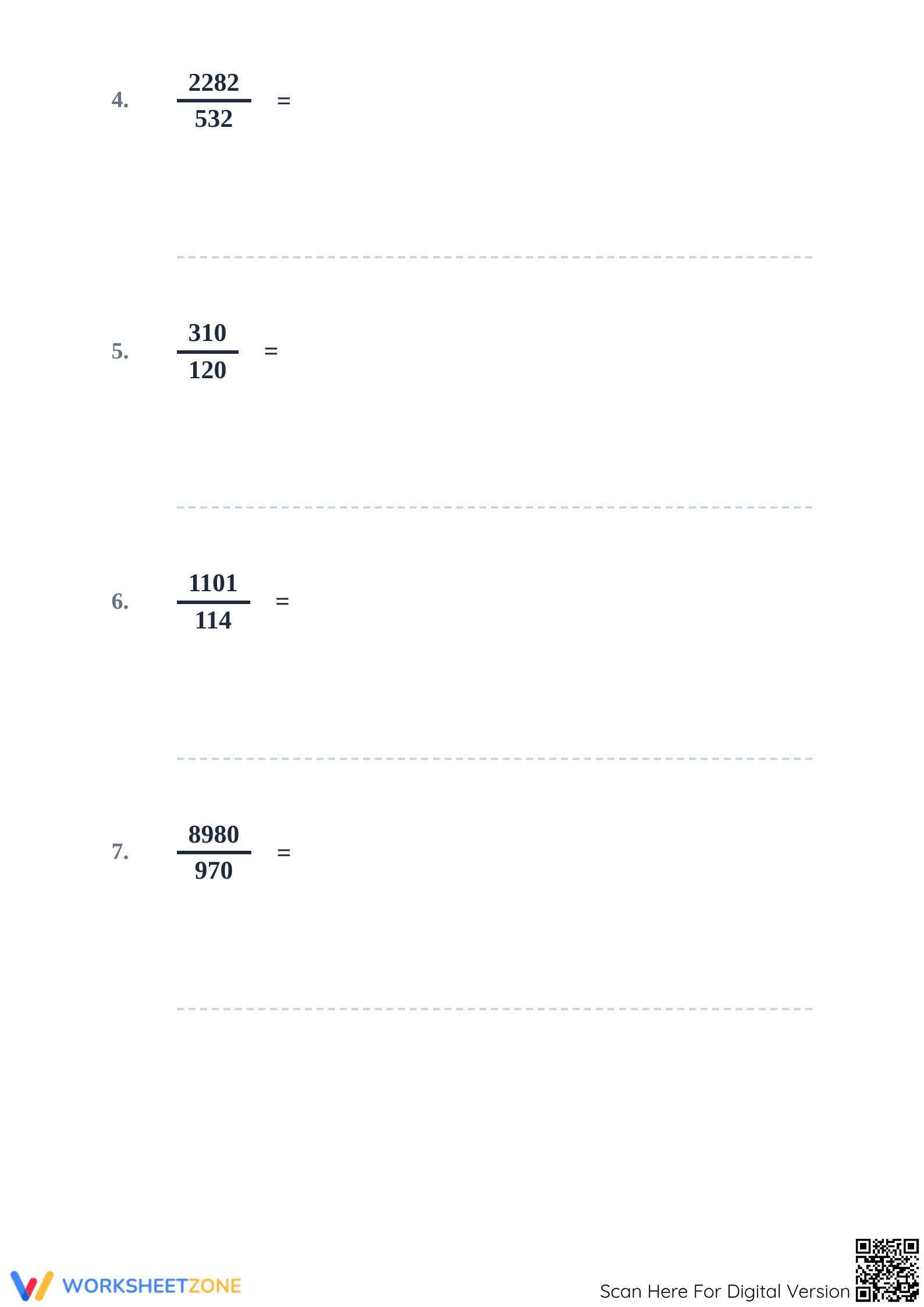
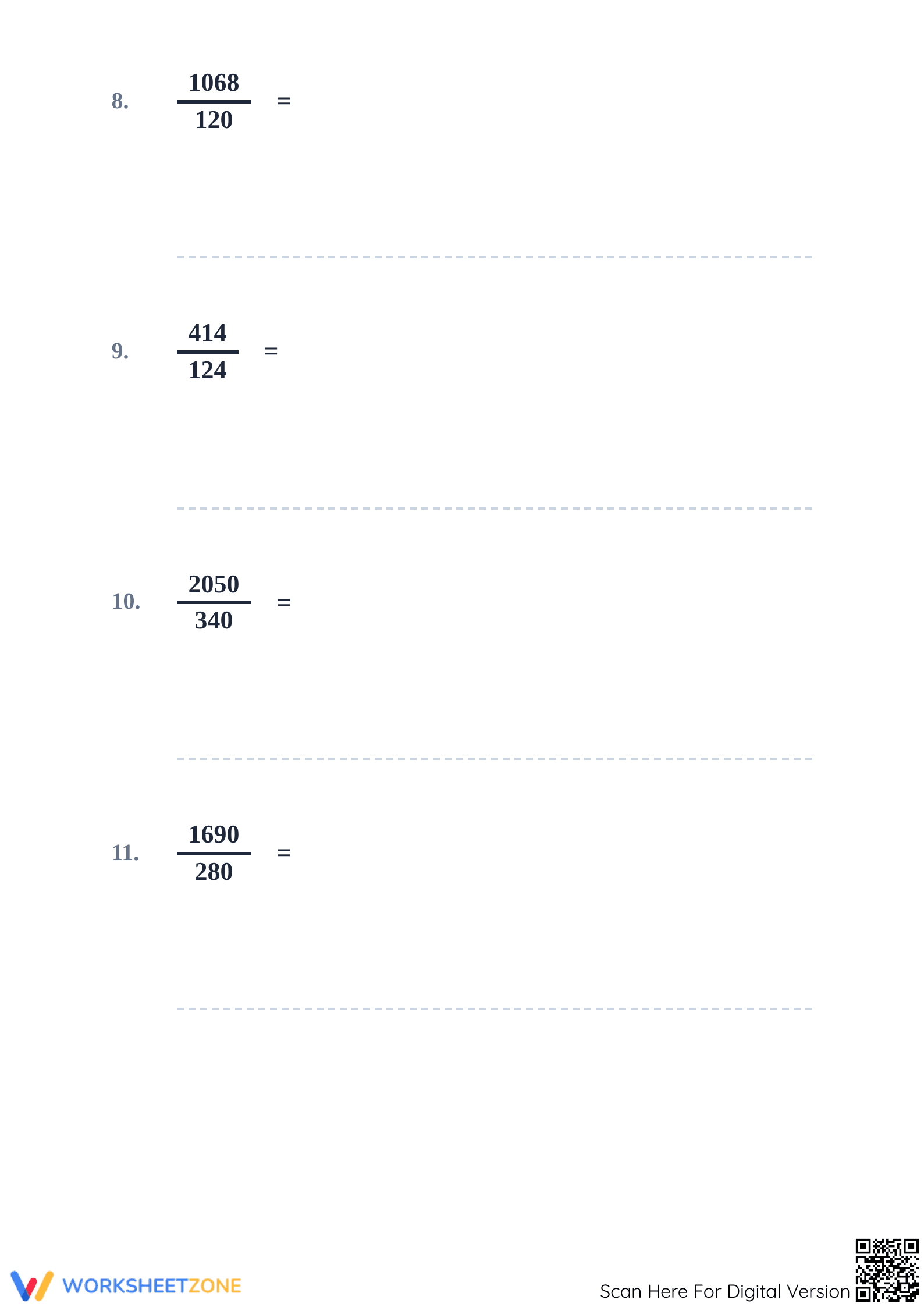
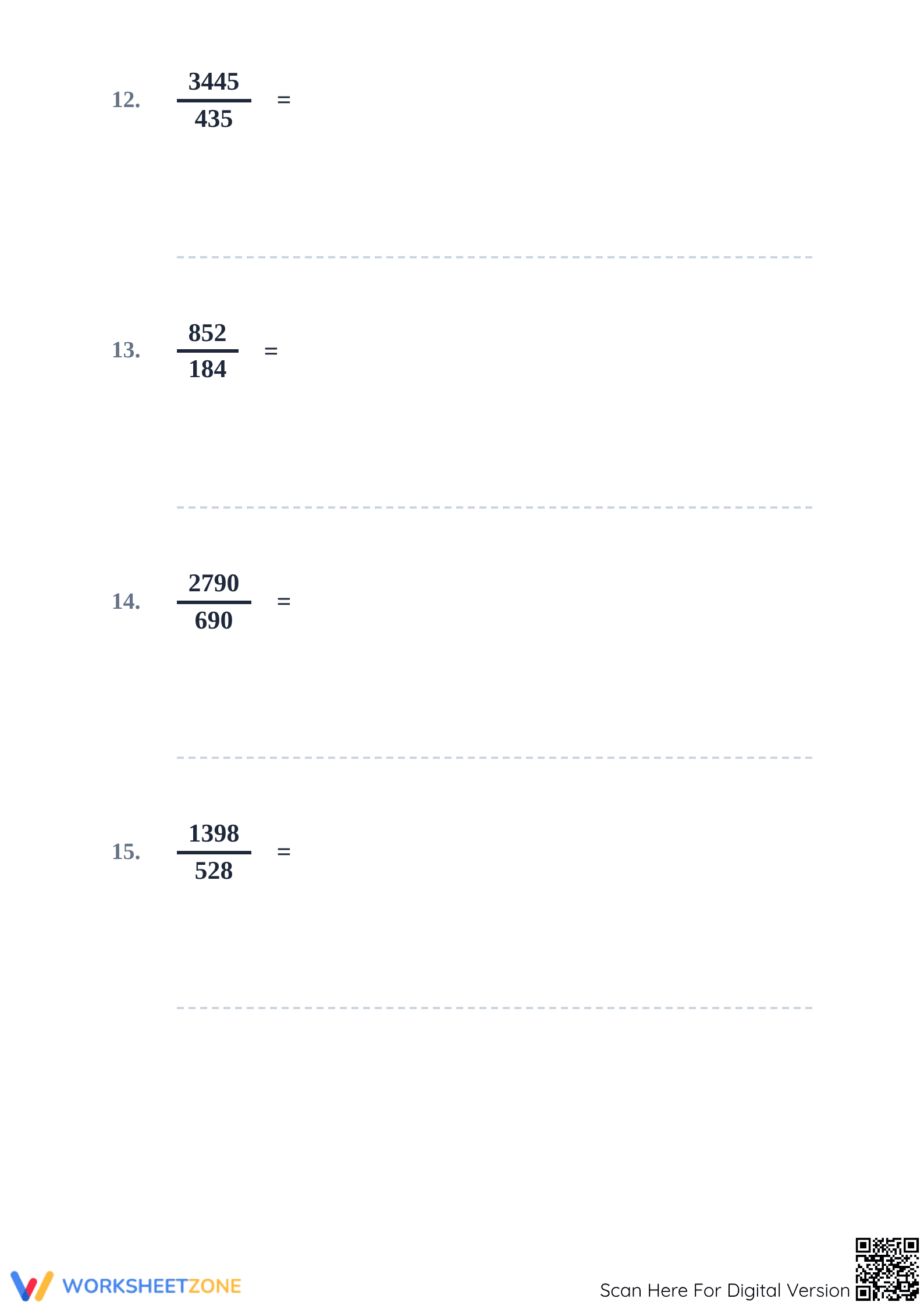
This 5-page PDF contains 19 rigorous mathematical problems designed to challenge student understanding of fraction properties. Each problem provides ample white space for calculation, ensuring students can clearly show their work during the two-stage process of simplifying and converting. A complete answer key is included to allow for efficient grading or student self-correction.
Skill Progression
- Guided practice: The initial problems feature a worked example (Question 1) that serves as a visual anchor, demonstrating the exact steps needed to reach the final mixed number.
- Supported practice: Mid-range problems (Questions 2-10) present larger numerators and denominators, requiring students to identify greatest common factors to reach lowest terms.
- Independent practice: The final set (Questions 11-19) includes complex three-digit numerators that demand high-level division skills and accuracy in mixed number conversion.
This gradual release model ensures students build confidence before tackling the most intimidating fraction values.
Standards Alignment
This resource is primarily aligned with CCSS.MATH.CONTENT.4.NF.B.3.C, which focuses on replacing mixed numbers with equivalent fractions to solve operations. Additionally, it supports CCSS.MATH.CONTENT.4.NF.A.1 by emphasizing the generation of equivalent fractions through simplification. Both standard codes can be copied directly into lesson plans, IEP goals, or district curriculum mapping tools.
How to Use It
Deploy this worksheet during the "You Do" phase of a lesson on fraction operations to assess student mastery of conversion. Teachers should circulate and observe students solving Question 8; if a student fails to simplify before converting, it indicates a need for more direct instruction on divisibility rules. This activity typically takes 30 minutes to complete.
Who It's For
This resource is ideal for Grade 4 and 5 students who have mastered basic fraction concepts but struggle with improper forms. It is particularly effective for Tier 2 intervention groups or as a challenge set for advanced 3rd graders. Pair this with a fraction wall anchor chart to provide visual support for equivalent values.
The mastery of fraction equivalence and conversion is a critical predictor of later success in algebra and proportional reasoning. According to Fisher & Frey (2014), the use of scaffolded practice sets that move from worked examples to independent application—as seen in this 19-problem set—allows students to internalize complex procedural knowledge like the simplification of improper fractions. Aligned with CCSS.MATH.CONTENT.4.NF.B.3.C, this resource requires students to perform multiple cognitive steps: identifying common factors, executing division, and reorganizing values into mixed number formats. NAEP data consistently shows that students who can flexibly navigate between different fraction representations perform significantly better on complex word problems. By providing 5 pages of focused practice, this worksheet ensures that the "art of simplifying" becomes an automatic habit rather than a point of frustration for developing mathematicians.


