


























Views
Downloads

Printable Grade 2 Sentence Structure Worksheet | Aligned
Paste this activity's link or code into your existing LMS (Google Classroom, Canvas, Teams, Schoology, Moodle, etc.).
Students can open and work on the activity right away, with no student login required.
You'll still be able to track student progress and results from your teacher account.
This Grade 2 ELA worksheet provides comprehensive practice for identifying and constructing different sentence types. Students master the distinctions between simple, compound, and complex sentences through varied exercises designed to improve writing clarity and grammatical precision. By engaging with 18 distinct tasks, learners develop the foundational syntax skills required for advanced composition and effective communication.
At a Glance
- Grade: 2 · Subject: ELA Sentences
- Standard:
CCSS.ELA-LITERACY.L.2.1.f— Produce, expand, and rearrange complete simple and compound sentences.- Skill Focus: Sentence Structure Classification
- Format: 4 pages · 18 problems · Answer key included · PDF
- Best For: Grammar reinforcement and writing workshops
- Time: 25–35 minutes
What's Inside
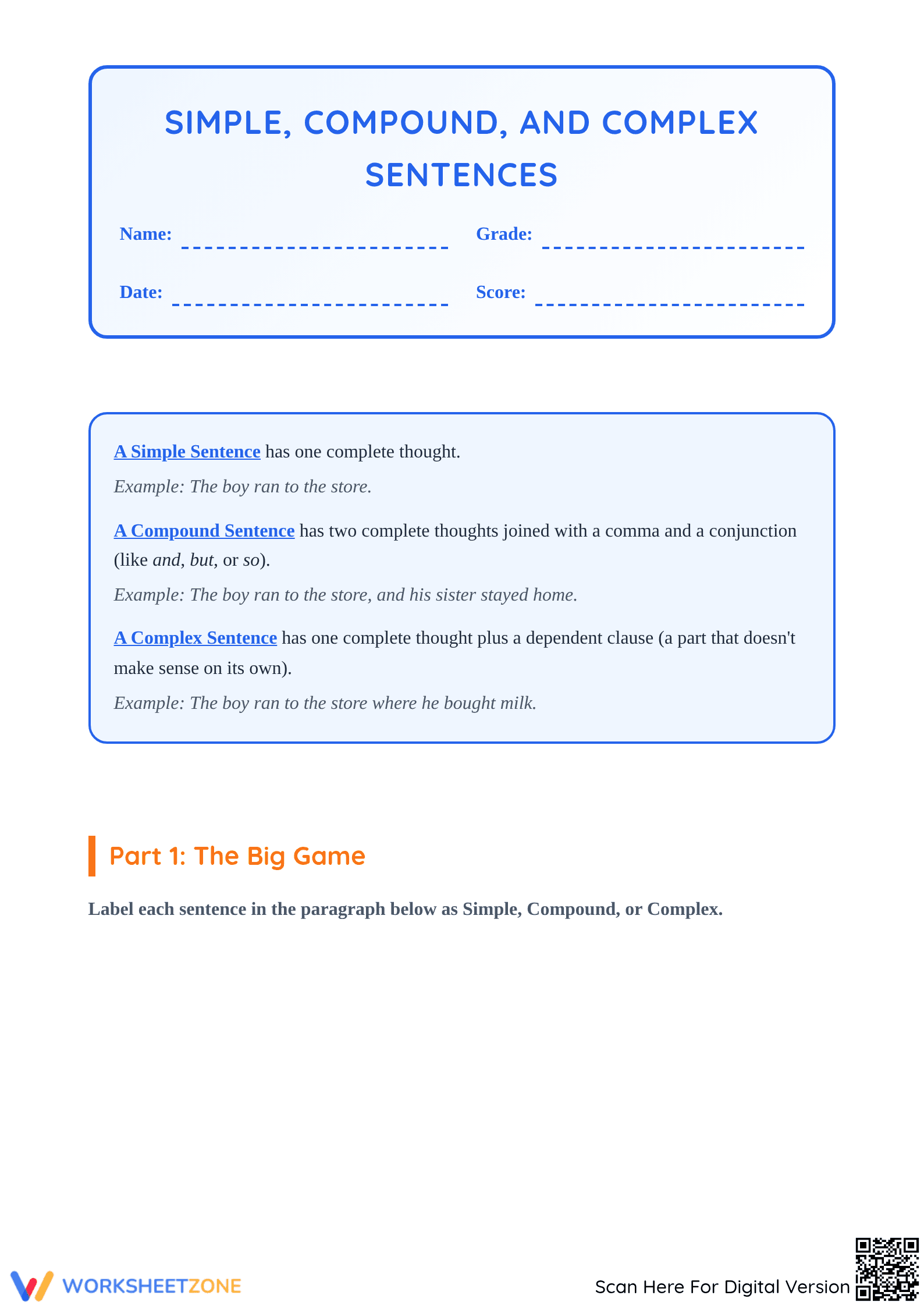
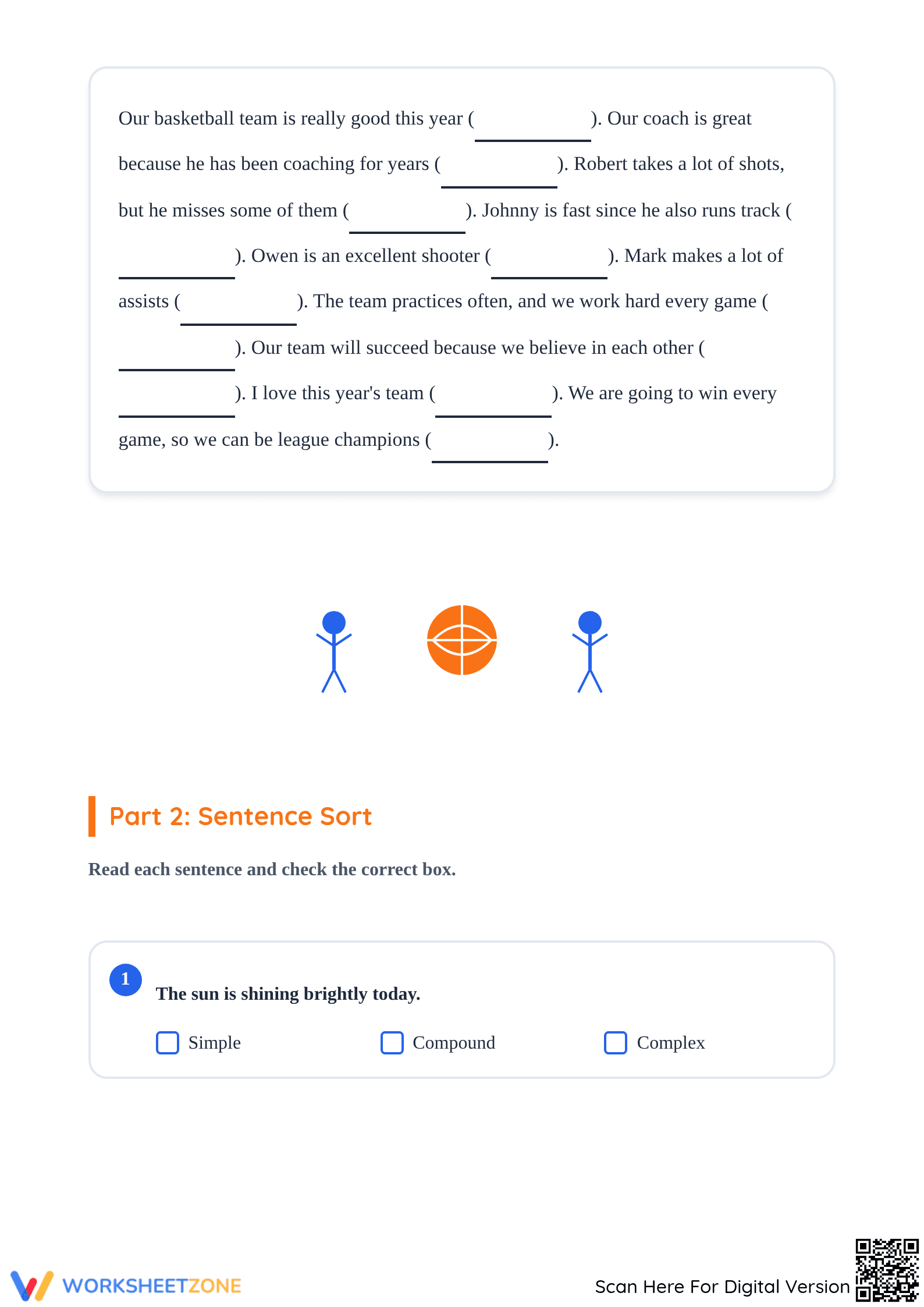
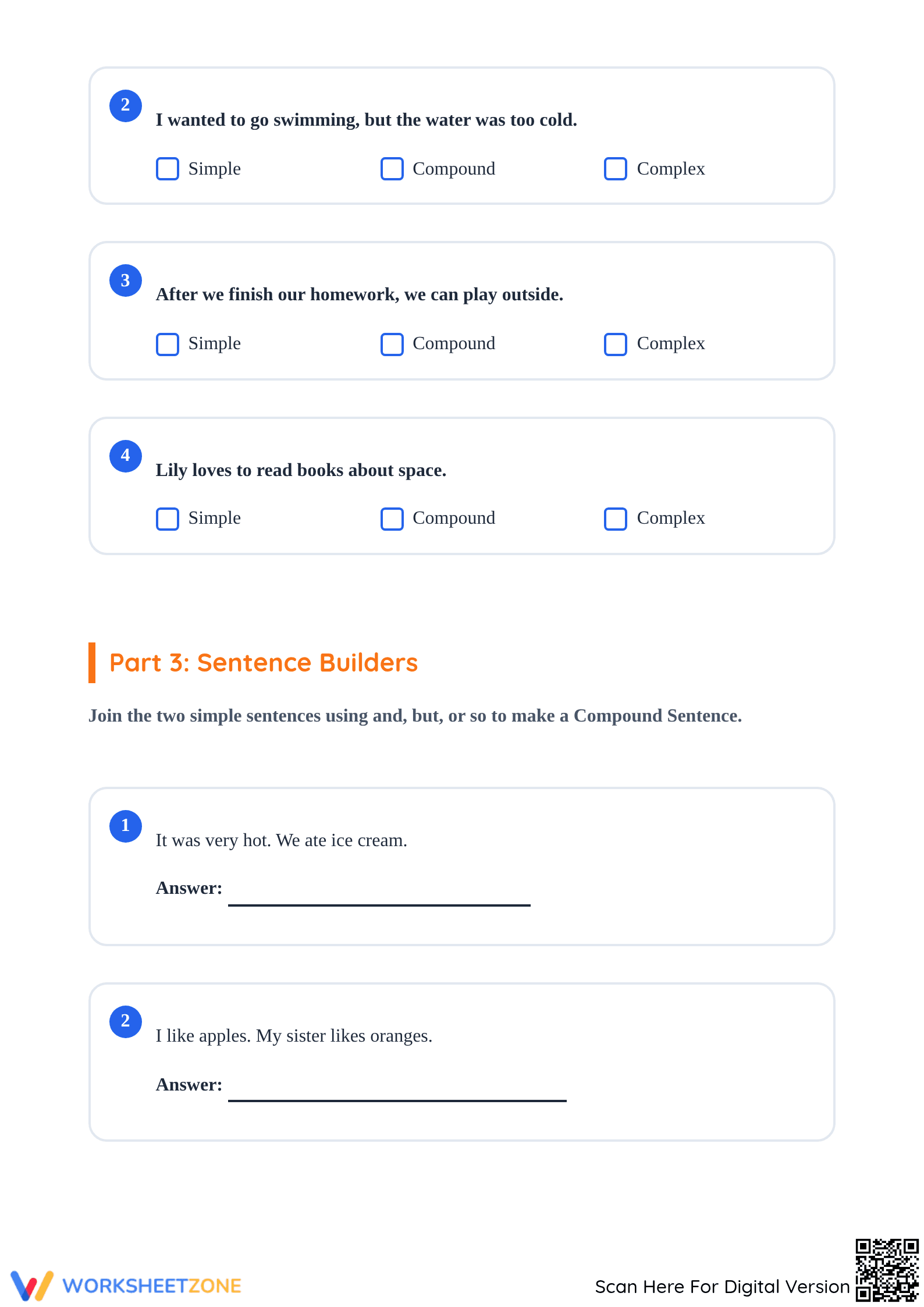
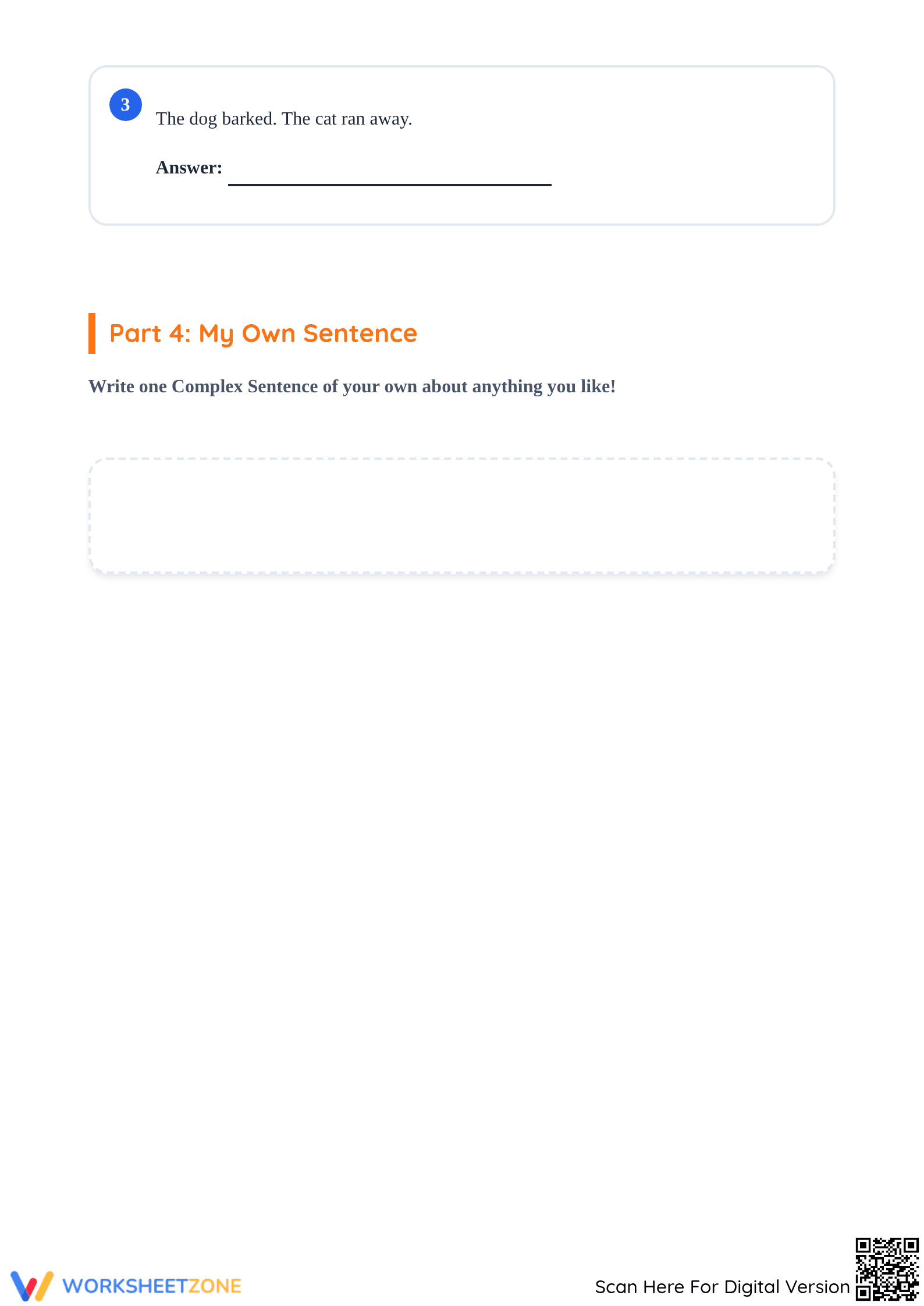
This 4-page PDF contains a balanced mix of identification and creation tasks. It begins with clear definitions and examples of simple, compound, and complex sentences to provide immediate student support. The resource includes a paragraph-based labeling activity, a multiple-choice sentence sort, a sentence-building section requiring conjunction use, and a creative writing prompt. A full answer key ensures efficient grading.
Skill Progression
- Guided Practice: Students first analyze a cohesive paragraph, labeling 10 sentences to observe how different structures work together in context.
- Supported Practice: Learners evaluate 4 isolated sentences, choosing the correct classification from a provided list to solidify their conceptual understanding.
- Independent Practice: The final 4 tasks challenge students to join simple sentences using coordinating conjunctions and eventually draft an original complex sentence.
This progression follows a gradual-release model, moving from observation to mechanical manipulation and finally to independent creative production.
Standards Alignment
The primary focus is CCSS.ELA-LITERACY.L.2.1.f, which requires students to produce and expand simple and compound sentences. While complex sentences are introduced as a challenge, the core activities align with early syntax development goals. Both standard codes can be copied directly into lesson plans, IEP goals, or district curriculum mapping tools.
How to Use It
Deploy this worksheet during a writing workshop after a mini-lesson on conjunctions. Use the first page as a whole-class guided activity to model the labeling process. For formative assessment, observe students during the sentence-building section to see if they correctly place commas before conjunctions. Expected completion time is approximately 30 minutes, making it ideal for a focused grammar block.
Who It's For
This resource is designed for Grade 2 students but serves as an excellent bridge for Grade 3 learners. It supports diverse needs by providing visual examples and sentence frames. It pairs naturally with a mentor text passage where students can search for similar sentence structures after completing the worksheet tasks.
Sentence structure mastery is a critical predictor of later reading comprehension and writing quality. According to Fisher & Frey (2014), explicit instruction in syntax, particularly the use of conjunctions to create compound and complex structures, allows students to move beyond repetitive simple sentences and express more sophisticated relationships between ideas. This worksheet aligns with CCSS.ELA-LITERACY.L.2.1.f by providing the scaffolded practice necessary for students to internalize these grammatical rules. The inclusion of 18 tasks across identification and construction ensures that students do not merely memorize definitions but apply their knowledge to authentic writing contexts. By transitioning from labeling existing text to building their own sentences, learners develop the grammatical flexibility cited in modern ELA research as a key component of effective literacy instruction. This resource provides a structured pathway for Grade 2 students to achieve syntactic mastery.


