


























Views
Downloads

Essential Simple and Compound Sentences Worksheet | Grade 2
Paste this activity's link or code into your existing LMS (Google Classroom, Canvas, Teams, Schoology, Moodle, etc.).
Students can open and work on the activity right away, with no student login required.
You'll still be able to track student progress and results from your teacher account.
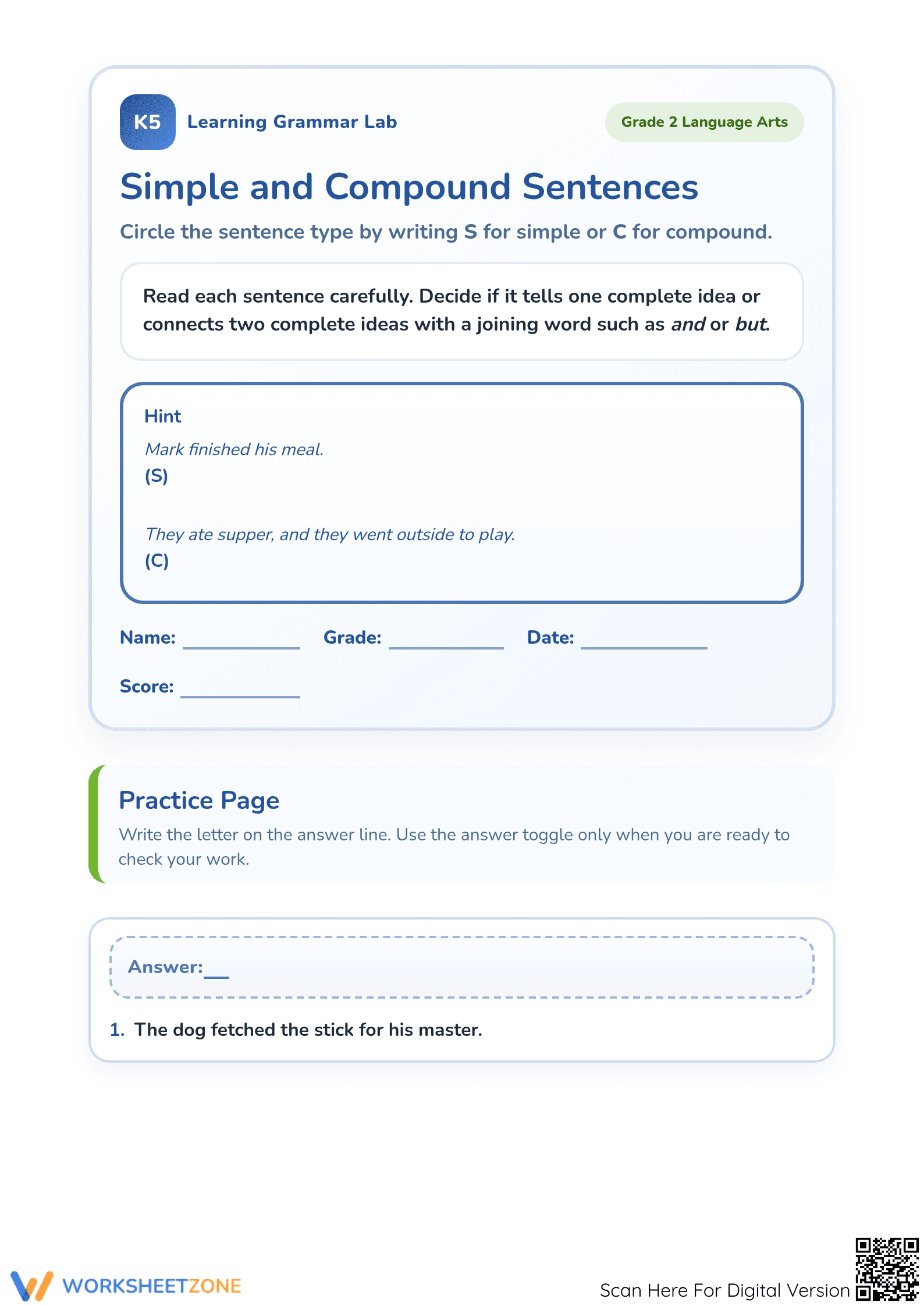
Mastering sentence structure is the foundation of clear writing and effective communication. This printable Grade 2 English Language Arts worksheet specifically targets the ability to distinguish between simple and compound sentences. By identifying independent clauses and joining words, students develop the grammatical awareness necessary for advanced punctuation and complex composition.
At a Glance
- Grade: 2 · Subject: English Language Arts
- Standard:
CCSS.ELA-LITERACY.L.2.1.F— Produce, expand, and rearrange complete simple and compound sentences- Skill Focus: Simple vs. Compound Sentence Identification
- Format: 2 pages · 8 problems · Answer key included · PDF
- Best For: Small group grammar practice
- Time: 15–20 minutes
What's Inside
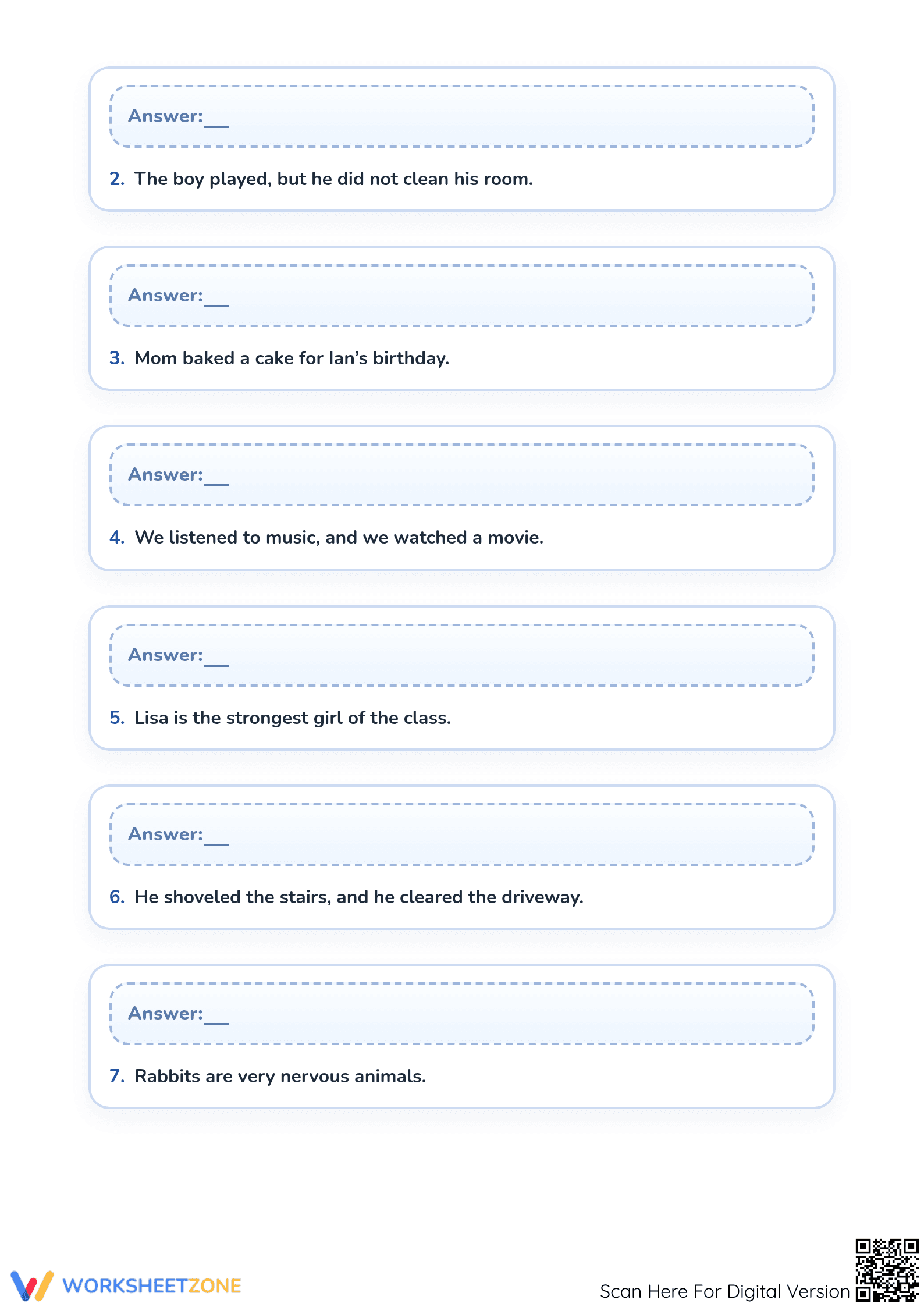
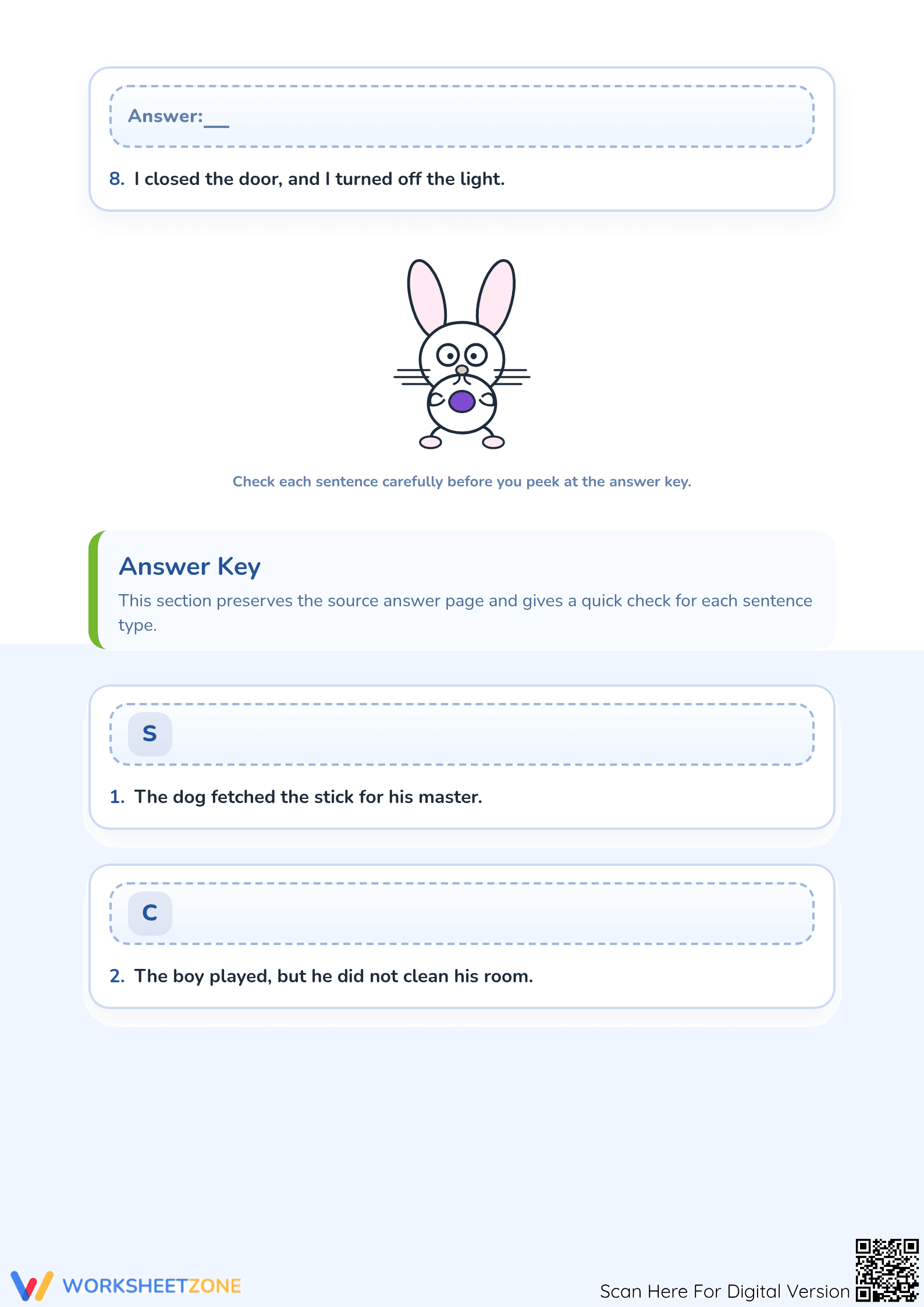
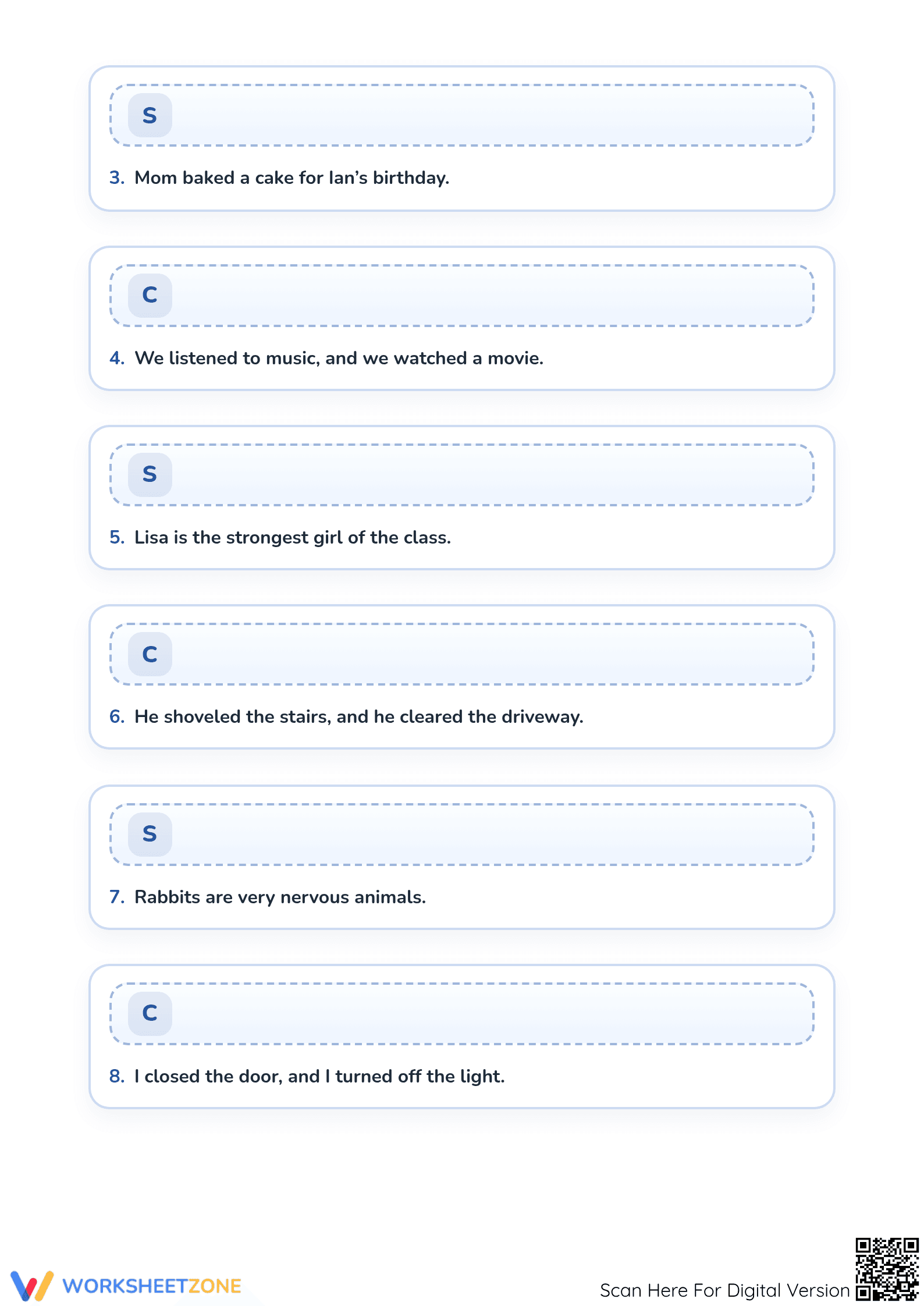
The resource includes a two-page Practice Page featuring eight carefully crafted sentences for student analysis. Each item provides a dedicated answer line for students to record their classification using "S" or "C" markers. To facilitate immediate feedback and self-correction, a complete two-page answer key is provided, mirroring the layout of the student version for easy visual comparison.
Skill Progression
- Guided Practice: The activity begins with a clear instructional hint box that defines simple sentences as one complete idea and compound sentences as two ideas joined by words like "and" or "but."
- Supported Practice: Students move to analyzing sentences with visible conjunctions, using the provided examples as a scaffold for their own decision-making process.
- Independent Practice: The final items allow students to apply these rules to various sentence lengths and topics without immediate assistance, reinforcing the "I Do, We Do, You Do" teaching model.
Standards Alignment
The activity is strictly aligned to `CCSS.ELA-LITERACY.L.2.1.F`. This standard requires that students produce, expand, and rearrange complete simple and compound sentences to demonstrate command of the conventions of standard English grammar. By focusing on the structural differences between these sentence types, the worksheet supports foundational literacy goals. This standard code can be copied directly into lesson plans, IEP goals, or district curriculum mapping tools.
How to Use It
Incorporate this worksheet during the independent practice portion of a grammar lesson on conjunctions. Before students begin, model the example sentences on an anchor chart. During the activity, walk around to observe if students are noticing the "joining words" in compound sentences as a formative assessment tip. The expected completion time is 15 minutes, making it an ideal exit ticket or morning work task.
Who It's For
Designed for second-grade students, this worksheet is also appropriate for third graders requiring remedial support or English Language Learners (ELL) focusing on syntax. It pairs naturally with a reading passage where students can search for examples of compound sentences in authentic text. The clear layout and scaffolded hint box provide necessary assistance for diverse learners without requiring extra teacher setup.
According to the RAND AIRS 2024 report on foundational literacy, explicit instruction in sentence-level grammar is a significant predictor of long-term writing proficiency in elementary students. This worksheet addresses CCSS.ELA-LITERACY.L.2.1.F by providing targeted practice in identifying the structural markers of simple and compound sentences. Students learn to recognize the difference between a single independent clause and the coordination of multiple ideas using conjunctions like "and" and "but." Research indicates that when students can accurately classify these structures, they are more likely to use correct comma placement in their own independent writing. This resource provides the necessary repetition required to move these grammatical rules from short-term memory to automatic application. By focusing on eight distinct sentence examples, the worksheet offers enough variety to test conceptual understanding without overwhelming young learners with excessive text. This balanced approach ensures that the plain-English skill of sentence construction is mastered before students move to complex sentence types.


