


























Views
Downloads

Printable Simple and Complex Sentences Worksheet | Grade 2
Paste this activity's link or code into your existing LMS (Google Classroom, Canvas, Teams, Schoology, Moodle, etc.).
Students can open and work on the activity right away, with no student login required.
You'll still be able to track student progress and results from your teacher account.
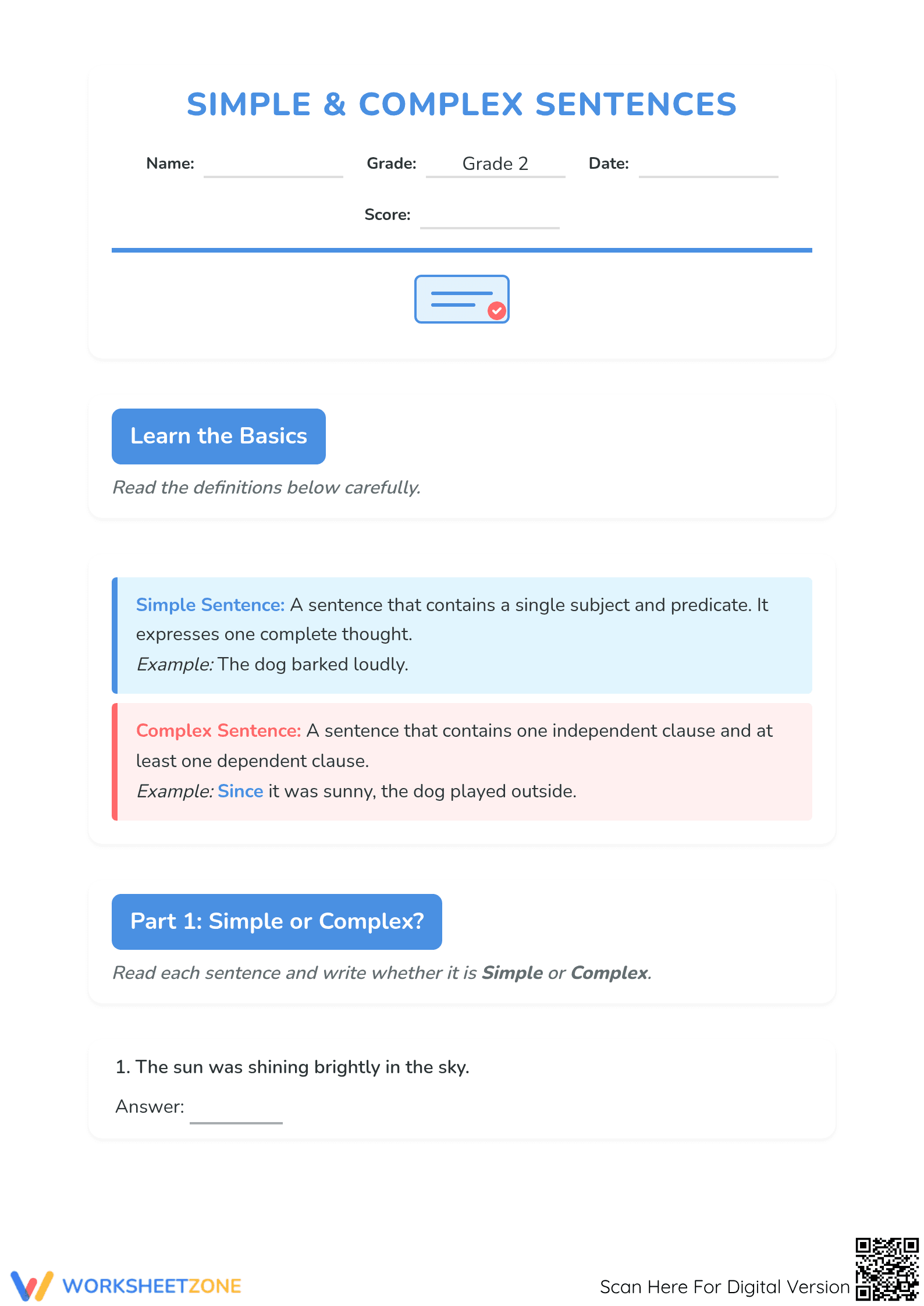
Help your Grade 2 students master sentence variety with this comprehensive grammar resource. This worksheet focuses on the structural differences between simple and complex sentences, enabling learners to improve their writing flow and clarity. By identifying clauses and using subordinating conjunctions, students develop the essential skills needed to produce more sophisticated and academic English prose.
At a Glance
- Grade: Grade 2 · Subject: English Language Arts (ELA)
- Standard:
CCSS.ELA-LITERACY.L.2.1— Demonstrate command of the conventions of standard English grammar and usage when writing- Skill Focus: Simple and complex sentence structures
- Format: 5 pages · 21 problems · Answer key included · PDF
- Best For: Grammar centers and independent practice
- Time: 25–35 minutes
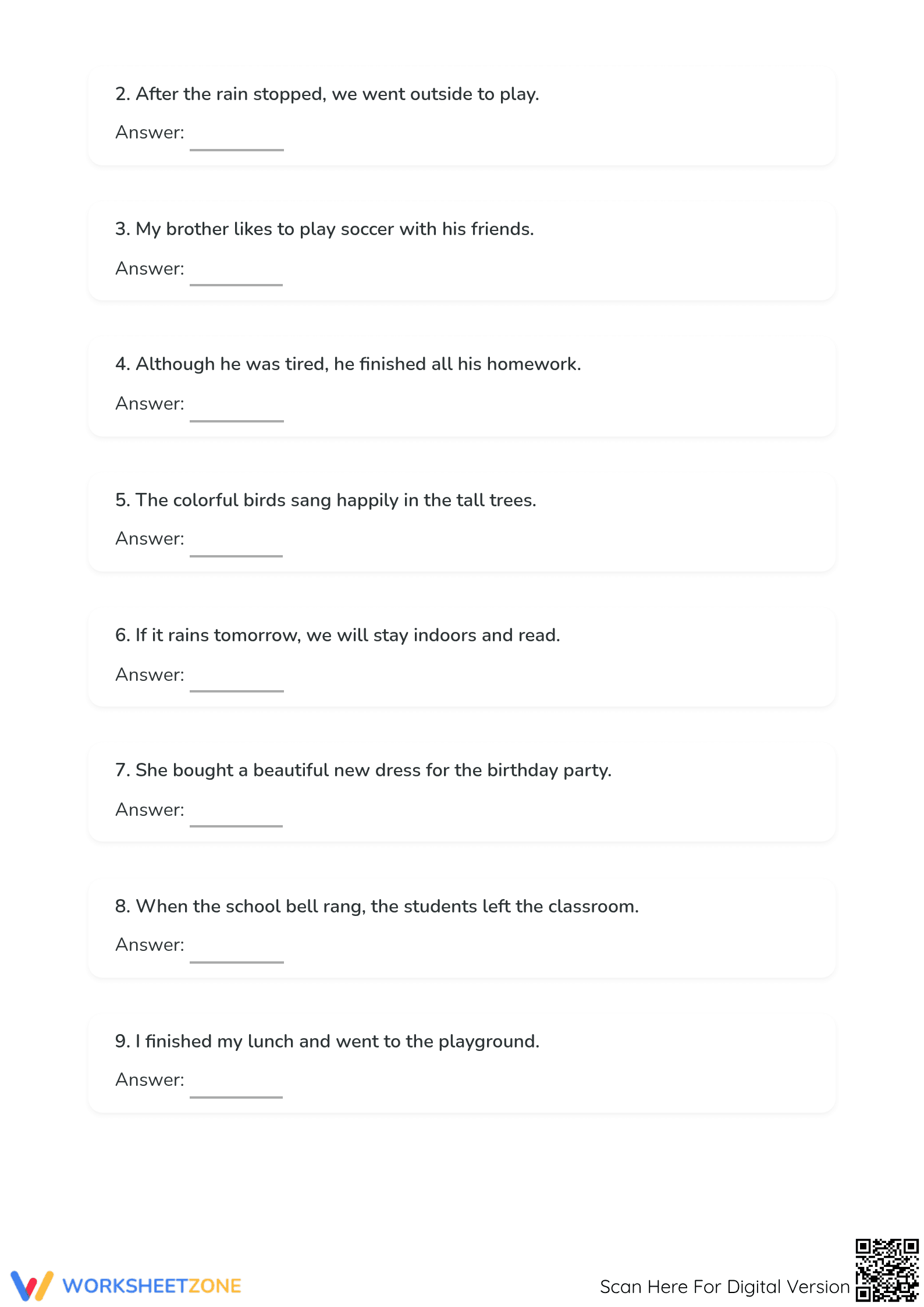
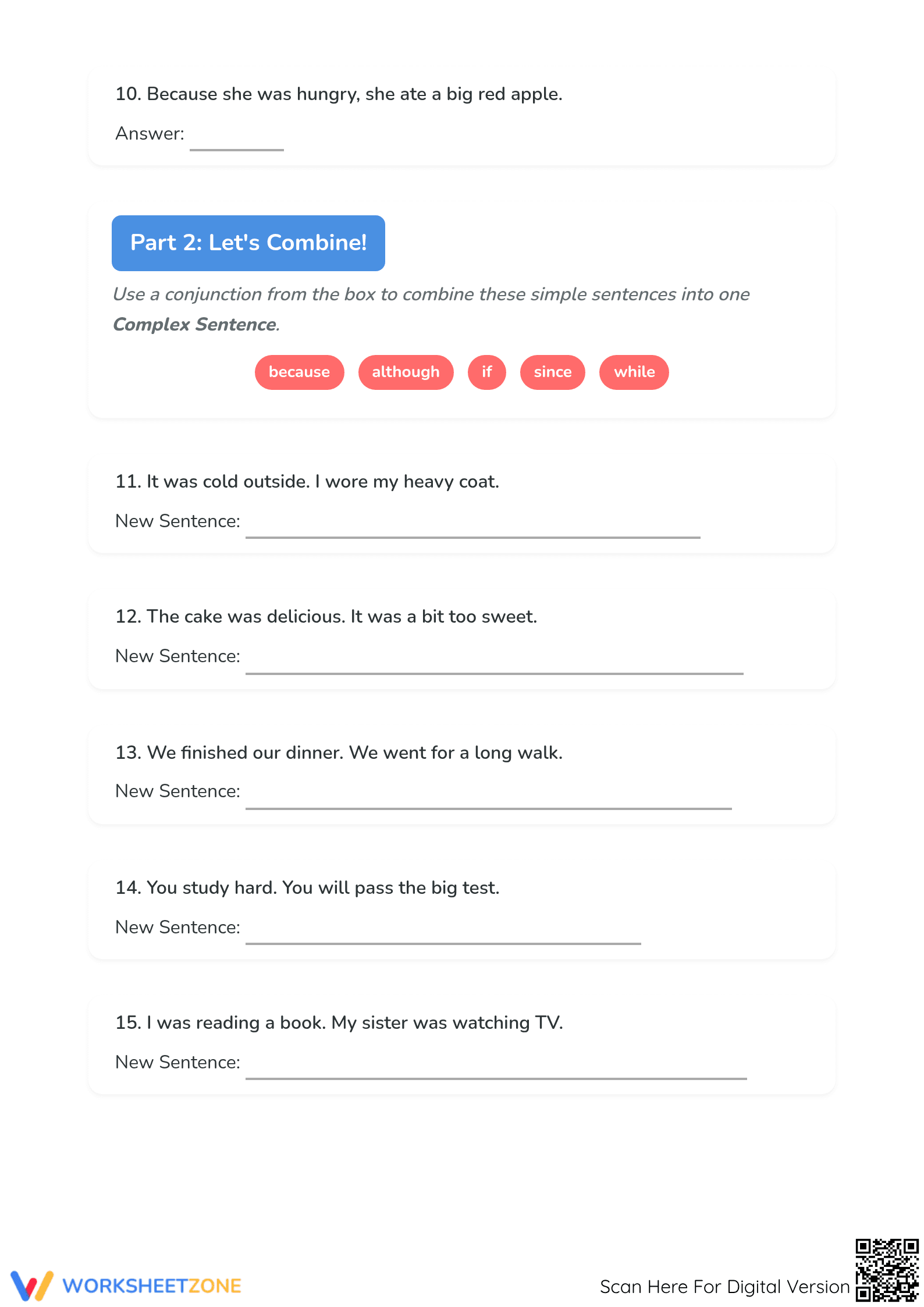
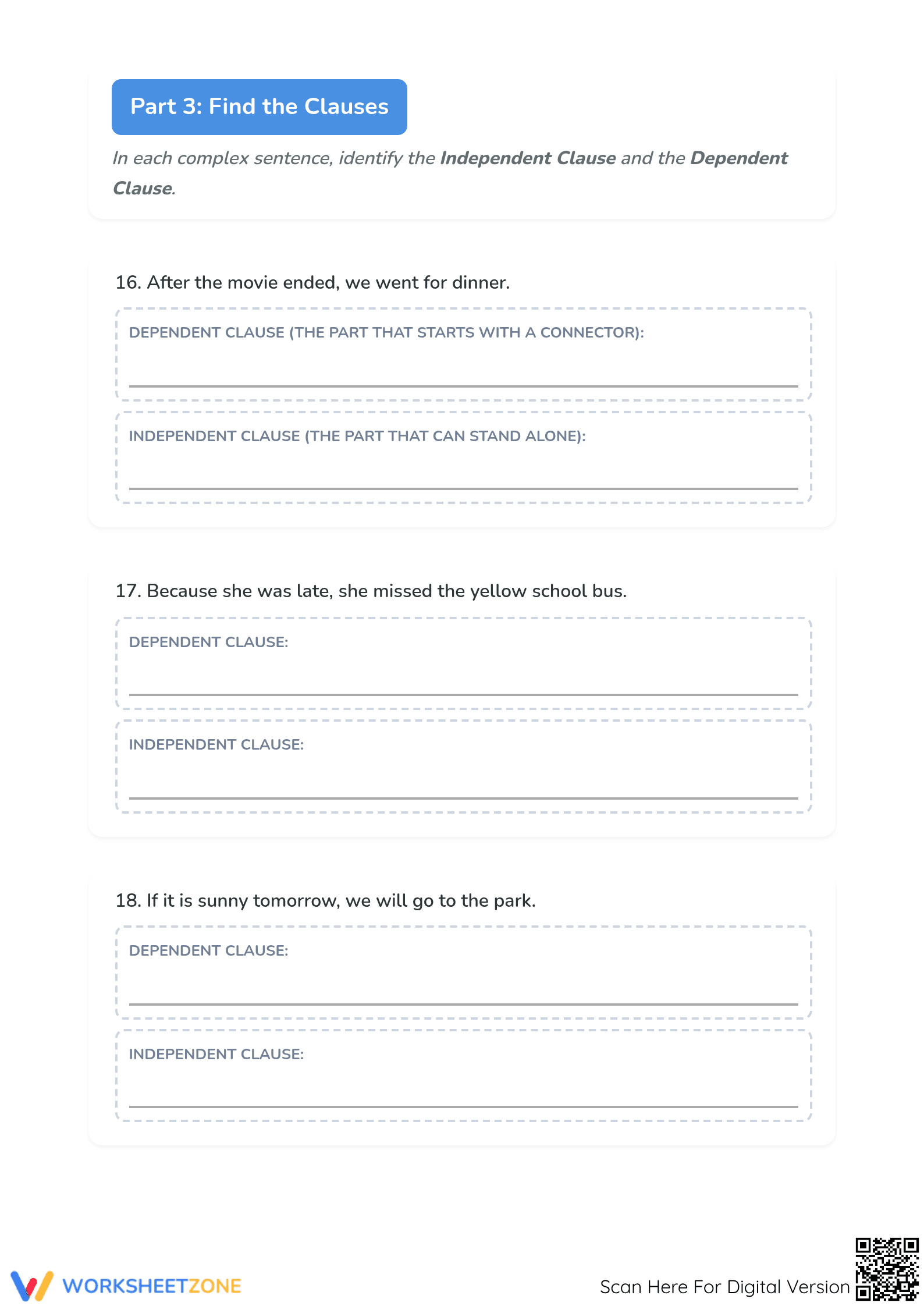
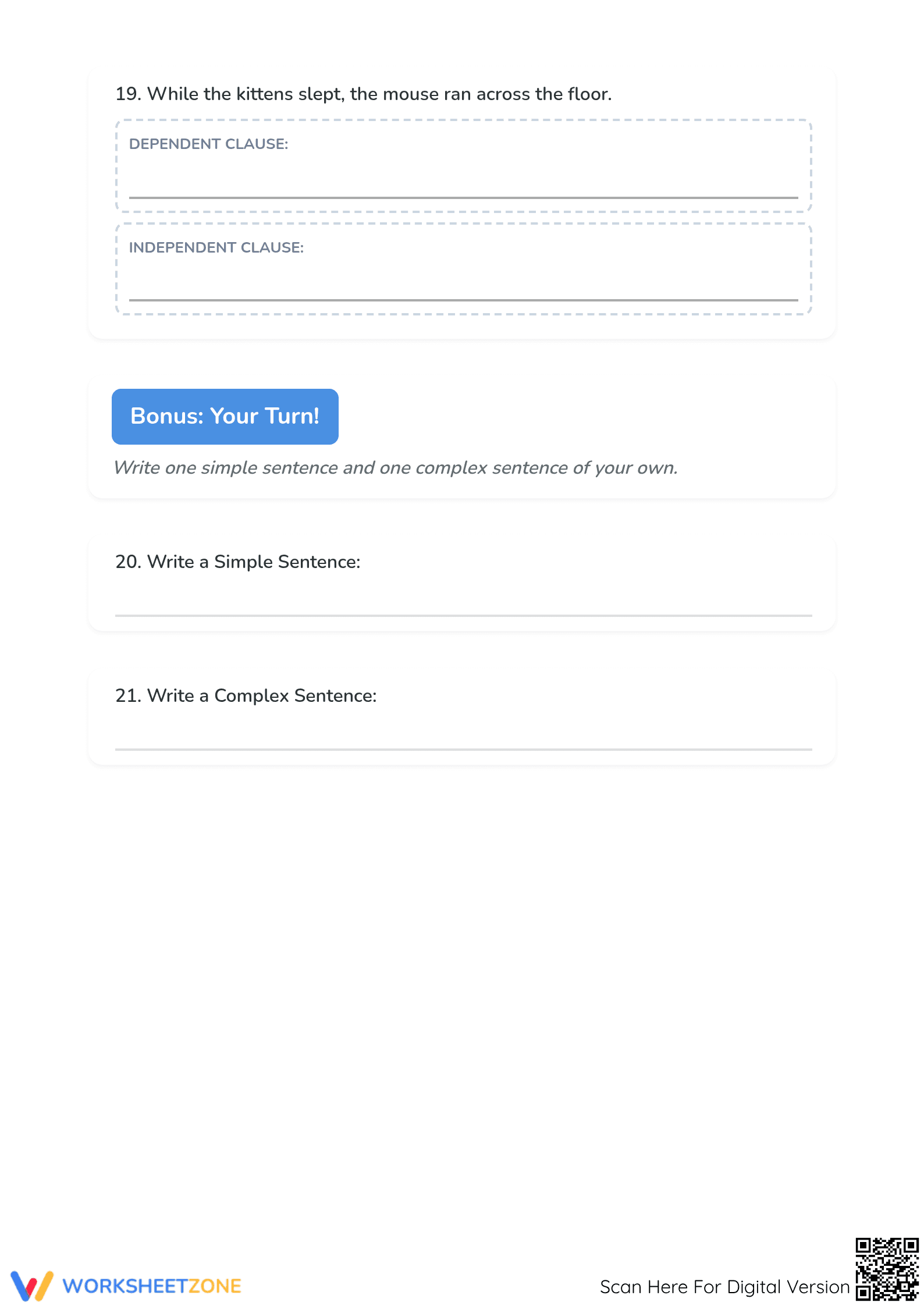
This 5-page printable packet includes clear definitions and examples to anchor student learning. The 21 tasks are divided into three focused sections: identification of sentence types, sentence combining using a conjunction word bank, and clause analysis. It also features a bonus section for original sentence creation. A full answer key is included to facilitate quick grading or self-correction.
- Identification: Students begin with 10 problems identifying simple and complex sentences, building basic recognition skills.
- Sentence Combining: Learners use five specific subordinating conjunctions to merge 5 pairs of simple sentences into complex structures.
- Clause Analysis: The final section requires students to isolate independent and dependent clauses in 4 complex sentences to deepen syntactic understanding.
This progression follows the gradual-release model, moving from guided identification to independent construction and structural analysis.
Aligned to `CCSS.ELA-LITERACY.L.2.1`, this resource helps students demonstrate command of the conventions of standard English grammar. While focusing on complex structures typically introduced as a stretch goal, it directly supports the standard for producing and expanding complete sentences. Both standard codes can be copied directly into lesson plans, IEP goals, or district curriculum mapping tools.
Use this worksheet as a focused follow-up to a direct instruction lesson on subordinating conjunctions. It works effectively as an independent practice activity during grammar centers or as a formative assessment to gauge student understanding of clause structures. Instructors should observe whether students correctly identify the "connector" in dependent clauses, which takes approximately 30 minutes to complete.
This resource is designed for Grade 2 students, including those requiring enrichment in sentence structure. It is particularly useful for English Language Learners (ELL) who benefit from explicit practice with conjunctions. Pair this worksheet with an anchor chart on subordinating conjunctions to provide a visual reference during independent work time.
This grammar resource aligns with `CCSS.ELA-LITERACY.L.2.1` by providing structured practice in producing and expanding sentences. By identifying independent and dependent clauses, students build the foundational syntactic awareness necessary for complex writing. Research from Fisher & Frey (2014) indicates that explicit instruction in sentence combining significantly improves writing quality and reading comprehension by helping students recognize the relationship between ideas. This 21-task worksheet moves students from simple identification to active construction using subordinating conjunctions like "because" and "although." According to the RAND AIRS 2024 report on literacy instruction, scaffolded grammar practice reduces the cognitive load on young writers during the drafting phase. As students master the transition from simple to complex structures, they develop the fluency needed for sophisticated narratives and informational texts. This printable packet ensures that Grade 2 learners meet essential language standards through rigorous, curriculum-aligned practice that bridges the gap between basic speech and academic writing.


