


























Views
Downloads

Printable Similes or Metaphors Worksheet | Grade 4 ELA
Paste this activity's link or code into your existing LMS (Google Classroom, Canvas, Teams, Schoology, Moodle, etc.).
Students can open and work on the activity right away, with no student login required.
You'll still be able to track student progress and results from your teacher account.
Distinguishing Similes and Metaphors
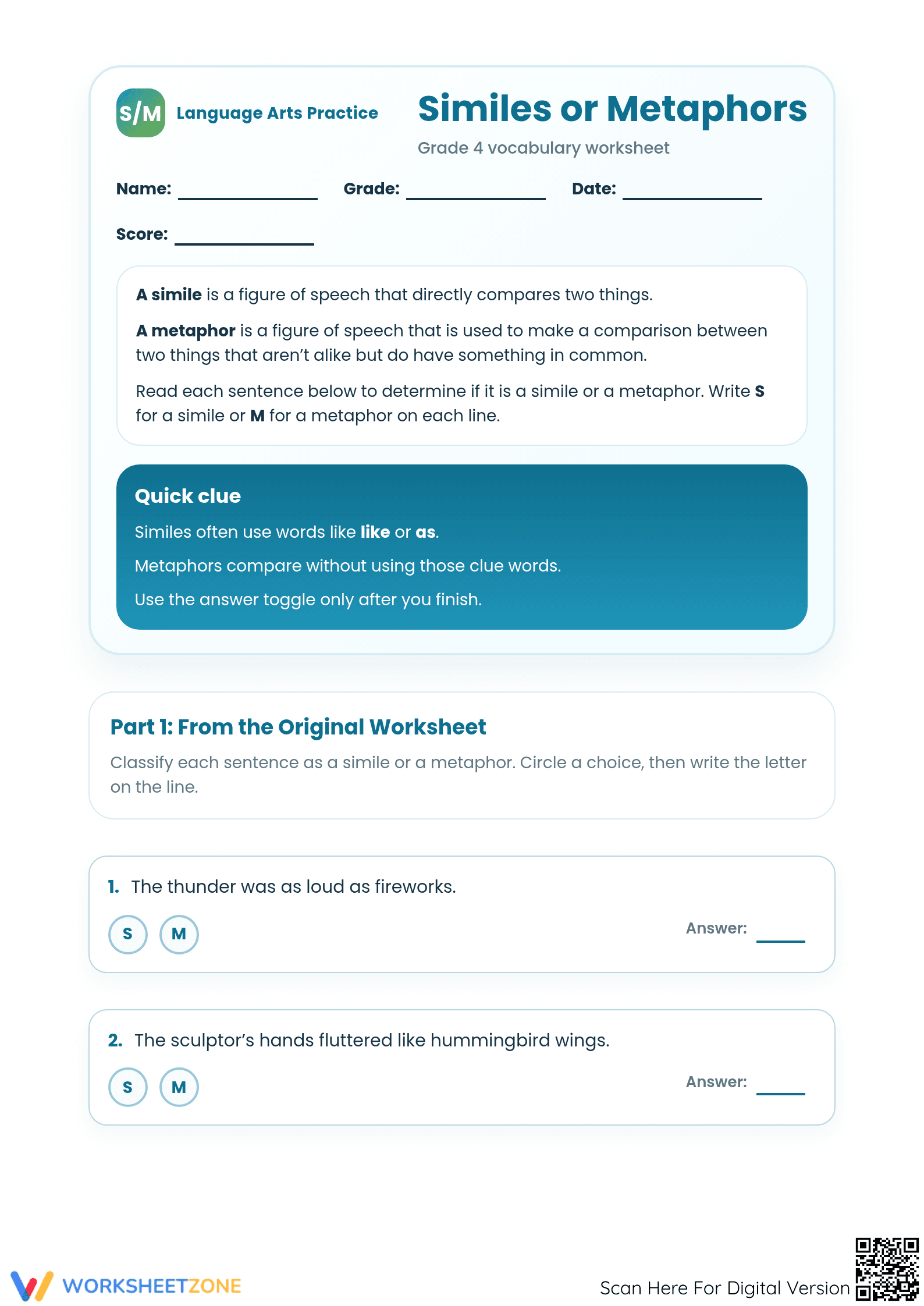
This Grade 4 Similes or Metaphors worksheet helps students master figurative language by distinguishing between direct and implied comparisons. By identifying key clue words like "like" or "as," learners build the essential analytical skills needed for reading comprehension and creative writing. It provides clear definitions and ample practice to ensure student mastery.
At a Glance
- Grade: 4 · Subject: ELA
- Standard:
CCSS.ELA-LITERACY.L.4.5.a— Explain the meaning of simple similes and metaphors in context- Skill Focus: Distinguishing between Similes and Metaphors
- Format: 3 pages · 12 problems · Answer key included · PDF
- Best For: Independent practice and small-group literacy centers
- Time: 15–20 minutes
What's Inside
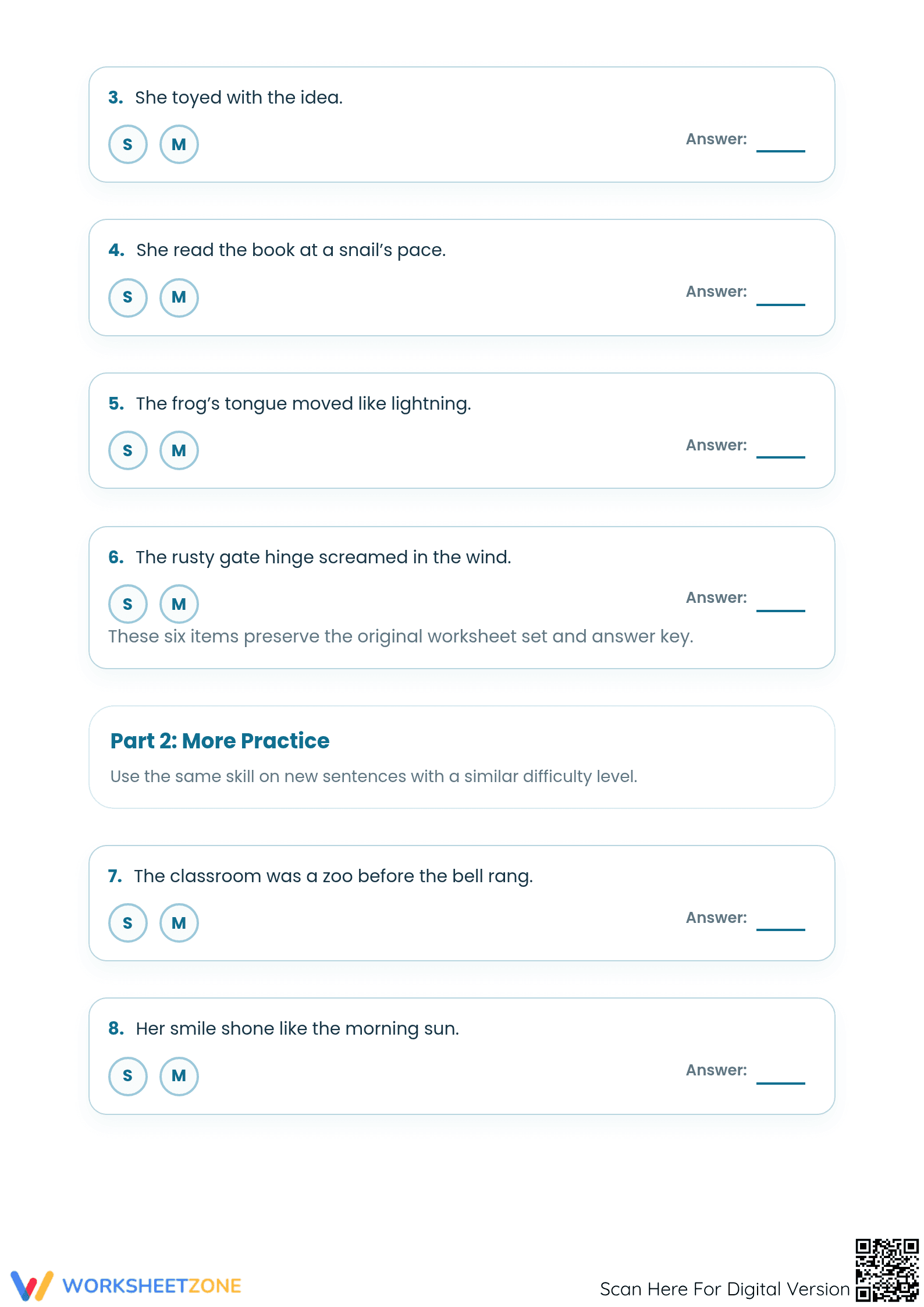
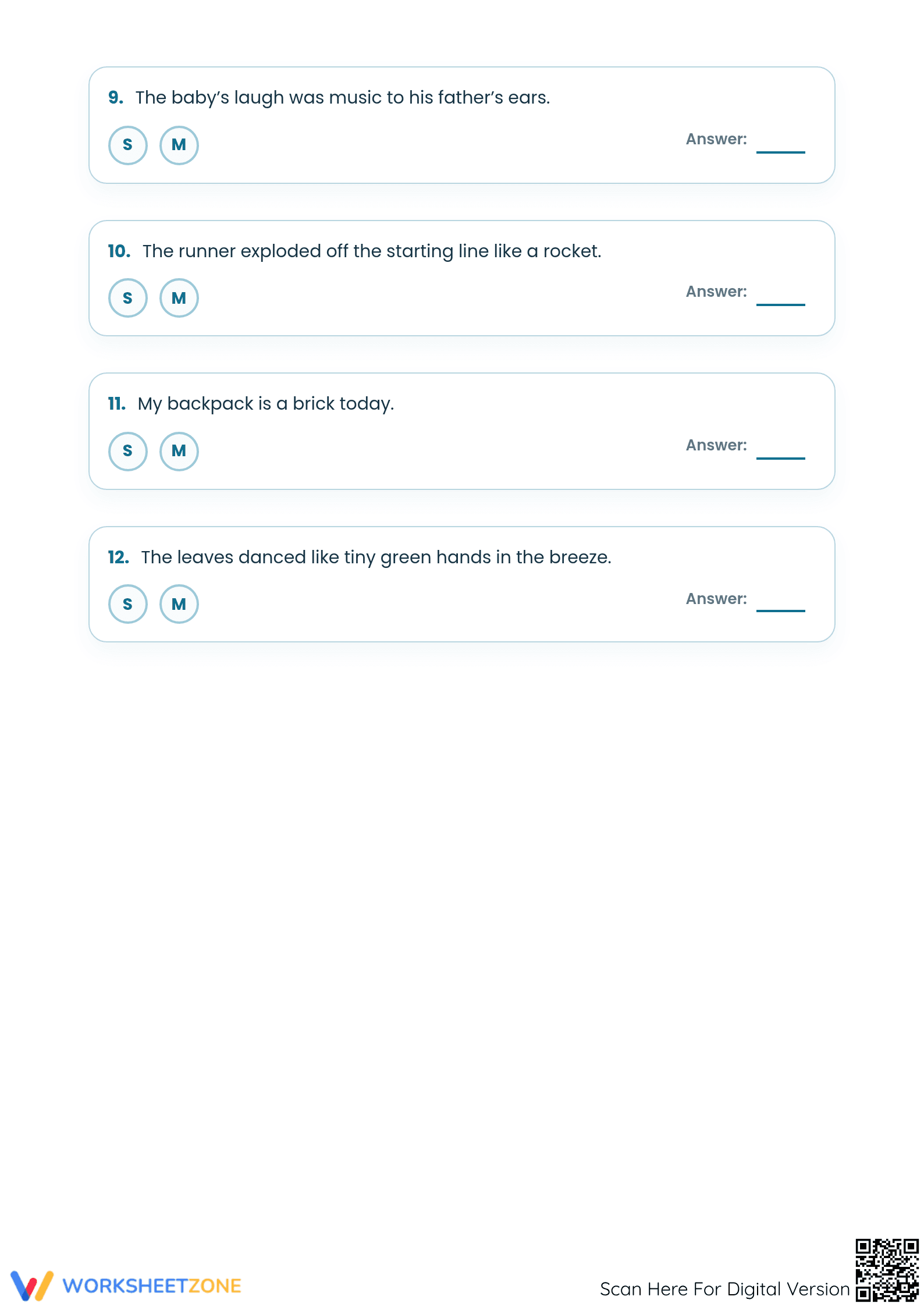
This comprehensive 3-page resource includes a concise "Quick Clue" anchor box that defines both similes and metaphors with clear examples. The primary task consists of 12 carefully curated sentences where students must determine the type of figurative language used. It features clear response lines and a designated answer key for efficient grading and immediate feedback.
Skill Progression
- Guided Practice: The first section provides immediate scaffolded support through the inclusion of the "Quick Clue" reference box to anchor student thinking before tackling the 12 problems.
- Supported Practice: Students tackle items 1-6 which preserve original context and difficulty levels to build confidence in their identification skills.
- Independent Practice: The final six items in Part 2 challenge students to apply their knowledge to new sentences without direct prompts.
This structure follows the proven gradual release of responsibility model, moving from teacher support to independent application.
Standards Alignment
This resource is specifically designed for CCSS.ELA-LITERACY.L.4.5.a, which requires students to explain the meaning of simple similes and metaphors in context. By first identifying these figures of speech, students establish the foundational step toward full interpretive mastery. This standard code can be copied directly into lesson plans, IEP goals, or district curriculum mapping tools.
How to Use It
Use this worksheet as a formative assessment after an introductory lesson on figurative language. It is ideal for a "Work on Writing" station where students can check their work using the provided answer key. Teachers can observe which students struggle with metaphors versus similes to target small-group instruction effectively. Expect completion in approximately 15 to 20 minutes.
Who It's For
This worksheet is designed for Grade 4 students but is also suitable for Grade 5 review or Grade 3 enrichment. It serves as an excellent resource for English Language Learners (ELL) who are navigating the nuances of English idioms and non-literal language. It pairs naturally with any short story or poetry unit focusing on descriptive imagery and author's craft.
Mastering similes and metaphors at the Grade 4 level is a pivotal moment in literacy development, transitioning students from literal decoding to nuanced literary analysis. According to Fisher & Frey (2014), the explicit teaching of figurative language through scaffolded practice allows students to access deeper meaning within complex texts and improves overall reading comprehension scores. This worksheet provides 12 targeted opportunities to apply the rules of comparison, directly addressing the requirements of CCSS.ELA-LITERACY.L.4.5.a. By using this printable resource, educators provide a proven method for bridging the gap between basic vocabulary and advanced stylistic interpretation. The inclusion of an answer key ensures that students receive the immediate feedback necessary for correcting misconceptions about non-literal comparisons. This tool is essential for any balanced literacy program aiming for rigorous standards alignment and measurable student growth in language arts.


