


























Views
Downloads

Printable Similes and Metaphors Worksheet | Grade 4 ELA
Paste this activity's link or code into your existing LMS (Google Classroom, Canvas, Teams, Schoology, Moodle, etc.).
Students can open and work on the activity right away, with no student login required.
You'll still be able to track student progress and results from your teacher account.
This Grade 4 ELA worksheet helps students master the difference between similes and metaphors through targeted identification. By evaluating common figurative expressions, learners build a foundation for interpreting complex texts and enhancing descriptive writing. This essential practice ensures students can distinguish direct comparisons from those using connecting words like like or as.
At a Glance
- Grade: 4 · Subject: ELA
- Standard:
CCSS.ELA-LITERACY.L.4.5.A— Explain the meaning of simple similes and metaphors in context.- Skill Focus: Figurative Language Identification
- Format: 3 pages · 10 problems · Answer key included · PDF
- Best For: Independent practice and formative assessment
- Time: 15–20 minutes
What's Inside
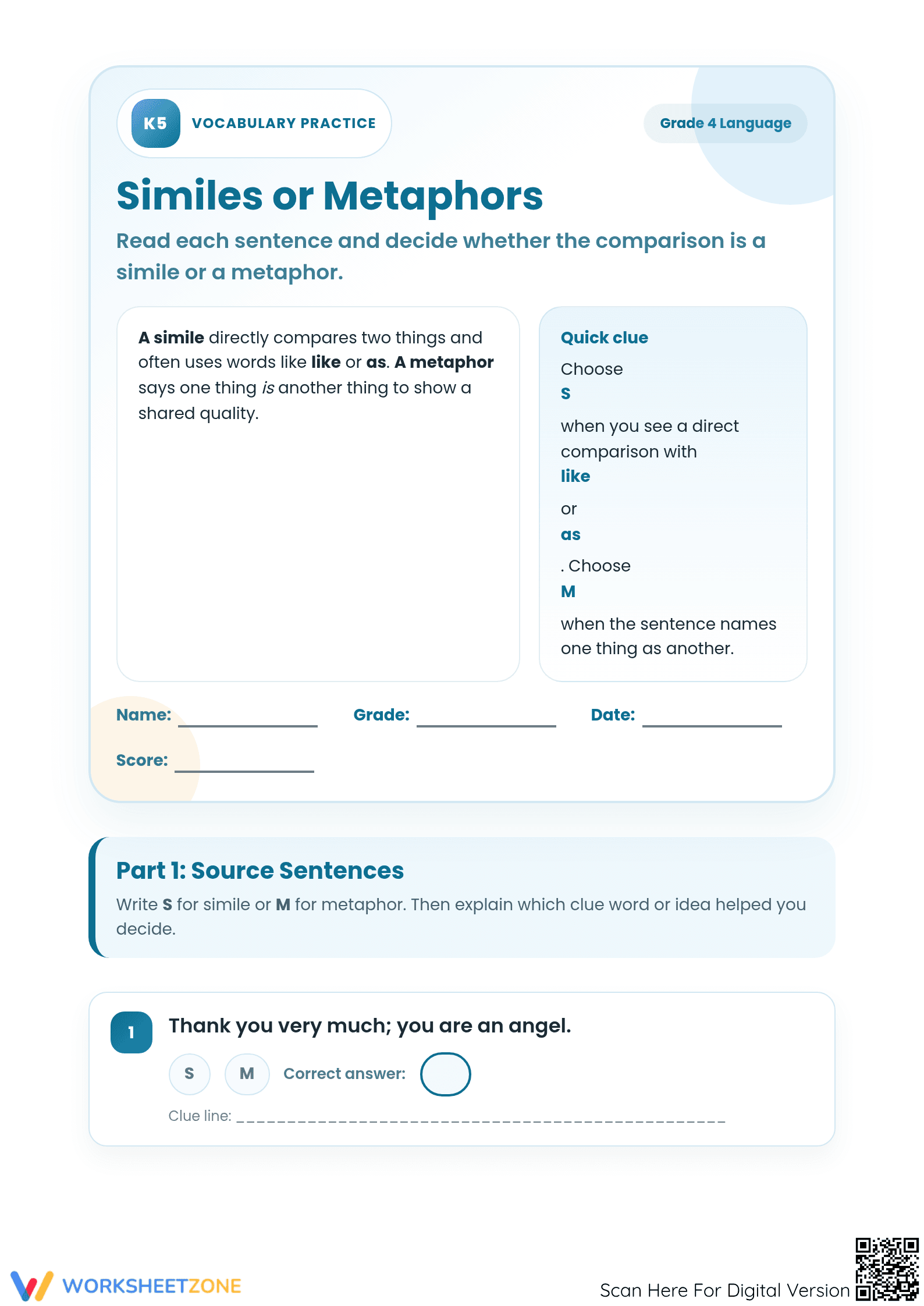
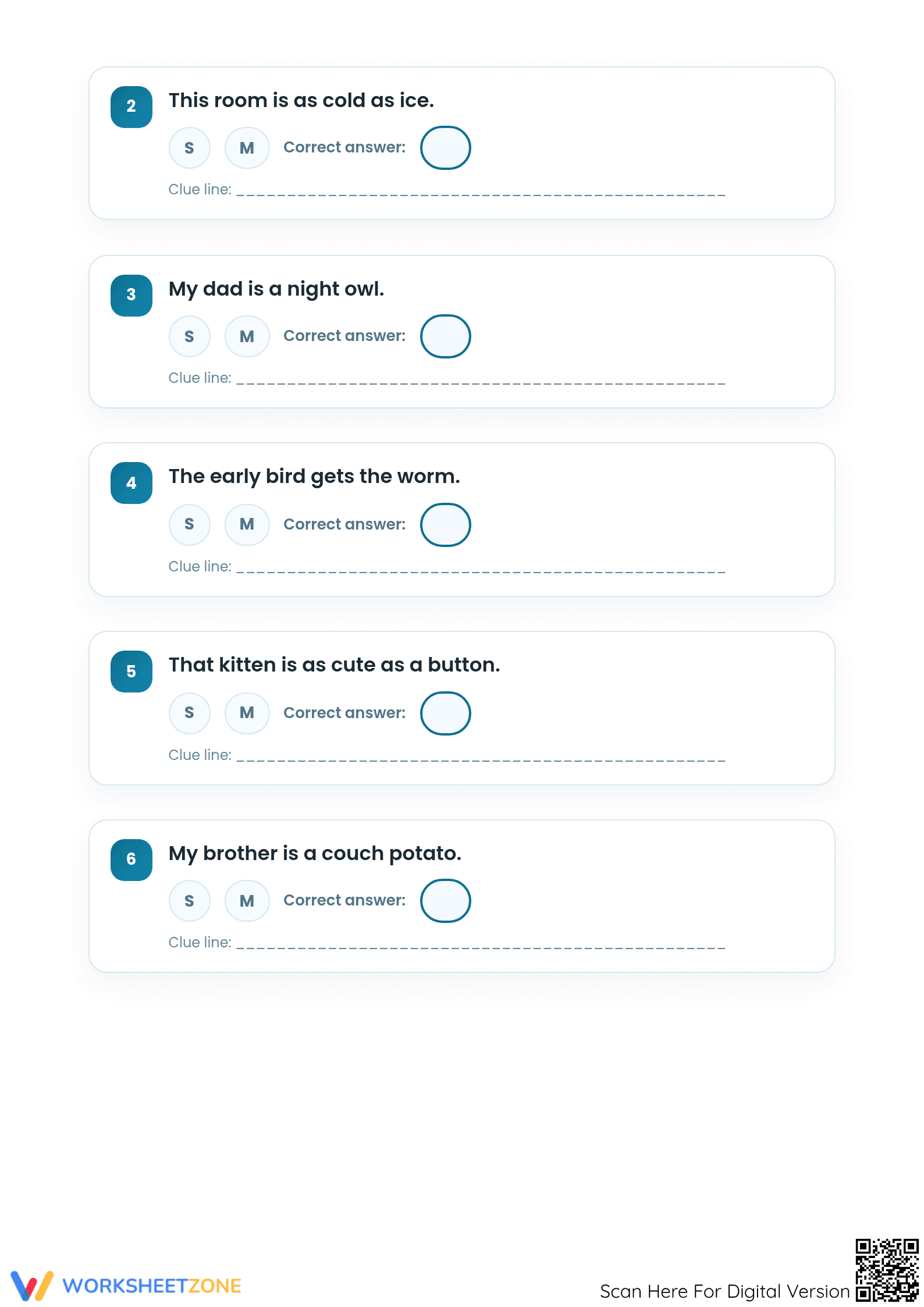
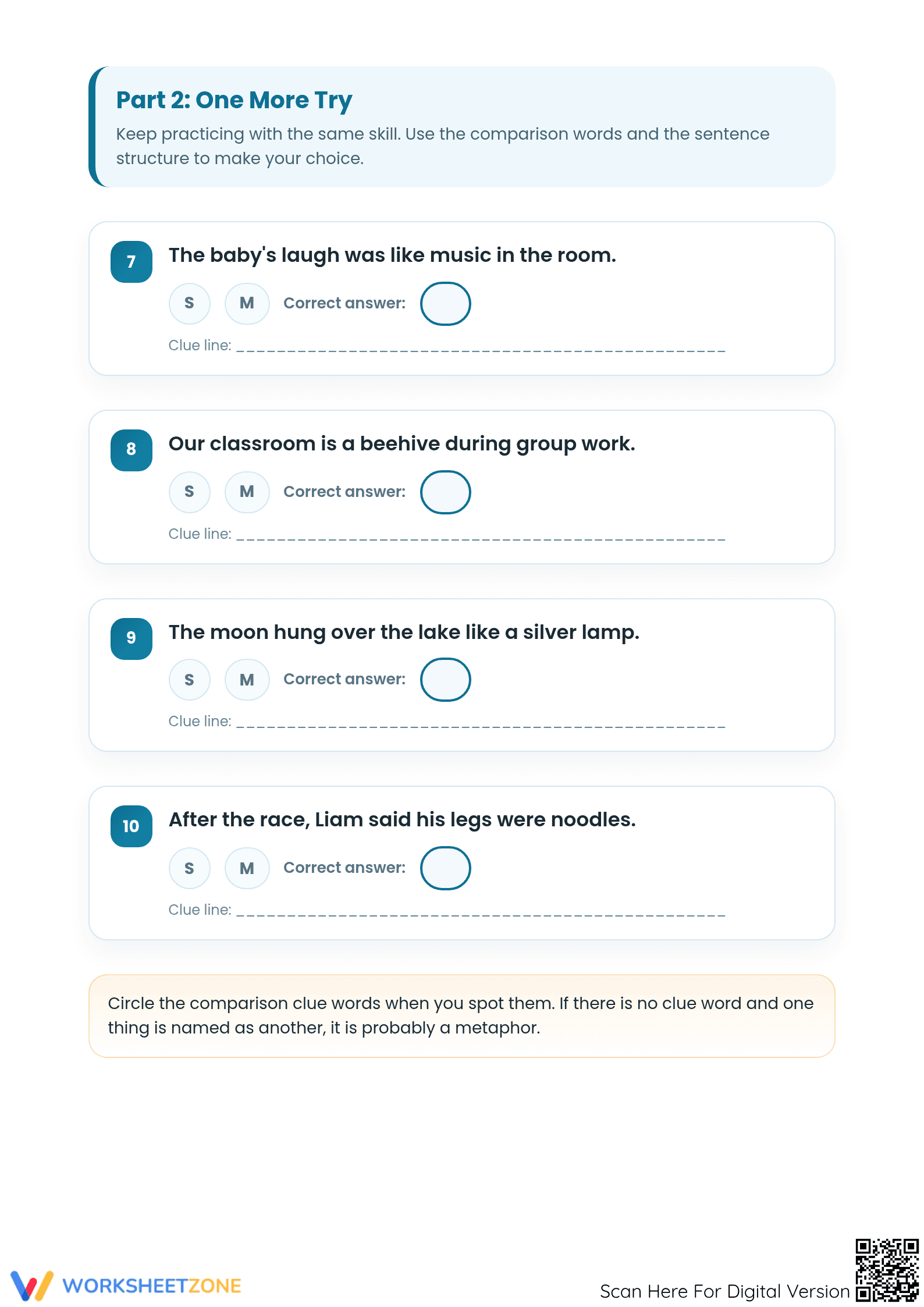
This 3-page printable PDF features 10 identification tasks divided into two progressive sections. Each task presents a sentence containing figurative language, requiring students to categorize it as a simile or metaphor. A Clue Line for every problem encourages metacognition, asking students to cite the indicator that guided their decision. Includes a comprehensive answer key.
Skill Progression
- Guided Practice: Page one introduces the concepts with a "Quick Clue" anchor and one introductory identification task.
- Supported Practice: Five varied sentences on page two challenge students to apply the "like/as" rule across different sentence structures.
- Independent Practice: Four final sentences on page three challenge learners to verify mastery without immediate prompts.
This "I Do, We Do, You Do" approach builds confidence and ensures mastery of abstract comparisons.
Standards Alignment
This resource is explicitly aligned to `CCSS.ELA-LITERACY.L.4.5.A`, which requires Grade 4 students to demonstrate an understanding of figurative language, specifically explaining the meaning of simple similes and metaphors. The tasks provide direct evidence of a student's ability to recognize these literary devices. This standard code can be copied directly into lesson plans, IEP goals, or district curriculum mapping tools to track student progress toward ELA mastery.
How to Use It
Use this worksheet as a focused formative assessment following direct instruction. Teachers can observe performance on initial items to identify misconceptions, such as confusing as in non-comparison sentences. Alternatively, assign the final section as a high-signal exit ticket to verify independent mastery. The expected completion time is approximately 18 minutes, making it a flexible addition to any literacy block.
Who It's For
This resource is designed for Grade 4 students, but its clear visual layout and Quick Clue box make it an excellent differentiation tool for English Language Learners and students receiving Tier 2 interventions. It pairs naturally with a classroom anchor chart or a short mentor text rich in imagery. The structured lines provide the necessary support for students who struggle with organizational writing.
Effective instruction in figurative language, such as similes and metaphors, is a critical component of reading comprehension and lexical development in the intermediate grades. Research conducted by Fisher & Frey (2014) highlights the importance of using gradual release of responsibility when teaching abstract literary concepts to ensure students move from recognition to deep conceptual understanding. By providing 10 specific practice tasks aligned to `CCSS.ELA-LITERACY.L.4.5.A`, this worksheet allows students to isolate the skill of identifying comparisons before applying it to complex narrative texts. The inclusion of a justification step—the "clue line"—aligns with evidence-based practices that promote metalinguological awareness and critical thinking. This printable resource serves as a reliable bridge between introductory lessons and independent literary analysis, providing teachers with clear data points for intervention. Fisher & Frey (2014) emphasize that targeted, scaffolded practice is essential for students to successfully internalize figurative language structures.


