


























Views
Downloads




Printable Similes and Metaphors Worksheet | Grade 4 ELA
Paste this activity's link or code into your existing LMS (Google Classroom, Canvas, Teams, Schoology, Moodle, etc.).
Students can open and work on the activity right away, with no student login required.
You'll still be able to track student progress and results from your teacher account.
This Grade 4 similes and metaphors worksheet provides extensive figurative language practice to help students distinguish between these two types of comparisons. By identifying 'like' and 'as' in similes versus direct comparisons in metaphors, learners master the nuance of descriptive writing. Students will gain the confidence to analyze and create their own figurative expressions.
At a Glance
- Grade: 4 · Subject: ELA
- Standard:
CCSS.ELA-LITERACY.L.4.5.A— Explain the meaning of simple similes and metaphors in context- Skill Focus: Figurative Language Comparisons
- Format: 5 pages · 33 problems · Answer key included · PDF
- Best For: Independent practice, morning work, and small group instruction
- Time: 25–40 minutes
What's Inside
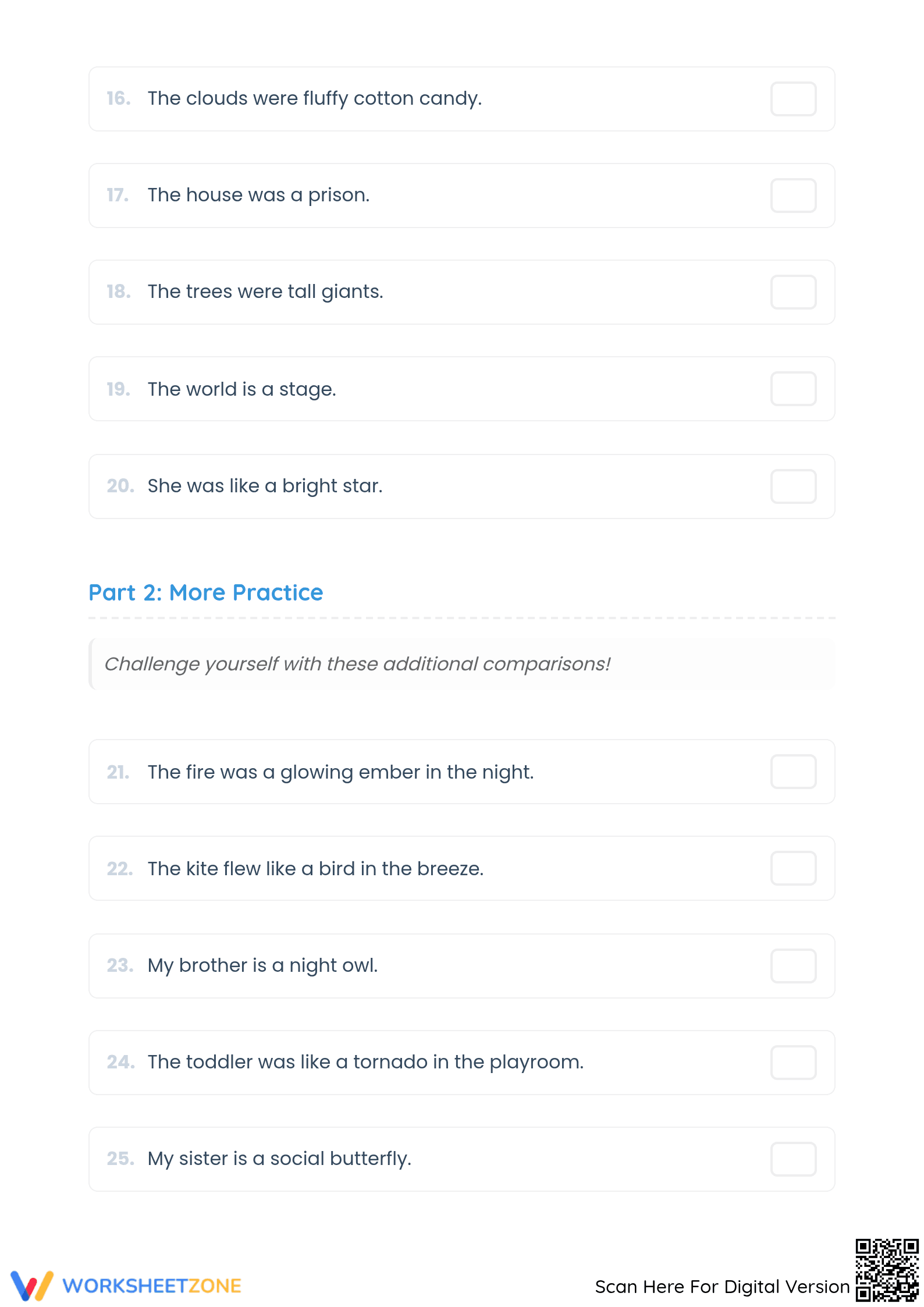
This comprehensive 5-page PDF contains a scaffolded approach to figurative language. It begins with a 'Quick Review' section that provides clear definitions and relatable examples for both similes and metaphors. The main body consists of thirty identification tasks where students classify sentences. The final section transitions to creative writing, prompting students to generate their own original comparisons about animals, weather, and friends. A full answer key is included for rapid grading.
Skill Progression
- Guided practice: The worksheet opens with a review box and four initial identification items to establish the pattern of finding comparison keywords.
- Supported practice: Students tackle twenty-six additional classification problems, encountering a wide variety of metaphorical and literal-comparison structures to build stamina.
- Independent practice: Three open-ended creative writing prompts challenge students to synthesize their learning by crafting original figurative language without scaffolds.
This sequence follows the gradual-release model, moving from 'I Do' definitions to 'You Do' original composition.
Standards Alignment
This resource aligns to CCSS.ELA-LITERACY.L.4.5.A, requiring Grade 4 students to explain the meaning of simple similes and metaphors in context. The sentences match the complexity expectations of fourth-grade learners. It also supports L.4.5 by addressing figurative language and nuances in word meanings. Both standard codes can be copied into lesson plans, IEP goals, or district curriculum mapping tools.
How to Use It
Use this worksheet as a formative assessment after introducing figurative language. Assign the first page during instruction to check for understanding, then allow independent completion of the remaining items. Observe how students handle sentences that use 'like' in non-comparative ways to gauge mastery. Most students will complete the five pages in thirty minutes.
Who It's For
This packet is designed for Grade 4 general education, but it is effective for English Language Learners (ELLs) who need practice with English idioms. It pairs naturally with a mentor text featuring rich descriptive language, such as 'Owl Moon,' allowing students to hunt for examples before practicing with this worksheet.
Research by Fisher & Frey (2014) highlights that scaffolded practice with similes and metaphors helps students transition from literal decoding to inferential understanding. This worksheet addresses the challenge of 'metaphorical density' by providing thirty-three specific opportunities for students to analyze how authors use comparisons to create mental images. By mastering the CCSS.ELA-LITERACY.L.4.5.A standard through identification and creative application, students develop the linguistic dexterity required for complex literature. The creative writing component ensures that students are not merely identifying patterns but are internalizing the mechanics of figurative language. This structured approach is consistent with evidence-based literacy practices that emphasize the integration of reading and writing skills. The NAEP framework identifies this as a core competency for Grade 4 success. As students distinguish between similes and metaphors, they build the foundational skills needed for advanced rhetorical analysis in secondary education.


