


























Views
Downloads

Printable Sight Words Word Search 5 | Grade K-1 Worksheet
Paste this activity's link or code into your existing LMS (Google Classroom, Canvas, Teams, Schoology, Moodle, etc.).
Students can open and work on the activity right away, with no student login required.
You'll still be able to track student progress and results from your teacher account.
Help early learners build literacy skills with this comprehensive sight words packet. This resource focuses on recognition and spelling through engaging activities. Students move from identification to production and usage, mastering essential Grade 1 vocabulary and foundation reading fluency.
At a Glance
- Grade: K-1 · Subject: ELA
- Standard:
RF.K.3.C— Read common high-frequency words by sight and identify them in isolation or text- Skill Focus: Sight Word Recognition & Contextual Usage
- Format: 3 pages · 24 problems · Answer key included · PDF
- Best For: Independent literacy centers and morning work
- Time: 20–30 minutes
What's Inside
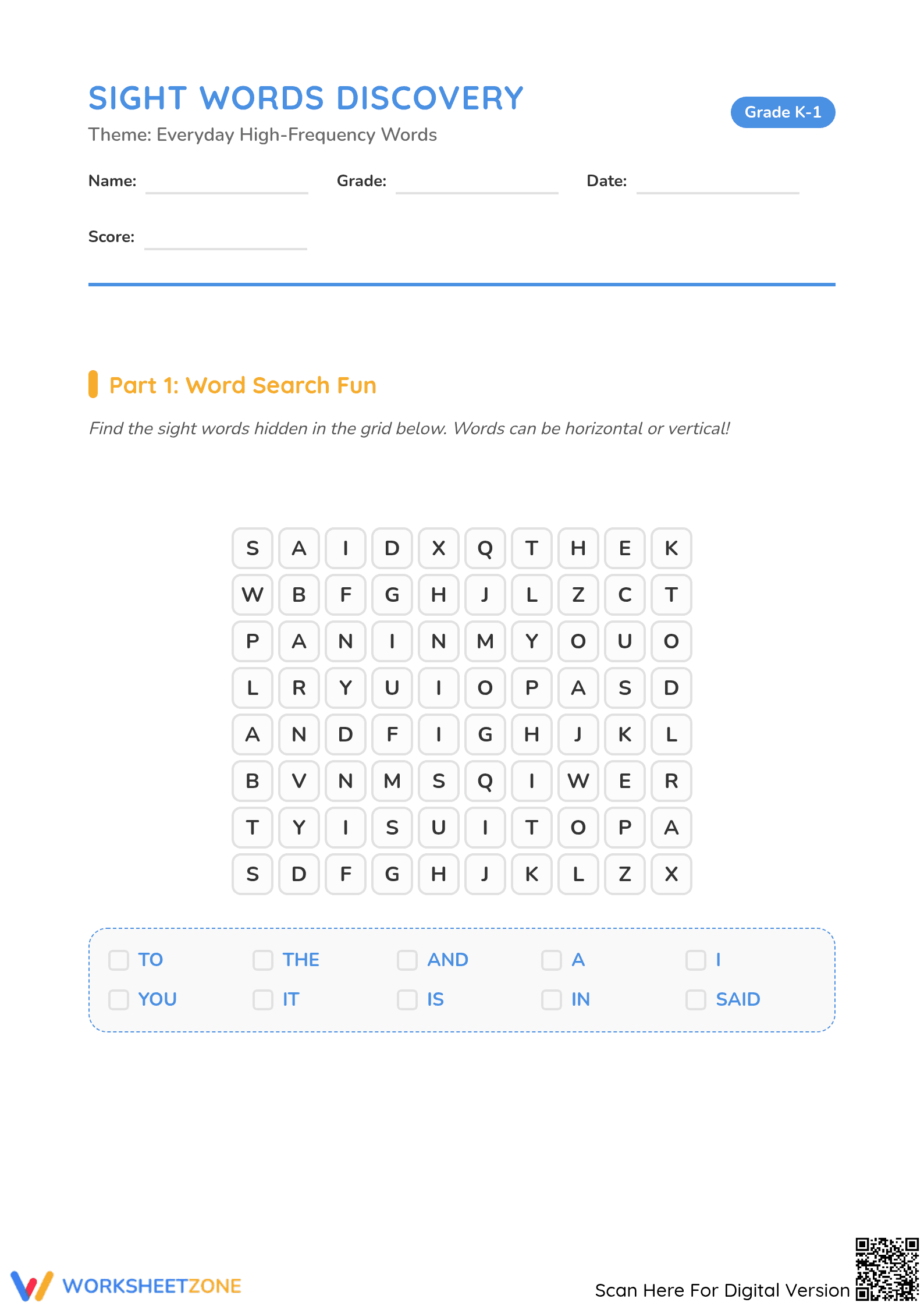
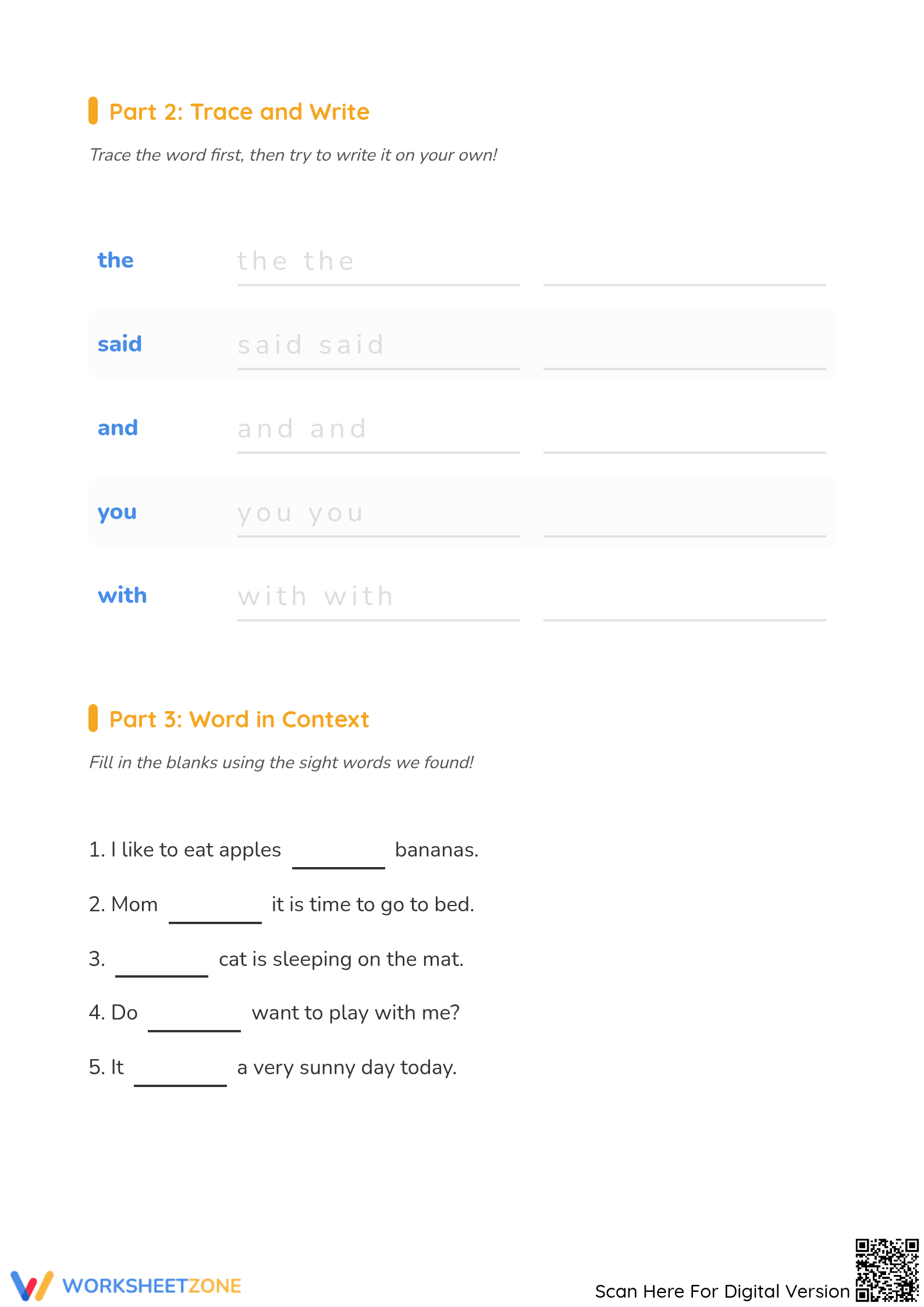
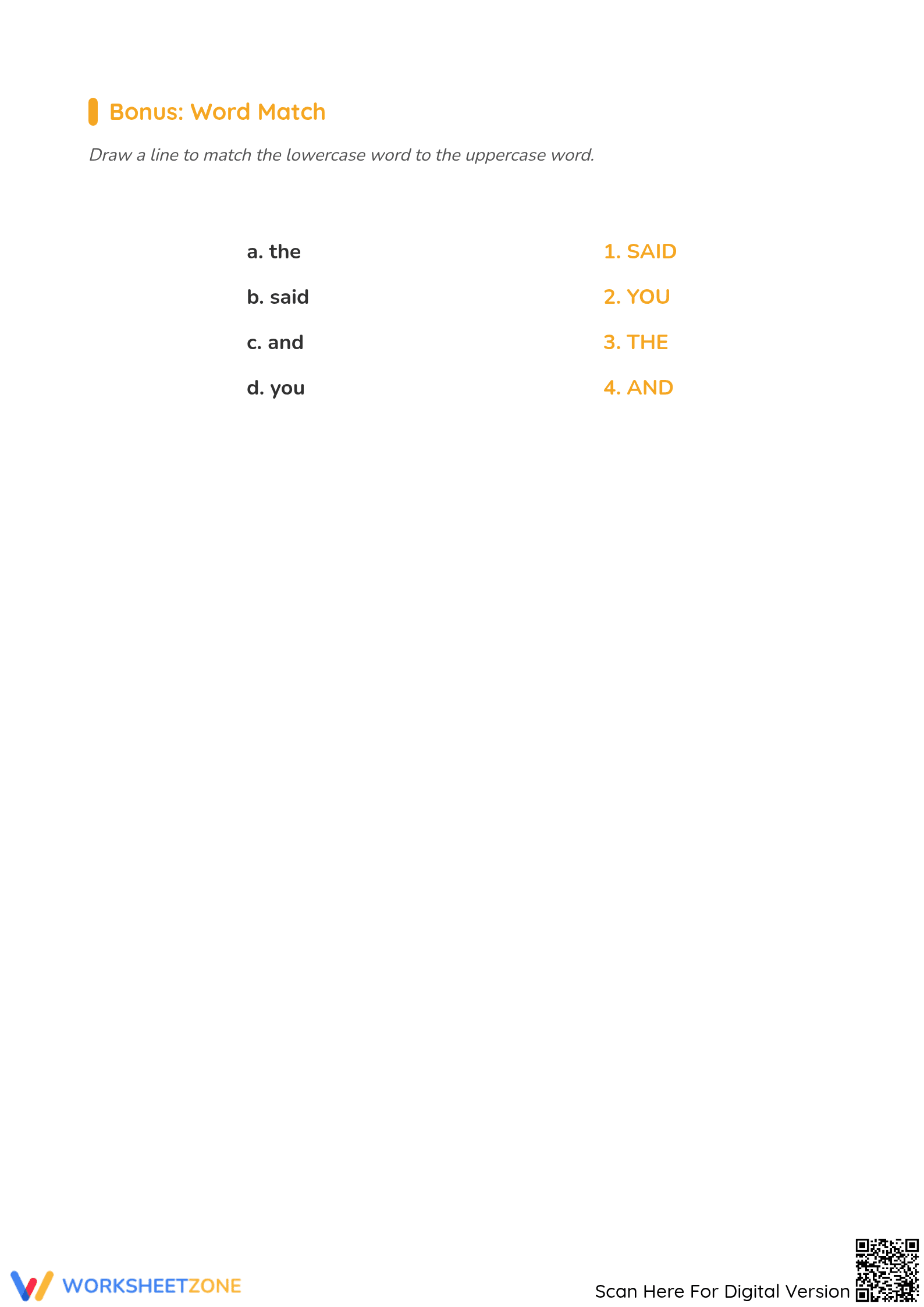
This three-page instructional packet provides a structured sequence for learning everyday high-frequency words. It begins with a 10-word "Word Search Fun" grid to encourage visual discrimination. The second page features "Trace and Write" scaffolds to develop muscle memory, followed by "Word in Context" cloze sentences that test comprehension. A bonus "Word Match" page reinforces uppercase and lowercase letter relationship for early readers.
Zero-Prep Workflow
The zero-prep design of this worksheet ensures teachers can implement high-quality literacy practice in under two minutes. Print the three-page PDF packet in under 30 seconds. Distribute materials in another 30 seconds; students begin the word search independently. Finally, review the sentences in about one minute using the included answer key for immediate feedback. This efficient workflow is ideal for busy classrooms or emergency substitute plans.
Standards Alignment
This resource is directly aligned to `CCSS.ELA-LITERACY.RF.K.3.C`, which requires students to read common high-frequency words by sight (e.g., the, of, to, you, she, my, is, are, do, does). By integrating tracing and writing, it also supports `CCSS.ELA-LITERACY.L.K.1.A` regarding letter formation. Both standard codes can be copied directly into lesson plans, IEP goals, or district curriculum mapping tools to ensure instructional compliance and tracking.
How to Use It
Use this packet during your literacy block as a transition activity or a stationary center rotation. It works exceptionally well as morning work to settle students while reinforcing previous lessons on high-frequency words. For a formative-assessment observation, watch how students approach the word search; those who struggle to find words may need additional support with visual tracking or phonemic awareness exercises. The activities typically take 20 to 30 minutes to complete.
Who It's For
The worksheet is designed for Kindergarten and Grade 1 students, though it is also an excellent resource for ESL/ELL students building their initial English vocabulary. Clear fonts and whitespace support students with fine motor challenges. For best results, pair this worksheet with a sight word anchor chart or physical flashcards to provide multiple points of exposure to the target words.
Effective sight word instruction requires multiple modes of engagement to move vocabulary from short-term memory to automatic retrieval. This worksheet employs a multi-sensory approach by combining visual searching, tactile tracing, and cognitive application in sentences. Research from the RAND AIRS 2024 report emphasizes that systematic exposure to high-frequency words in diverse formats significantly improves reading speed and comprehension in early primary grades. By mastering the sight words provided in this activity—such as "said," "the," and "you"—students reduce the cognitive load required for decoding, allowing them to focus on the meaning of the text. This aligns with the Fisher & Frey (2014) gradual release of responsibility model, moving students from guided tracing to independent contextual usage. This resource provides the necessary repetition to ensure students achieve the RF.K.3.C standard of automatic sight word recognition, creating a solid foundation for future literary success.


