


























Views
Downloads

Printable Sight Words Word Search | Grade 1 Essential
Paste this activity's link or code into your existing LMS (Google Classroom, Canvas, Teams, Schoology, Moodle, etc.).
Students can open and work on the activity right away, with no student login required.
You'll still be able to track student progress and results from your teacher account.
This sight word word search worksheet provides Grade 1 students with a focused way to practice recognizing high-frequency words in a puzzle format. By searching for hidden terms within the grid, learners strengthen their visual scanning skills and orthographic mapping of irregularly spelled words, leading to improved reading fluency and word recognition speed.
At a Glance
At a Glance
- Grade: Grade 1 · Subject: ELA
- Standard:
CCSS.ELA-LITERACY.RF.1.3.G— Recognize and read grade-appropriate irregularly spelled words- Skill Focus: High-frequency sight word recognition
- Format: 3 pages · 8 problems · Answer key included · PDF
- Best For: Literacy centers and independent morning work
- Time: 15–20 minutes
What's Inside
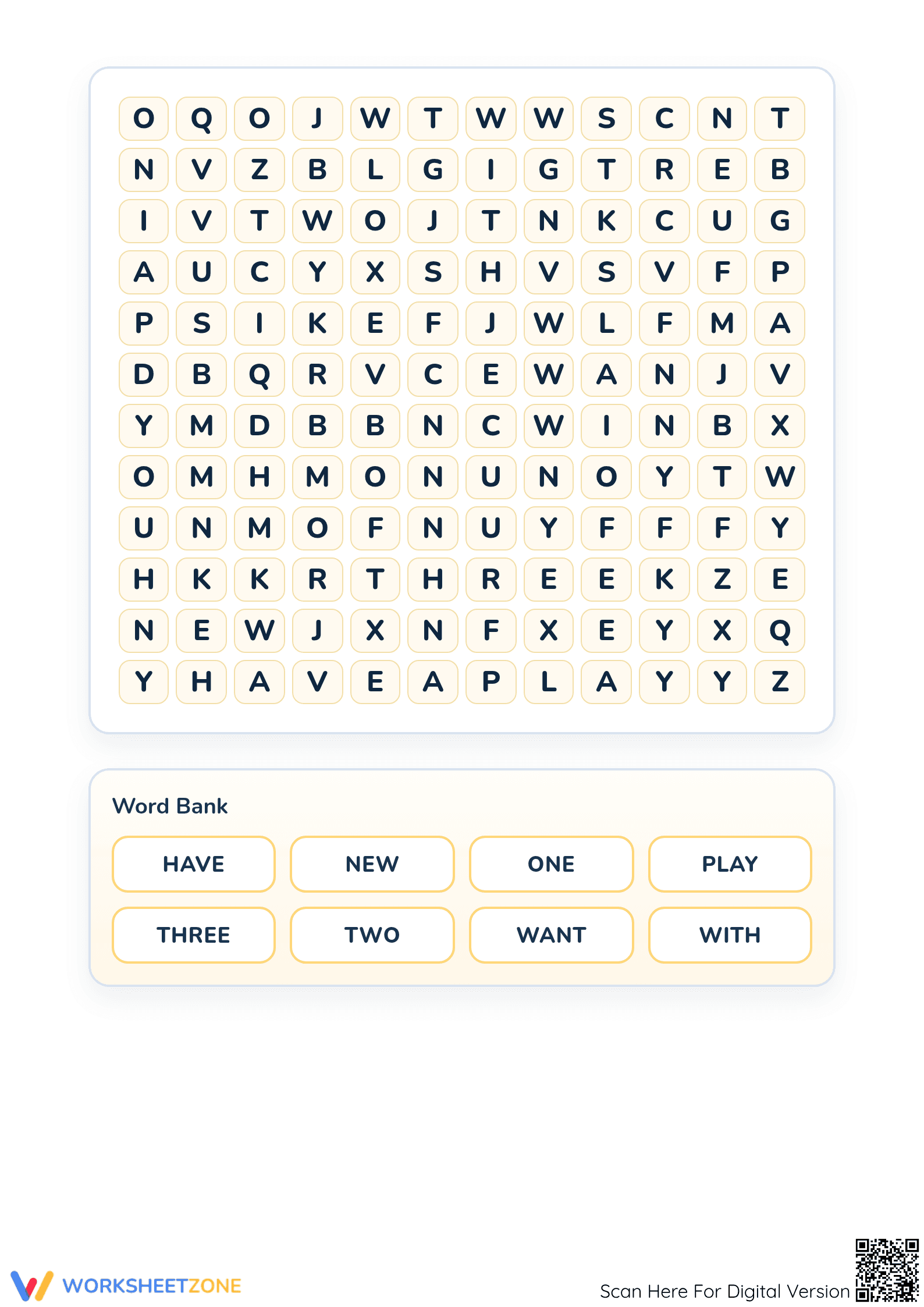
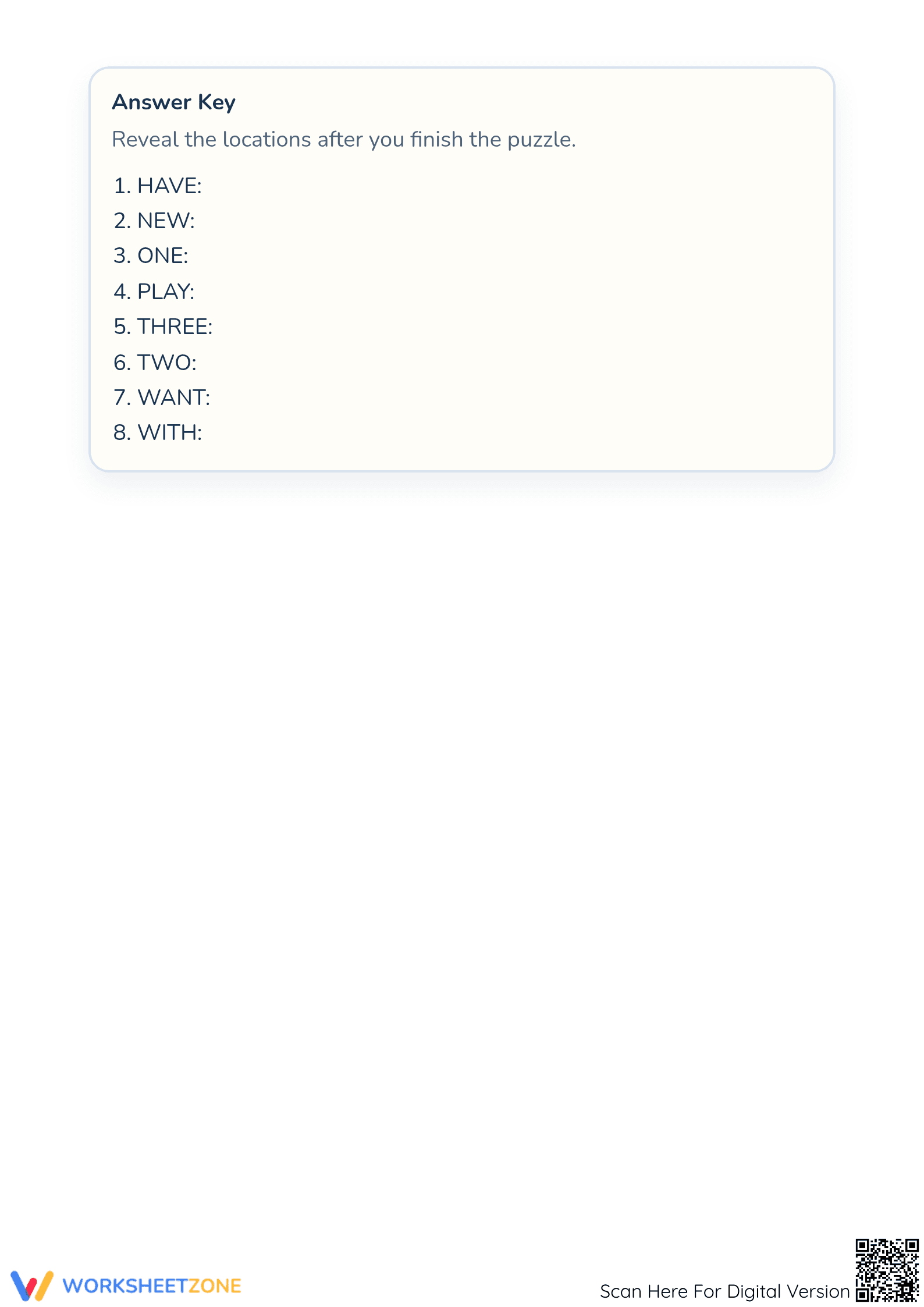
The PDF package contains three comprehensive pages designed for immediate classroom use. The primary puzzle page features a 12-by-12 letter grid and a clear word bank containing eight essential Grade 1 sight words like "three," "want," and "with." A dedicated notes page allows students to practice writing the words they find, while a complete answer key ensures that checking for accuracy is fast and efficient for teachers or parents.
Zero-Prep Workflow
This resource is designed for a three-step immediate deployment. First, print the necessary copies for your class in under one minute. Second, distribute the worksheets to students during your literacy block or as a transition activity. Finally, review the answers using the provided key to provide instant feedback. Total teacher preparation time is under two minutes, making this an ideal choice for emergency substitute plans or busy mornings.
Standards Alignment
The primary focus is CCSS.ELA-LITERACY.RF.1.3.G, which requires students to recognize and read grade-appropriate irregularly spelled words. This activity supports the standard by requiring students to identify the specific letter sequences of high-frequency words in various orientations. Both standard codes can be copied directly into lesson plans, IEP goals, or district curriculum mapping tools.
How to Use It
Use this worksheet during the independent practice portion of a phonics lesson after introducing the weekly sight words. It serves as an excellent tool for students to interact with word shapes in a low-stakes environment. Alternatively, assign it as a morning task to settle the class. Teachers should observe if students are correctly identifying word boundaries or if they struggle with specific letter patterns to inform future small-group instruction.
Who It's For
This activity is tailored for first-grade students but is also appropriate for Kindergarteners ready for a challenge or second-graders needing remedial support. It works well for English Language Learners building basic vocabulary. Pair this resource with a leveled reading passage or a word wall anchor chart to provide additional scaffolding for students who are still mastering these specific terms.
According to a recent EdReports 2024 evaluation of foundational literacy materials, structured exposure to high-frequency words through varied interactive formats is critical for developing early reading automaticity. This sight word word search aligns with evidence-based practices by providing students with targeted practice in identifying CCSS.ELA-LITERACY.RF.1.3.G irregularly spelled words, such as "three," "want," and "with." By isolating these terms in a visual grid, students must attend to the specific phoneme-grapheme correspondences that define English orthography. Research suggests that repetitive, engaging encounters with these "heart words" significantly reduce the cognitive load during text decoding, allowing young readers to focus more on comprehension rather than word-level analysis. This printable resource offers a high-utility, research-aligned method for reinforcing these foundational skills within a standard classroom literacy framework, ensuring that students meet grade-level benchmarks for fluency and word recognition.


