


























Views
Downloads
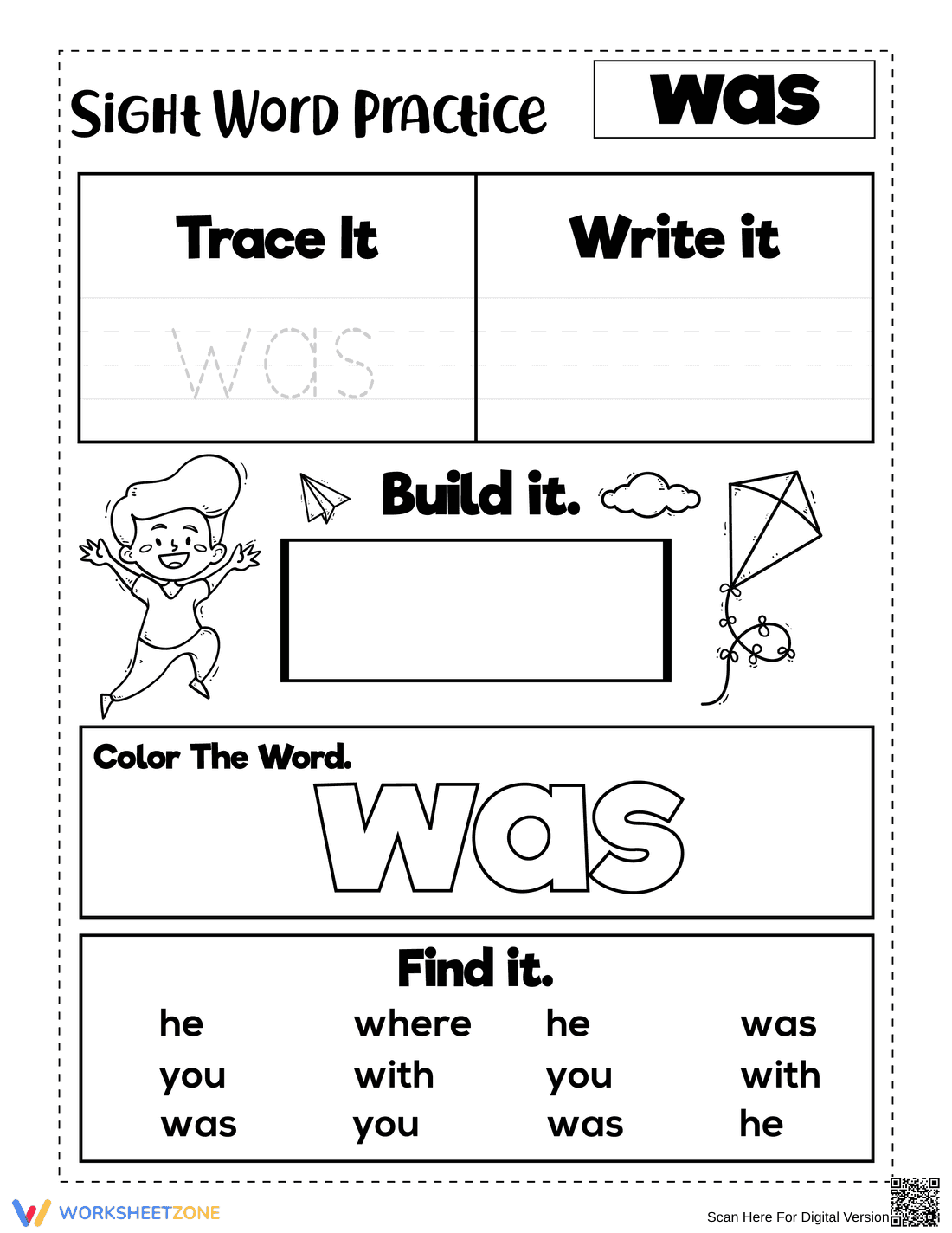

Grade K Sight Word "Was" — Printable No-Prep Worksheet
Paste this activity's link or code into your existing LMS (Google Classroom, Canvas, Teams, Schoology, Moodle, etc.).
Students can open and work on the activity right away, with no student login required.
You'll still be able to track student progress and results from your teacher account.
This printable Kindergarten ELA worksheet focuses on the high-frequency sight word "was," helping early readers build essential literacy skills. Students will practice recognizing, tracing, writing, and identifying the target word through engaging, multi-sensory activities designed to improve reading fluency and spelling accuracy.
At a Glance
- Grade: K · Subject: ELA
- Standard:
CCSS.ELA-LITERACY.RF.K.3.C— Read common high-frequency words by sight- Skill Focus: Sight word recognition
- Format: 1 page · 5 tasks · No answer key needed · PDF
- Best For: Independent practice centers
- Time: 10–15 minutes
This single-page resource features five distinct task types to reinforce word memorization. Students begin by tracing the word "was" along dotted lines, followed by writing it independently. A "Build it" section allows for creative letter arrangement, while a "Color the Word" bubble-letter area provides fine motor practice. Finally, a "Find it" word search grid challenges learners to visually discriminate the target word among other common sight words like "he," "where," "with," and "you."
Zero-Prep Workflow
- Print (1 minute): Simply download the PDF and print the desired number of copies. No special materials or cutting required.
- Distribute (1 minute): Hand out the worksheets along with pencils and crayons. The visual instructions make it easy for young learners to understand the expectations.
- Review (3 minutes): Quickly scan completed pages to ensure students are forming letters correctly and accurately identifying the target word in the search grid.
With a total teacher prep time of under two minutes, this resource is highly suitable for emergency sub plans or quick morning work.
This activity is directly aligned to CCSS.ELA-LITERACY.RF.K.3.C: Read common high-frequency words by sight. By repeatedly interacting with the word "was" in different contexts, students build the automaticity required by early reading benchmarks. Both standard codes can be copied directly into lesson plans, IEP goals, or district curriculum mapping tools.
This worksheet is highly versatile for early childhood classrooms. Use it during morning work as a quiet, independent activity while taking attendance, or place it in a literacy center for students to complete after direct instruction on new sight words. As a formative assessment tip, observe students during the "Find it" section; if they circle incorrect words, they may need additional practice with visual discrimination. Expected completion time ranges from 10 to 15 minutes.
This resource is primarily designed for Kindergarten students, though it serves as excellent review for first graders or targeted intervention for PreK learners showing early reading readiness. For students needing extra scaffolding, provide a physical word card to reference while completing the "Build it" section. This worksheet pairs naturally with a pocket chart lesson or a read-aloud book that frequently uses the word "was."
Mastering high-frequency vocabulary is a critical milestone in early literacy development. According to Fisher & Frey (2014), explicit instruction combined with repeated, varied exposure to target vocabulary significantly improves reading automaticity and comprehension in young learners. This worksheet supports that pedagogical framework by requiring students to interact with the target vocabulary across five distinct modalities—tracing, writing, building, coloring, and identifying. By aligning directly with CCSS.ELA-LITERACY.RF.K.3.C to read common high-frequency words by sight, the activity ensures that students are meeting foundational reading benchmarks. The multi-sensory approach not only reinforces visual memory but also supports fine motor skill development, making it an efficient tool for comprehensive early childhood literacy instruction. Consistent practice with resources like this builds the confidence necessary for students to transition from decoding individual letters to fluent reading.


