


























Views
Downloads

Grade 1 Sight Word "new" — Printable No-Prep Worksheet
Paste this activity's link or code into your existing LMS (Google Classroom, Canvas, Teams, Schoology, Moodle, etc.).
Students can open and work on the activity right away, with no student login required.
You'll still be able to track student progress and results from your teacher account.
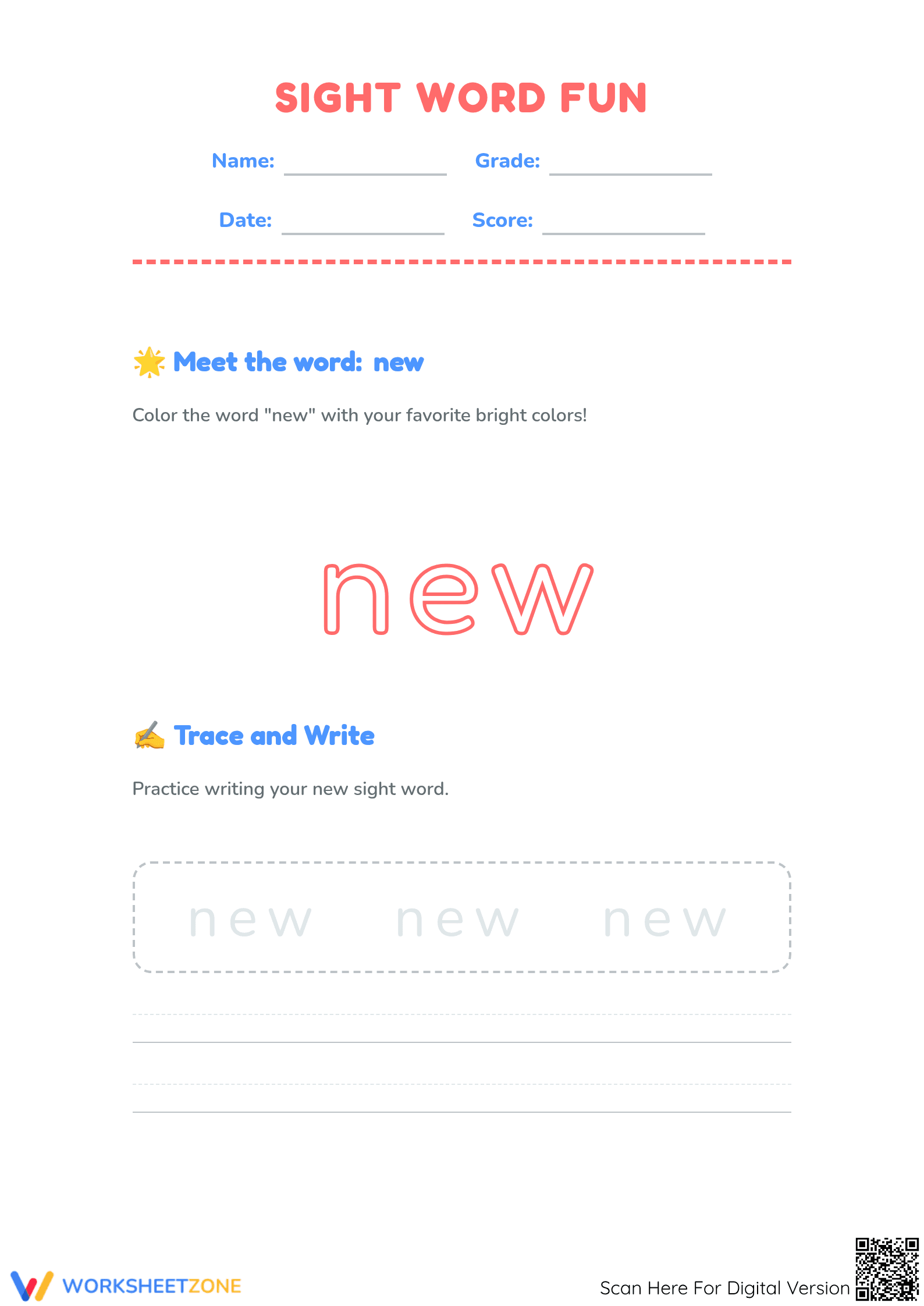
This printable sight word "new" worksheet helps young learners master a high-frequency vocabulary term through a multi-sensory approach. Students engage with the word through coloring, tracing, writing, identifying, and sentence-level application. This comprehensive set ensures that early readers transition from simple recognition to fluent usage in both reading and writing contexts.
At a Glance
- Grade: Grade 1 · Subject: English Language Arts
- Standard:
CCSS.ELA-LITERACY.RF.1.3.G— Recognize and read grade-appropriate irregularly spelled words by sight- Skill Focus: Sight Word Recognition ("new")
- Format: 3 pages · 6 problems · Answer key included · PDF
- Best For: Literacy centers and morning work
- Time: 15–20 minutes
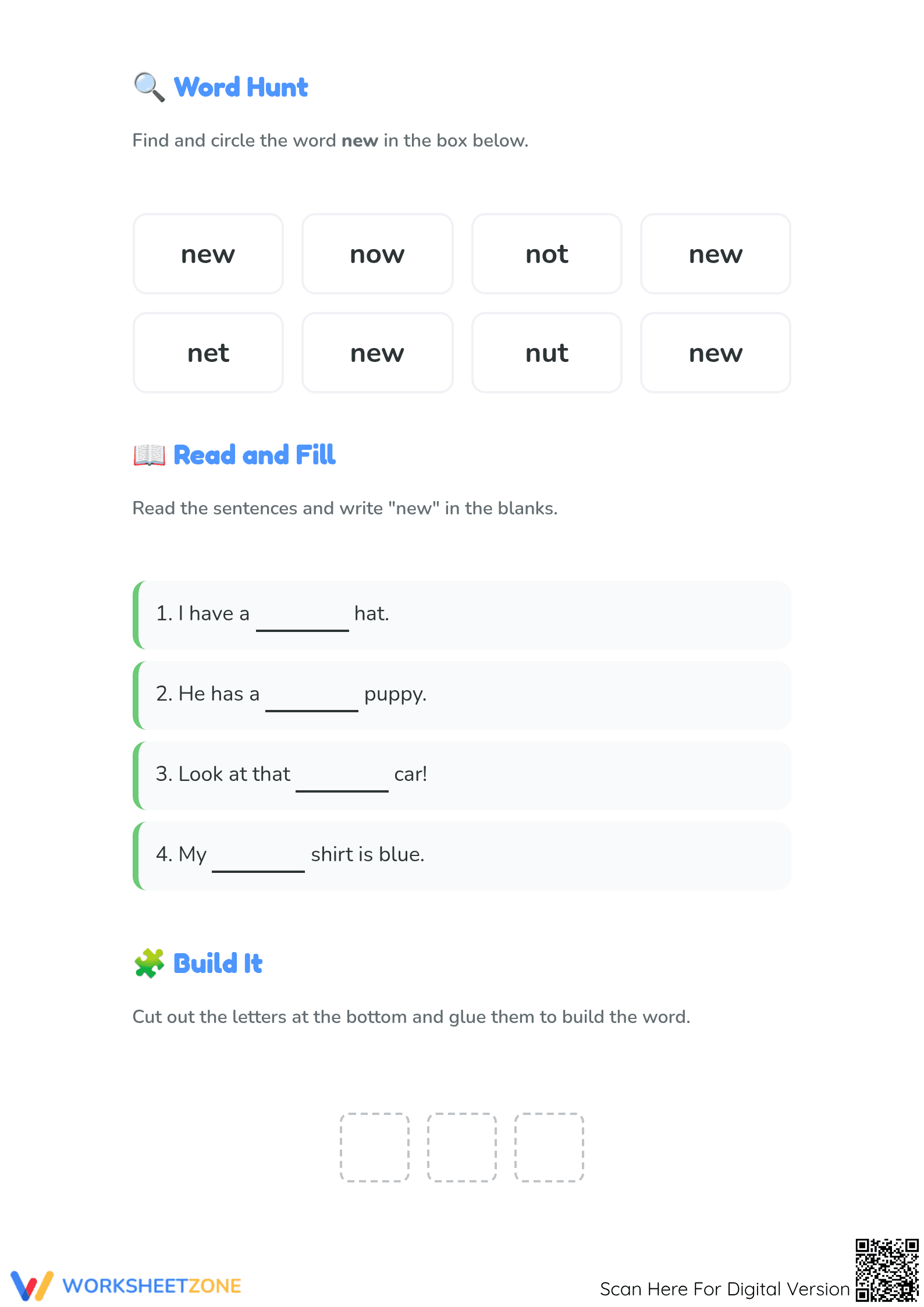
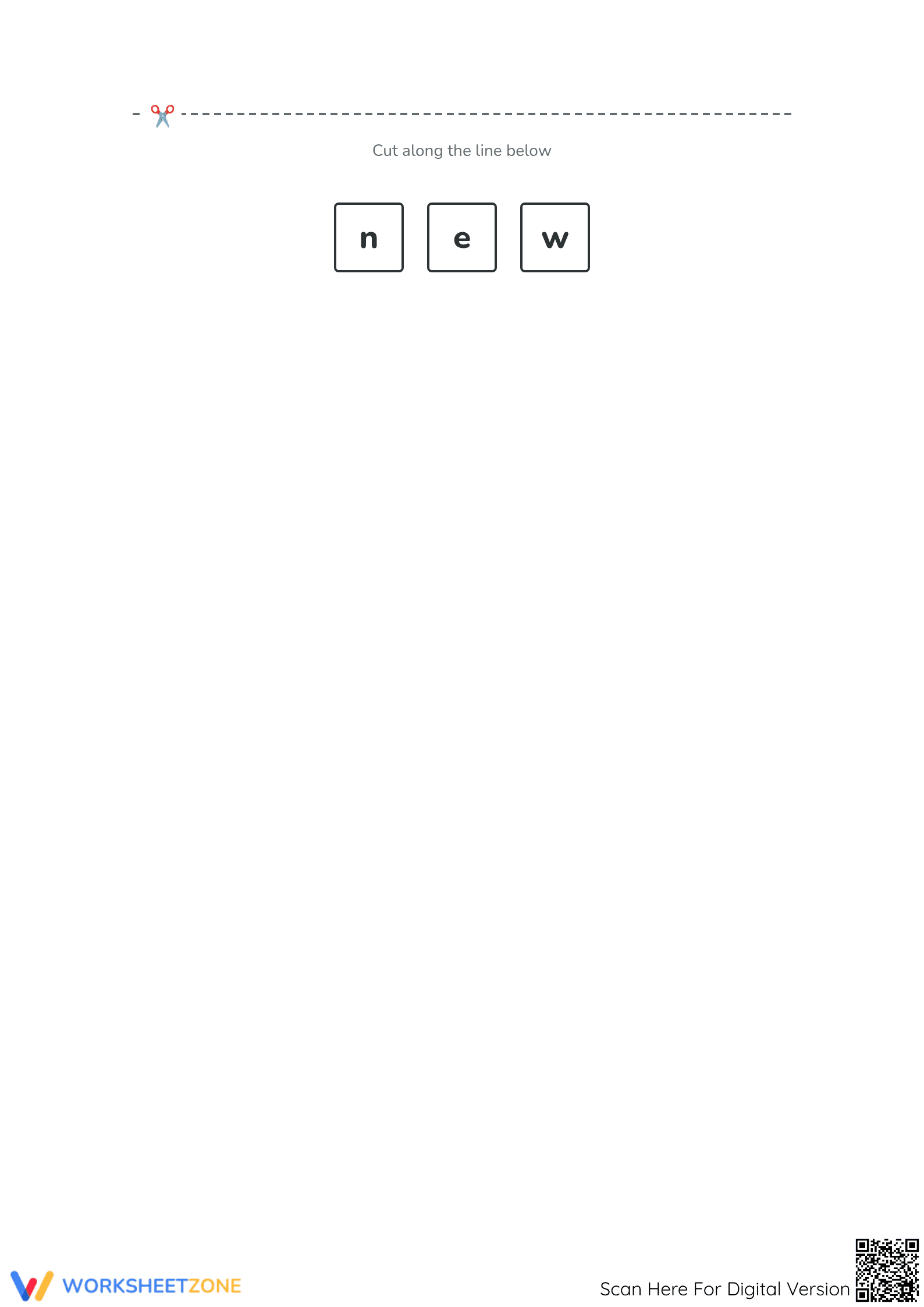
The packet contains three pages of focused literacy practice. It includes a visual recognition "word hunt" grid, a tracing and independent writing section with primary-ruled lines, and a "Read and Fill" activity with four contextual sentences. A dedicated tactile page allows students to cut and paste letters to physically construct the word, reinforcing letter order and spelling.
Zero-Prep Workflow
- Print: Use a standard printer to output the three-page PDF in seconds.
- Distribute: Hand out the sheets along with scissors and glue for the tactile portion.
- Review: Use the provided answer key to verify student accuracy in under 60 seconds.
This workflow requires less than two minutes of total teacher preparation, making it an ideal choice for emergency sub plans or last-minute filler activities during literacy blocks.
Standards Alignment
This resource is specifically aligned to CCSS.ELA-LITERACY.RF.1.3.G, which requires students to recognize and read grade-appropriate irregularly spelled words. By providing multiple modes of interaction, it supports the automaticity required for fluent reading. Both standard codes can be copied directly into lesson plans, IEP goals, or district curriculum mapping tools.
How to Use It
Deploy this worksheet during your small-group literacy block after introducing the word "new" on a word wall. Use the "Read and Fill" section as a formative assessment to observe if students can differentiate between similar-looking words like "now" or "net." Students typically complete the entire set of activities within 20 minutes of independent work time.
Who It's For
This resource is designed for Grade 1 students, though it serves as an excellent extension for Kindergarten or a remediation tool for Grade 2 learners. It pairs naturally with high-frequency word lists, decodable passages featuring the word "new," and direct instruction lessons focused on Fry or Dolch word mastery.
Research by EdReports (2024) emphasizes that high-frequency word mastery is a foundational pillar of early literacy, directly impacting a student's ability to decode more complex texts with fluency. This worksheet addresses CCSS.ELA-LITERACY.RF.1.3.G by providing the repetitive, scaffolded exposure necessary for permanent orthographic mapping. By moving students through the stages of recognition, tactile construction, and contextual application, the resource ensures the word "new" is moved into long-term memory. Such structured practice is identified by Fisher & Frey (2014) as essential for the gradual release of responsibility in primary classrooms. Educators can utilize these findings to justify the integration of targeted sight word practice within a balanced literacy framework. This standalone summary provides a research-backed overview of the worksheet's instructional value for use in administrative reporting or professional development citations.


