


























Views
Downloads


Essential Sight Word "on" Practice | Grade K-1 Printable
Paste this activity's link or code into your existing LMS (Google Classroom, Canvas, Teams, Schoology, Moodle, etc.).
Students can open and work on the activity right away, with no student login required.
You'll still be able to track student progress and results from your teacher account.
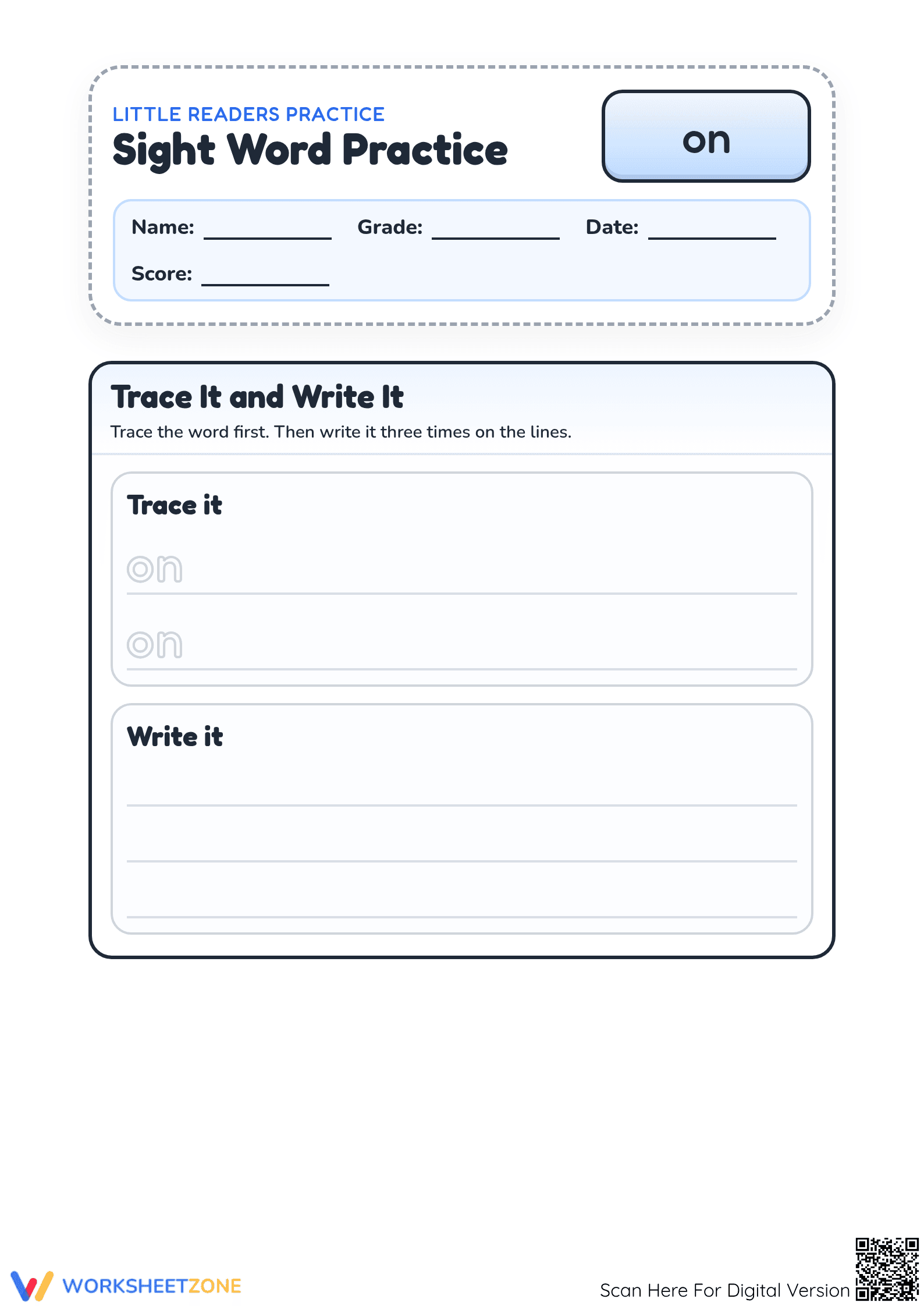
This comprehensive 3-page worksheet helps early readers master the sight word "on" through multi-sensory engagement. Students build foundational literacy by tracing, writing, building, coloring, and identifying the target word in isolation. The structured layout ensures learners develop automaticity, which is a critical component of fluent reading and writing in primary grades.
At a Glance
- Grade: K · Subject: English Language Arts
- Standard:
RF.K.3.C— Read common high-frequency words by sight to build early reading fluency- Skill Focus: Sight word recognition and orthographic mapping
- Format: 3 pages · 5 problems · Answer key included · PDF
- Best For: Literacy centers and independent morning work
- Time: 15–20 minutes
What's Inside
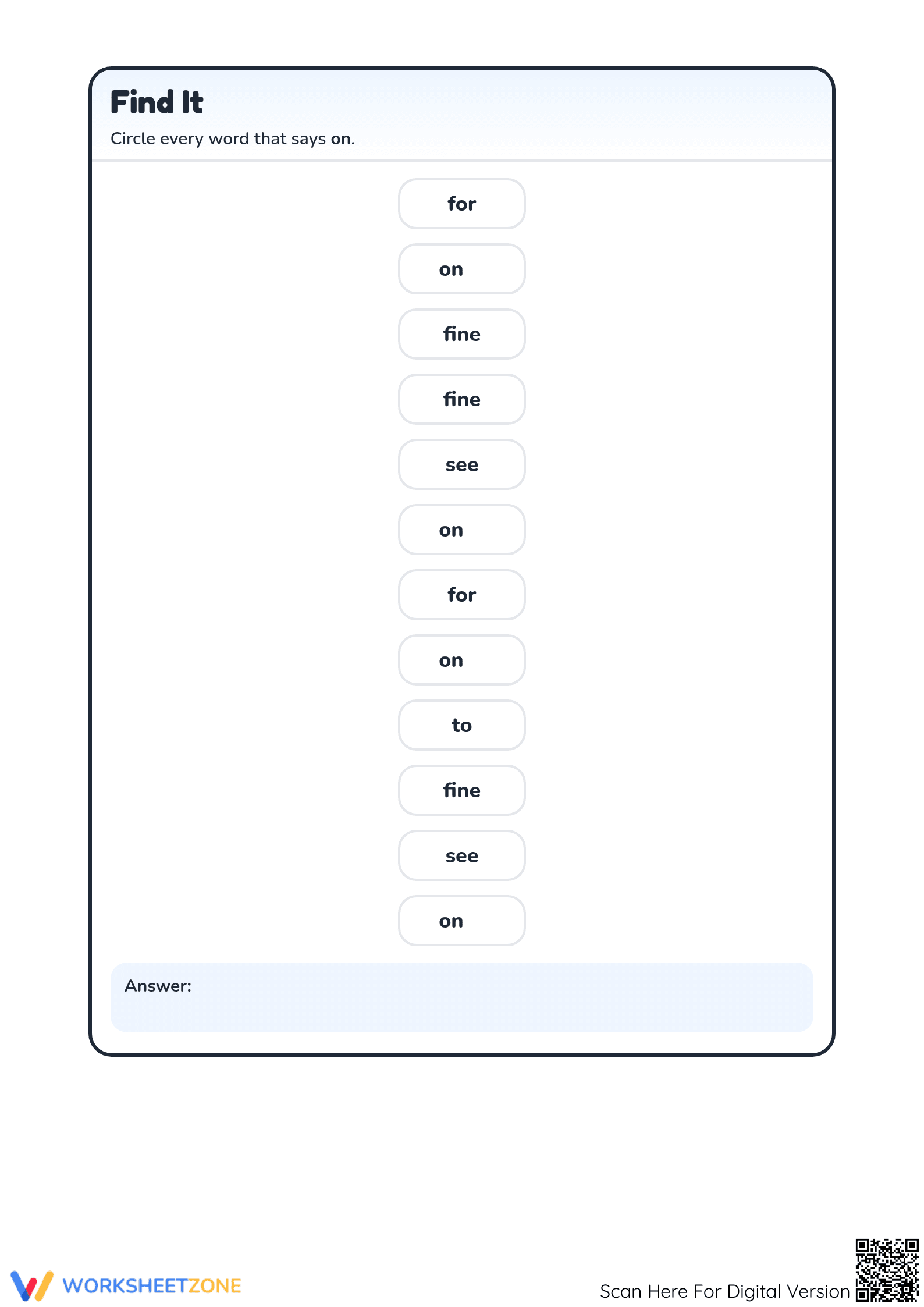
This resource includes three distinct pages packed with five interactive literacy tasks. Page one focuses on motor skills with two tracing exercises and three independent writing lines. Page two features a "Build It" section using letter tiles to reinforce spelling patterns and a "Color the Word" activity for visual reinforcement. Page three contains a "Find It" word search list where students must identify the word "on" among common distractors.
Zero-Prep Workflow
This printable is designed for immediate classroom implementation with zero teacher preparation. First, print the three pages for your class (30 seconds). Second, distribute the worksheets along with crayons or markers (1 minute). Third, review the completed work using the provided answer key or have students self-check during literacy centers (1 minute). Total teacher prep time is under 3 minutes, making it ideal for busy mornings or sub plans.
Standards Alignment
The primary focus of this worksheet is CCSS.ELA-LITERACY.RF.K.3.C, which requires students to read common high-frequency words by sight. By engaging in multiple modes of interaction—visual, tactile, and kinesthetic—students move beyond simple memorization toward permanent orthographic mapping. This standard code can be copied directly into lesson plans, IEP goals, or district curriculum mapping tools to document student progress toward foundational reading benchmarks.
How to Use It
Use this worksheet during your literacy block following direct instruction on high-frequency words. It works exceptionally well as a formative assessment tool; observe students during the "Find It" task to see if they can distinguish "on" from similar words like "for" or "fine." Alternatively, assign it as a quiet morning work activity to settle the class while building essential skills. Completion typically takes between 15 and 20 minutes depending on individual student pacing.
Who It's For
This resource is tailored for Preschool, Kindergarten, and Grade 1 students who are beginning their reading journey. It provides necessary scaffolding for struggling readers while offering clear, focused practice for the entire class. The simple instructions and repetitive tasks make it accessible for English Language Learners (ELLs). Pair this worksheet with a short "on" themed decodable passage or an anchor chart for a complete instructional cycle.
This educational resource targets the foundational standard CCSS.ELA-LITERACY.RF.K.3.C, focusing on the high-frequency sight word "on." Research by Fisher & Frey (2014) highlights that multi-sensory practice—including tracing, writing, and visual identification—accelerates the transition from phonetic decoding to automatic word recognition. By providing students with multiple exposures across three structured pages, this worksheet reinforces the orthographic mapping process necessary for reading fluency. The inclusion of tasks like "Build It" and "Find It" ensures that students engage in active processing rather than passive looking. This approach aligns with evidence-based literacy instruction that prioritizes early exposure to the most frequent words in the English language. Educators can utilize the 5 distinct tasks to monitor individual student progress and identify those needing further intervention. This printable serves as a reliable tool for building the lexical stores required for successful reading comprehension in early primary education.


