


























Views
Downloads

Sight Word "is" Printable Worksheet | Grade K ELA
Paste this activity's link or code into your existing LMS (Google Classroom, Canvas, Teams, Schoology, Moodle, etc.).
Students can open and work on the activity right away, with no student login required.
You'll still be able to track student progress and results from your teacher account.
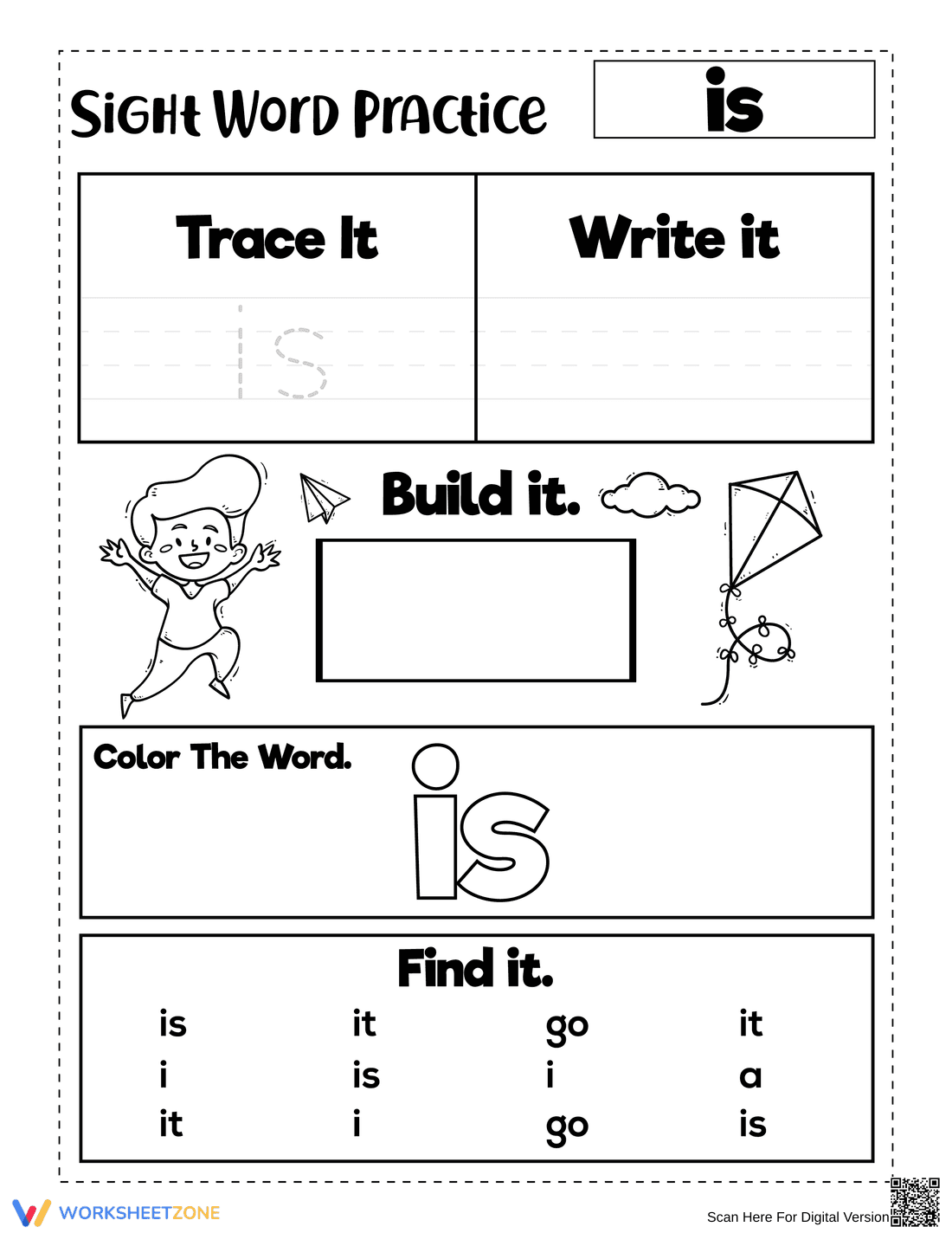
This foundational reading worksheet helps early learners master the high-frequency sight word "is" through multimodal practice. By engaging multiple senses, students build automatic word recognition and improve early reading fluency. The structured activities support fine motor development while reinforcing essential literacy skills for beginning readers.
At a Glance
- Grade: Kindergarten · Subject: ELA
- Standard:
CCSS.ELA-LITERACY.RF.K.3.C— Read common high-frequency words by sight- Skill Focus: Sight word recognition and writing
- Format: 1 page · 5 problems · No answer key needed · PDF
- Best For: Independent literacy centers
- Time: 10–15 minutes
This single-page resource features five distinct task types designed to reinforce sight word memorization. Students will trace the word using guided dashed lines, write it independently, build it in a designated box, color the block letters, and find the target word hidden among other common sight words. The clear layout and familiar activity structures allow young learners to complete the page with minimal adult intervention.
Zero-Prep Workflow
This resource is designed for immediate classroom implementation with a streamlined three-step process:
- Print (1 minute): Simply download the PDF and print a class set. The black-and-white design ensures crisp copies and saves ink.
- Distribute (1 minute): Hand out the worksheets along with basic supplies like pencils and crayons. No special manipulatives are required.
- Review (1 minute): Briefly model the five sections on the board, then let students work independently.
With under two minutes of total teacher prep time, this activity is an excellent addition to sub plans or morning work routines.
Standards Alignment
This practice page is directly aligned to CCSS.ELA-LITERACY.RF.K.3.C, which requires students to read common high-frequency words by sight. It also supports foundational writing skills by having students form lowercase letters correctly. Both standard codes can be copied directly into lesson plans, IEP goals, or district curriculum mapping tools.
How to Use It
This versatile worksheet fits perfectly into morning work routines, providing a quiet, focused task as students arrive. Alternatively, use it during literacy block rotations as an independent center activity after direct instruction. As a formative assessment tip, observe students during the "Find it" section to see if they can quickly discriminate the target word from visually similar distractors like "it" or "i". Expected completion time ranges from 10 to 15 minutes depending on fine motor speed.
Who It's For
This resource is primarily designed for Kindergarten students, but it also serves as excellent remediation for first graders who need extra high-frequency word practice, or advanced preschool learners showing early reading readiness. The repetitive, predictable structure provides built-in differentiation for English Language Learners and students receiving special education support. Pair this worksheet with a pocket chart activity or a decodable reader that heavily features the target word.
Mastering high-frequency vocabulary is a critical milestone in early childhood literacy development. According to Fisher & Frey (2014), repeated exposure to core vocabulary through varied, multimodal activities significantly increases automaticity and reading comprehension. This targeted practice page supports CCSS.ELA-LITERACY.RF.K.3.C by requiring students to read common high-frequency words by sight. By combining tracing, writing, coloring, and visual discrimination tasks into a single cohesive activity, educators provide necessary repetition without causing cognitive fatigue. The structured format allows young learners to build confidence as they interact with text in multiple ways. Consistent practice with foundational sight words reduces cognitive load during connected text reading, allowing students to focus mental energy on decoding complex words and understanding the overall narrative structure of early reader books.


