


























Views
Downloads
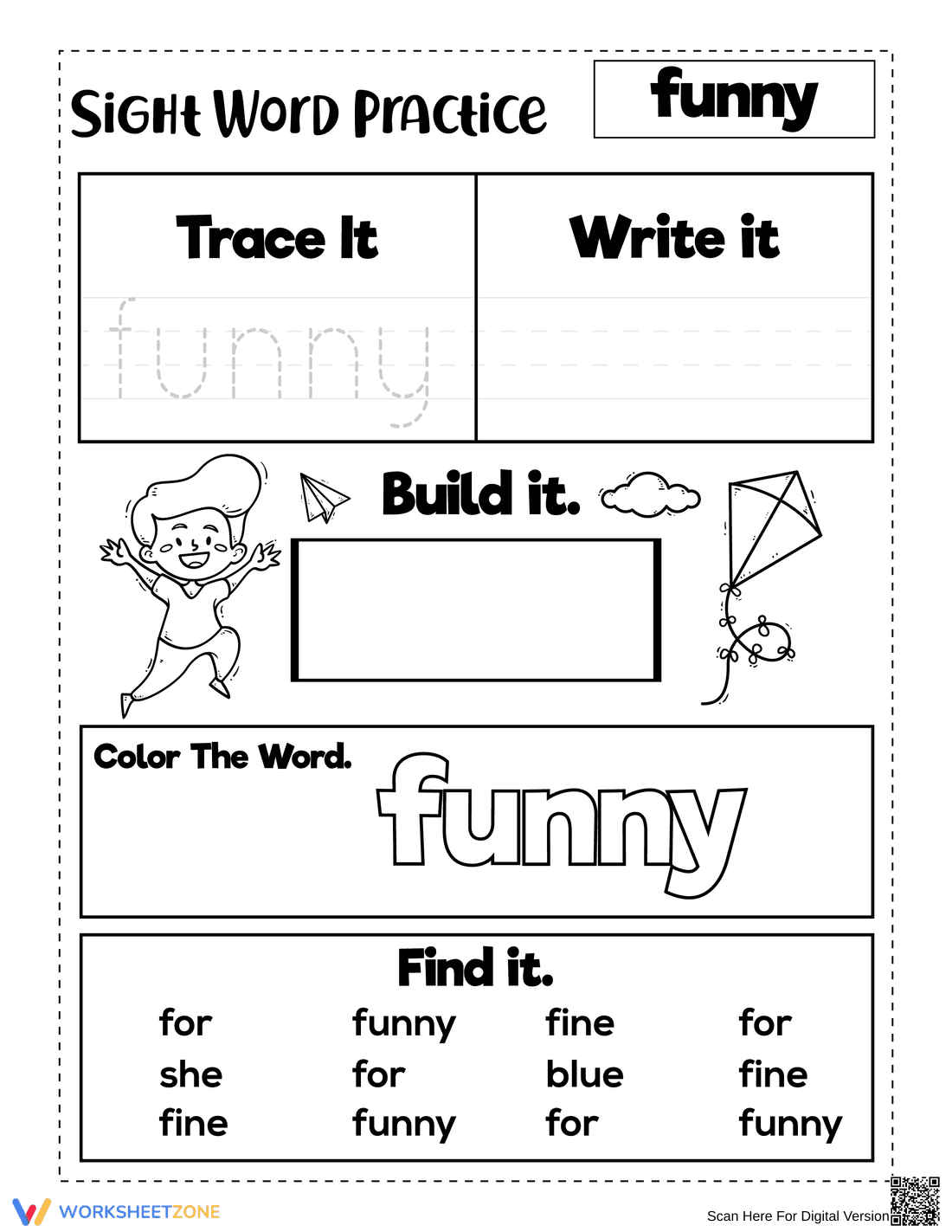

Grade K Sight Word "funny" — Printable No-Prep Worksheet
Paste this activity's link or code into your existing LMS (Google Classroom, Canvas, Teams, Schoology, Moodle, etc.).
Students can open and work on the activity right away, with no student login required.
You'll still be able to track student progress and results from your teacher account.
This foundational reading worksheet helps early learners master the high-frequency sight word "funny" through targeted, multi-sensory practice. Students build essential reading fluency and word recognition skills by interacting with the target word in multiple formats, ensuring strong retention for beginning readers.
At a Glance
- Grade: K · Subject: ELA
- Standard:
CCSS.ELA-LITERACY.RF.K.3.C— Read common high-frequency words by sight- Skill Focus: Sight word recognition
- Format: 1 page · 5 problems · No answer key needed · PDF
- Best For: Independent practice
- Time: 10–15 minutes
This single-page resource features five distinct task types designed to reinforce visual memory and fine motor skills. Students will trace the word, write it independently, build it using letter shapes, color the block letters, and find the target word hidden among a bank of similar high-frequency distractors. The clear, uncluttered layout provides ample workspace for young learners.
Zero-Prep Workflow
This resource requires zero teacher preparation.
- Print (1 minute): Simply download the PDF and print a class set. The design is ink-friendly.
- Distribute (1 minute): Hand out the sheets along with basic supplies like pencils and crayons. The intuitive layout means students understand the expectations immediately.
- Review (3 minutes): Quickly circulate to check for correct letter formation and accurate word identification during the "Find it" activity.
Total teacher prep time is under two minutes, making this an ideal, stress-free addition to any emergency sub plan or morning work routine.
Standards Alignment
This practice sheet directly supports CCSS.ELA-LITERACY.RF.K.3.C: Read common high-frequency words by sight. By isolating a single word and requiring repeated, varied interaction, students develop the automaticity required for fluent reading. Both standard codes can be copied directly into lesson plans, IEP goals, or district curriculum mapping tools.
How to Use It
Use this worksheet during morning work or literacy centers after introducing the word "funny". It serves as an excellent independent task while the teacher pulls small guided reading groups. For a quick formative assessment observation, watch how students tackle the "Find it" section at the bottom; note whether they are scanning left-to-right and accurately distinguishing "funny" from visually similar words like "fine" or "for". Expected completion time ranges from 10 to 15 minutes depending on the student's fine motor speed.
Who It's For
This material is designed for Kindergarten students, though it serves as excellent remediation for first graders needing word review. To differentiate for students needing tactile support, provide textured materials for the "Build it" section. Pair this worksheet with a decodable reader featuring the word "funny" to apply the skill in context.
Mastering early literacy requires strategic repetition and varied exposure to high-frequency vocabulary. This resource targets CCSS.ELA-LITERACY.RF.K.3.C, ensuring students can read common high-frequency words by sight with automaticity. According to Fisher & Frey (2014), providing students with multiple modalities to interact with new vocabulary—such as tracing, writing, and visual discrimination tasks—significantly increases retention and reading fluency. By isolating the target word and requiring active engagement through five distinct cognitive tasks, this worksheet moves learners beyond rote memorization into functional application. The structured progression from guided tracing to independent identification builds confidence and visual memory. Educators rely on this focused, multi-sensory practice to establish the foundational reading skills necessary for decoding complex texts in later grades. This evidence-based approach ensures that young readers develop the rapid word recognition essential for overall reading comprehension.


