


























Views
Downloads
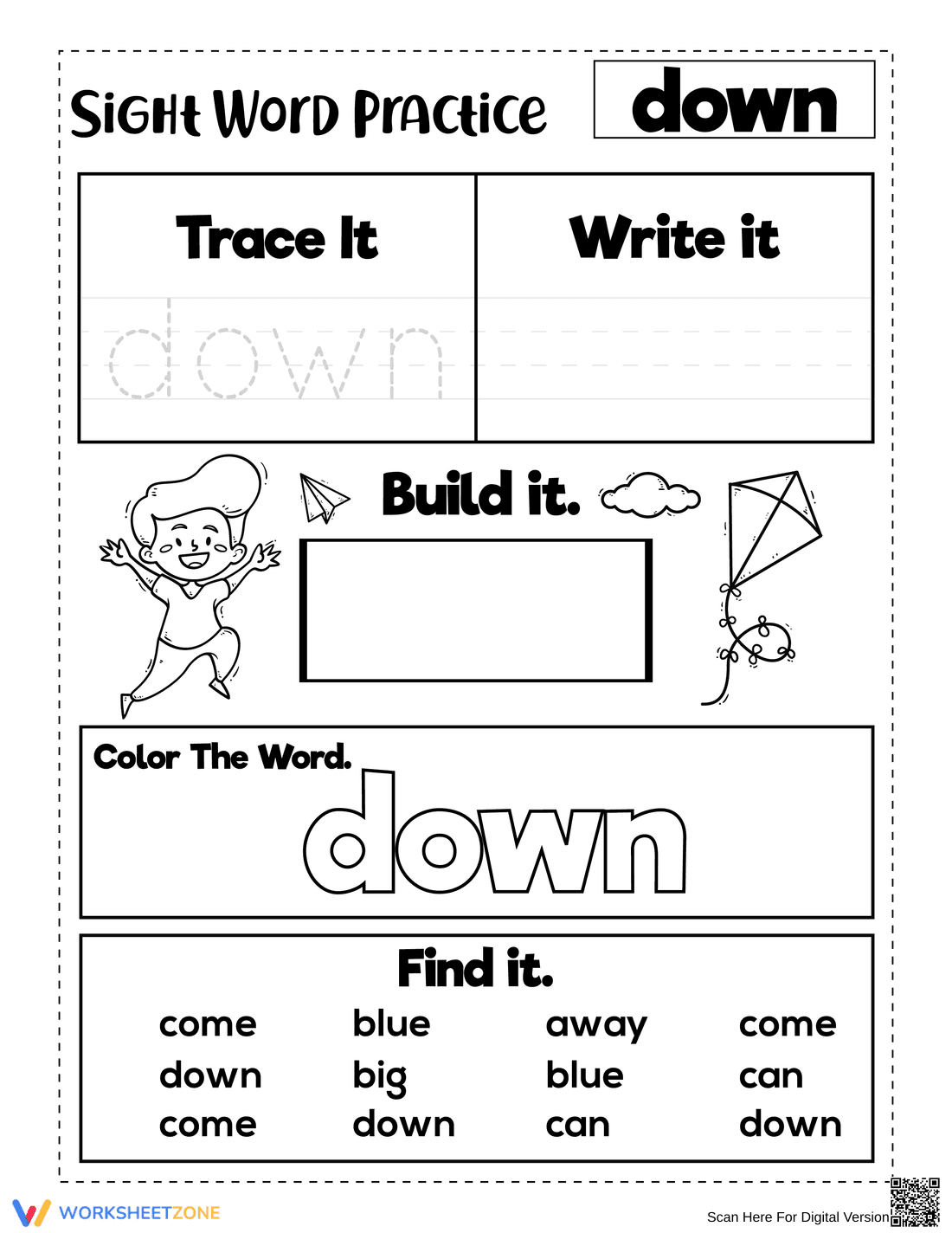

Printable Sight Word Down Worksheet | Grade K ELA
Paste this activity's link or code into your existing LMS (Google Classroom, Canvas, Teams, Schoology, Moodle, etc.).
Students can open and work on the activity right away, with no student login required.
You'll still be able to track student progress and results from your teacher account.
This foundational reading worksheet provides targeted practice for early learners mastering the sight word "down." By combining tracing, writing, and visual identification tasks, students build automatic word recognition and fine motor skills. This single-page resource offers immediate, structured engagement to support early literacy development and reading fluency.
At a Glance
- Grade: Kindergarten · Subject: ELA
- Standard:
CCSS.ELA-LITERACY.RF.K.3.C— Read common high-frequency words by sight.- Skill Focus: Sight word recognition and writing
- Format: 1 page · 5 problems · No answer key needed · PDF
- Best For: Independent practice centers
- Time: 10–15 minutes
Inside this single-page printable, educators will find five distinct activity zones designed to reinforce the target word. Students begin by tracing the word using guided dashed lines, followed by independent writing practice. A "Build it" section encourages letter arrangement, while a bubble-letter coloring area reinforces word shape. Finally, a word search matrix requires students to visually discriminate and locate the target word among other common high-frequency distractors.
This resource offers a highly efficient, zero-prep workflow.
- Print (1 minute): Simply download the PDF and print the required number of copies. No special formatting or color ink is required.
- Distribute (1 minute): Hand out the sheets along with pencils and crayons. The visual instructions make the tasks immediately clear to young learners.
- Review (1 minute): Quickly scan completed sheets to verify accurate tracing and correct identification in the word matrix.
Total teacher preparation time is under two minutes, making this an excellent addition to emergency sub plans or morning work routines.
This worksheet is directly aligned to CCSS.ELA-LITERACY.RF.K.3.C: Read common high-frequency words by sight. It also supports foundational writing standards by requiring students to print lowercase letters accurately. Both standard codes can be copied directly into lesson plans, IEP goals, or district curriculum mapping tools.
Deploy this worksheet during morning arrival as a focused bell-ringer activity. Alternatively, use it as a standalone station during literacy centers, allowing students to work independently while the teacher conducts small group guided reading. As a formative assessment tip, observe students during the "Find it" task to see if they can quickly scan and identify the word without vocalizing each letter. Expected completion time ranges from 10 to 15 minutes depending on the student's fine motor proficiency.
This resource is primarily designed for Kindergarten students developing their initial sight word vocabulary. It is also highly effective for Preschoolers demonstrating early reading readiness, or First Grade students requiring targeted intervention and review. For students needing extra scaffolding, provide a tactile sand tray for tracing before they attempt the pencil-and-paper tasks. Pair this worksheet with a shared reading of a predictable text that heavily features the target word to reinforce context.
Mastering high-frequency vocabulary is a critical milestone in early literacy, directly impacting a student's ability to process connected text fluently. This resource targets CCSS.ELA-LITERACY.RF.K.3.C, requiring learners to read common high-frequency words by sight. According to an EdReports 2024 analysis, explicit and repeated exposure to sight words through multimodal activities significantly accelerates automaticity. When students engage multiple pathways to process a word, they transition more rapidly from decoding to fluent recognition. By integrating these varied tasks into a single, focused exercise, educators provide the structured repetition necessary for orthographic mapping. This evidence-based approach ensures that early readers build the robust word recognition skills required for long-term reading comprehension and academic success across all subject areas.


