


























Views
Downloads
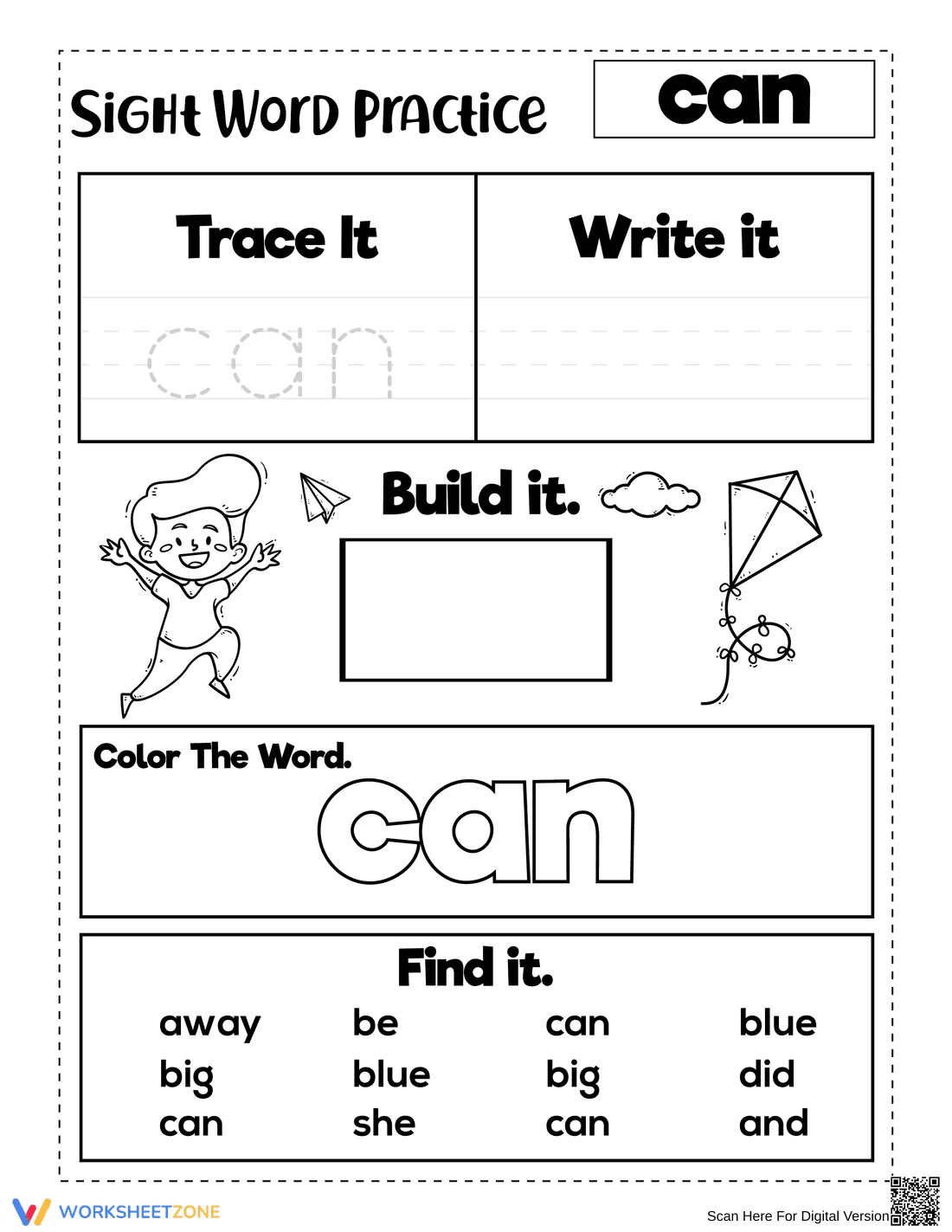

Kindergarten Sight Word Can — Printable No-Prep Worksheet
Paste this activity's link or code into your existing LMS (Google Classroom, Canvas, Teams, Schoology, Moodle, etc.).
Students can open and work on the activity right away, with no student login required.
You'll still be able to track student progress and results from your teacher account.
This foundational reading worksheet helps early learners master the high-frequency sight word "can" through targeted, multi-sensory practice. By engaging with the word in several distinct ways, students build automaticity and visual recognition skills essential for fluent reading and writing development in the primary classroom.
At a Glance
- Grade: Kindergarten · Subject: ELA
- Standard:
CCSS.ELA-LITERACY.RF.K.3.C— Read common high-frequency words by sight- Skill Focus: Sight word recognition
- Format: 1 page · 5 problems · No answer key needed · PDF
- Best For: Independent practice centers
- Time: 10–15 minutes
This single-page resource features five distinct task types designed to reinforce word memorization and motor skills. Students trace the word, write it independently, build it, color the block letters, and hunt for it within a word bank. The uncluttered layout provides ample workspace, utilizing dotted lines for handwriting support and simple icons to guide each activity without requiring extensive teacher instruction.
Designed for immediate classroom implementation, this resource follows a streamlined zero-prep workflow. Print (1 minute): Generate copies directly from the PDF file. Distribute (1 minute): Hand out the sheets during morning work or literacy centers. Review (3 minutes): Quickly check student work for accuracy in the word search and proper letter formation. With a total teacher preparation time of under two minutes, this self-explanatory activity is an excellent addition to any emergency sub plan.
This activity is directly aligned with CCSS.ELA-LITERACY.RF.K.3.C, requiring students to read common high-frequency words by sight. It also supports foundational handwriting standards by having students form lowercase letters accurately. Both standard codes can be copied directly into lesson plans, IEP goals, or district curriculum mapping tools.
Integrate this worksheet during morning work routines to establish a calm, productive start to the day, or place it in an independent literacy center after direct instruction on the week's sight words. As a formative assessment observation tip, watch how students approach the "Find it" section; rapid identification indicates growing automaticity, while hesitation suggests a need for further flashcard review. Most early learners will complete the entire page within a 10 to 15-minute timeframe.
This resource is primarily designed for Kindergarten students, though it serves as excellent remediation for first graders needing high-frequency word reinforcement or preschool students demonstrating early reading readiness. To differentiate for students requiring extra support, provide a tactile sand tray for tracing before they use a pencil on the paper. Pair this worksheet with a decodable reader passage that heavily features the word "can" to immediately apply the isolated skill in context.
Mastering high-frequency vocabulary is a critical milestone in early literacy development, serving as the bridge between phonetic decoding and fluent reading. Addressing CCSS.ELA-LITERACY.RF.K.3.C, this targeted resource ensures students can read common high-frequency words by sight with confidence. According to Fisher & Frey (2014), providing multiple exposures to target vocabulary through varied, interactive tasks significantly increases retention and automaticity in young readers. By combining tracing, independent writing, coloring, and visual discrimination exercises into a single cohesive activity, educators facilitate the cognitive mapping required for permanent word storage in the brain's visual word form area. This multi-modal approach reduces cognitive load during subsequent connected text reading, allowing students to focus their mental energy on comprehension rather than laborious decoding. Consistent, structured practice with foundational sight words establishes the necessary groundwork for reading fluency and writing proficiency across all primary grade levels.


