


























Views
Downloads
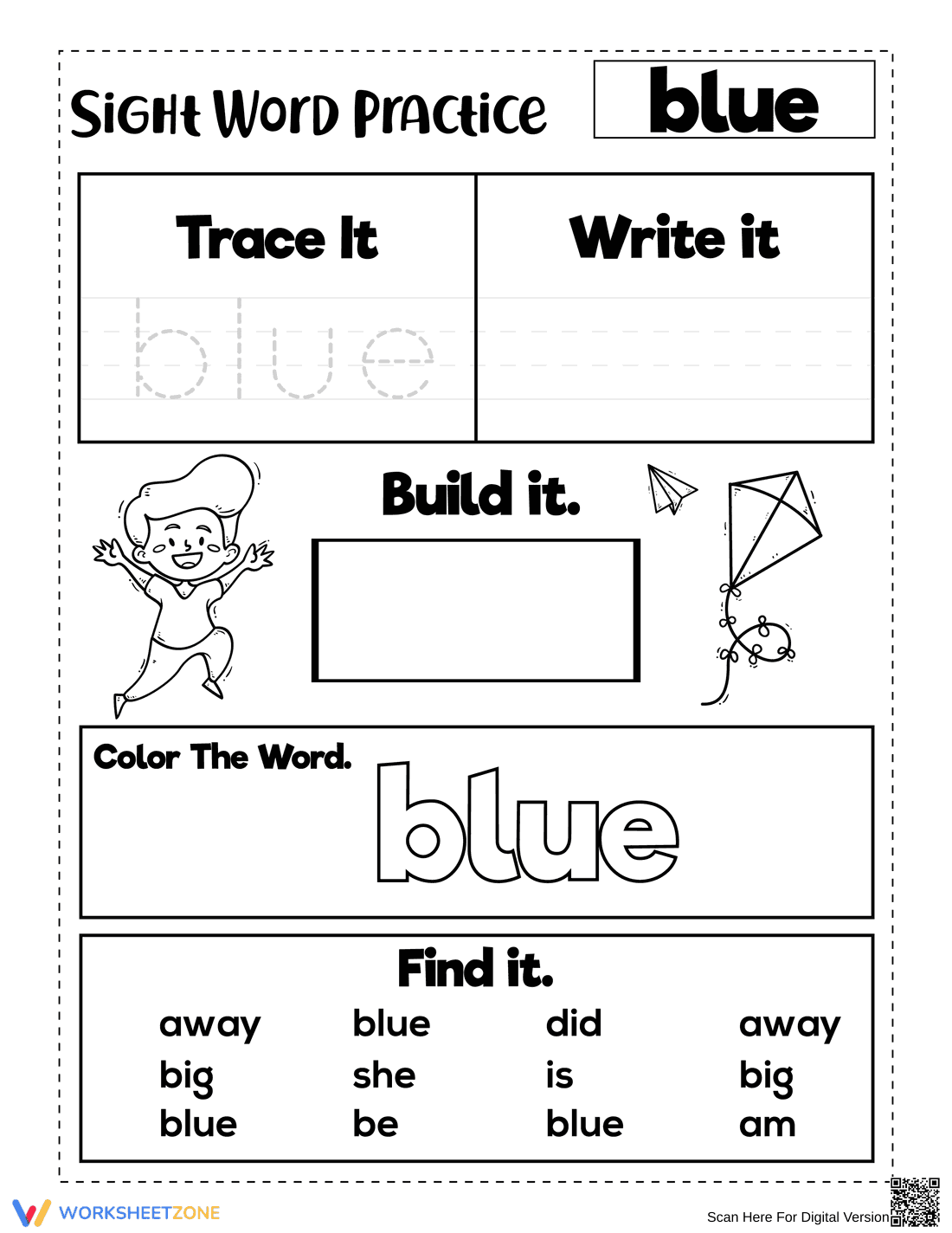

Grade K Sight Word Blue — Printable No-Prep Worksheet
Paste this activity's link or code into your existing LMS (Google Classroom, Canvas, Teams, Schoology, Moodle, etc.).
Students can open and work on the activity right away, with no student login required.
You'll still be able to track student progress and results from your teacher account.
This foundational reading worksheet helps early learners master the sight word "blue" through targeted, multi-sensory practice. Students will build essential reading fluency and fine motor skills by tracing, writing, coloring, and identifying the target word, ensuring they can confidently recognize it in everyday texts.
At a Glance
- Grade: K · Subject: ELA
- Standard:
CCSS.ELA-LITERACY.RF.K.3.C— Read common high-frequency words by sight- Skill Focus: Sight word recognition
- Format: 1 page · 5 problems · No answer key · PDF
- Best For: Independent practice
- Time: 10–15 minutes
This single-page resource features five distinct task types designed to reinforce word retention. Students begin with a "Trace It" section using guided dashed lines, followed by a "Write It" space for independent lettering. The "Build It" box allows for letter-tile placement or drawing, while the "Color The Word" bubble letters provide a creative break. Finally, a "Find It" word hunt challenges students to locate the target word among a bank of similar high-frequency words.
Designed for immediate classroom implementation, this resource requires minimal teacher setup.
- Print (1 minute): Download the PDF and print a class set. No cutting required.
- Distribute (1 minute): Hand out to students with pencils and crayons. Visual instructions make tasks self-explanatory.
- Review (3 minutes): Scan the "Find It" section to ensure students correctly identified the target word.
With under two minutes of prep time, this activity is an excellent addition to any sub plan.
This activity is directly aligned with CCSS.ELA-LITERACY.RF.K.3.C: Read common high-frequency words by sight (e.g., the, of, to, you, she, my, is, are, do, does). By isolating a single high-frequency word and interacting with it across multiple modalities, students develop the automaticity required for fluent reading. Both standard codes can be copied directly into lesson plans, IEP goals, or district curriculum mapping tools.
This worksheet serves as an ideal morning work activity, taking approximately 10 to 15 minutes to complete. Alternatively, it functions perfectly as an independent literacy center station during small group guided reading. As a formative assessment tip, observe students during the "Find It" task; if they circle words like "be" instead of the target word, they may need support with visual discrimination.
This resource is primarily designed for Kindergarten students developing early literacy skills, though it is also appropriate for Preschoolers showing advanced readiness or First Graders needing targeted intervention. To support diverse learners, teachers can provide tactile letter tiles for the "Build It" section. This worksheet pairs naturally with a color-themed read-aloud book or a classroom color anchor chart.
Mastering high-frequency vocabulary is a critical milestone in early childhood literacy development. This resource specifically targets CCSS.ELA-LITERACY.RF.K.3.C, ensuring students can read common high-frequency words by sight with accuracy and speed. According to Fisher & Frey (2014), providing students with repeated, multi-modal exposures to target vocabulary significantly increases automaticity and long-term retention in early readers. By combining tracing, writing, coloring, and visual discrimination tasks into a single cohesive activity, this worksheet reduces cognitive load while maximizing active student engagement. The structured repetition helps transition the target word from working memory into the orthographic lexicon, a necessary step for fluent reading comprehension later on. Educators can utilize this targeted practice to build foundational reading confidence, ensuring young learners have the necessary tools to decode increasingly complex texts as they progress through the primary grades.


