


























Views
Downloads

Essential Role Play Games: Show Your Feelings | Grade 12
Paste this activity's link or code into your existing LMS (Google Classroom, Canvas, Teams, Schoology, Moodle, etc.).
Students can open and work on the activity right away, with no student login required.
You'll still be able to track student progress and results from your teacher account.
This Grade 12 social skills worksheet facilitates emotional expression through interactive dice games. Students practice identifying and discussing complex feelings to improve interpersonal communication and empathy. By using structured role-play prompts, learners develop the vocabulary needed for professional and personal relationship management in various social contexts.
At a Glance
- Grade: 12 · Subject: Social Skills
- Standard:
CCSS.ELA-LITERACY.SL.11-12.1— Participate effectively in collaborative discussions about complex emotions and social scenarios- Skill Focus: Emotional Intelligence
- Format: 5 pages · 3 dice templates · Discussion rules included · PDF
- Best For: Adult social skills and counseling groups
- Time: 30–45 minutes
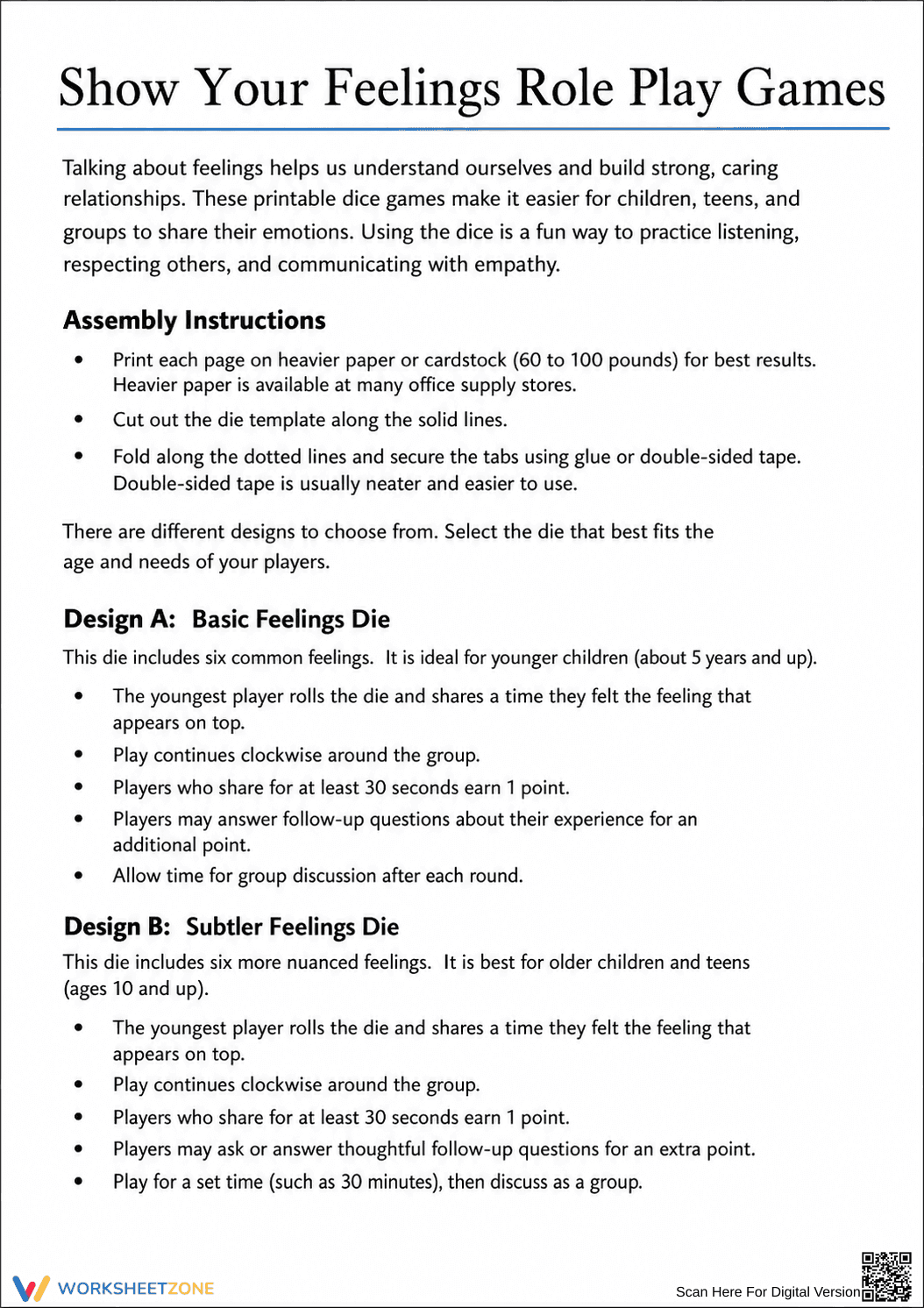
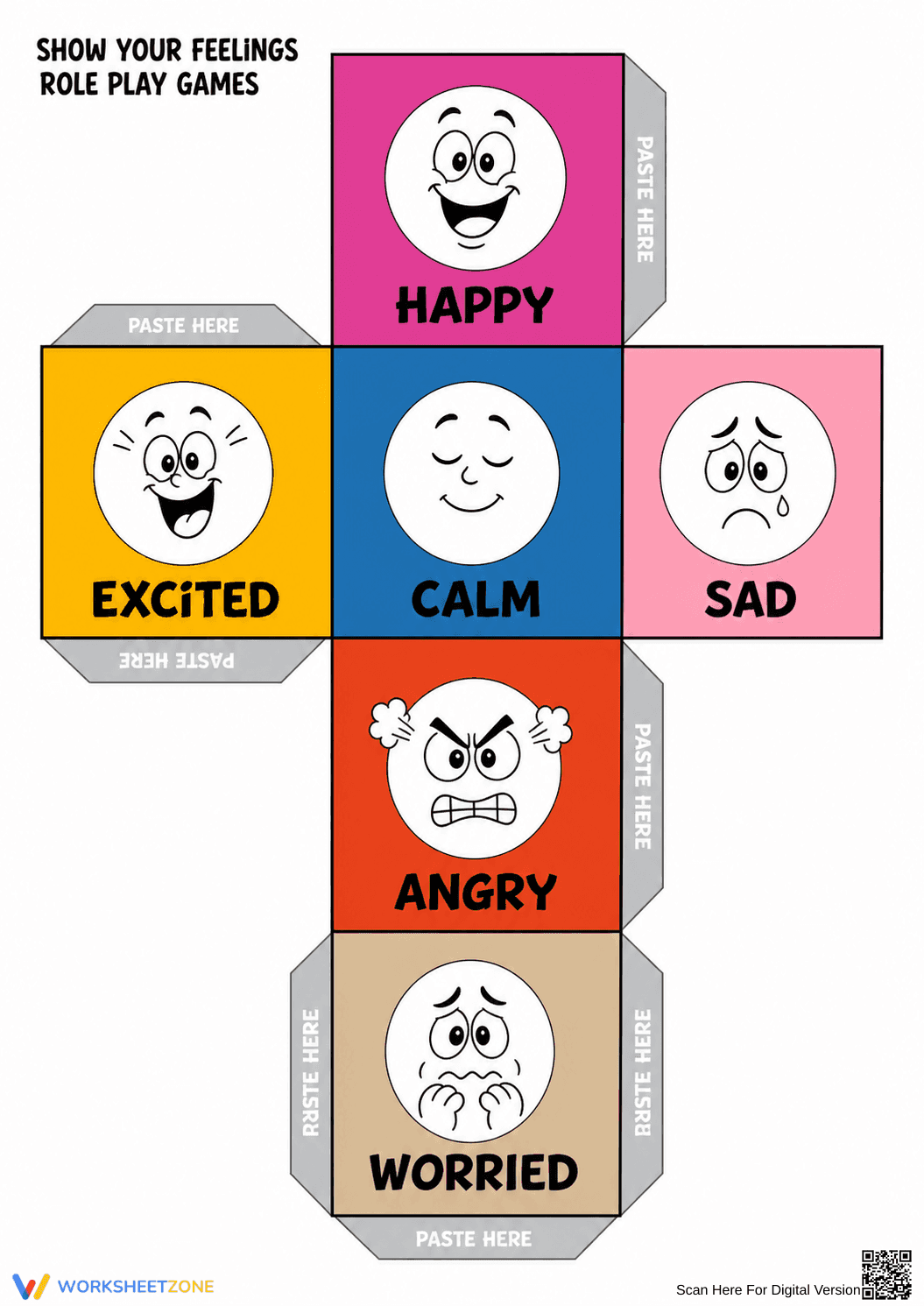
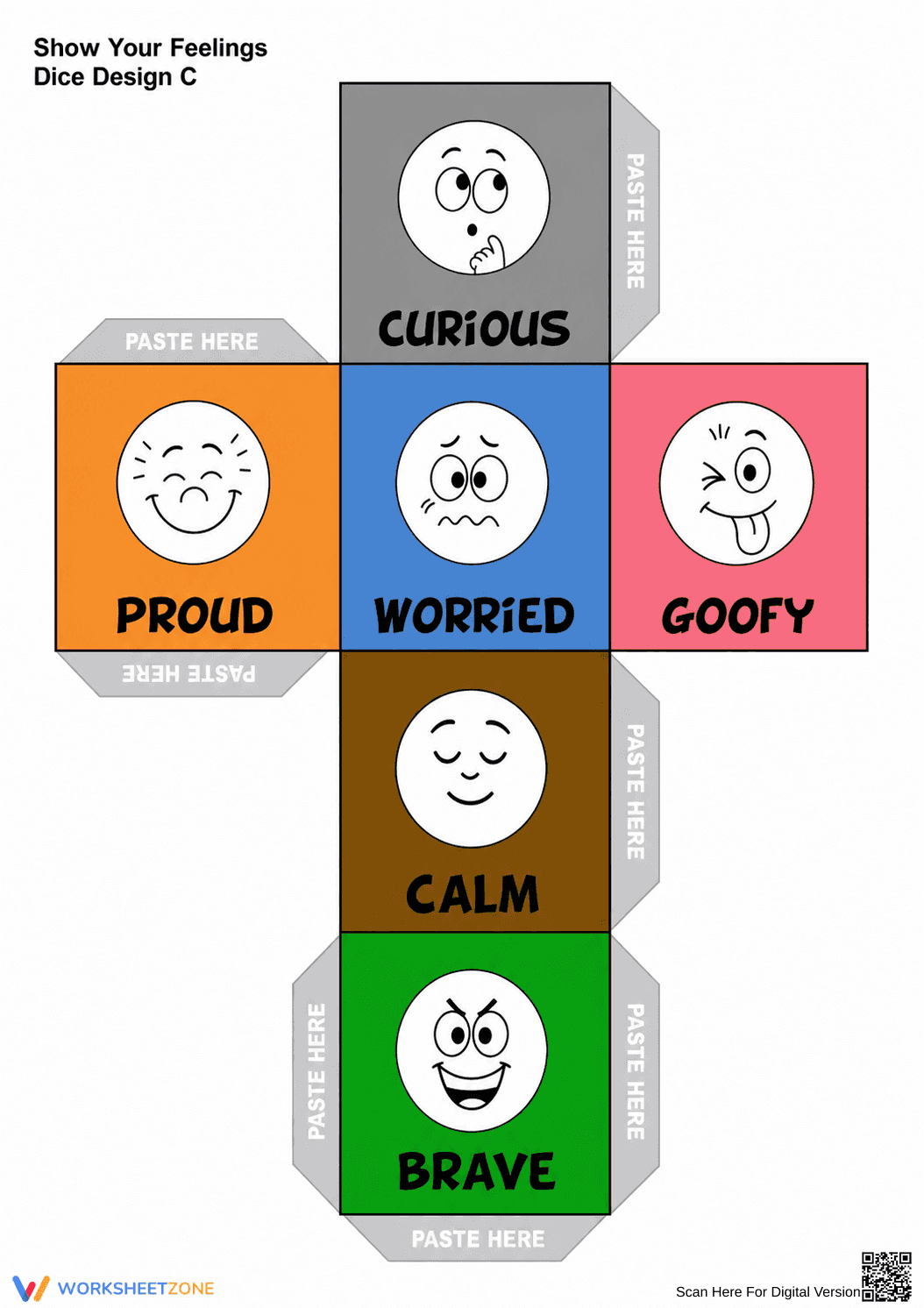
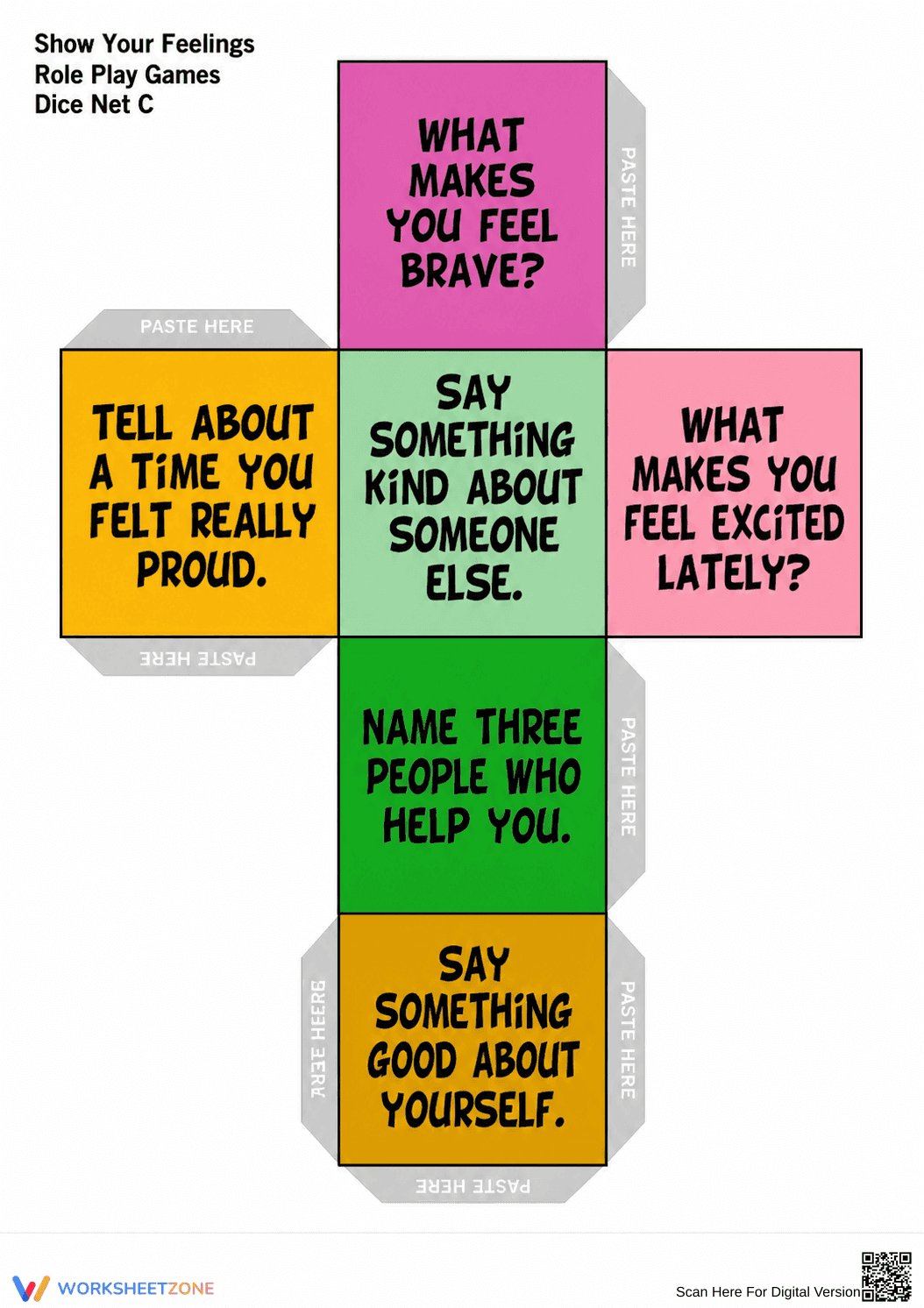
This 5-page PDF contains three distinct dice templates, assembly instructions, and gameplay rules. Each die features six unique faces with either emotion labels or specific sharing prompts. The resource includes a point-based scoring system to encourage extended speaking time and active listening during group interactions.
Level Descriptions
- Basic Feelings: Focuses on six foundational emotions like happy and sad, ideal for introductory sessions or building foundational emotional literacy in diverse groups.
- Subtler Feelings: Introduces nuanced emotional states such as curiosity and pride, challenging older students to differentiate between complex internal states and external reactions.
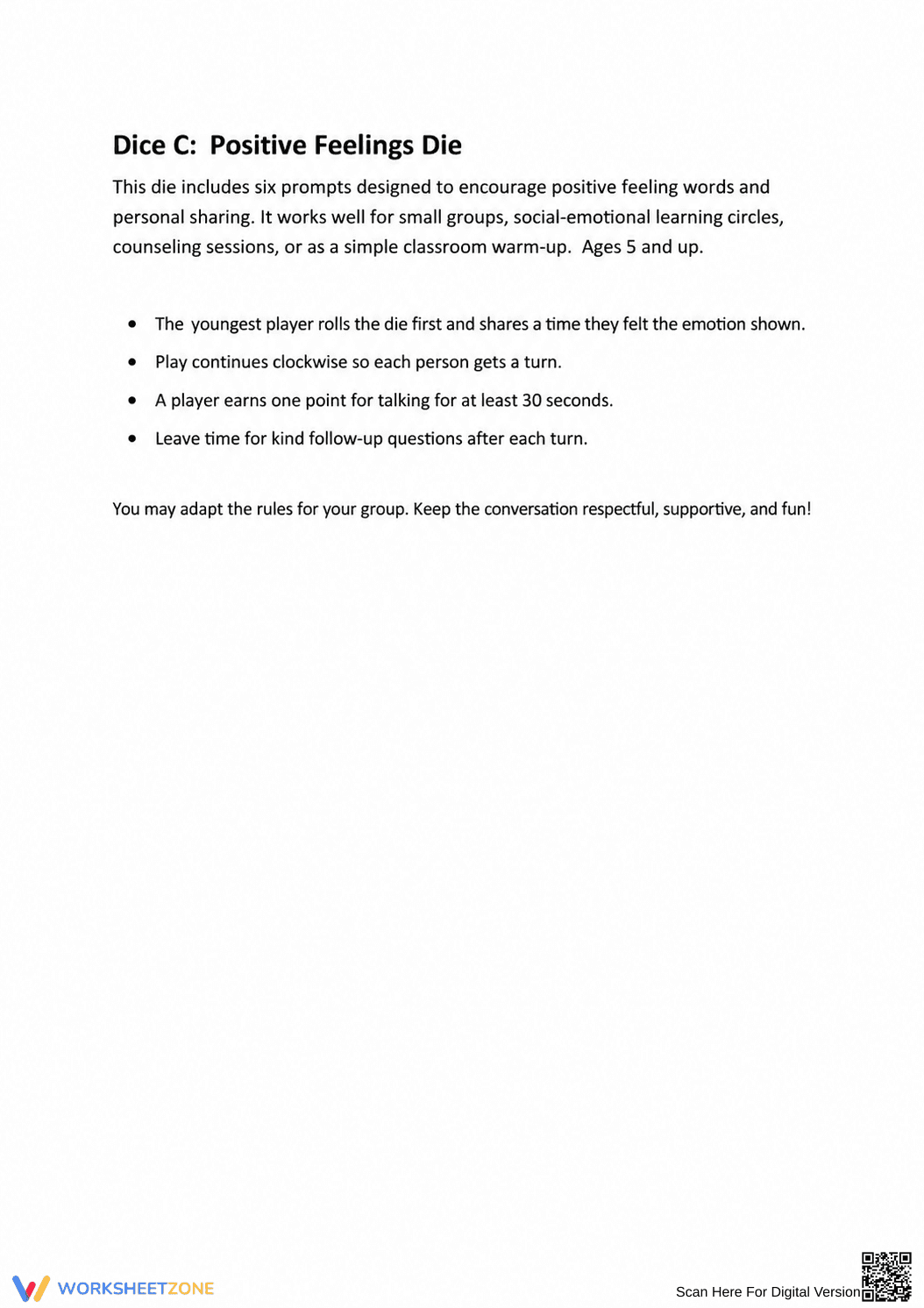
- Positive Prompts: Features specific sentence starters and kind actions, shifting the focus toward affirmative communication, self-reflection, and building supportive peer relationships.
This resource is aligned with CCSS.ELA-LITERACY.SL.11-12.1: "Initiate and participate effectively in a range of collaborative discussions with diverse partners on grades 11-12 topics, texts, and issues, building on others' ideas and expressing their own clearly and persuasively." Both standard codes can be copied directly into lesson plans, IEP goals, or district curriculum mapping tools.
Use this during a social-emotional learning seminar to break the ice or as a formative assessment for communication goals. Educators should observe how students handle follow-up questions to gauge their empathy levels. The activity typically requires 30 to 45 minutes for a full group rotation.
This worksheet is designed for Grade 12 students and adults in transition programs or counseling settings. It pairs naturally with an anchor chart on non-verbal communication cues or a direct instruction lesson on active listening techniques in professional environments.
Research from RAND AIRS 2024 emphasizes that social-emotional learning for young adults significantly improves workplace readiness and interpersonal conflict resolution. This worksheet aligns with CCSS.ELA-LITERACY.SL.11-12.1 by providing a structured framework for collaborative discussion. By gamifying the expression of feelings, the resource lowers the affective filter, allowing students to engage with the plain-English skill of identifying and articulating emotions without the pressure of traditional testing. The three-level design ensures that learners at different stages of emotional development can access the curriculum. Fisher & Frey (2014) note that structured talk is essential for cognitive development, and these role-play games provide the necessary scaffolding for high-level social interaction. Educators can use these printable dice to meet specific IEP goals or as part of a broader adult education curriculum focused on soft skills and emotional intelligence. This 5-page set offers a complete solution for interactive social skills training.


