


























Views
Downloads
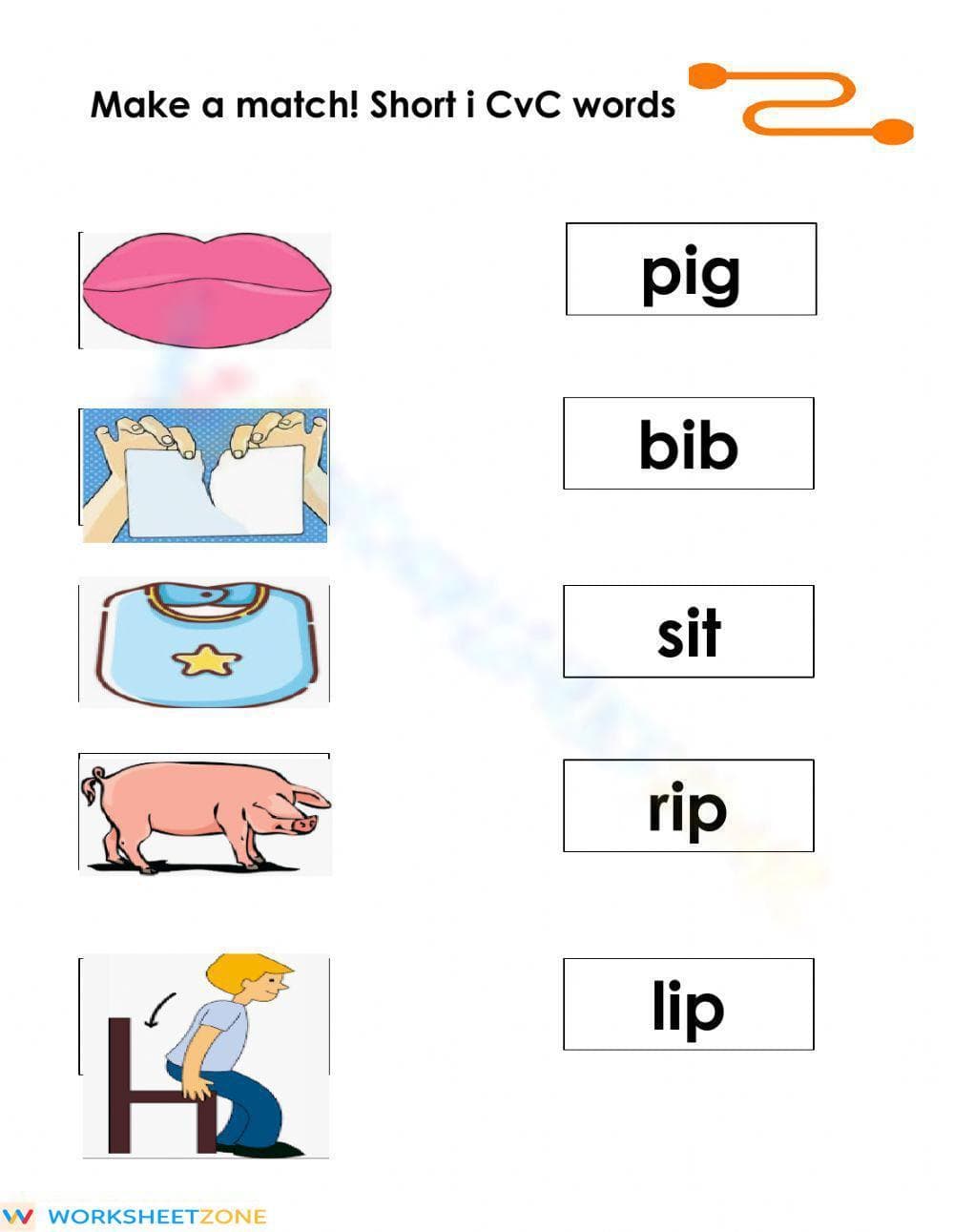

Grade K Short 'i' CVC Words — Printable No-Prep Worksheet
Paste this activity's link or code into your existing LMS (Google Classroom, Canvas, Teams, Schoology, Moodle, etc.).
Students can open and work on the activity right away, with no student login required.
You'll still be able to track student progress and results from your teacher account.
This phonics worksheet provides targeted practice with short 'i' CVC (consonant-vowel-consonant) words for Kindergarten students. Learners will strengthen their decoding skills by matching simple pictures to the corresponding words, building foundational literacy and visual discrimination. It’s a straightforward activity designed to reinforce early reading concepts in an engaging way.
At a Glance
- Grade: Kindergarten · Subject: English Language Arts (ELA)
- Standard:
CCSS.ELA-LITERACY.RF.K.2.D— Isolate and pronounce sounds in three-phoneme words.- Skill Focus: Short 'i' CVC Words
- Format: 1 page · 5 problems · Answer key included · PDF
- Best For: Phonics centers, independent practice, morning work
- Time: 5–10 minutes
What's Inside
This single-page download includes one core activity. Students are presented with five colorful images (pig, bib, sit, rip, lip) and a list of five corresponding CVC words featuring the short 'i' vowel sound. The task is to draw a line connecting each picture to its word. An answer key is provided on a separate page for quick and easy checking.
Zero-Prep Workflow
Designed for immediate classroom use, this worksheet follows a simple, zero-prep workflow that saves valuable instructional time.
- Print (under 1 minute): The resource is a single, printer-friendly PDF. Simply print the required number of copies for your students.
- Distribute (under 1 minute): Hand out the worksheet. The instructions are self-contained at the top: "Make a match!" No lengthy explanation is needed.
- Review (2 minutes): Use the included answer key to review answers with the whole class, in small groups, or to check work individually.
Total teacher prep time is under two minutes, making this an ideal resource for substitute plans, morning work, or a last-minute phonics review.
Standards Alignment
This worksheet is directly aligned with the Common Core State Standard for Kindergarten foundational reading skills: CCSS.ELA-LITERACY.RF.K.2.D. This standard requires students to "isolate and pronounce the initial, medial vowel, and final sounds (phonemes) in three-phoneme (consonant-vowel-consonant) words." This activity provides focused practice on the medial vowel sound 'i'. Both standard codes can be copied directly into lesson plans, IEP goals, or district curriculum mapping tools.
How to Use It
This resource is effective as independent practice after a direct instruction lesson on the short 'i' sound. It can also be used in a literacy center or as a quick morning work activity to reinforce CVC word patterns. For a formative assessment, observe which students can quickly match the image to the word and which ones need to sound out each phoneme, noting those who may need more support with medial vowel sounds. Most students will complete this task in 5-10 minutes.
Who It's For
This worksheet is designed for early readers in Kindergarten and early Grade 1 who are learning to decode CVC words. The clear images and simple matching format provide strong support for English Language Learners and students who benefit from visual aids. It pairs well with a short 'i' sound anchor chart or a read-aloud story featuring multiple short 'i' words.
Providing students with explicit and systematic phonics instruction is a critical component of effective early literacy programs. This worksheet supports that goal by targeting a specific phonics pattern—the short 'i' in CVC words—which aligns with foundational reading standard CCSS.ELA-LITERACY.RF.K.2.D. By asking students to connect a pictorial representation to a written word, the activity reinforces the alphabetic principle: the understanding that letters and letter patterns represent the sounds of spoken language. Research consistently shows that such structured literacy practices are essential for developing skilled readers.


