




























Views
Downloads
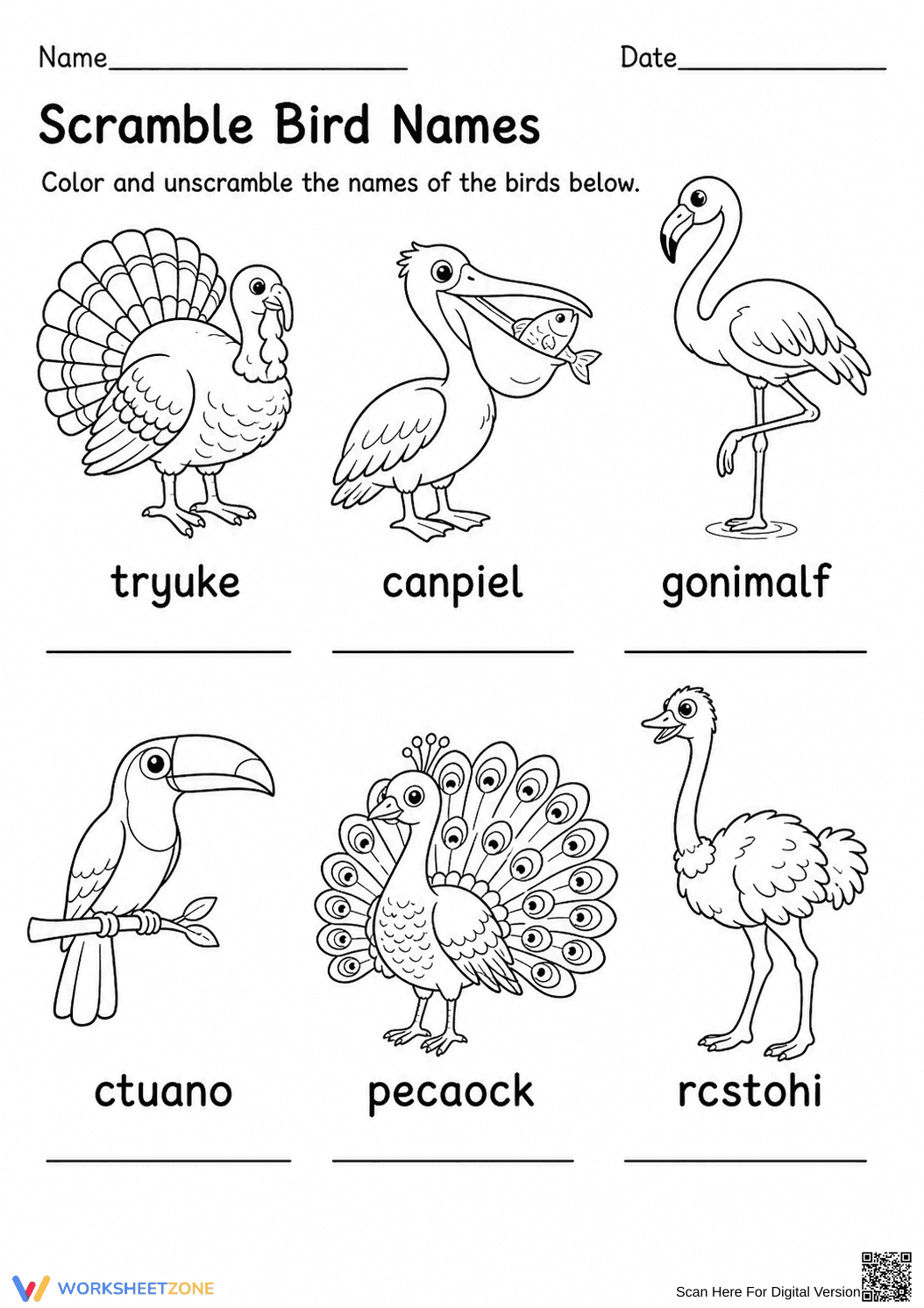

Printable Bird Names Scramble Worksheet | Grade K-1

Paste this activity's link or code into your existing LMS (Google Classroom, Canvas, Teams, Schoology, Moodle, etc.).
Students can open and work on the activity right away, with no student login required.
You'll still be able to track student progress and results from your teacher account.
This Grade K-1 science worksheet helps young learners practice bird identification and phonetic spelling by unscrambling animal names. Students observe distinct physical traits of six different avian species, reinforcing early life science concepts while building essential vocabulary and fine motor skills through coloring and writing.
At a Glance
- Grade: K–1 · Subject: Science
- Standard:
K-LS1-1— Observe and describe patterns in animal characteristics- Skill Focus: Bird identification and spelling
- Format: 1 page · 6 problems · Answer key included · PDF
- Best For: Science centers or early finishers
- Time: 15–20 minutes
What's Inside
This single-page printable features six distinct bird illustrations, including a turkey, pelican, flamingo, toucan, peacock, and ostrich. Each high-contrast line art image is paired with a scrambled letter string and a primary-ruled line for writing the correct spelling. The layout provides a multi-sensory learning experience by combining visual recognition, coloring, and handwriting practice. A complete answer key is included to facilitate quick teacher review or independent student self-correction.
Zero-Prep Workflow
This zero-prep design allows teachers to implement the activity in three simple steps. First, Print the single-page PDF (30 seconds). Second, Distribute the sheets during your living things unit or as a supplemental literacy center activity (30 seconds). Third, Review student results using the provided answer key (1 minute). Total teacher prep time is under two minutes, making this an ideal solution for emergency sub plans, morning work, or quiet transitions between lessons.
Standards Alignment
Aligned to K-LS1-1: Use observations to describe patterns of what plants and animals (including humans) need to survive. This activity supports the standard by requiring students to observe the physical characteristics of different birds to identify them accurately. Both standard codes can be copied directly into lesson plans, IEP goals, or district curriculum mapping tools.
How to Use It
Use this worksheet as a formative assessment following a lesson on animal habitats or as a focused vocabulary builder during independent practice. During the activity, observe if students can identify the physical features, like the pelican's beak or the peacock's feathers, that distinguish each species. The expected completion time is 15 to 20 minutes, depending on the level of detail students apply to coloring the illustrations.
Who It's For
Designed for Preschool, Kindergarten, and First Grade students, this resource offers built-in differentiation through clear visual cues. It pairs naturally with non-fiction picture books about birds or an anchor chart displaying avian anatomy. It is particularly effective for English Language Learners who benefit from the direct image-to-text correlation and the tactile engagement of coloring alongside vocabulary acquisition.
Aligned to the K-LS1-1 standard for Kindergarten and Grade 1, this worksheet focuses on the essential skill to observe and describe patterns in animal characteristics. Research from EdReports 2024 highlights that multi-sensory activities—combining visual recognition, manual spelling, and coloring—significantly increase vocabulary retention in early childhood education. By integrating phonetic unscrambling with biological identification, the resource provides a rigorous yet accessible entry point into life sciences. Teachers can reliably use this tool to bridge the gap between simple animal recognition and the observation-based inquiry required by national science frameworks. The clear layout and focused task count ensure that students remain engaged without being overwhelmed, supporting both classroom management and individual learning goals. This printable resource serves as a foundational component for any curriculum centered on living things and their unique characteristics, providing a high-quality, zero-prep option for busy educators.


