




























Views
Downloads

Essential Animal Adaptations Worksheet | Grade 3 Science

Paste this activity's link or code into your existing LMS (Google Classroom, Canvas, Teams, Schoology, Moodle, etc.).
Students can open and work on the activity right away, with no student login required.
You'll still be able to track student progress and results from your teacher account.
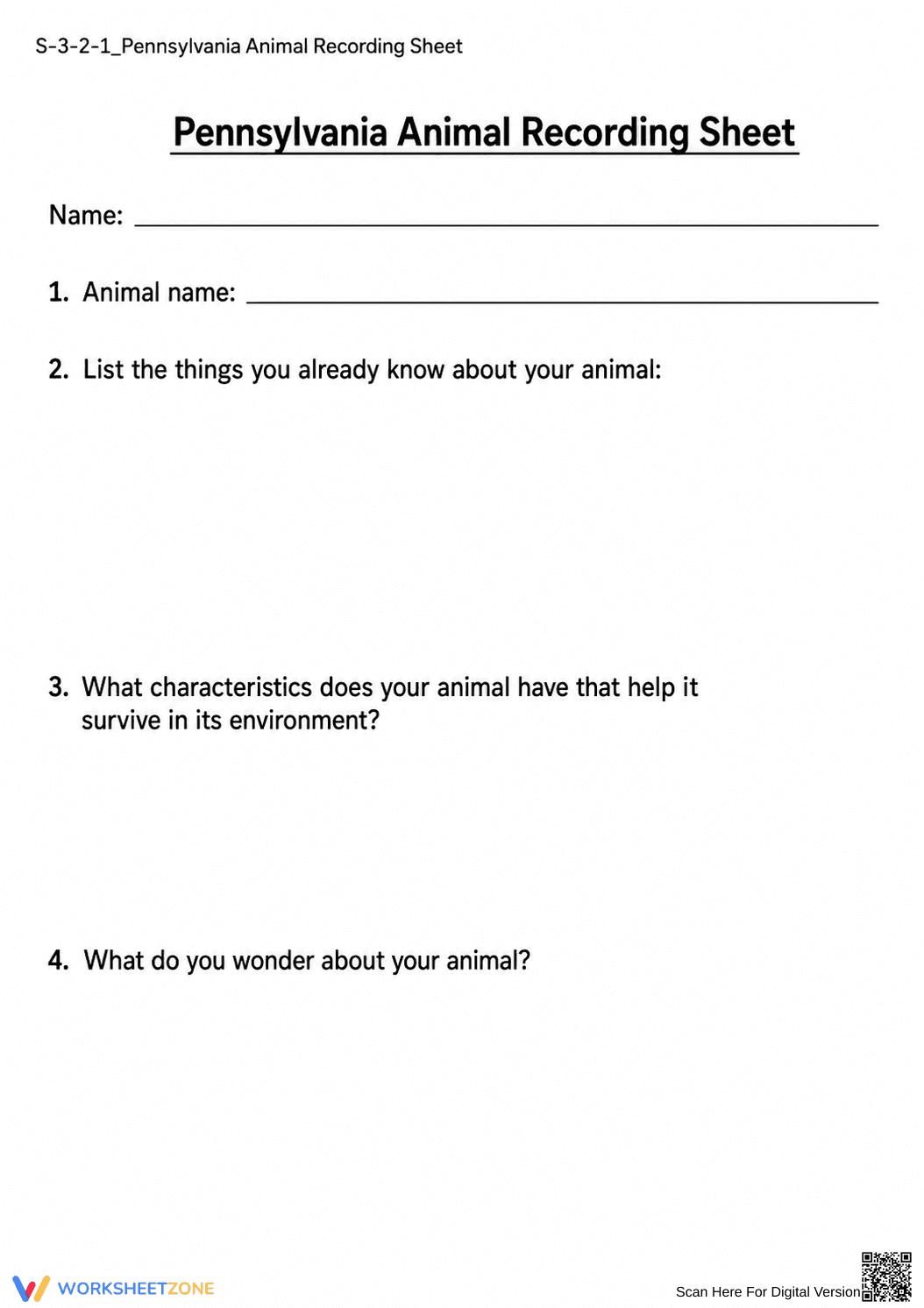
This Grade 3 science worksheet facilitates independent research into animal biology and environmental science. Students identify a specific animal and analyze the physical or behavioral characteristics that enable survival within its unique habitat. By bridging prior knowledge with new inquiry, the recording sheet transforms reading into active scientific observation.
At a Glance
- Grade: 3 · Subject: Science
- Standard:
3-LS4-3— Construct an argument with evidence that organisms survive well in specific habitats- Skill Focus: Animal Adaptations & Research
- Format: 1 page · 4 problems · Answer key not applicable · PDF
- Best For: Independent research and science centers
- Time: 20–30 minutes
This single-page PDF provides a structured framework for animal study. It features four primary prompts: animal identification, prior knowledge activation, adaptation analysis, and inquiry-based questioning. The open-ended design allows students to select any animal—from local wildlife to exotic species—making it a versatile tool for diverse curriculum units. The layout provides ample writing space for third-grade handwriting.
Zero-Prep Workflow
- Print: Select the single-page PDF and print enough copies for your class (30 seconds).
- Distribute: Hand out the sheets alongside library books or pre-vetted websites (1 minute).
- Review: Circulate as students work to provide formative feedback on their "Wonder" questions.
This resource is ideal for emergency sub plans or as a concluding activity for a lesson on ecosystems, requiring zero teacher setup beyond providing research materials.
Standards Alignment
This worksheet is aligned with 3-LS4-3: "Construct an argument with evidence that in a particular habitat some organisms can survive well, some survive less well, and some cannot survive at all." By requiring students to list specific characteristics that help an animal survive, the task directly supports the NGSS requirement for evidence-based scientific explanations. This standard code can be copied directly into lesson plans, IEP goals, or district curriculum mapping tools.
How to Use It
Use this recording sheet during the "Explore" phase of a 5E instructional model. After a brief introduction to habitats, assign students different animals to research using classroom tablets or books. It also serves as an excellent formative assessment tool; by reviewing the "I wonder" section, teachers can identify gaps in student understanding or spark ideas for future inquiry-based projects. Completion typically takes 20 to 30 minutes.
Who It's For
This resource is designed for Grade 3 students but is adaptable for Grade 2 or Grade 4 learners. It is particularly effective for English Language Learners (ELLs) because the prompts provide a clear scaffold for organizing thoughts without overwhelming text. Pair this worksheet with a visual anchor chart of common adaptations (like camouflage or hibernation) to support students who need additional visual cues during their research.
The Pennsylvania Animal Recording Sheet is a structured inquiry tool designed to meet the rigorous demands of the 3-LS4-3 standard. By focusing on the relationship between animal characteristics and environmental survival, the worksheet encourages students to move beyond simple identification toward functional biological analysis. Research by Fisher & Frey (2014) emphasizes the importance of scaffolded note-taking and recording sheets in developing disciplinary literacy within the sciences. This specific resource provides the necessary point of entry for young researchers to organize complex biological data into a coherent format. By documenting what they know and what they wonder, students engage in the metacognitive processes essential for long-term retention of scientific concepts. The 4-task structure ensures that the cognitive load remains manageable while still requiring high-level critical thinking about how traits function as survival mechanisms in diverse ecosystems.


