


























1 / 10
0
Views
0
Downloads




0.0
0
Save
0 Likes
Updated Relative Dating Activity Worksheet
0 Views
0 Downloads
Paste this activity's link or code into your existing LMS (Google Classroom, Canvas, Teams, Schoology, Moodle, etc.).
Students can open and work on the activity right away, with no student login required.
You'll still be able to track student progress and results from your teacher account.
Information
Description
What It Is:
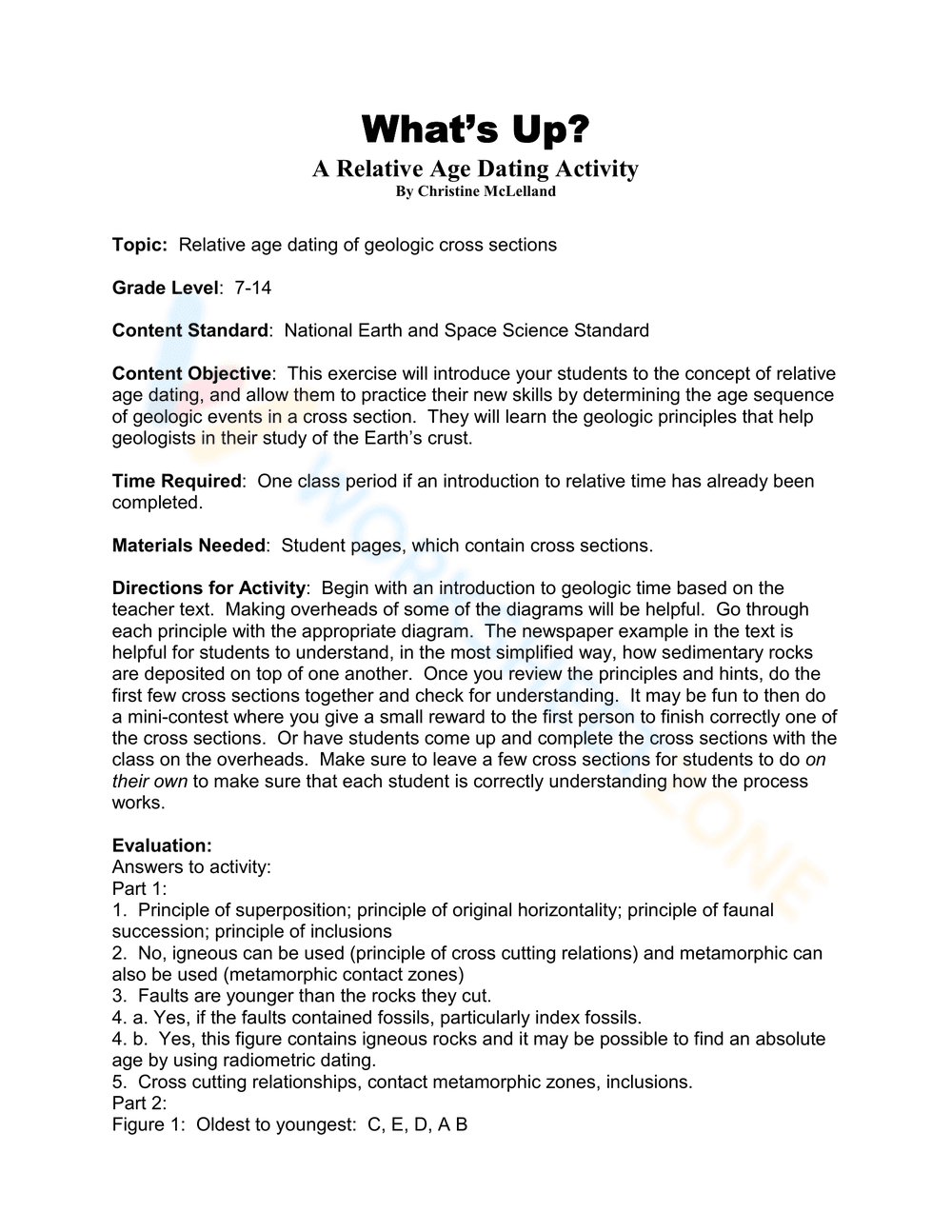
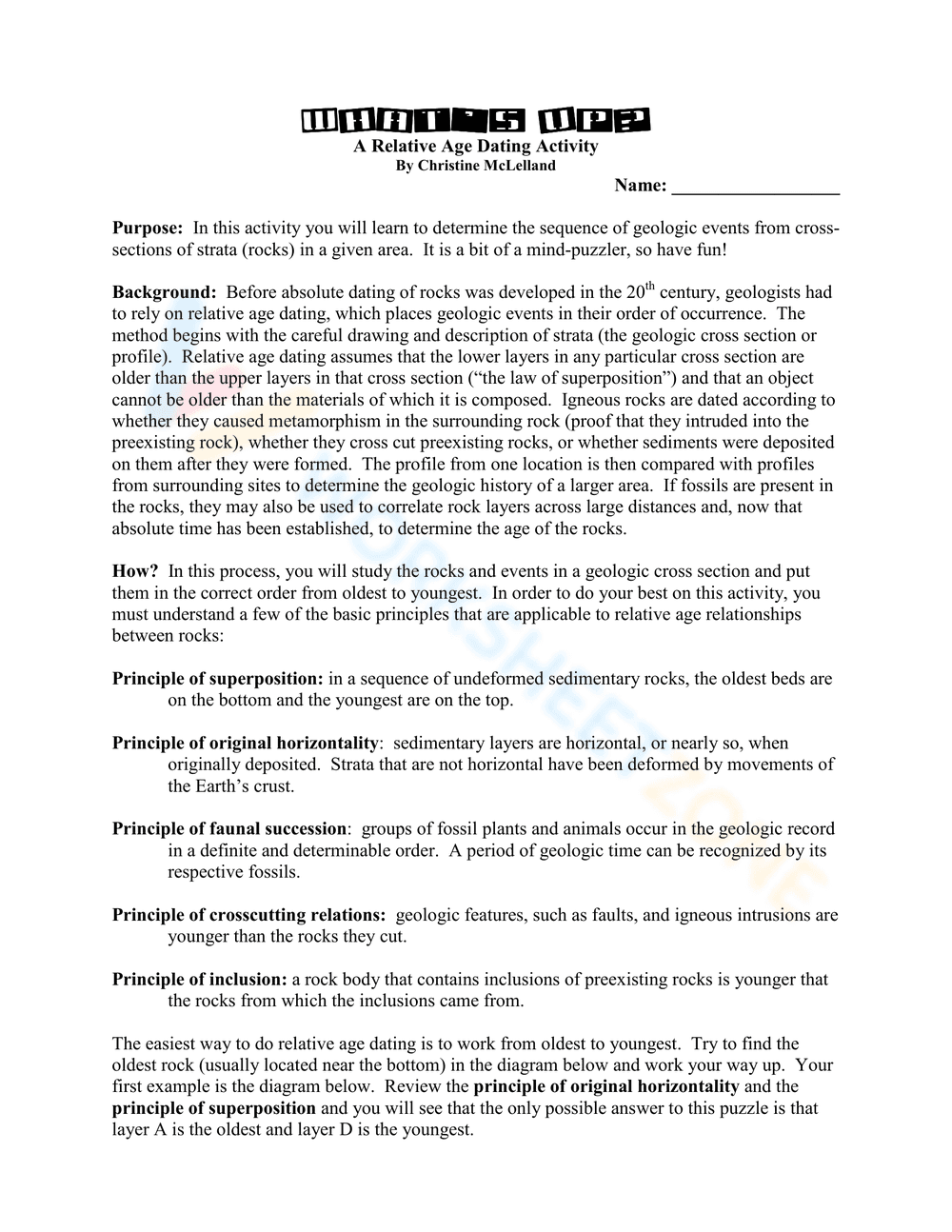
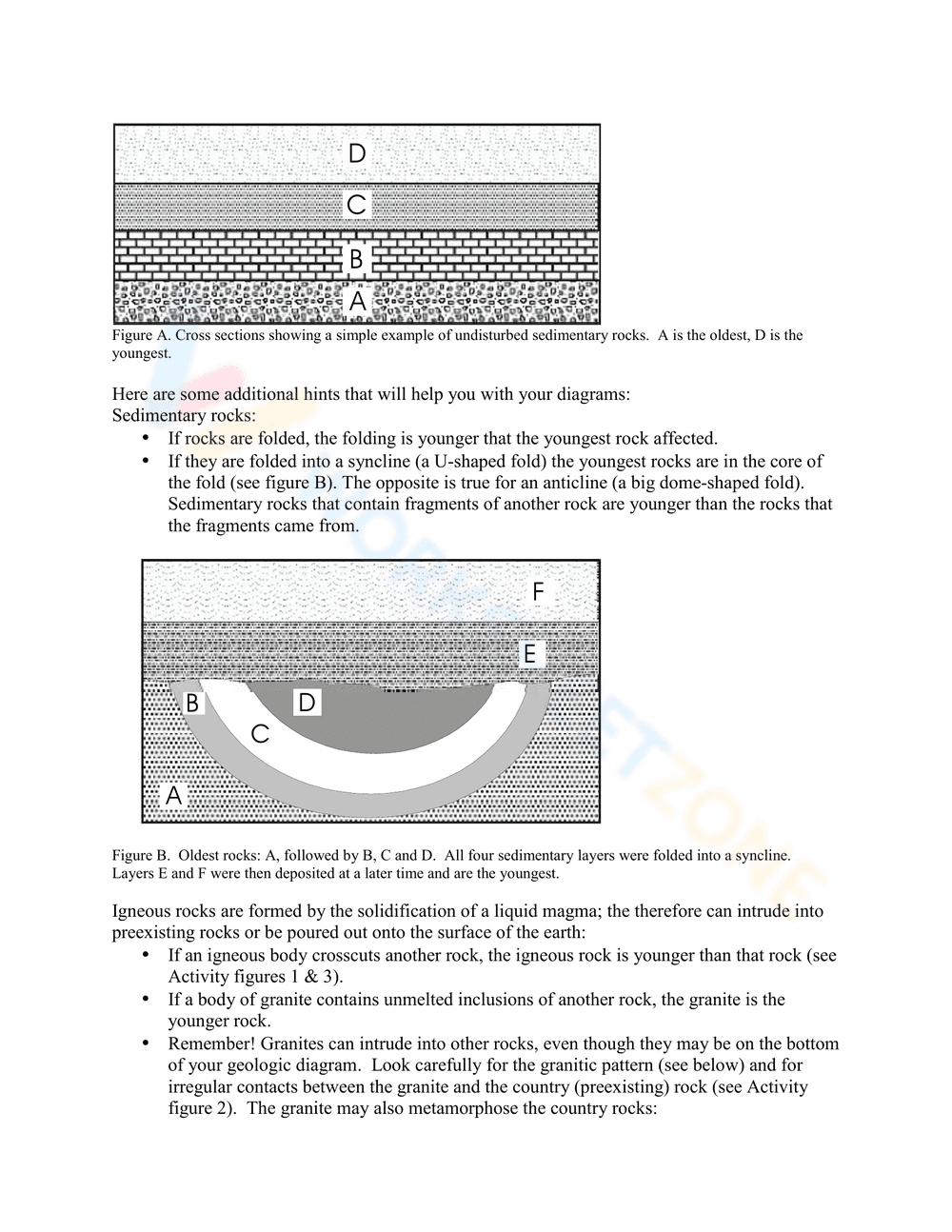
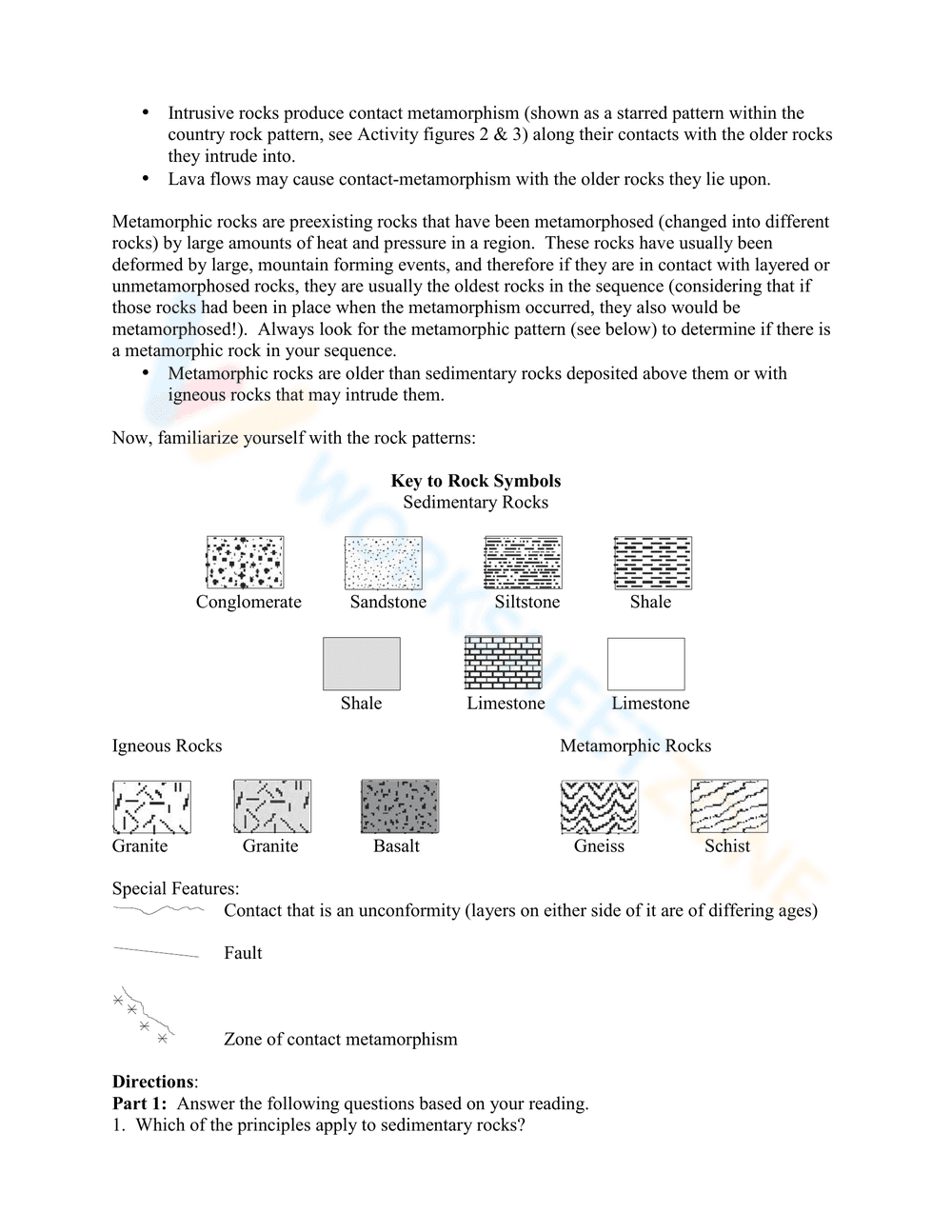
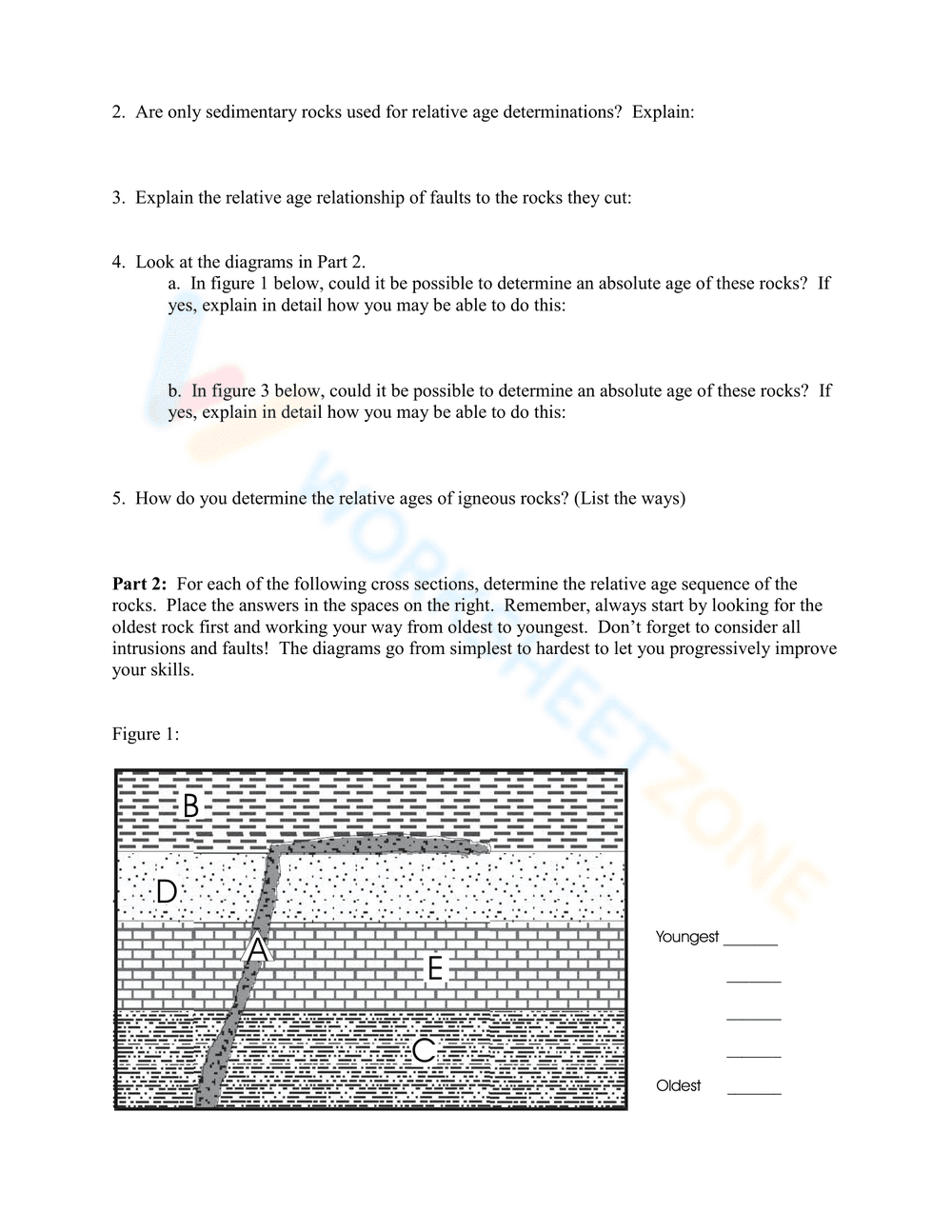
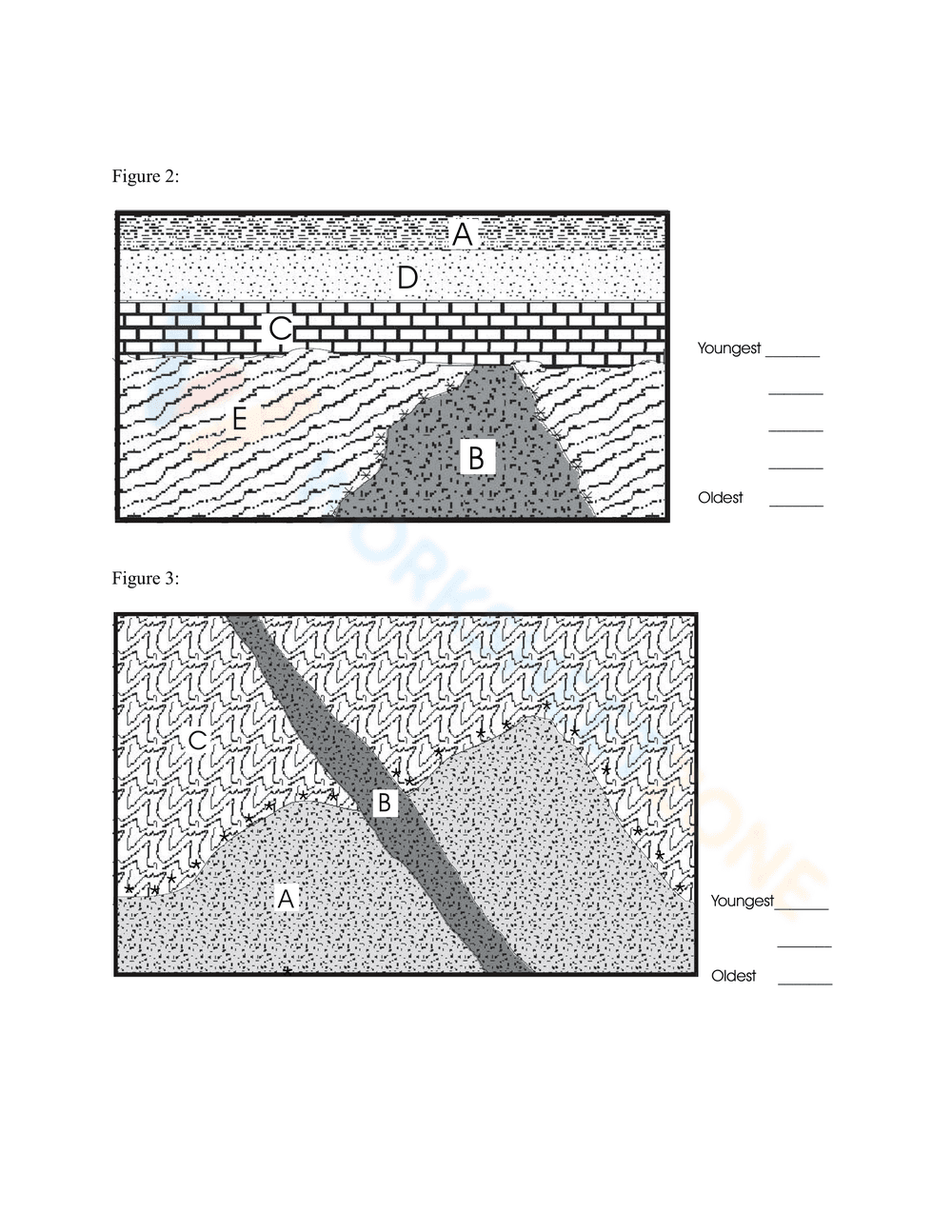
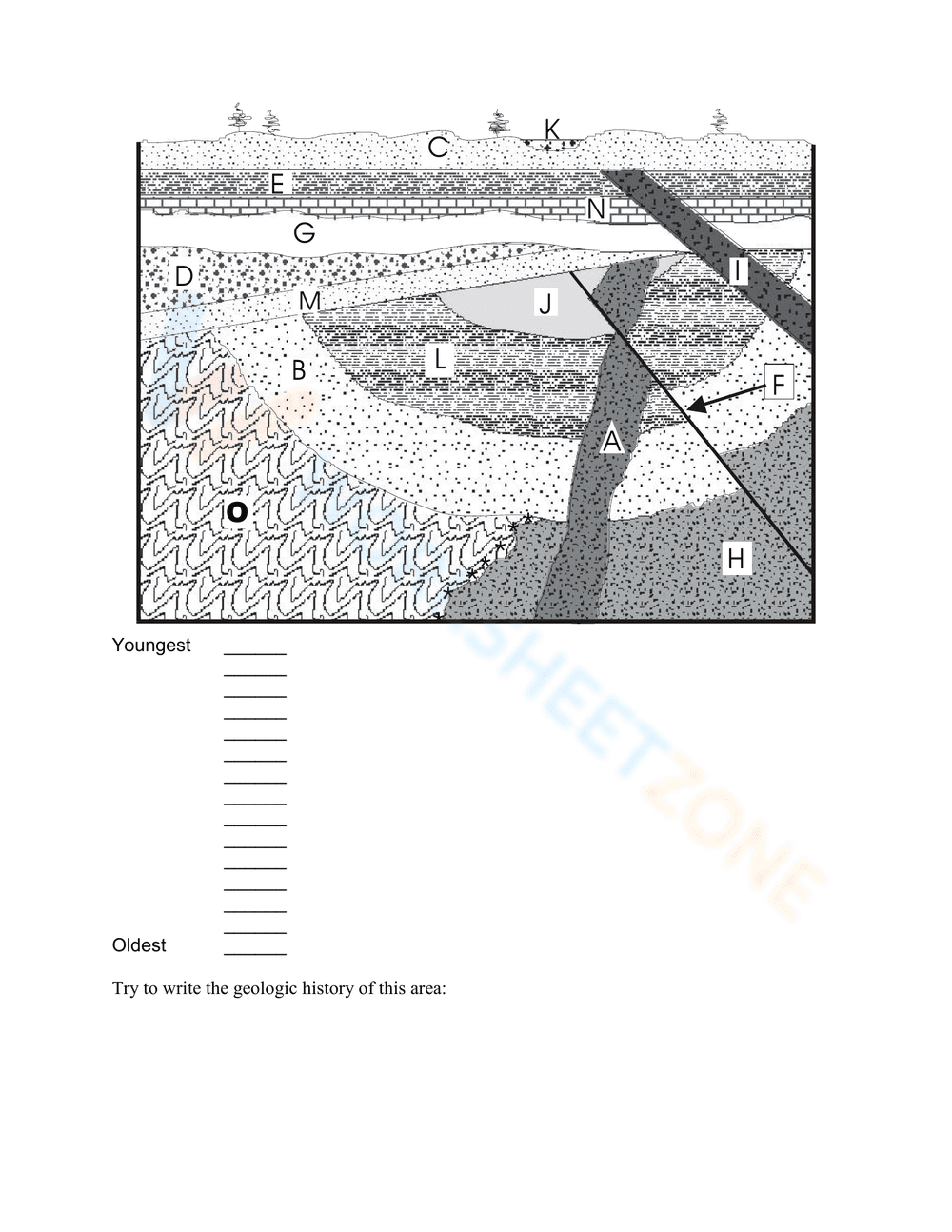
This is a worksheet titled 'What's Up? A Relative Age Dating Activity' focused on teaching relative age dating of geologic cross sections. It includes an introduction to the topic, directions for an activity involving cross-sections, and evaluation questions. The evaluation section provides answers related to principles like superposition, original horizontality, faunal succession, and inclusions. It also covers cross-cutting relationships, contact metamorphic zones, and determining the relative age of geologic features in a diagram.
Grade Level Suitability:
This worksheet is suitable for grades 7-14. The concepts of relative age dating and geologic cross sections require a basic understanding of earth science, making it appropriate for middle and high school students. The complexity of the evaluation questions suggests it's well-suited for a range of skill levels within those grades.
Why Use It:
This worksheet introduces and reinforces the concept of relative age dating and allows students to practice applying geologic principles to determine the age sequence of events in a cross section. It helps students learn the principles that help geologists in their study of the Earth's crust. It encourages critical thinking and problem-solving skills in earth science.
How to Use It:
Begin by introducing geologic time and the principles of relative dating. Use overheads of diagrams to illustrate the principles. Work through the examples together as a class. You can use a mini-contest to reward students for correctly identifying the cross sections. Finally, have students complete additional cross sections individually to check for understanding.
Target Users:
This worksheet is designed for earth science students in grades 7-14, particularly those learning about geologic time, relative dating, and the principles used to determine the age of rocks and geologic events. It is also useful for teachers looking for engaging activities to teach these concepts.
This is a worksheet titled 'What's Up? A Relative Age Dating Activity' focused on teaching relative age dating of geologic cross sections. It includes an introduction to the topic, directions for an activity involving cross-sections, and evaluation questions. The evaluation section provides answers related to principles like superposition, original horizontality, faunal succession, and inclusions. It also covers cross-cutting relationships, contact metamorphic zones, and determining the relative age of geologic features in a diagram.
Grade Level Suitability:
This worksheet is suitable for grades 7-14. The concepts of relative age dating and geologic cross sections require a basic understanding of earth science, making it appropriate for middle and high school students. The complexity of the evaluation questions suggests it's well-suited for a range of skill levels within those grades.
Why Use It:
This worksheet introduces and reinforces the concept of relative age dating and allows students to practice applying geologic principles to determine the age sequence of events in a cross section. It helps students learn the principles that help geologists in their study of the Earth's crust. It encourages critical thinking and problem-solving skills in earth science.
How to Use It:
Begin by introducing geologic time and the principles of relative dating. Use overheads of diagrams to illustrate the principles. Work through the examples together as a class. You can use a mini-contest to reward students for correctly identifying the cross sections. Finally, have students complete additional cross sections individually to check for understanding.
Target Users:
This worksheet is designed for earth science students in grades 7-14, particularly those learning about geologic time, relative dating, and the principles used to determine the age of rocks and geologic events. It is also useful for teachers looking for engaging activities to teach these concepts.


