


























Views
Downloads


Grade K Sight Words — Printable No-Prep Worksheet
Paste this activity's link or code into your existing LMS (Google Classroom, Canvas, Teams, Schoology, Moodle, etc.).
Students can open and work on the activity right away, with no student login required.
You'll still be able to track student progress and results from your teacher account.
This foundational Kindergarten ELA worksheet helps early readers build essential literacy skills by recognizing, reading, and writing high-frequency sight words. By engaging with these common words in multiple contexts, students develop the automaticity required for fluent reading and confident writing as they progress through early literacy milestones.
At a Glance
- Grade: K · Subject: ELA
- Standard:
CCSS.ELA-LITERACY.RF.K.3.C— Read common high-frequency words by sight- Skill Focus: Sight Word Recognition
- Format: 3 pages · 13 problems · Answer key included · PDF
- Best For: Independent practice and centers
- Time: 15–20 minutes
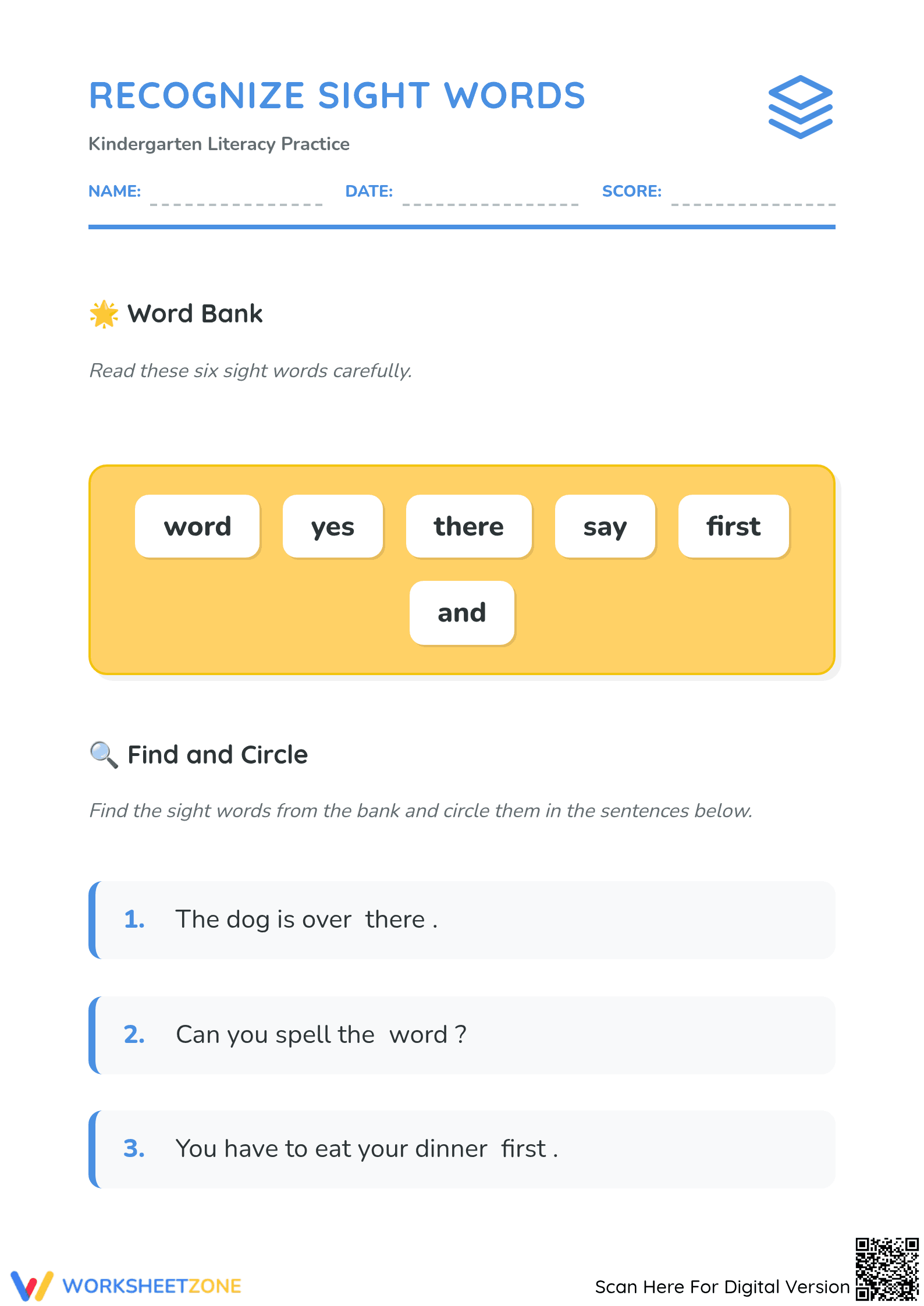
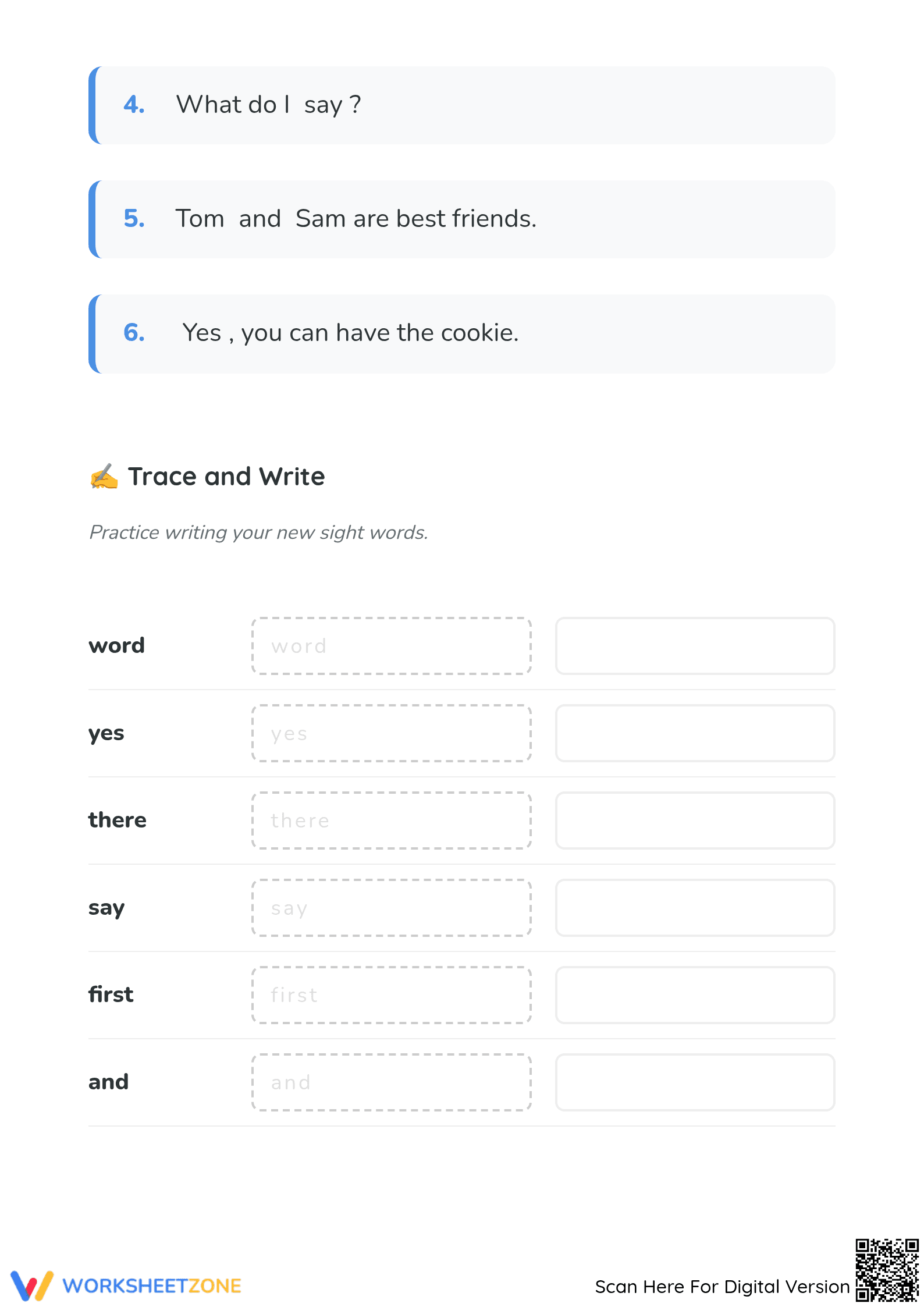
This comprehensive three-page packet features a clear, structured approach to mastering six target sight words: word, yes, there, say, first, and and. The resource includes a dedicated word bank, six sentence-level "find and circle" identification tasks, six "trace and write" handwriting practice rows, and a bonus challenge for sentence creation. A complete answer key is provided to ensure quick and accurate grading.
This resource is designed for a smooth, zero-prep classroom experience:
- Print (1 minute): Simply download the PDF and print the three-page student packet. No special materials or cutting required.
- Distribute (1 minute): Hand out the worksheets during literacy centers, morning work, or as a reliable sub plan activity.
- Review (3 minutes): Use the included answer key to quickly check student work or project it on the board for whole-class self-correction.
Total teacher prep time is under two minutes, making it an ideal grab-and-go solution for busy educators.
This worksheet is strictly aligned to CCSS.ELA-LITERACY.RF.K.3.C, requiring students to read common high-frequency words by sight. It also supports foundational handwriting and sentence structure skills. Both standard codes can be copied directly into lesson plans, IEP goals, or district curriculum mapping tools.
Deploy this worksheet during independent literacy centers after introducing the target sight words in a whole-group setting. It also serves as an excellent morning work activity to reinforce previous instruction. As a formative assessment tip, observe students while they complete the "find and circle" section; if they struggle to locate the words within the sentences, they may need additional flashcard practice before moving to contextual reading. Expected completion time is 15 to 20 minutes.
This resource is primarily designed for Kindergarten students developing early reading fluency, but it is also highly effective for Preschoolers ready for a challenge or First Graders needing targeted intervention. For students requiring extra support, provide a highlighted copy of the word bank. Pair this worksheet with a sight word anchor chart or a shared reading text that heavily features the target vocabulary.
Mastering high-frequency vocabulary is a critical stepping stone in early childhood literacy development. Aligned with CCSS.ELA-LITERACY.RF.K.3.C, this resource ensures students can read common high-frequency words by sight, reducing the cognitive load required for decoding and allowing young readers to focus on reading comprehension. According to Fisher & Frey (2014), repeated exposure to sight words in both isolated and contextualized formats significantly accelerates reading automaticity and overall text fluency. By combining identification tasks with physical handwriting practice, this worksheet engages multiple learning modalities to solidify word retention. Early intervention and consistent practice with these foundational words prevent future reading difficulties and build the confidence necessary for independent reading success. This evidence-based approach provides educators with a reliable tool to support early literacy milestones effectively.


