


























Views
Downloads



Ready Quote Integration Worksheet | Grade 11 English III
Paste this activity's link or code into your existing LMS (Google Classroom, Canvas, Teams, Schoology, Moodle, etc.).
Students can open and work on the activity right away, with no student login required.
You'll still be able to track student progress and results from your teacher account.
This Grade 11 writing worksheet strengthens source synthesis by training students to blend external evidence with original analysis. High school writers learn to eliminate dropped quotations by framing historical sources with speaker credentials, employing active signal verbs, and developing analytical commentary that directly advances their central thesis across multi-paragraph essays.
At a Glance
- Grade: 11 · Subject: English III
- Standard: Integrate text evidence with attribution, context, and analytical commentary
- Skill Focus: Connect Attribution, Context, and Commentary
- Format: 7 pages · 12 problems · Answer key included · PDF
- Best For: High school research paper revision
- Time: 45–60 minutes
What's Inside
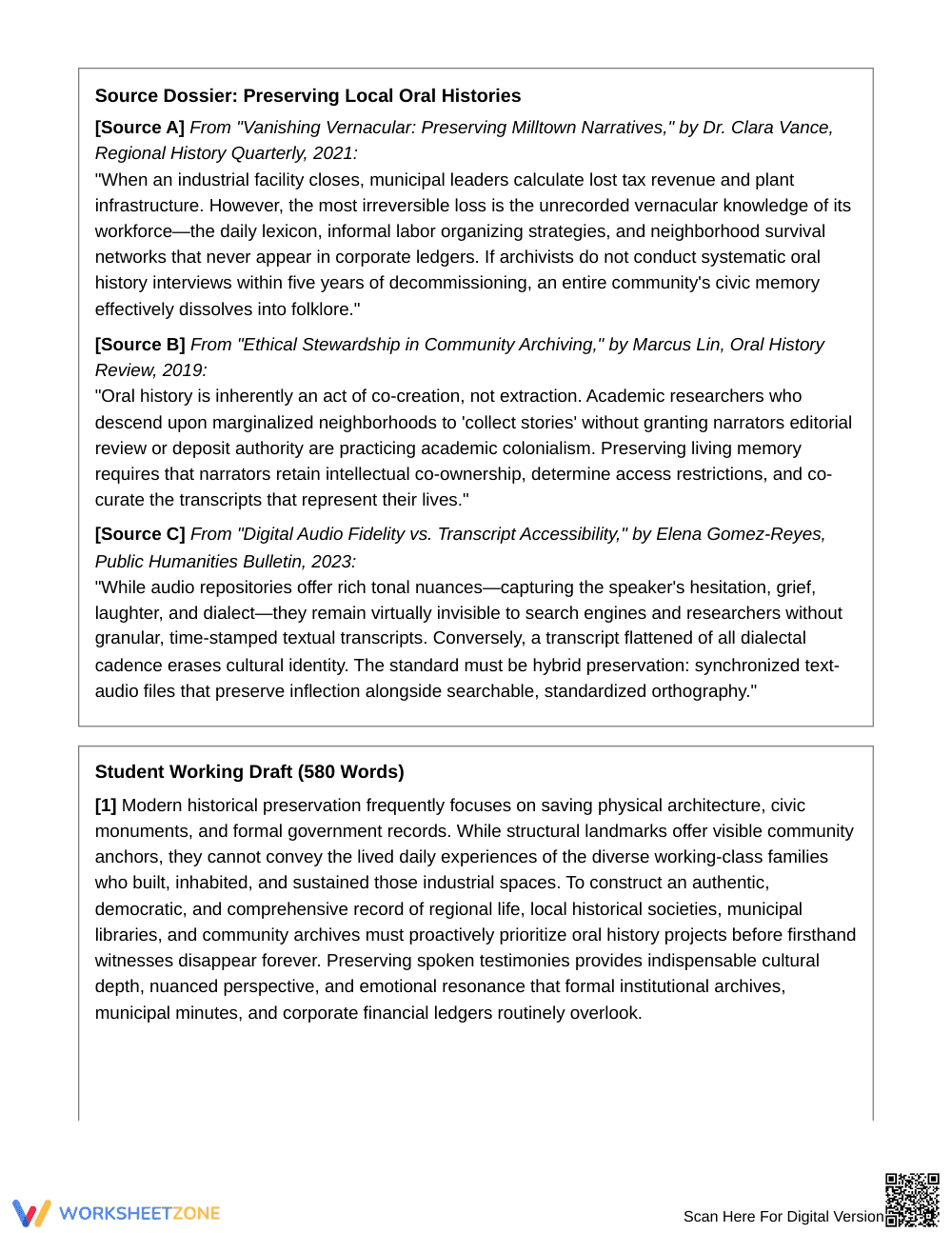
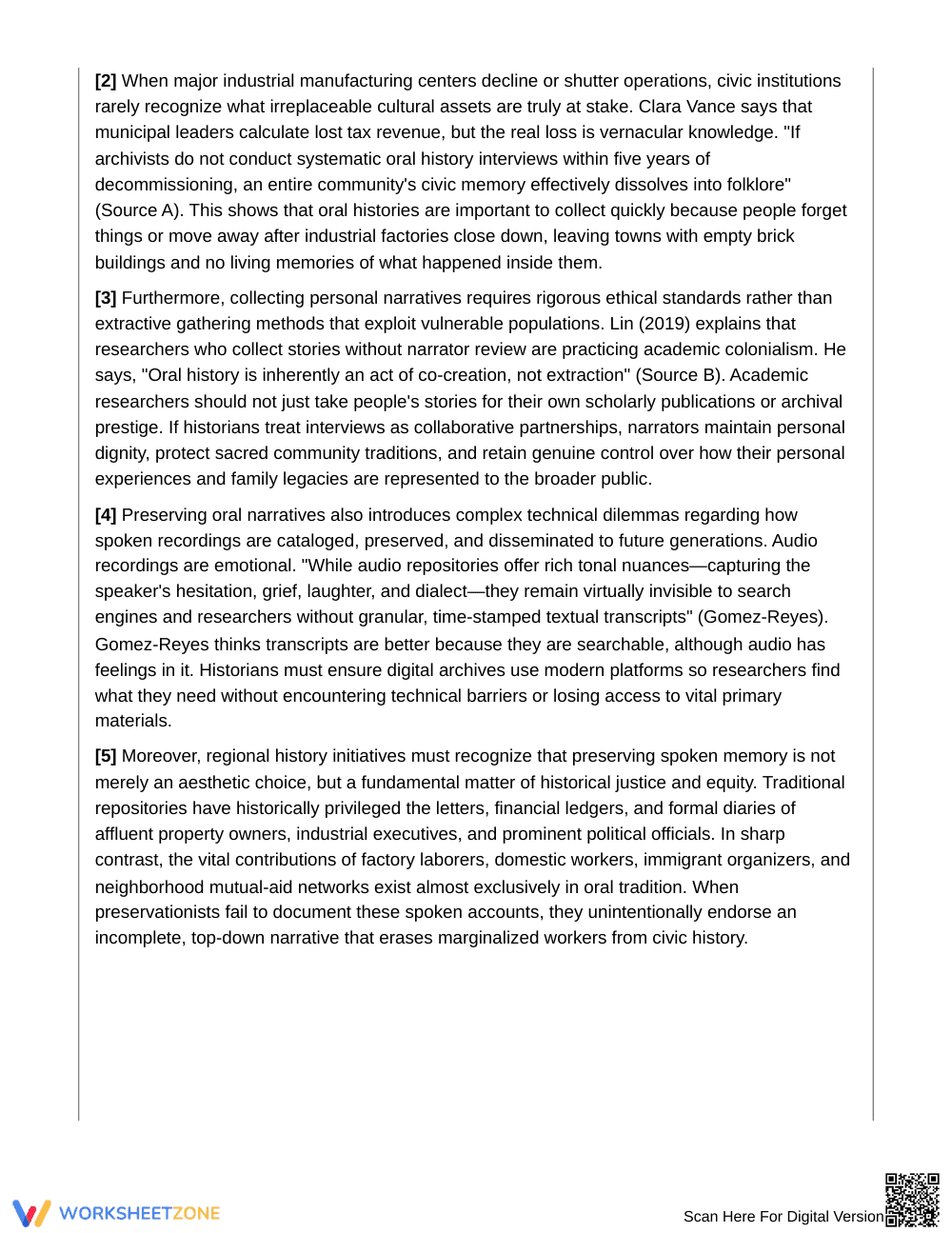
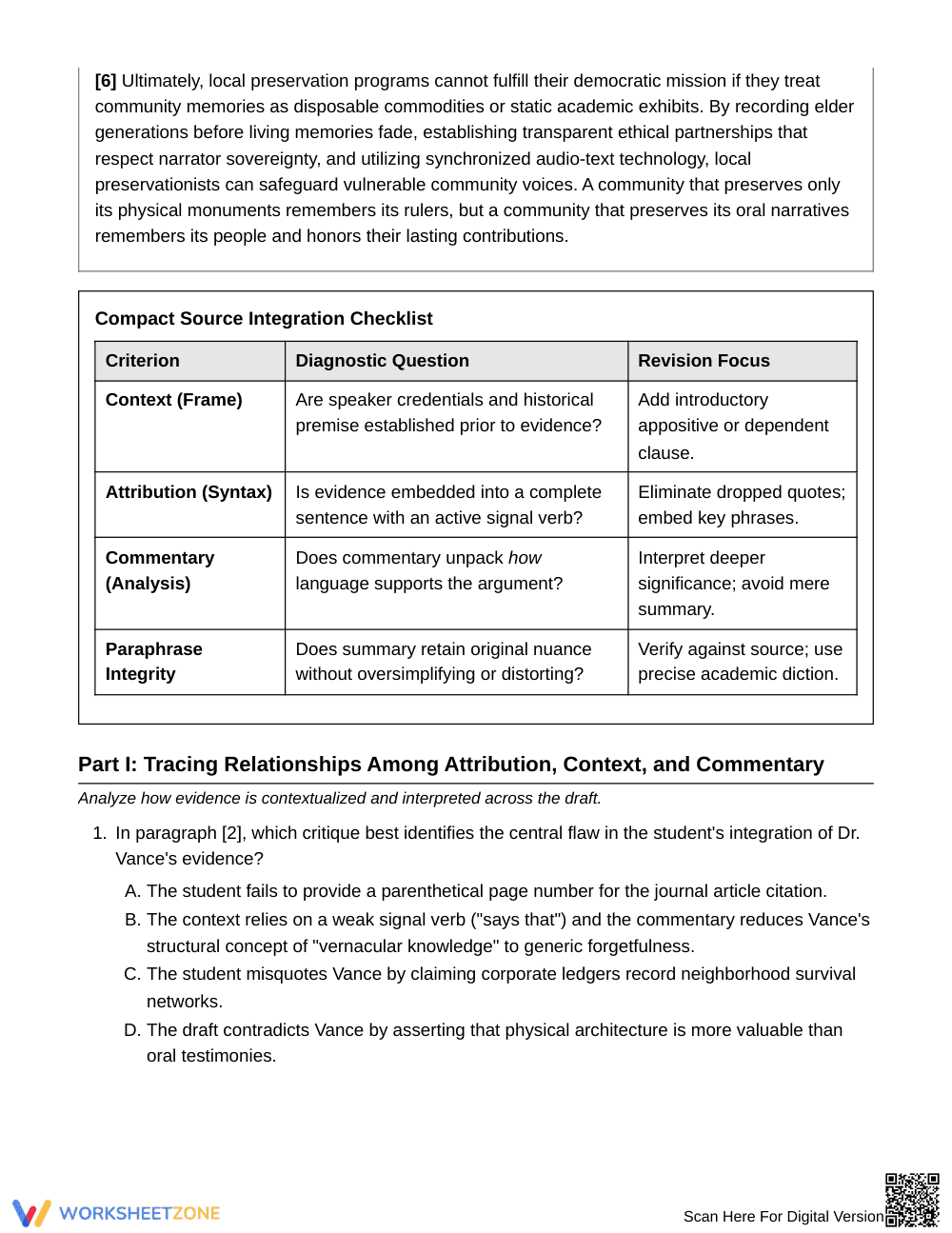
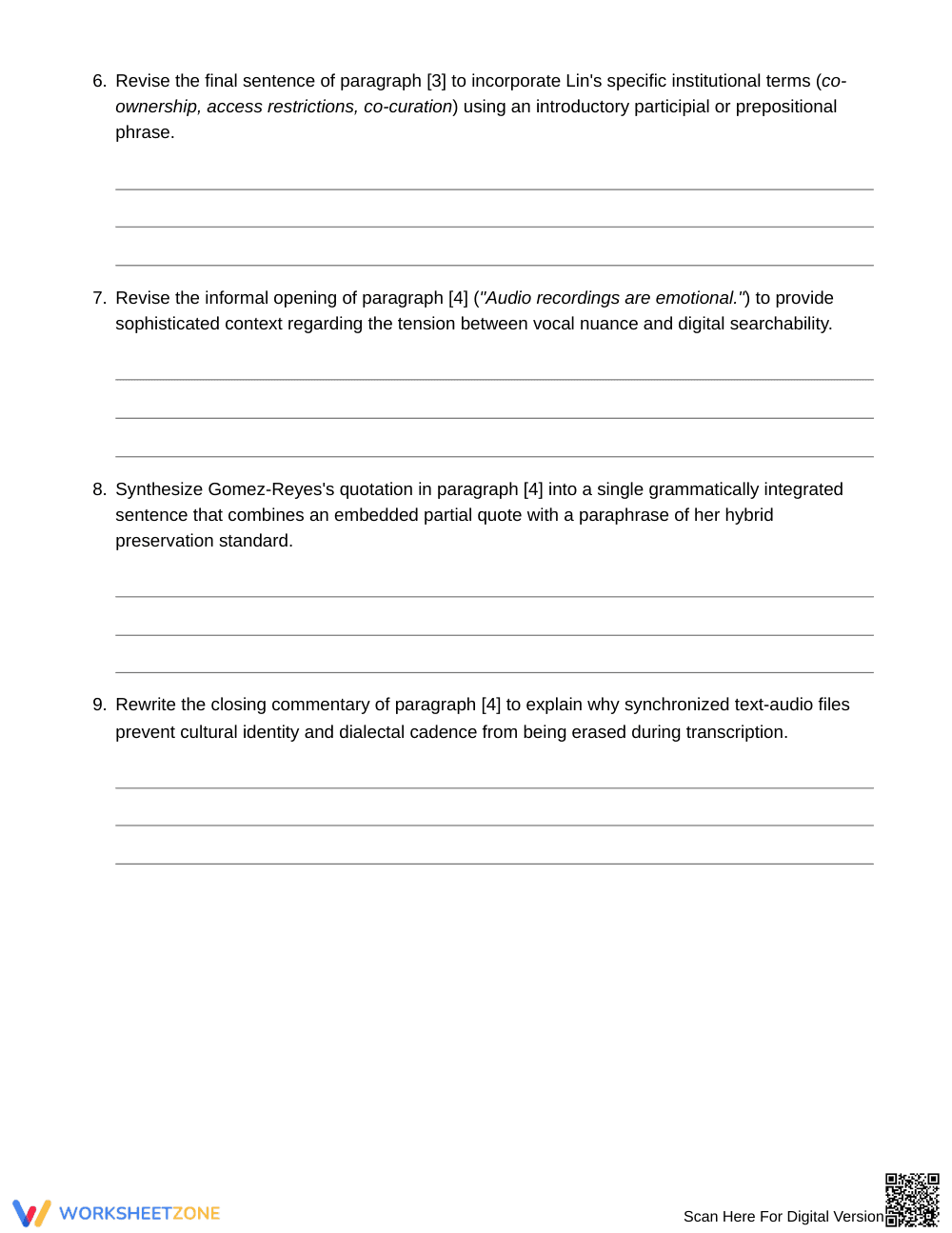
This 7-page instructional packet includes an analytical source dossier featuring three academic excerpts, an unpolished 580-word student draft, and a compact integration checklist. Students complete 12 rigorous tasks spanning multiple-choice critique, sentence rewrites, and rhetorical audits. A complete 3-page answer key provides targeted model revisions and explanatory rationales for immediate evaluation.
Skill Progression
- Guided practice (Tasks 1–3): Students analyze a flawed working draft against source texts, identifying weak signal verbs, dropped quotes, and distorted paraphrases.
- Supported practice (Tasks 4–9): Learners revise connected sentences by embedding credentials, deploying active verbs, and drafting analytical commentary.
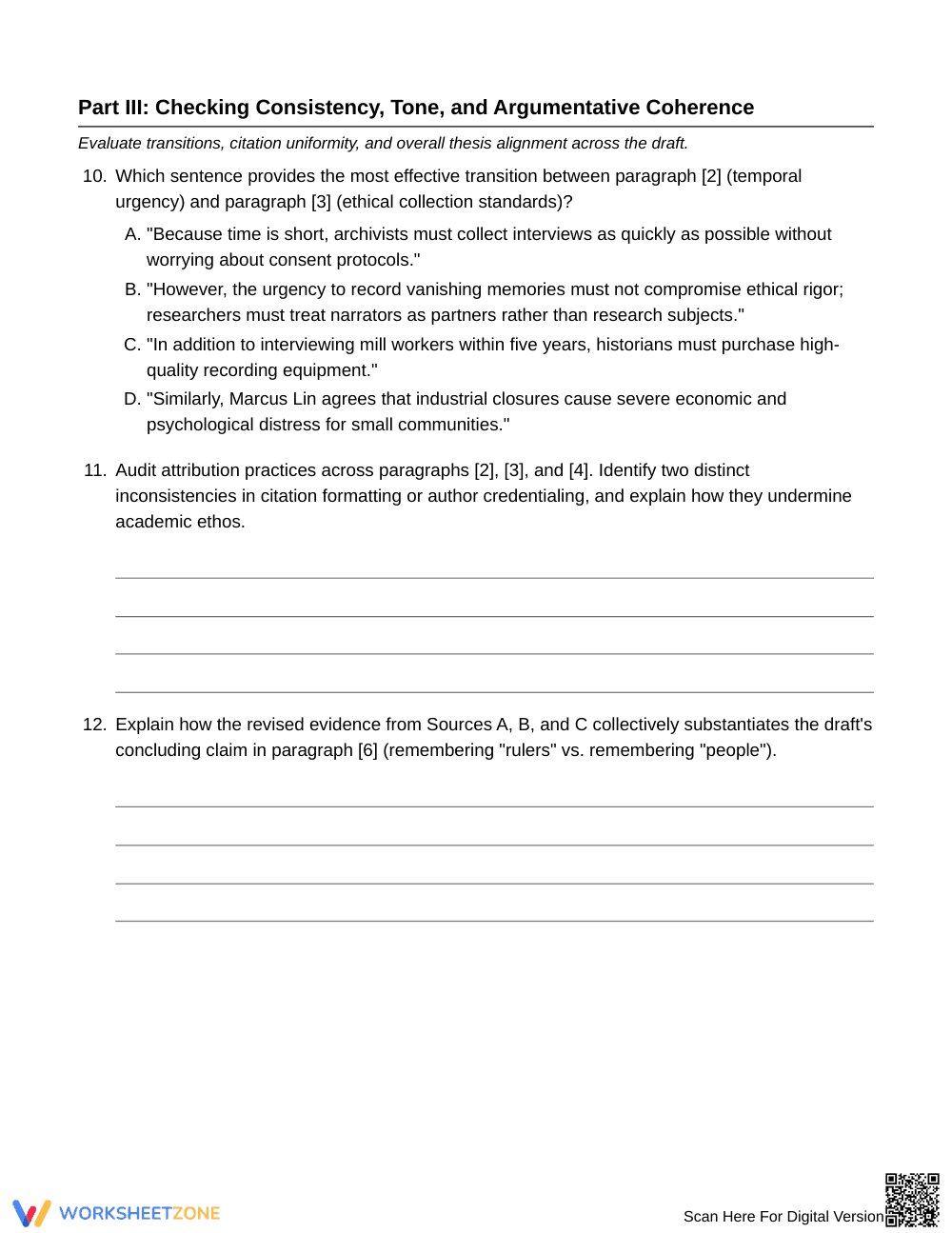
- Independent practice (Tasks 10–12): High school writers audit full-draft citation consistency, refine transitions, and align synthesized evidence with broader essay conclusions.
This scaffolded sequence follows a gradual-release model, moving writers from diagnostic critique to independent sentence-level composition.
Standards Alignment
This resource aligns with Grade 11 research and writing expectations for integrating relevant evidence into informational and argumentative texts. Students demonstrate mastery by embedding quotations within complex sentences and articulating rigorous textual commentary without distorting source intent. Both standard codes can be copied directly into lesson plans, IEP goals, or district curriculum mapping tools.
How to Use It
Implement this worksheet after direct instruction on quotation framing or during peer review workshops for research papers. For formative assessment, examine student revisions in Part II to check whether students maintain grammatical sentence integrity when embedding multi-word quotes. Expect completion within 45 to 60 minutes during an extended literacy block or split across two class periods.
Who It's For
This practice set serves eleventh-grade English III students preparing for college-level research writing. It offers structured diagnostic frames for developing writers needing syntactic support, while challenging advanced students with nuanced source reconciliation. Pair this resource with an anchor chart on academic signal verbs or a mini-lesson on MLA in-text citations.
High school research writing standards emphasize the critical skill of connecting attribution, context, and analytical commentary to produce coherent academic arguments. According to Fisher & Frey (2014), gradual-release instructional frameworks significantly enhance secondary literacy outcomes when students first identify structural flaws in authentic non-examples before attempting independent syntactic revisions. This instructional worksheet targets common student errors in Grade 11 writing, such as dropped quotes and superficial summary commentary, by grounding practice in a three-part source dossier on community archiving. Writers evaluate an unpolished 580-word draft, reconstruct fragmented sentences with appositives and active signal verbs, and compose rigorous commentary that interprets textual significance. By mastering the coordination of speaker authority, integrated textual evidence, and thesis-driven analysis, eleventh-grade students build essential rhetorical stamina required for college-level research writing and formal academic discourse across interdisciplinary humanities coursework.


