


























Views
Downloads

Essential Reading Analog Clocks Worksheet | Grade 4-5 Ready
Paste this activity's link or code into your existing LMS (Google Classroom, Canvas, Teams, Schoology, Moodle, etc.).
Students can open and work on the activity right away, with no student login required.
You'll still be able to track student progress and results from your teacher account.
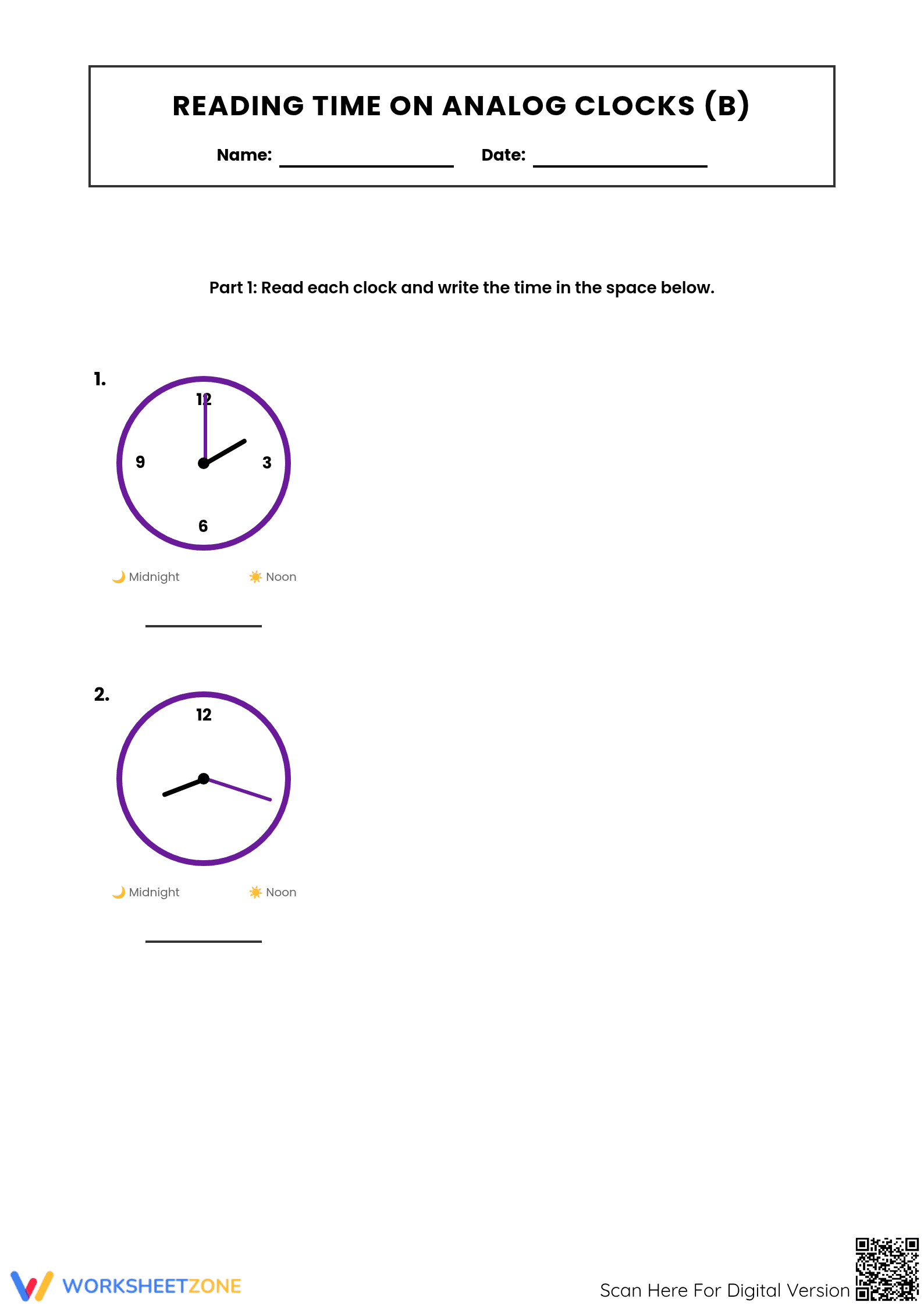
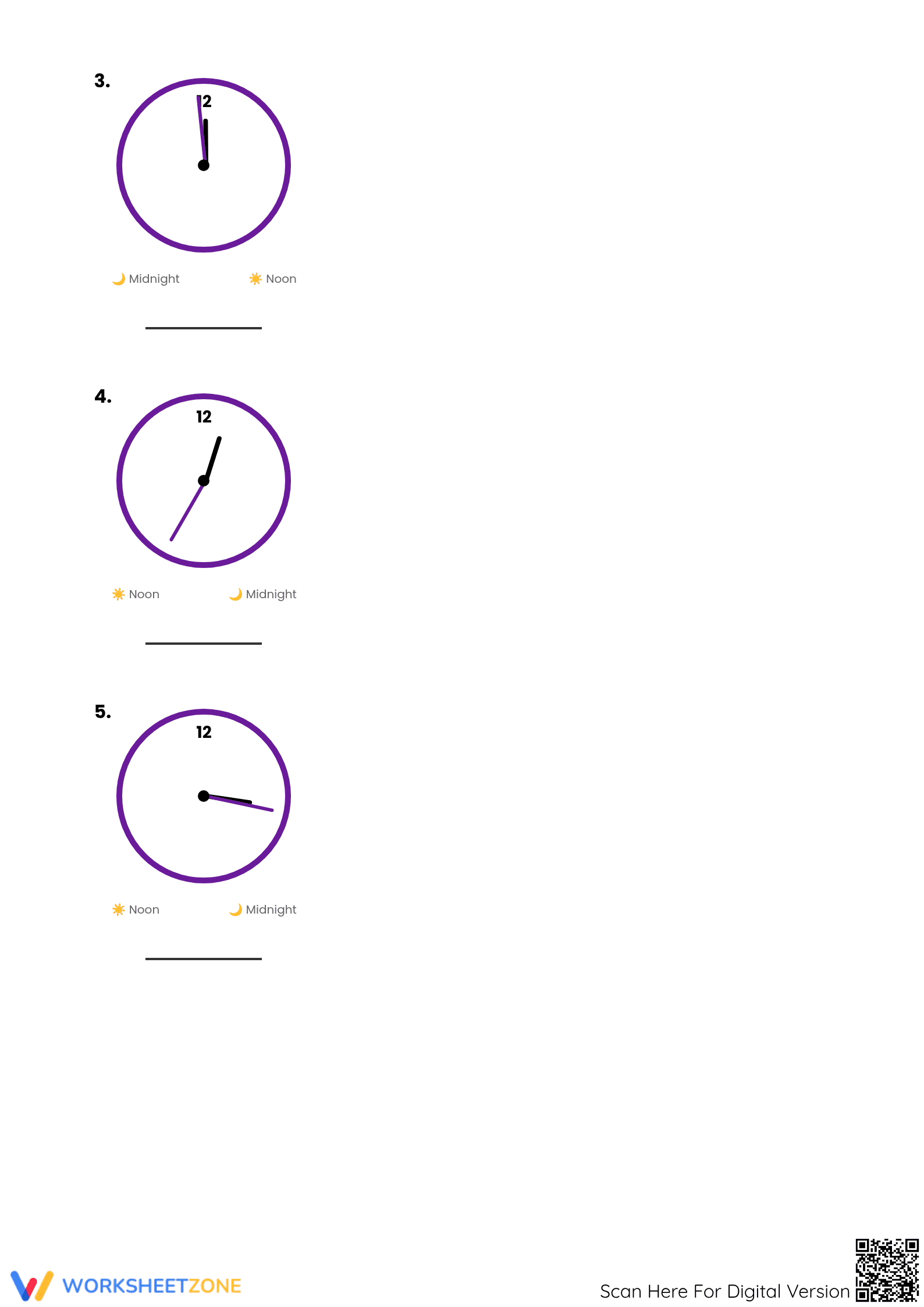
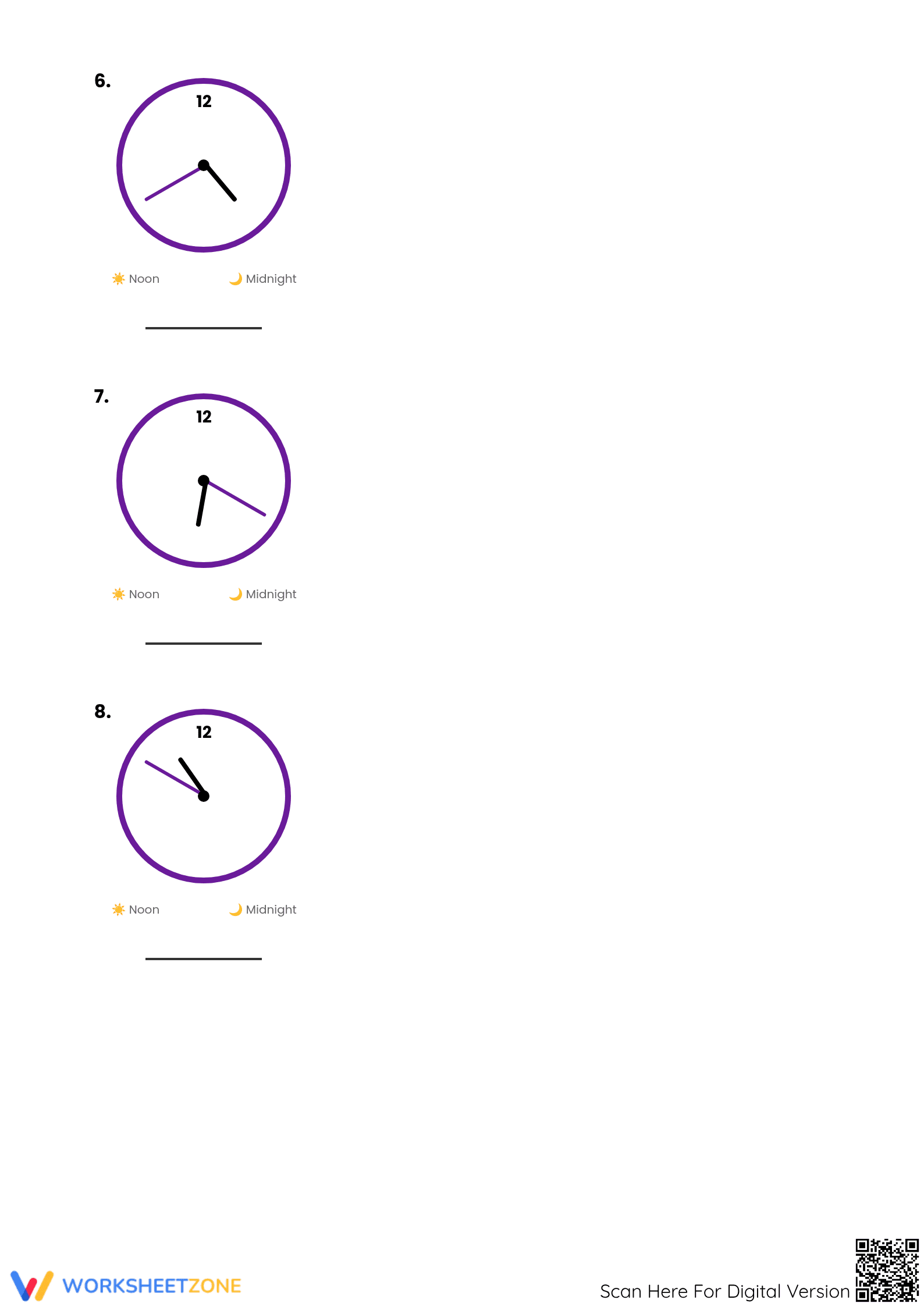
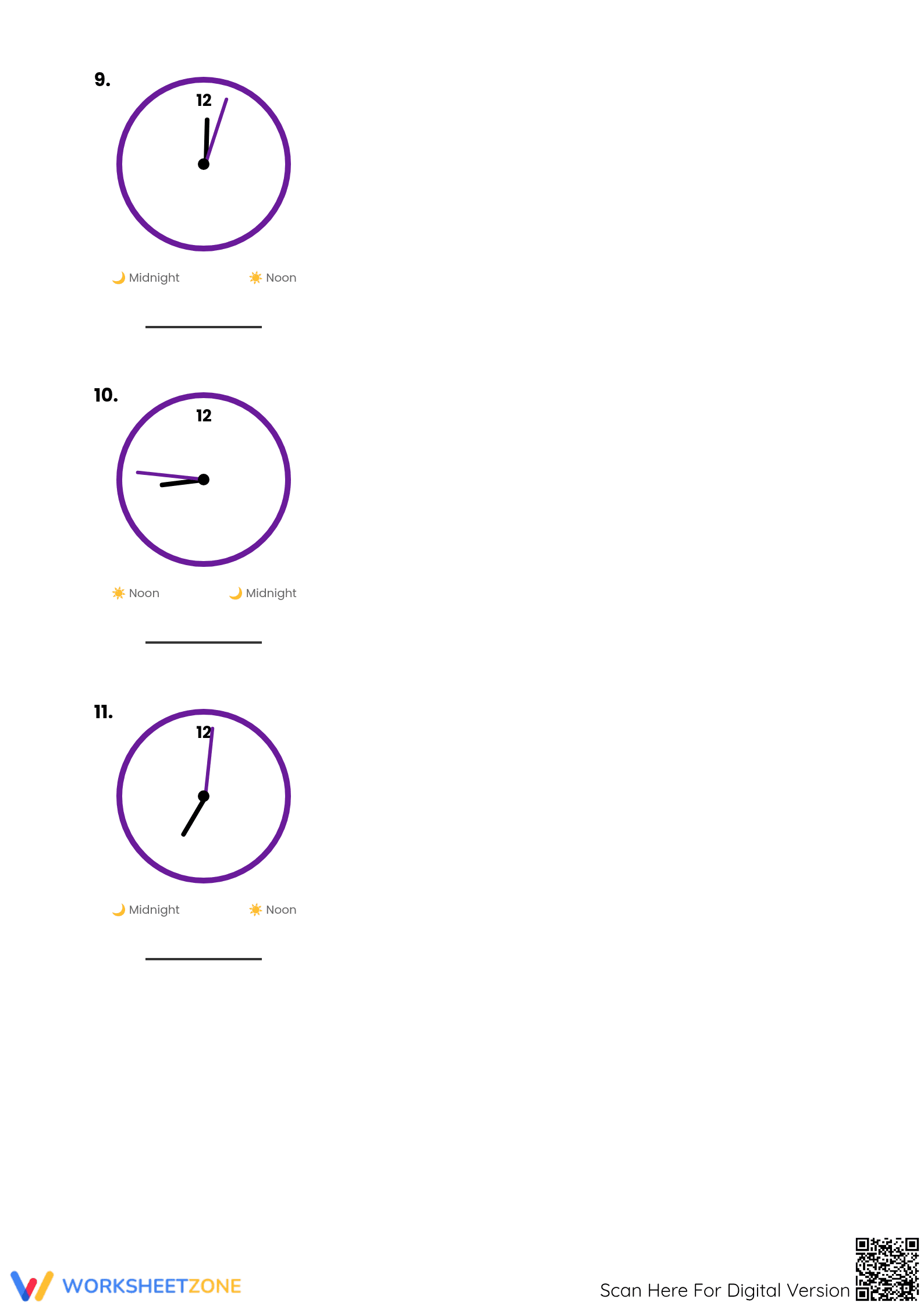
This Essential Grade 4 and 5 math worksheet focuses on reading analog clocks with precision to the minute. Students analyze 14 clock faces to identify specific times, including AM and PM designations. This resource ensures learners build the fluency needed for complex time-based calculations and real-world scheduling in the classroom environment.
At a Glance
- Grade: 4–5 · Subject: Math
- Standard:
3.MD.A.1— Tell and write time to the nearest minute using analog clocks- Skill Focus: 1-minute interval time reading
- Format: 5 pages · 14 problems · Answer key included · PDF
- Best For: Independent practice and time-telling fluency checks
- Time: 15–20 minutes
What's Inside
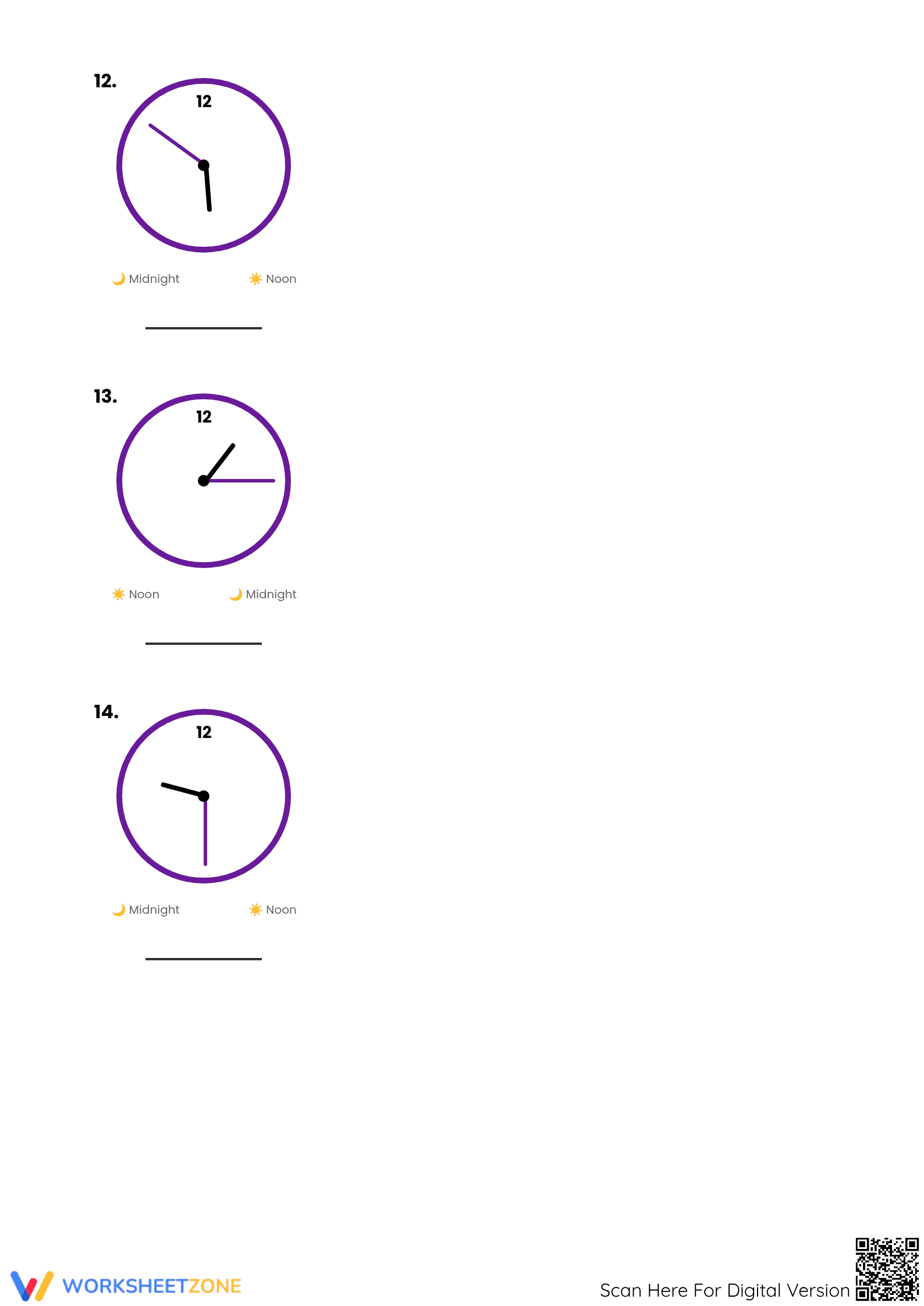
This five-page PDF features 14 high-contrast analog clock illustrations. Each task provides a visual representation of time at the one-minute level, requiring students to determine the hour and exact minute. The worksheet includes "Midnight" and "Noon" icons to help students contextualize times. A full answer key is included for rapid grading or student self-correction during independent study sessions.
Zero-Prep Workflow
Integrating this resource is effortless. Simply print the five-page packet (30 seconds) and distribute it to your Grade 4 or 5 students (1 minute). Because the instructions are self-explanatory and the layout is intuitive, students can begin working immediately. Reviewing the answers using the provided key takes less than 2 minutes, making this an ideal choice for morning work, fast finishers, or emergency sub plans. Total teacher prep time is under 2 minutes.
Standards Alignment
This resource is strictly aligned to `3.MD.A.1`: "Tell and write time to the nearest minute and measure time intervals in minutes." Mastery of this standard is a prerequisite for Grade 4 and 5 objectives involving elapsed time and multi-step word problems. This standard code can be copied directly into lesson plans, IEP goals, or district curriculum mapping tools to document targeted skill reinforcement.
How to Use It
Use this worksheet as a formative assessment after direct instruction. As students work independently, circulate to identify those struggling with the minute hand's proximity to the next hour. Alternatively, assign it as homework to reinforce learning. Most students will complete the 14 problems in 15 to 20 minutes, providing a clear snapshot of their mastery. Teachers can use results to plan small-group interventions.
Who It's For
This practice set is for Grade 4 and 5 students sharpening their accuracy with analog time-telling. It is effective for students who rely on digital clocks and need practice with minute-hand precision. Pair this worksheet with an interactive clock model or a time anchor chart to provide visual support for diverse learners or students with specific IEP goals.
The mastery of analog time-telling represents a foundational cognitive leap in understanding circular measurement and fractional parts of an hour. According to the NAEP framework, the ability to read 1-minute intervals on an analog clock is a significant indicator of a student's broader spatial reasoning and numerical fluency. Research from Fisher & Frey (2014) emphasizes that focused independent practice, like the 14 tasks provided here, is essential for moving skills into long-term memory. By requiring students to reconcile visual hand placement with numerical minute values, this worksheet Aligned to 3.MD.A.1 strengthens the neural pathways associated with proportional thinking. This tool provides the structured repetition necessary for students to achieve automaticity, which is a critical precursor to success in higher-level measurement and data standards. This resource serves as a verified bridge for learners moving from basic hour-level recognition to precise minute-level calculation.


