




























Views
Downloads

Printable Sequencing Story Steps Worksheet | Grade K ELA

Paste this activity's link or code into your existing LMS (Google Classroom, Canvas, Teams, Schoology, Moodle, etc.).
Students can open and work on the activity right away, with no student login required.
You'll still be able to track student progress and results from your teacher account.
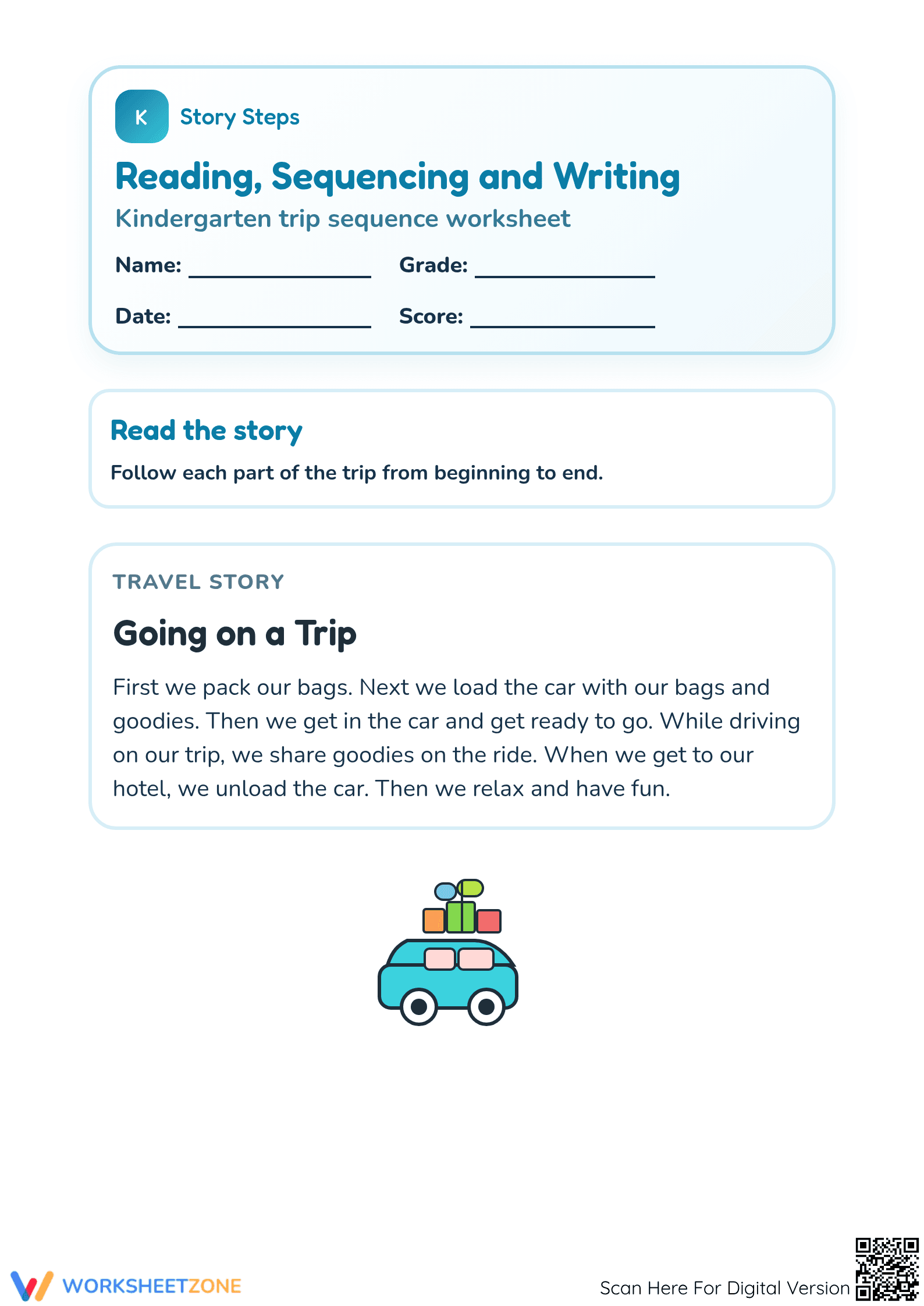
This printable Kindergarten ELA worksheet helps young learners master the essential skill of story sequencing. Students develop reading comprehension and narrative writing abilities by following a trip story from start to finish. By organizing events in chronological order, children build a strong foundation for logical thinking and future literary analysis.
At a Glance
- Grade: Kindergarten · Subject: English Language Arts (ELA)
- Standard:
CCSS.ELA-LITERACY.RL.K.2— Retell familiar stories including key details to demonstrate understanding of event sequences- Skill Focus: Story Sequencing and Narrative Writing
- Format: 3 pages · 6 problems · Answer key included · PDF
- Best For: Beginning readers and early writers
- Time: 15–25 minutes
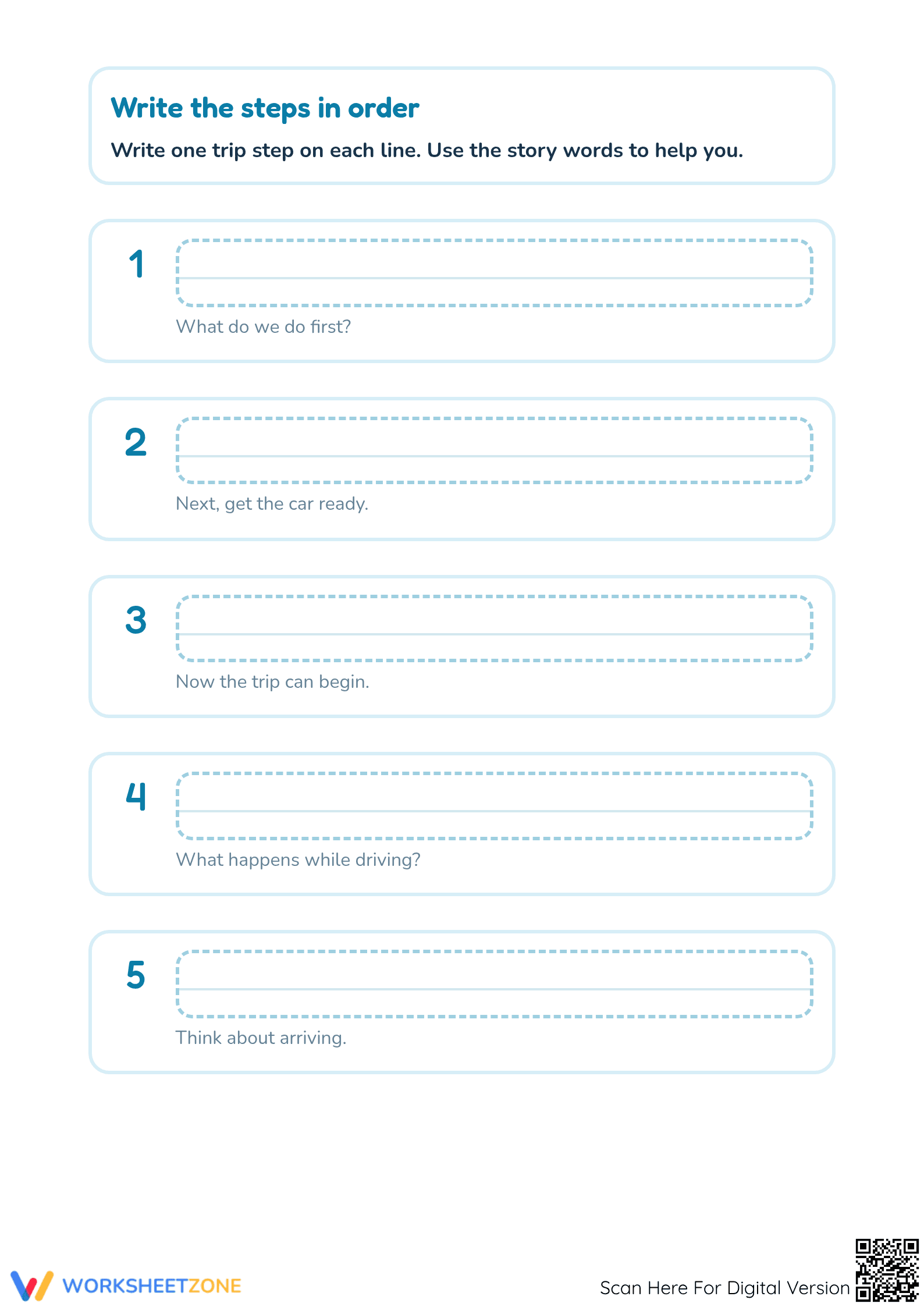
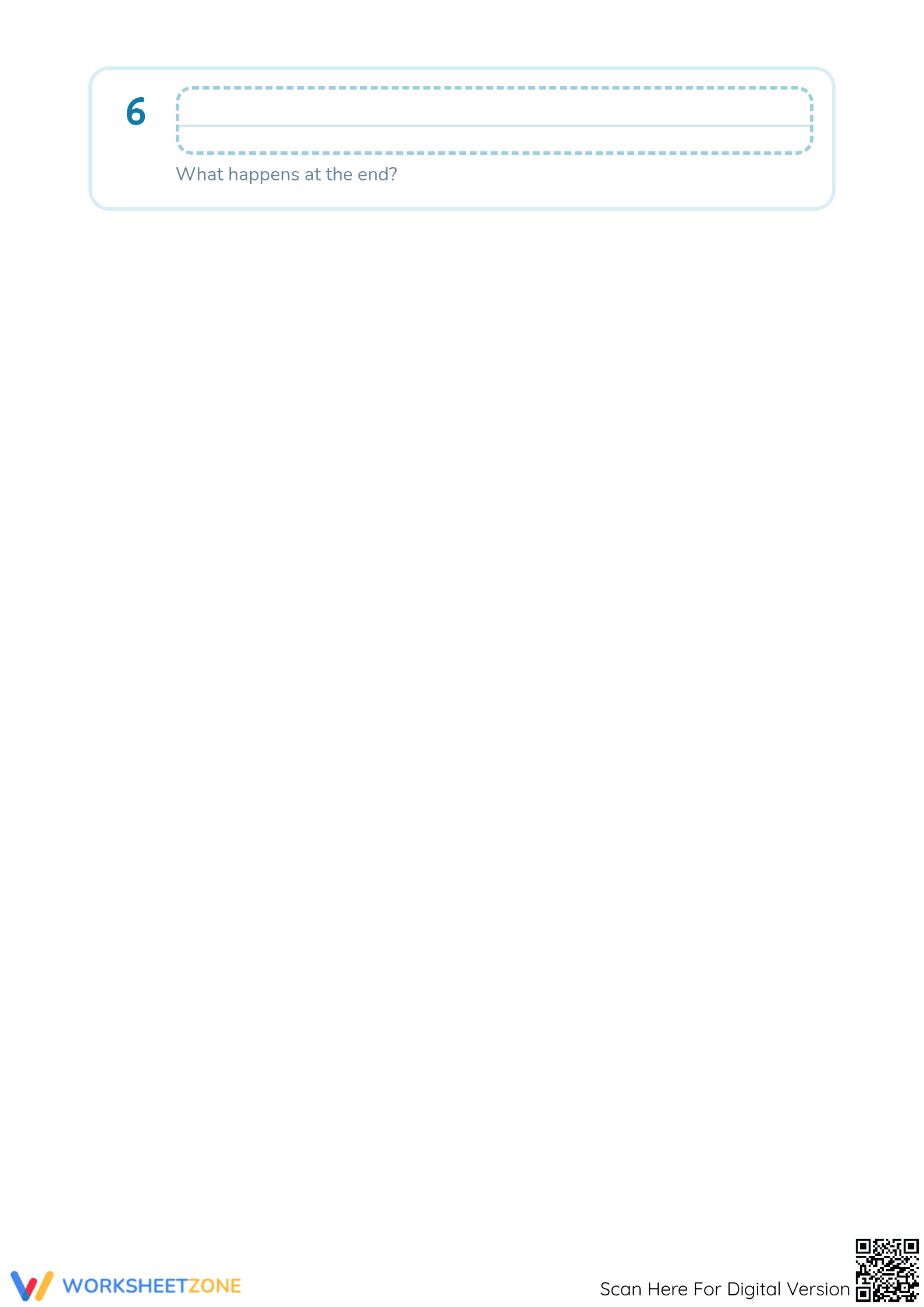
The resource contains a three-page structured activity designed for early childhood classrooms. Page one features a short, accessible "Travel Story" titled "Going on a Trip," which uses clear transition words like "First," "Next," and "Then" to support sequencing. Pages two and three provide six numbered writing prompts where students transcribe the steps in order. A complete answer key is provided for quick grading.
Zero-Prep Workflow
- Step 1: Print (30 seconds) — Select the desired number of copies and send them to your printer. No complex assembly or stapling is required beyond the basic multi-page set.
- Step 2: Distribute (30 seconds) — Hand out the packets during your literacy block or as a transition activity. No additional manipulatives or teacher-led setup are needed.
- Step 3: Review (30 seconds) — Use the provided answer key to verify student responses or lead a quick whole-class discussion to confirm the story's logical flow.
Total teacher preparation time is under two minutes, making this an ideal solution for sub plans or emergency literacy lessons.
This worksheet is primarily aligned with CCSS.ELA-LITERACY.RL.K.2: "With prompting and support, retell familiar stories, including key details." It also supports CCSS.ELA-LITERACY.W.K.3 by asking students to use a combination of writing to narrate a single event and telling about events in order. Both standard codes can be copied directly into lesson plans, IEP goals, or district curriculum mapping tools.
Use this resource as a formative assessment after a direct instruction lesson on transition words. Observe how students refer back to the text to find evidence for the correct order. Alternatively, assign it as a high-quality sub-plan activity; its self-explanatory layout ensures students can work independently or with minimal guidance during a teacher's absence. Completion typically takes 20 minutes.
The activity is designed for Kindergarten students but works well for first-grade learners needing extra intervention or English Language Learners (ELLs) focusing on narrative structures. It pairs naturally with a read-aloud about travel or a classroom anchor chart detailing beginning, middle, and end sequences to reinforce visual and auditory learning.
Sequencing is a foundational literacy skill that serves as a precursor to complex reading comprehension. Research from Fisher & Frey (2014) emphasizes the importance of gradual release of responsibility, where structured practice like this story-step worksheet allows students to move from guided decoding to independent retelling. By identifying key details and organizing them chronologically, students meet the CCSS.ELA-LITERACY.RL.K.2 requirement for retelling familiar narratives. This resource provides 6 distinct opportunities for students to practice this skill using a controlled vocabulary and clear narrative cues. Systematic practice with sequencing has been shown to improve overall comprehension scores and narrative writing fluency in early primary grades. Educators can use these tasks to identify gaps in a student's ability to track event interaction within a text.


