


























Views
Downloads
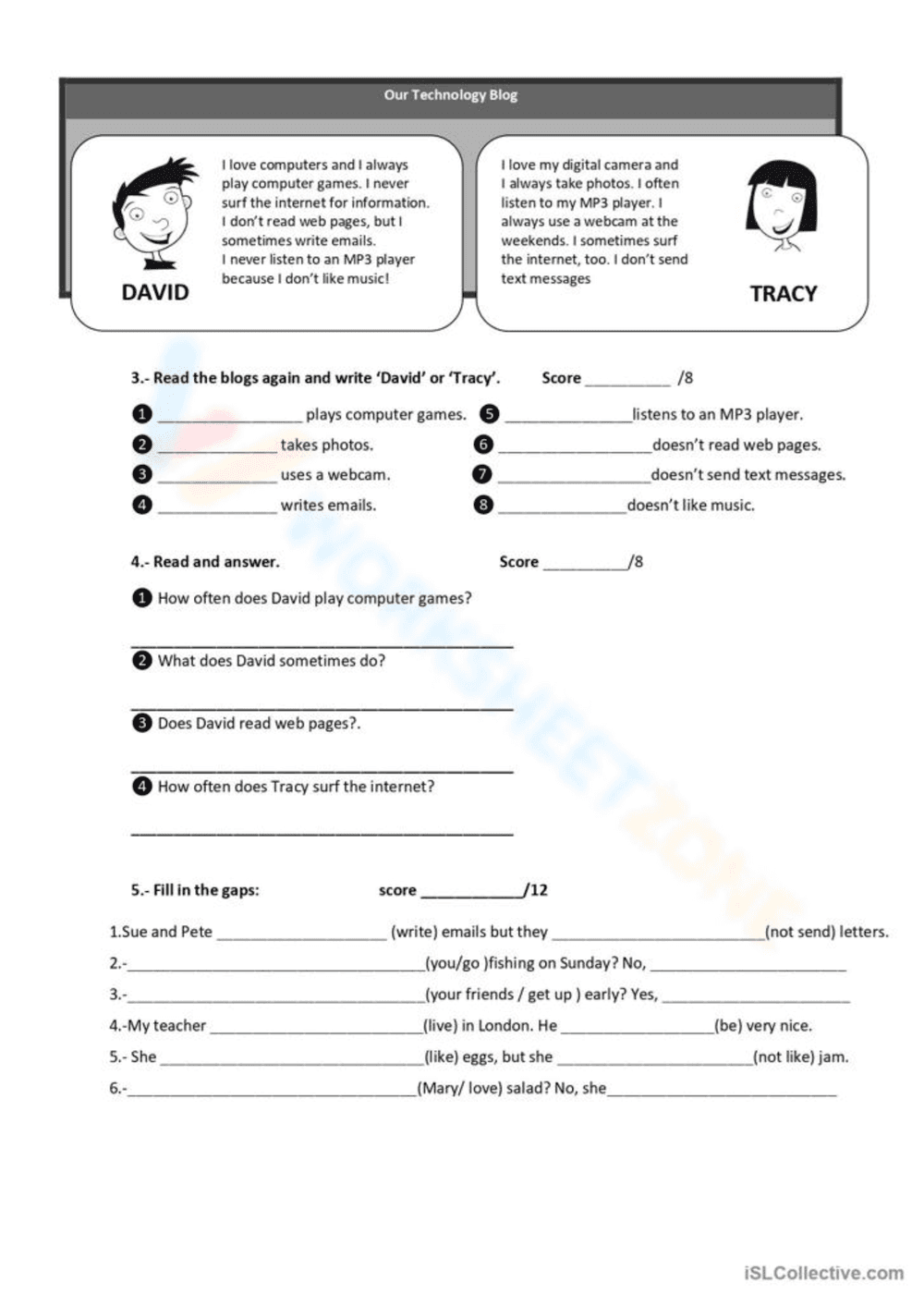

Grade 6 Reading & Grammar — Printable No-Prep Worksheet
Paste this activity's link or code into your existing LMS (Google Classroom, Canvas, Teams, Schoology, Moodle, etc.).
Students can open and work on the activity right away, with no student login required.
You'll still be able to track student progress and results from your teacher account.
This Grade 6 English Language Arts worksheet provides targeted practice in reading comprehension and present simple grammar. Students read short informational blog posts to extract specific details, then apply grammar rules to complete sentences. This resource ensures learners accurately cite textual evidence and demonstrate command of standard English conventions.
At a Glance
- Grade: 6 · Subject: ELA
- Standard:
CCSS.ELA-LITERACY.RI.6.1— Cite textual evidence to support analysis of what the text says explicitly.- Skill Focus: Reading comprehension and grammar
- Format: 1 page · 18 problems · Answer key included · PDF
- Best For: Independent practice and review
- Time: 15–20 minutes
Inside this single-page resource, educators will find three task types evaluating reading and language skills. The first section requires students to match statements to the correct character based on the text. The second features short-answer questions focusing on adverbs of frequency. Finally, a fill-in-the-blank grammar exercise tests present simple verb conjugations. A complete answer key is included.
This worksheet is engineered for a zero-prep classroom experience.
- Print (1 minute): Download the PDF and print a class set. The clean design minimizes ink usage.
- Distribute (1 minute): Hand out the single-page assignment as a warm-up or emergency sub plan. Instructions are self-explanatory.
- Review (3 minutes): Use the included answer key to quickly check student work or project it for self-grading.
Total teacher prep time is under two minutes, making it an ideal grab-and-go solution.
This resource is directly aligned to CCSS.ELA-LITERACY.RI.6.1: "Cite textual evidence to support analysis of what the text says explicitly as well as inferences drawn from the text." It also supports language standards by reinforcing present simple verb usage and adverbs of frequency. Both standard codes can be copied directly into lesson plans, IEP goals, or district curriculum mapping tools.
Deploy this worksheet during independent work time following a mini-lesson on reading for details. It serves as an excellent formative assessment; teachers can quickly scan the short-answer section to observe whether students correctly identify adverbs of frequency. Alternatively, assign it as focused homework. Students typically complete the 18 problems within 15 to 20 minutes.
This material is designed for general education sixth-grade students, but it is also highly effective for English Language Learners (ELLs) needing structured grammar practice. The clear formatting and short reading passages reduce cognitive overload for students reading slightly below grade level. Pair this worksheet with a direct instruction lesson on technology vocabulary or a broader unit on digital citizenship to maximize engagement.
Mastering the ability to locate specific information within a text is a foundational literacy skill for middle school students. According to a recent RAND AIRS 2024 report, students who engage in frequent, targeted practice with short informational texts demonstrate significantly higher proficiency in reading comprehension assessments. This worksheet directly supports that research by requiring learners to interact with brief blog posts and extract concrete details. By aligning with CCSS.ELA-LITERACY.RI.6.1, the activity ensures students practice how to cite textual evidence to support analysis of what the text says explicitly. Furthermore, integrating grammar exercises within a reading context helps solidify language conventions in a meaningful way. Educators can rely on this evidence-based approach to build both reading stamina and grammatical accuracy, ensuring students are well-prepared for more complex analytical tasks in advanced grades.


