


























0
Views
0
Downloads

0.0
0
Save
0 Likes
Share
Reading Characterization: Character Traits Worksheet
0 Views
0 Downloads
Paste this activity's link or code into your existing LMS (Google Classroom, Canvas, Teams, Schoology, Moodle, etc.).
Students can open and work on the activity right away, with no student login required.
You'll still be able to track student progress and results from your teacher account.
Information
Description
What It Is:
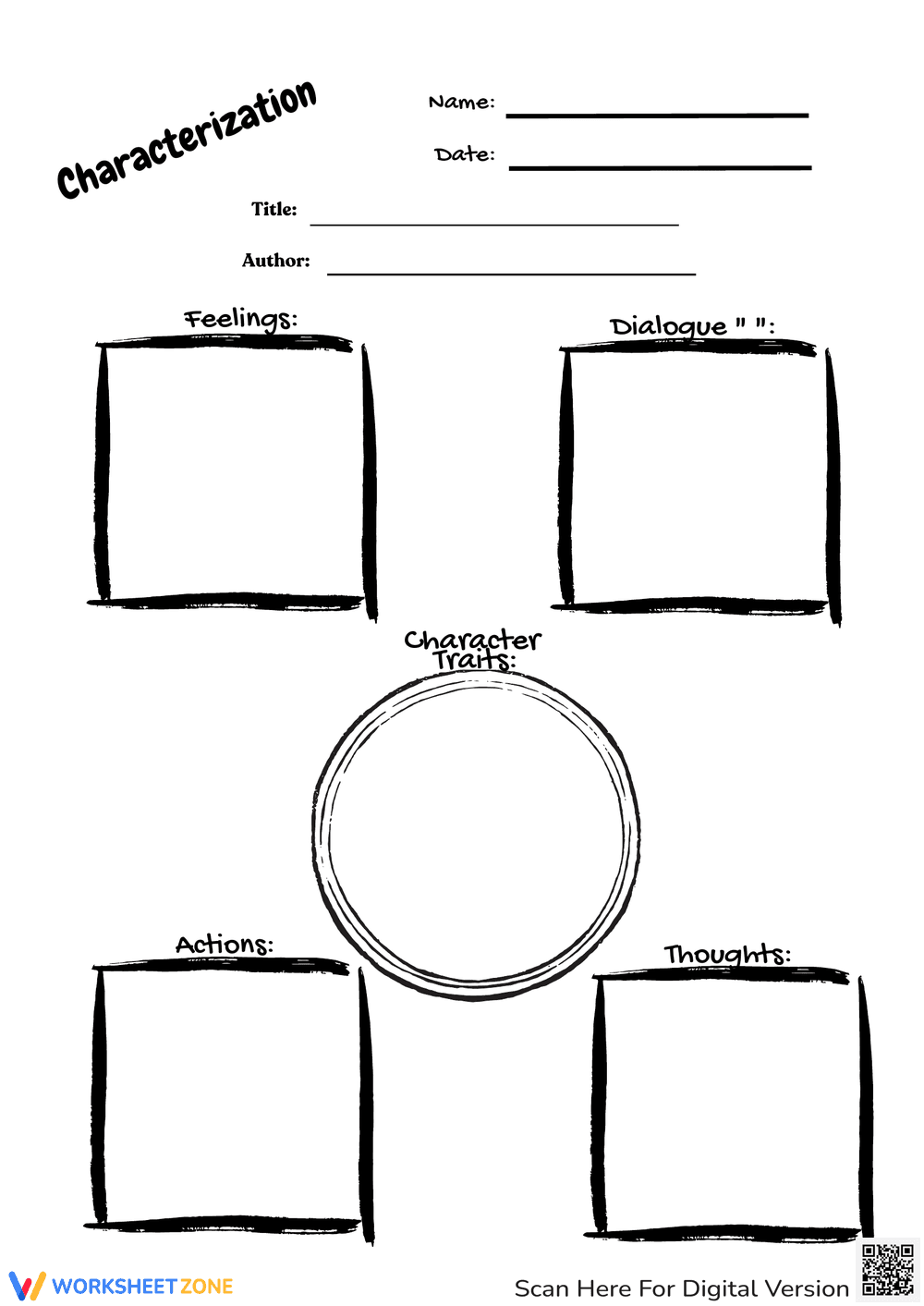
This is a characterization worksheet. It prompts students to analyze characters by filling in information about their feelings, dialogue, actions, thoughts, and overall character traits. The worksheet includes spaces for the student's name, the date, the title of the work, and the author. There are four square boxes labeled 'Feelings,' 'Dialogue,' 'Actions,' and 'Thoughts,' and a central circle labeled 'Character Traits.'
Grade Level Suitability:
This worksheet is suitable for grades 3-6. It is appropriate for these grades because it uses simple language and provides a structured format for students to organize their thoughts about character analysis. The concepts are accessible to students within this age range who are learning about literary elements.
Why Use It:
This worksheet helps students to develop their critical thinking and reading comprehension skills. It encourages them to look beyond the surface of a character and consider their motivations, behaviors, and relationships to other characters. It also reinforces vocabulary related to character traits and helps students organize information from a text.
How to Use It:
Students should read a story or passage and then use this worksheet to analyze one or more characters. They should fill in each box with specific examples from the text that demonstrate the character's feelings, dialogue, actions, and thoughts. In the central circle, they should list the character's main traits based on the evidence they have gathered.
Target Users:
This worksheet is designed for elementary and middle school students who are learning about characterization in literature. It is also useful for teachers who want to provide a structured activity for students to practice analyzing characters.
This is a characterization worksheet. It prompts students to analyze characters by filling in information about their feelings, dialogue, actions, thoughts, and overall character traits. The worksheet includes spaces for the student's name, the date, the title of the work, and the author. There are four square boxes labeled 'Feelings,' 'Dialogue,' 'Actions,' and 'Thoughts,' and a central circle labeled 'Character Traits.'
Grade Level Suitability:
This worksheet is suitable for grades 3-6. It is appropriate for these grades because it uses simple language and provides a structured format for students to organize their thoughts about character analysis. The concepts are accessible to students within this age range who are learning about literary elements.
Why Use It:
This worksheet helps students to develop their critical thinking and reading comprehension skills. It encourages them to look beyond the surface of a character and consider their motivations, behaviors, and relationships to other characters. It also reinforces vocabulary related to character traits and helps students organize information from a text.
How to Use It:
Students should read a story or passage and then use this worksheet to analyze one or more characters. They should fill in each box with specific examples from the text that demonstrate the character's feelings, dialogue, actions, and thoughts. In the central circle, they should list the character's main traits based on the evidence they have gathered.
Target Users:
This worksheet is designed for elementary and middle school students who are learning about characterization in literature. It is also useful for teachers who want to provide a structured activity for students to practice analyzing characters.


